Old Money Bob Haircut: Get the Quiet-Luxury Finish

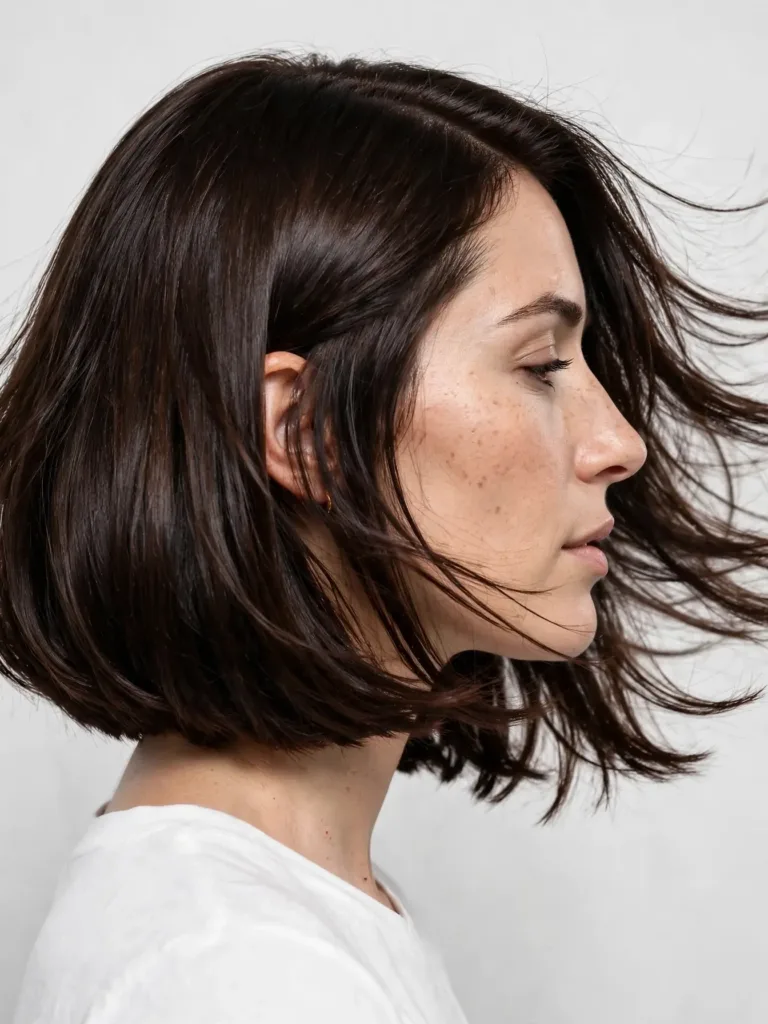
The old money bob haircut promises hair that looks expensive, and the cut itself is only half the story. The real difference sits in the finish: mirror shine, a crisp perimeter, and ends that turn under softly.
Search the phrase today and you will find a hundred photos of glossy, chin-grazing bobs. Few explain what creates the effect. This guide does. You will learn the five hallmarks of the finish. Then the three salon services behind it. Plus the color rules that read rich, and the blowout that builds the signature curve.
As stylist Nicola Clarke told Glamour, old money bobs are luxurious, blow-dried, and turned under at the ends. This guide shows how to get that result on your own hair.
The Old Money Bob Haircut, Defined by Its Finish
An old-money bob haircut is a chin-to-collarbone bob defined by an expensive finish. Think high-gloss shine, a precise blunt edge, curved-under ends, and lifted roots. That single sentence covers the whole look.
The name borrows from the quiet-luxury aesthetic, the style code of understated wealth. Nothing about the cut shouts for attention. The luxury sits in condition and precision instead. Hair looks healthy, color looks rich, and every strand seems to sit exactly where it belongs.
Length usually lands between the jawline and the collarbone. Most versions keep layering minimal so the perimeter reads thick and full. The styling does the talking. A smooth blowout bends the ends under and lifts the roots. The result is soft volume and shine that catches light as you move.
The Expensive-Finish Checklist: Five Hallmarks
Before you book anything, learn to see the finish. These five hallmarks separate an old money bob haircut from a plain short cut. Check your reference photos against this list. If a photo misses more than one, it is not the look.
Mirror Shine
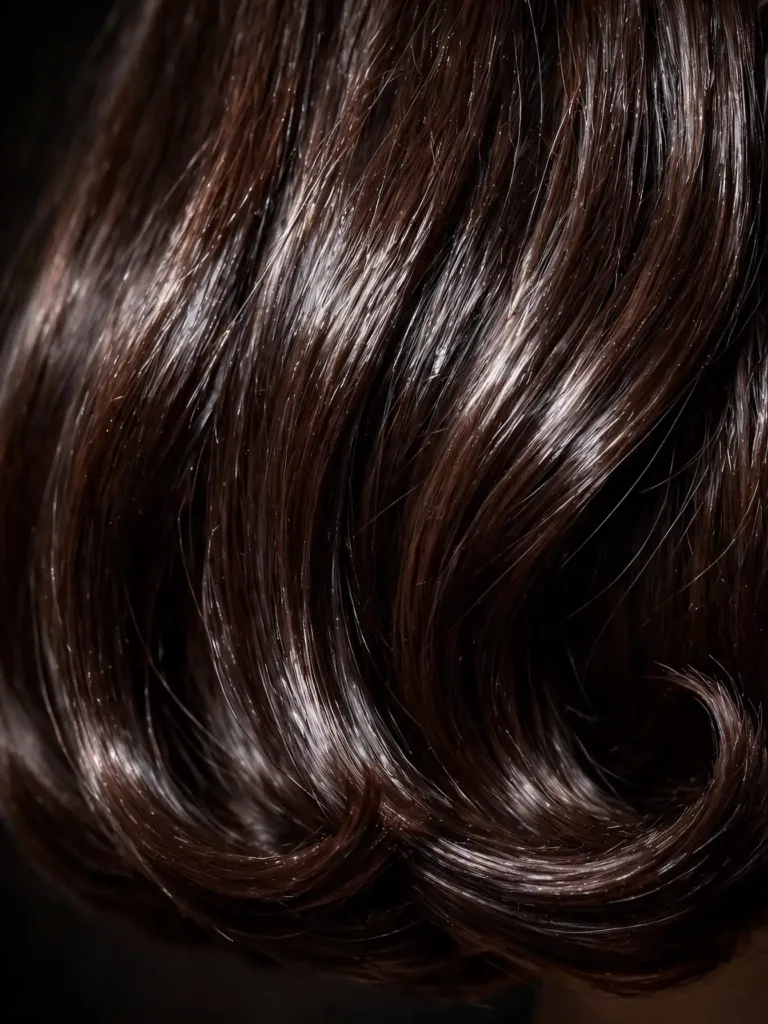
Shine is the fastest expensive signal in hair. Light bouncing off a smooth hair cuticle reads as health and care. The old money bob leans on that reflection hard. A clear gloss or glossing treatment at the salon builds this reflection. At home, a weekly mask and a lightweight shine serum keep it alive between visits.
A Crisp Perimeter
The bottom edge should look cut, not frayed. A blunt perimeter with clean, full ends gives the bob its clean, precise outline. Straggly or see-through ends undo the effect in seconds. Ask your stylist to dust the ends at every other visit. A dusting is a micro-trim that removes splits without losing length, and it keeps the line sharp.
Ends That Turn Under
This is the signature move. The ends bend inward in a soft curve, never flipped out, never pin straight. The curve gives the bob its polished, vintage-leaning shape and makes the perimeter look thicker. A medium round brush during blow-drying creates it. A flat iron can fake it in a pinch, but the brush version lasts longer.
Lifted Roots
Flat roots read limp, and limp never reads rich. The old money bob carries soft volume at the crown, the kind that looks natural rather than teased. Root lift comes from blow-drying the roots upward and away from the scalp. A volumizing mousse applied before heat helps it last. Fine hair needs this step most.
Rich, Dimensional Color
Color should look deep and even, with tone that shifts subtly in the light. Flat, one-note color or harsh regrowth lines break the illusion fast. Dimensional color, a root melt, or a fresh toner keeps the shade looking expensive. The next section covers exactly what to ask for.
Cut, Color, Gloss: The Three Services Behind the Look
Here is what most tutorials skip: the old money bob haircut is rarely one appointment. It is three services working together. Knowing this before you book saves you from asking for a cut and wondering why the finish falls short.
The cut. Ask for a blunt bob between the jawline and collarbone with minimal layering. Long, hidden layers at the crown are fine; they add movement without thinning the edge. The perimeter stays full and precise. Not sure which bob length suits you? Compare silhouettes in our roundup of stunning bob haircuts before your consultation.
The color. This is where richness comes from. A single-process color in a deep, even shade works well. Your colorist can also add subtle dimension with fine highlights melted at the root. Either way, the goal is an even, light-catching base with no patchiness.
The gloss. The final layer. A clear or tinted hair gloss seals the cuticle and adds the mirror finish the whole look depends on. It also refreshes tone, which matters because faded color reads dull fast. Many salons offer gloss as an add-on to a cut or color appointment.
Book the cut and gloss together for your first visit. Add color only if your current shade needs depth or correction. This order keeps the bill focused on what actually creates the finish.
Color Rules That Read Expensiv
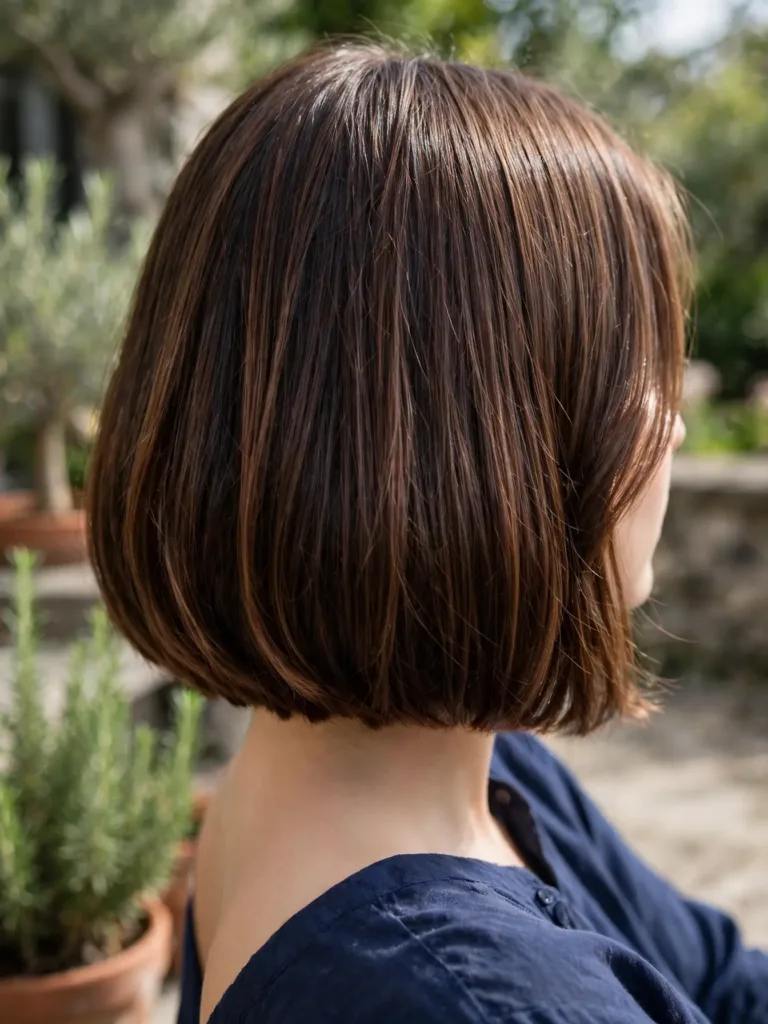
Color makes or breaks the old money bob haircut. Keep two ideas separate. Depth means how light or dark the shade is. Undertone means the warm, cool, or neutral cast underneath. Depth does most of the expensive work. Medium to dark depths reflect more light and hide damage better than pale shades. Undertone is personal; pick the cast that flatters your skin and let depth carry the richness.
Three shade families nail the brief. Rich brunettes (espresso, chestnut, dark chocolate) are the classic old money base. Dimensional blondes (buttery, honey, softly rooted) work when the grow-out stays soft. Glossy coppers (amber, auburn) read rich when the tone stays even and saturated.
Two rules protect the investment. First, keep contrast low. Harsh regrowth lines and stark highlights scream high maintenance in the wrong way. A root melt or lived-in dimension keeps grow-out graceful. Second, keep tone even. Patchy, faded color kills shine because light scatters off uneven surfaces. A toner refresh every few weeks costs little and keeps the shade uniform.
Tell your colorist you want depth, evenness, and shine, in that order. Those three words steer the appointment better than any photo filter.
The Curved-Under Blowout, Step by Step
The blowout builds the signature shape. Do it on clean, conditioned hair, and give yourself twenty unhurried minutes the first few times. Speed comes with practice.
Step 1: Prep for Lift

Start with damp, towel-dried hair. Work a golf-ball-sized amount of volumizing mousse through the roots only. Then rough-dry upside down until hair is about seventy percent dry. This pre-lift stops roots from drying flat against your head. Clip the top two-thirds up so you can work the bottom layer first.
Step 2: Smooth With a Round Brush
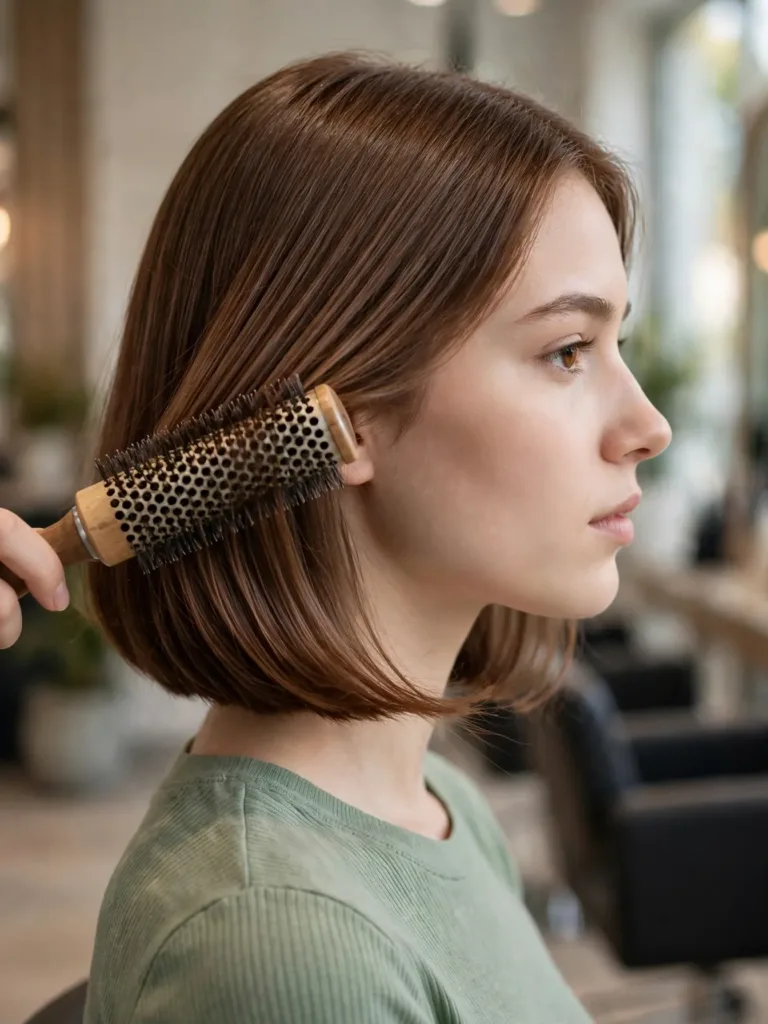
Take two-inch sections and pull each one taut over a medium round brush. Aim the dryer nozzle down the hair shaft, from roots to ends. Downward airflow seals the cuticle and builds shine. Keep the brush moving so heat never sits in one spot. Work from the nape upward, releasing one clipped section at a time.
Step 3: Bend the Ends Under

At the last two inches of each section, roll the brush inward toward your chin. Hold for three slow counts before releasing. This single move creates the curved-under signature. Do not over-roll, or the ends will curl instead of bending. For softer texture on short hair, see these wavy bob haircut ideas for an undone alternative.
Step 4: Set With Cool Air

Hit each finished section with the dryer’s cool-shot button for five seconds. Cool air locks the shape and adds shine because it closes the cuticle you just smoothed. Skip this and the curve loosens within the hour. Patience here pays off all day.
Step 5: Seal With Shine, Not Weight

Warm one to two drops of shine serum between your palms and press it over the mid-lengths and ends. Keep product off the roots or lift collapses by noon. Less is more; you can add a second drop, but you cannot remove buildup without rewashing. The result should feel like hair, not product.
The Upkeep Calendar That Keeps It Rich
An old money bob haircut is a maintenance look. The finish fades on a schedule, and the calendar below keeps you ahead of it. Put these on repeat and the expensive effect never fully leaves.
| Service | How Often | Why It Matters |
|---|---|---|
| Precision trim | Every 6-8 weeks | Keeps the blunt perimeter crisp and removes split ends before they travel |
| Gloss refresh | Every 4-6 weeks | Salon gloss fades in 4-6 weeks; a refresh restores mirror shine and tone |
| Toner or root melt touch-up | Every 6-8 weeks | Keeps color even and grow-out soft so light reflects uniformly |
| Deep-conditioning mask | Weekly at home | Healthy, hydrated hair holds shine; dry hair scatters light and looks dull |
Between appointments, wash with a sulfate-free shampoo to protect both gloss and toner. Heat protectant is non-negotiable before every blowout. Sleep on a silk or satin pillowcase to cut morning frizz, which is the enemy of a polished perimeter.
What an Old Money Bob Haircut Costs
Prices vary by city, salon tier, and stylist level. Treat these as a rough US guide as of fall 2026, and ask for an estimate at your consultation.
A precision bob cut typically runs $55-$120 at most salons. Real menus back this up. Johnny Rodriguez The Salon in Plano lists women’s cuts from $55. Highlight Salon in Miami lists $75 and up for a cut alone. Ohana Salon lists $80 and up for a cut and style.
A gloss is cheapest as an add-on. Booked with a cut or color, expect roughly $30-$60 extra, based on a 2026 industry pricing roundup. As a standalone service, gloss usually runs $45-$150. Teddie Kossof Salon lists gloss from $45. Platinum Salon and Spa in Kansas City lists $65-$80, and Ohana Salon lists a $47 gloss add-on.
A professional blowout lands around $40-$75 (Platinum lists a lux blowout at $60; Highlight lists $65 and up). Plan roughly $100-$200 for a first visit covering cut plus gloss add-on, before color. Dimensional color adds $130 or more on top. If your budget is tight, get the cut-and-gloss foundation right first.
Five Details That Make a Bob Read Cheap
Even the right old money bob haircut falls apart when small details slip. Watch for these five; each one has a fast fix.
Frayed, see-through ends. Thin ends scatter light and erase the crisp line. Fix: book the 6-8 week trim and ask your stylist to dust the perimeter.
Harsh regrowth lines. A hard line where roots meet color breaks the rich, even read. Fix: ask your colorist for a root melt or shadow root at your next visit.
Frizz at the crown. Flyaways rough up the polished surface the whole look needs. Fix: finish every blowout with the cool shot, and smooth a pea-sized drop of serum over the crown.
Over-texturized layers. Wispy, shredded ends remove the thick, full perimeter this style depends on. Fix: grow them out with regular dusting, and tell your stylist you want weight at the edge.
Product buildup. Heavy waxes and oils coat the hair and dull shine instead of adding it. Fix: clarify once a month with a clarifying shampoo, then re-gloss.
Old Money Bob Haircut FAQs
What Is an Old Money Bob Haircut?
An old money bob haircut is a chin-to-collarbone bob defined by an expensive finish. Think mirror shine, a crisp blunt edge, curved-under ends, and lifted roots. The name comes from the quiet-luxury aesthetic, not from any single cutting technique.
What Makes a Bob Look Expensive?
It comes down to four things: shine from healthy, glossed hair and a precise, full perimeter. Add ends that curve under smoothly, plus rich, even color. Condition and precision create the effect, not the specific silhouette.
Do I Need a Gloss Treatment for the Old Money Look?
Almost certainly yes. Gloss is the fastest route to the mirror shine this style depends on, and it also evens out tone. A salon gloss lasts 4-6 weeks; at-home glossing kits exist but fade faster.
What Should I Ask My Colorist for an Old Money Bob?
Ask for depth, evenness, and shine, in that order. Request a rich base with low-contrast dimension and a root melt for graceful grow-out. Bring photos that show the finish you want, not just the cut.
What Length Works Best for the Old Money Bob?
Most versions sit between the jawline and the collarbone. Chin length sharpens the jawline; collarbone length softens the look and suits longer faces. Your stylist can fine-tune within that range.
Can I Get the Old Money Look at Home Without Salon Visits?
You can get close. A careful blowout with a round brush, a weekly mask, and an at-home gloss build much of the finish. The crisp perimeter still needs a professional trim every 6-8 weeks, though.
Final Thoughts
The old money bob haircut rewards care more than daring. No extreme cut or bold color carries it; condition, precision, and shine do all the talking. Good news: care is a calendar, not a gamble.
Book the trim, add the gloss, and protect the shine between visits. Save two reference photos showing the finish clearly. Use the salon language from this guide at your appointment. Give the curved-under blowout one try this week. The expensive look follows the upkeep.