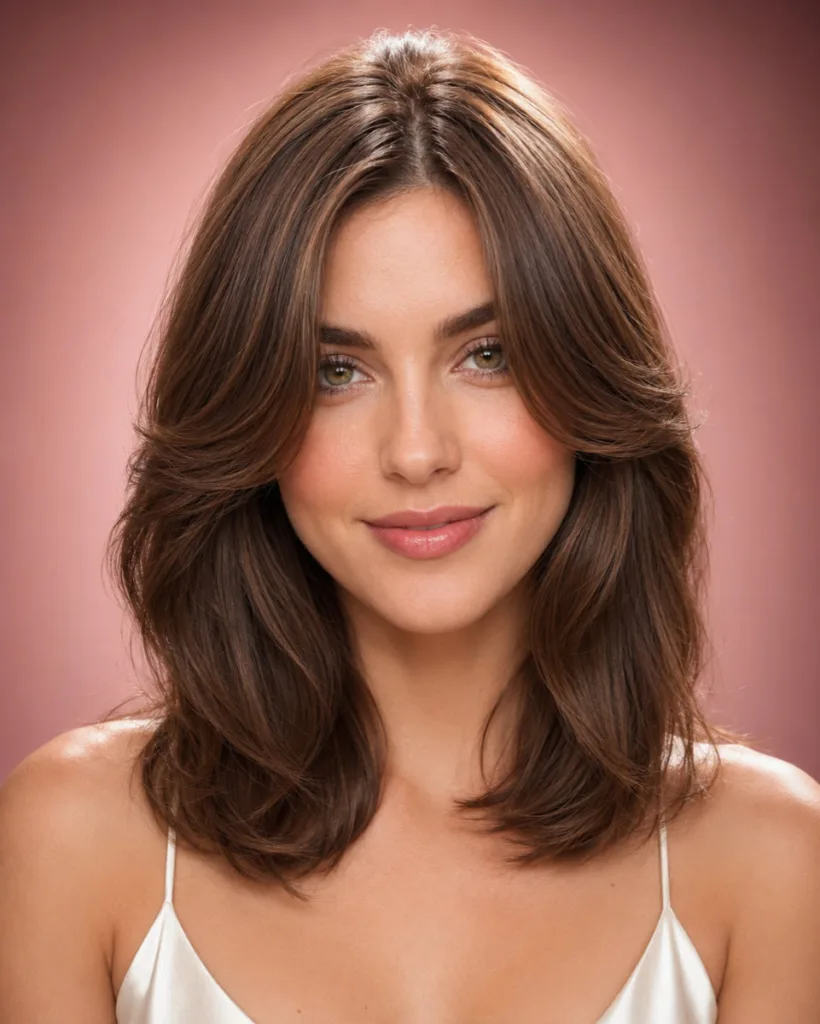
25 Ways To Wear Red Highlights In Brown Hair
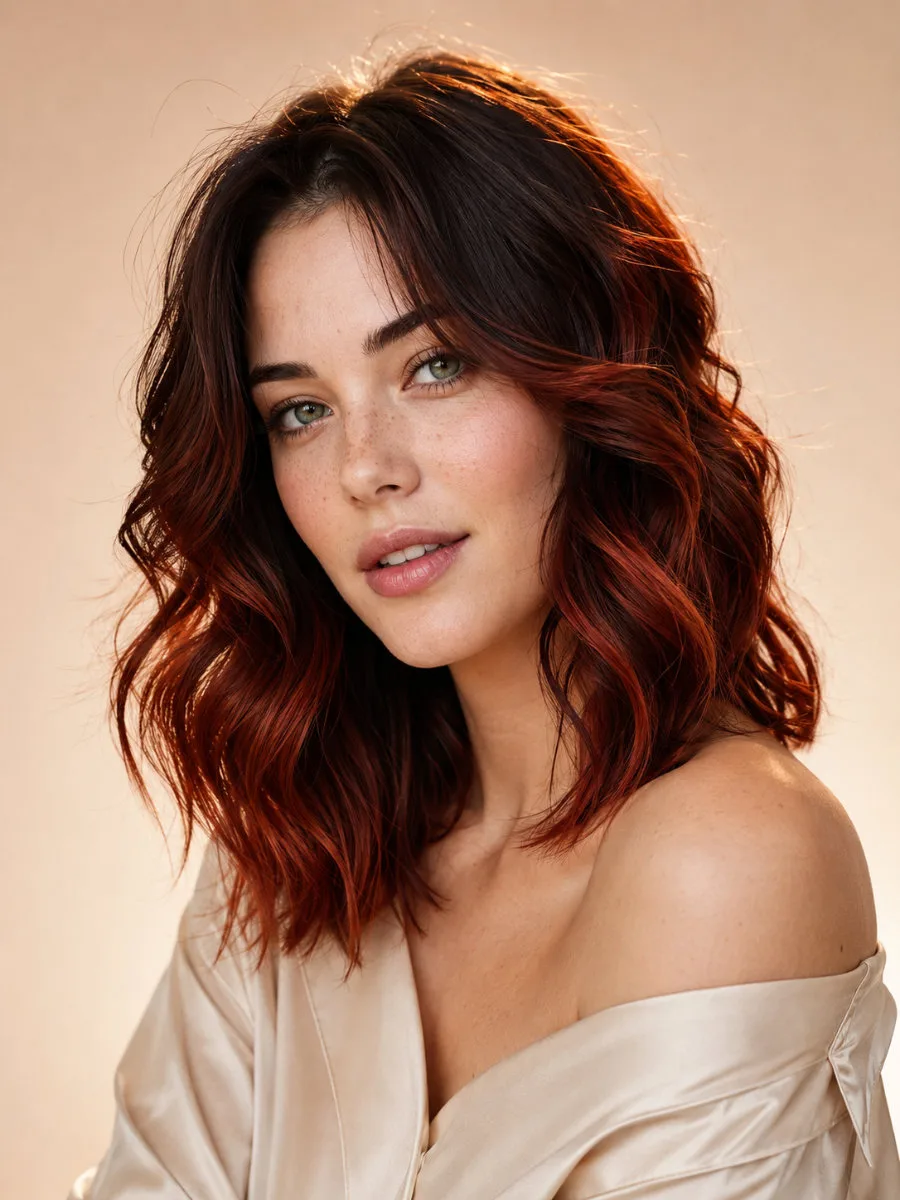
Ever wonder why your brown hair looks flat in photos, even when it is freshly styled? The answer is almost never the lighting. It is the absence of red. Red tones already sit in the undertones of most brown hair. Highlights do not add a foreign color. They pull out what was already there. The difference shows in the way hair catches light and photographs with visible depth instead of reading as one flat tone.
The 25 styles below cover everything from barely visible auburn baby lights to vivid crimson balayage, each matched to a specific shade, skin tone, and commitment level. Some read as natural brunette variations. Others read as a deliberate color choice from across the room. This guide covers both.
Why Red Highlights Look So Good On Brown Hair
Brown and red share natural warmth. Red highlights on brown hair amplify what was already there. The red tones were sitting in the undertones of your base color all along.
The contrast also adds real depth. Instead of a flat, one-note brunette, your hair catches light differently from different angles. That is partly why red highlights photograph so well and why red highlights keep turning up in hair inspiration feeds.
Red also reads as a statement with no all-over color needed. You keep your brown base, add some contrast, and leave the salon looking noticeably different, with less commitment than most other color services.
Choosing The Right Red Shade For Your Skin Tone
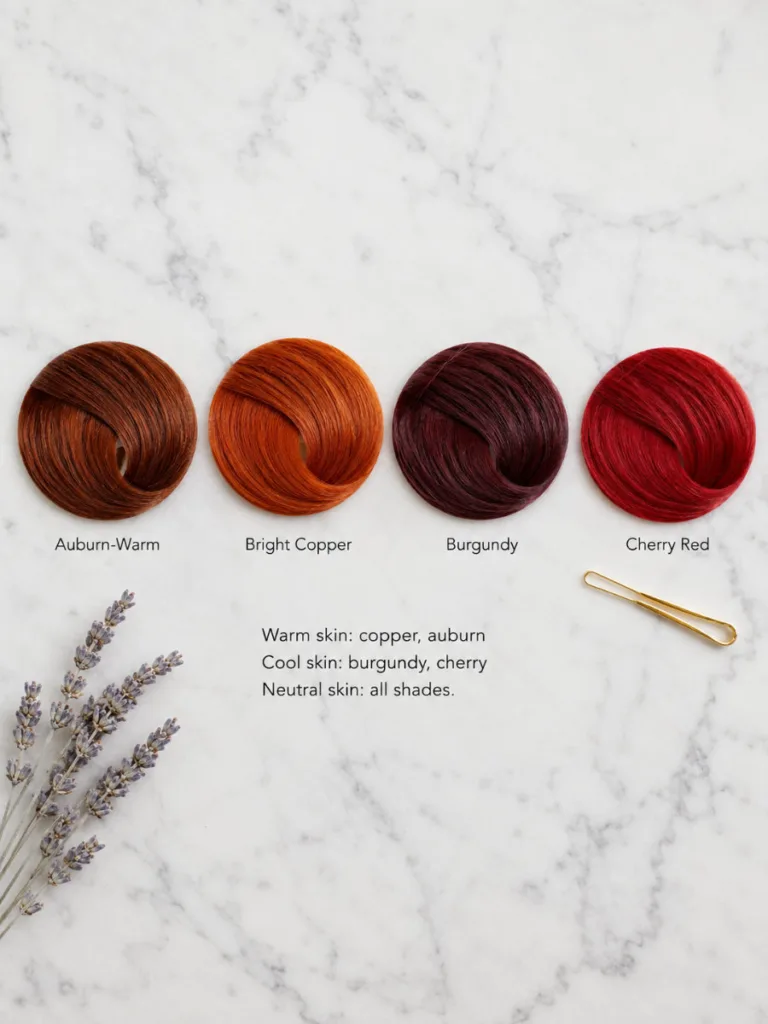
Not every red works on every brunette. The wrong shade can pull sallow against your skin or fade into muddy orange within a few weeks. Matching your undertone to your red tone is the step most people skip, and it matters more than the specific shade name.
Warm Skin Tones
If your skin has golden, peachy, or olive undertones, you already carry warmth in your complexion. Copper and auburn highlights echo that warmth and read as almost natural on warm skin. Cinnamon red is another solid option here. The shade leans earthy and wears well across multiple seasons.
Cool Skin Tones
Cool-toned skin has pink, rosy, or bluish undertones. Warm reds like copper tend to clash. On cool skin, the orange quality of copper pulls against the complexion. Burgundy and cherry carry a cooler, deeper hue that works with rosy skin. Wine reds sit in a similar register. Violet-based reds, sometimes called black cherry or magenta red, work well on deeper cool skin tones, where the purple depth balances your undertone.
Neutral Skin Tones
Neutral undertones give you the most options. If your skin sits somewhere between warm and cool, crimson, raspberry, and rosewood highlights will all work. Test your preferred shade against your inner wrist in natural light before committing. With so many reds available to you, pick the one that makes your eyes stand out.
Save this shade guide to your hair color board. It is useful to have when you sit down with your colorist.
25 Ways To Wear Red Highlights In Brown Hair
These styles cover the full range from subtle warmth to vivid contrast. Each one suits a different base shade, skin tone, and level of color commitment.
1. Auburn Babylights
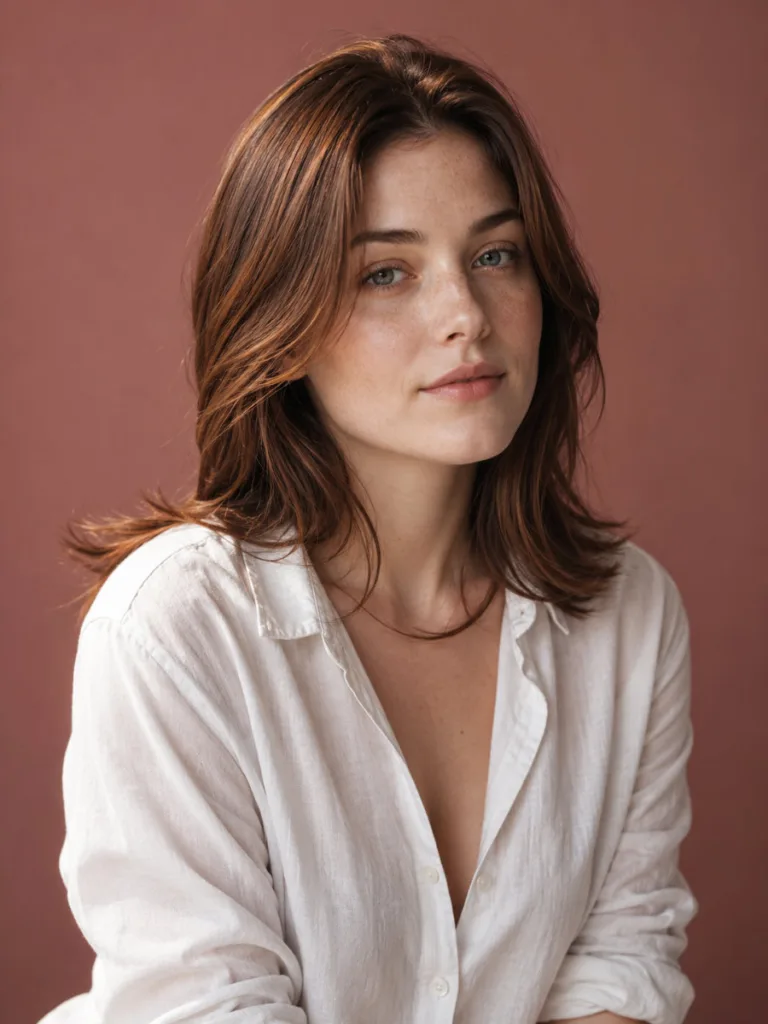
Best for: First-time red color, medium to dark brunettes, all skin tones, lowest commitment
Auburn babylights are ultra-fine color sections placed throughout the hair in a warm red-brown that sits close to most natural brunette shades. Because the highlights are so fine, they do not create a visible line between colored and uncolored hair. The effect looks like natural color variation. It is the lowest-commitment red option on brown hair. It suits medium and dark brown bases with minimal pre-lightening on most brunettes. The auburn tone holds its warm-red hue without shifting toward orange. Grow-out is clean because there is no hard root contrast. It is also the easiest option to reverse or take deeper if you want more color later.
2. Cinnamon Balayage
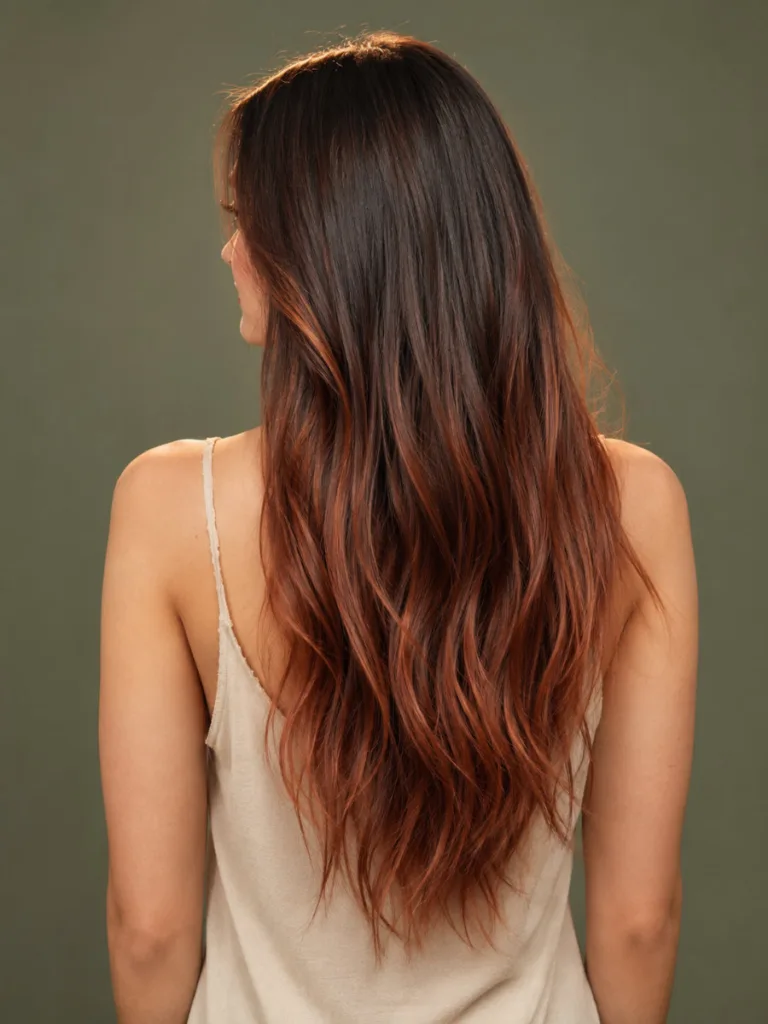
Best for: Medium and light brunettes, warm and neutral skin tones, professional settings, year-round wear
Cinnamon balayage applies warm cinnamon-red tones to the hair using a freehand painting technique. The color is swept through the mid-lengths and ends in irregular sections that vary by strand. The result is a gradient with varied section widths. On brown hair, cinnamon balayage creates a warm look that reads naturally in outdoor light. The shade is earthy and muted, sitting close to a natural brunette tone. That keeps it wearable across seasons and in professional settings. Since the technique leaves roots untouched, the grow-out is gradual with no hard root line. It suits medium and light brown bases best.
3. Rosewood Streaks
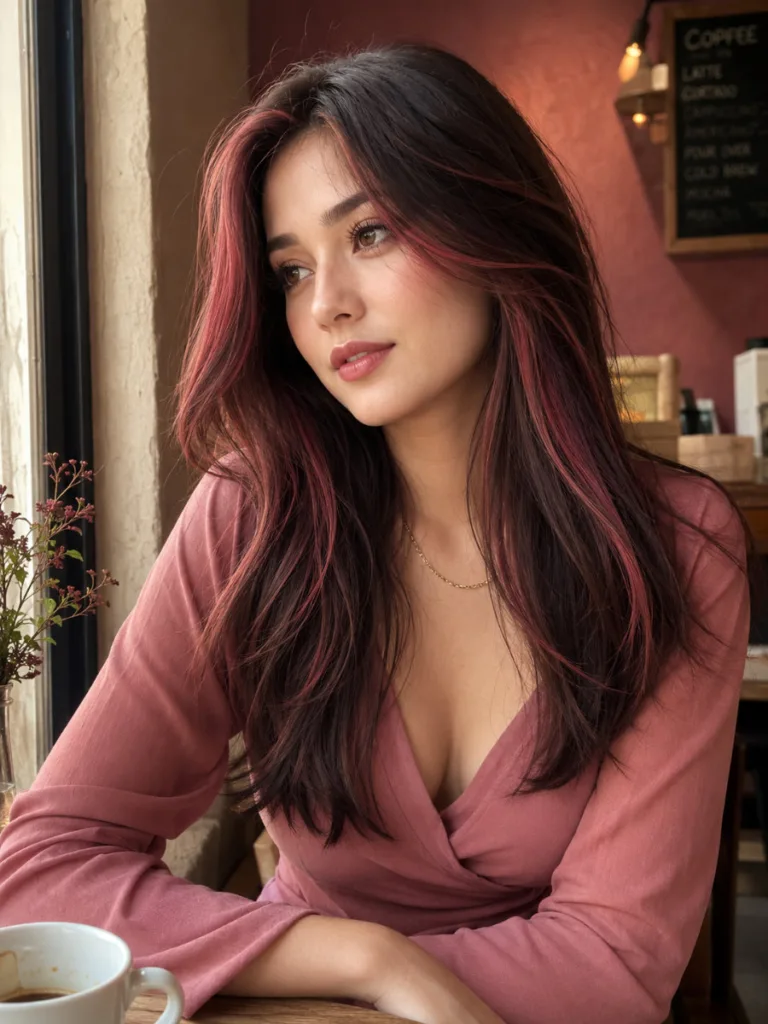
Best for: All skin tones, medium to long hair, subtle color shift, contemporary result
Rosewood is a red-pink tone that sits between burgundy and rose gold. As streaks through brown hair, it adds subtle warmth that shows up most in natural light and photographs well without the overprocessed quality of vivid reds. The pink undertone separates rosewood from standard auburn or copper. That gives it a more contemporary feel. On dark brown hair, rosewood streaks create soft contrast, which suits people who want color without a dramatic shift. The shade is warm enough to complement most skin tones and neutral enough to suit both warm and cool complexions. It works best on medium to long hair where the streaks have enough length to show distinctly.
4. Deep Auburn Highlights
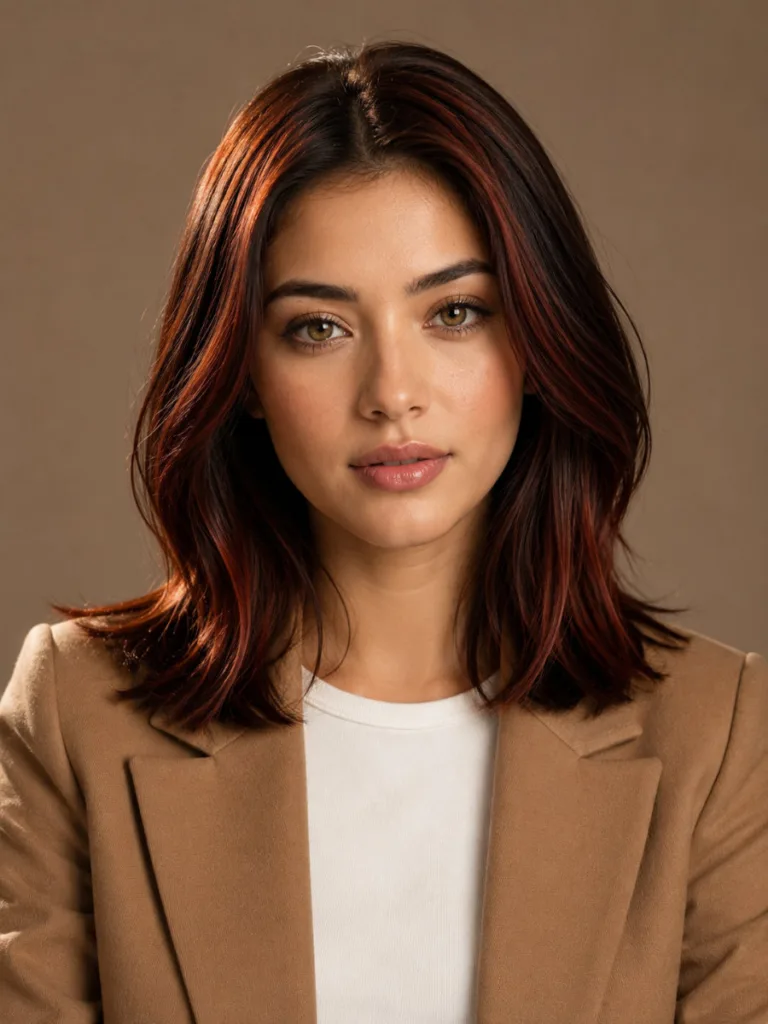
Best for: Dark brunettes, professional environments, warm and neutral skin tones, subtle dual-light effect
Deep auburn is a dark red-brown that sits close to natural hair color on medium and dark brunettes. Placed throughout the top layer of brown hair, these highlights add warmth and depth. The look stays subdued overall. In low or indoor light, the hair appears a rich uniform brown. In direct sunlight or natural light, the red tones become visible and give the hair a warm, multidimensional appearance. This dual quality works well for people in professional environments where a subtle look matters. Most brown bases take the color with minimal pre-lightening. The application stays straightforward, with reduced damage risk. Warm and neutral skin tones carry this shade well. Deep auburn is one of the most searched auburn-highlighted brown hair variations because it works on the widest range of brunette bases.
5. Terracotta Tones
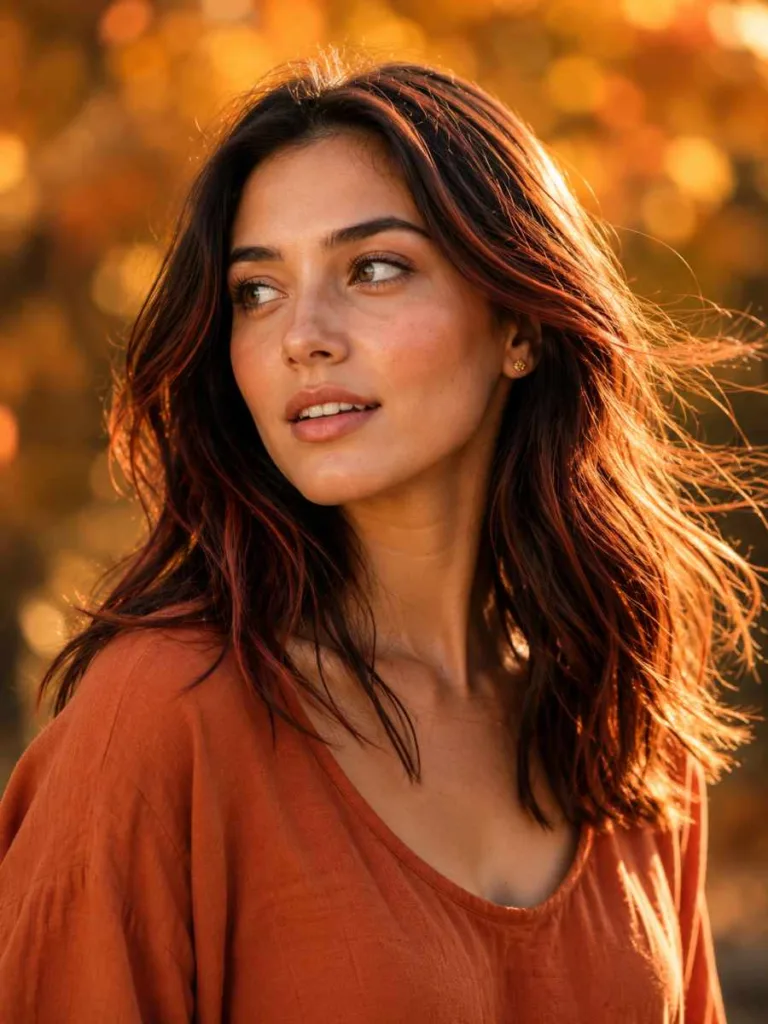
Best for: Warm and neutral skin tones, natural-looking result, all seasons, medium to dark brunettes
Terracotta is an earthy, muted red-brown that references the warm, clay-like pigments in natural earth tones. On brown hair, terracotta highlights add a warm richness. The tone sits between copper and standard red, muted and earthy. The shade is desaturated enough to read as a natural variation in brunette color. It suits people who want warmth with a natural-looking finish. Terracotta suits warm and neutral skin tones well, where the earthy pigment echoes the natural warmth in the complexion. It moves between seasons and works from early autumn through spring on a single application.
6. Bright Copper Highlights
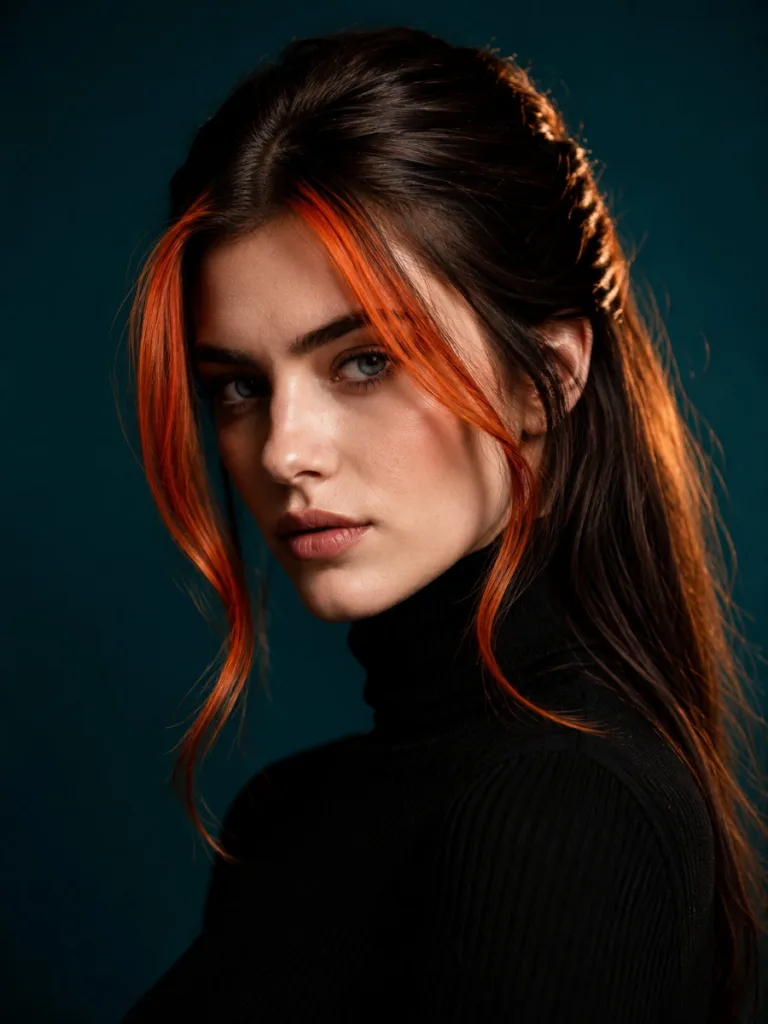
Best for: Warm and neutral skin tones, dark to medium brunettes, bold contrast, face-framing placement
Bright copper highlights sit between red and bronze. The result is a warm metallic contrast against a dark or medium brown base. Auburn leans toward brown; bright copper carries a clear orange-red that catches light visibly. On a dark chocolate base, the contrast is striking. The copper sections stand out as individual strands against the dark base. This look works best for warm and neutral skin tones, where the orange warmth of copper echoes the natural pigment in the complexion. On cool skin, the orange quality of copper can pull against pink or rosy undertones. Bright copper is one of the most requested copper highlights for brown hair looks for dark brunette bases. Face-framing placement shows off that contrast with less commitment than all-over application.
7. Ginger Balayage
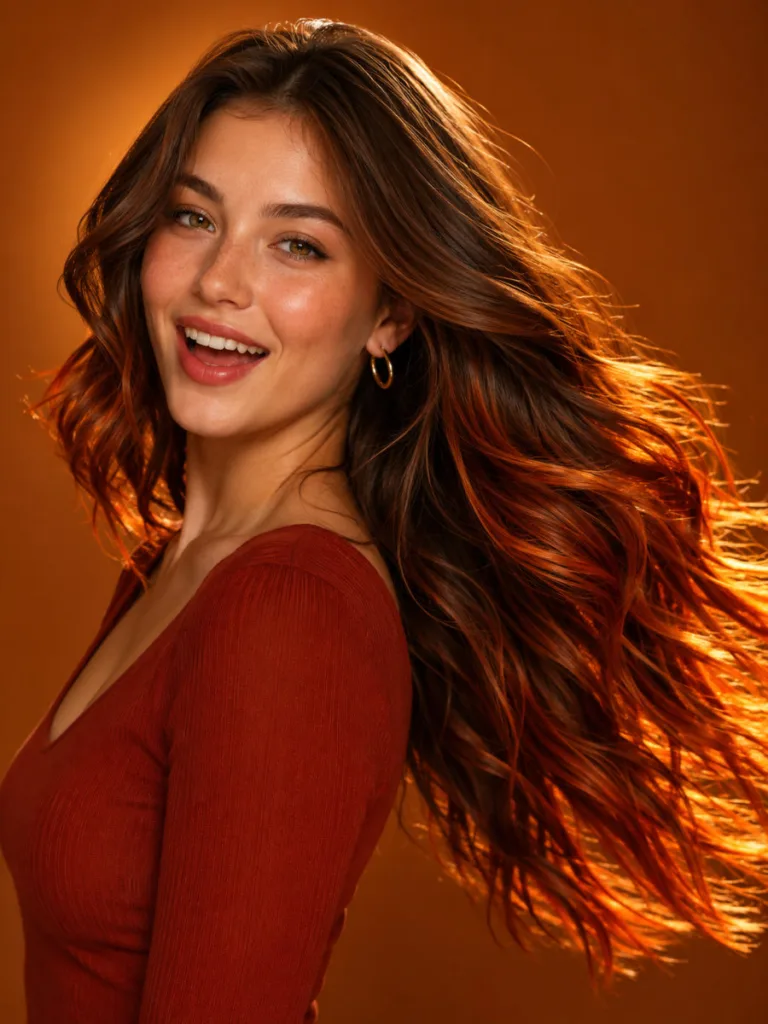
Best for: Medium brunettes, warm skin tones, wavy or textured hair, vivid warm-red result
Ginger balayage applies a vivid warm-red tone through medium-brown hair using a freehand technique. The shade is brighter and more saturated than copper, with a red-orange quality that appears almost three-dimensional when the hair is in motion. Because the colorist applies it in irregular sections across the mid-lengths and ends, the ginger tone shifts depending on how the hair falls. On loose waves or natural movement, the color catches light at multiple angles. Ginger works best on medium brown bases, where the base lightness gives the ginger enough room to show at full saturation. On very dark bases, ginger may need a lightening step to show up as a distinct warm-red tone. Red balayage on brown hair in the ginger family works best when the base is medium brown or lighter.
8. Warm Copper Face-Framing Pieces
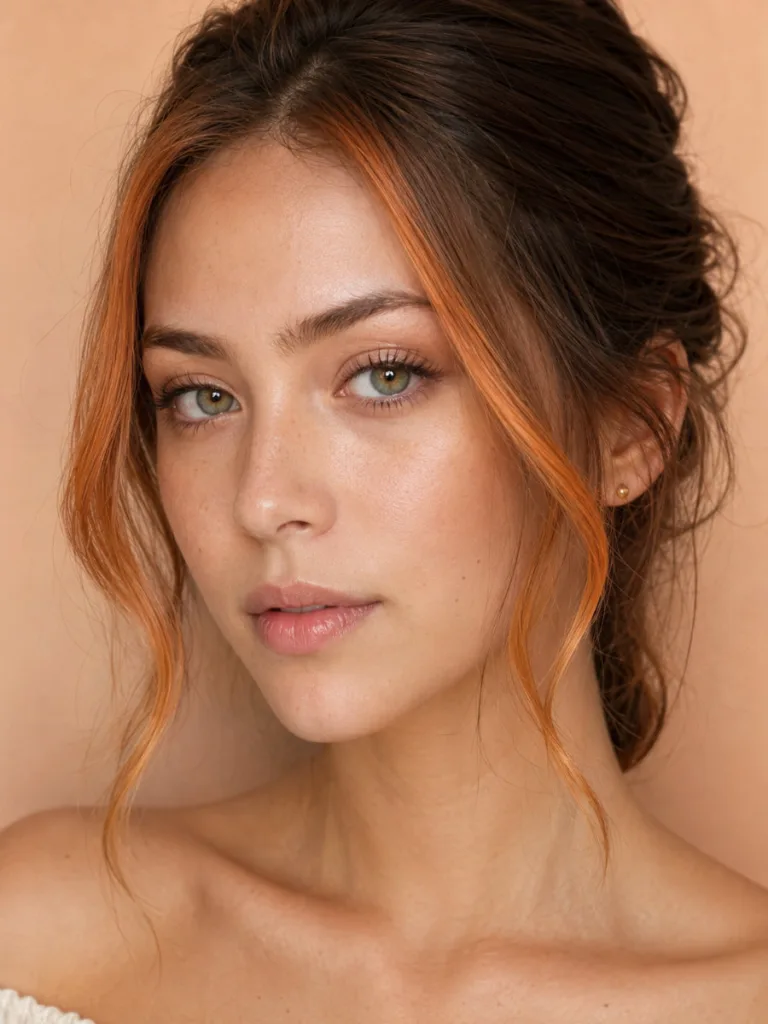
Best for: Warm and neutral skin tones, medium to long hair, low commitment, high visual impact
Face-framing copper highlights go at the sections closest to the face: the temples, the hairline beside the cheeks, and sometimes the pieces that frame the forehead. Because only the front sections receive color, this is one of the lower-commitment applications in the copper family. The warm copper tone brightens the complexion at the most visible part of the hair. The bulk of the hair stays in its natural brown, which keeps the look easy to maintain. Touch-ups only involve the front sections at each appointment. This style works best on medium-length or longer hair where the face-framing pieces have enough length to show clearly.
9. Mahogany Red Highlights
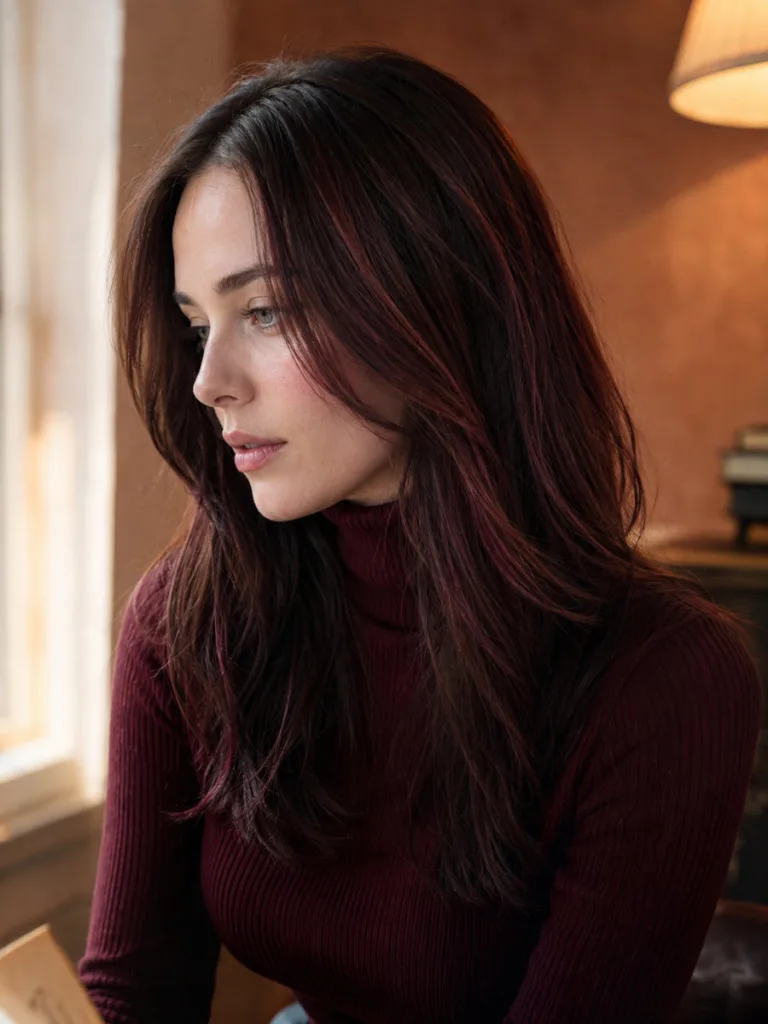
Best for: Cool and neutral skin tones, medium to dark brunettes, depth without vivid color, professional settings
Mahogany is a dark red-brown with a distinctly cool undertone that sets it apart from auburn, cinnamon, and the copper family. Auburn pulls toward orange warmth. Mahogany carries red depth that reads close to neutral in its coolness, closer to a deep reddish wood tone than any sun-warmed shade. Placed throughout dark or medium brown hair as foil highlights or scattered sections, mahogany creates visible depth and richness without a vivid result. In indoor light the color reads as a dark, multi-tonal brown. In direct natural light, the red depth becomes clearly visible. It suits cool and neutral skin tones where warm reds like copper tend to clash. Most medium brown bases take the color with no pre-lightening.
10. Copper Ombre
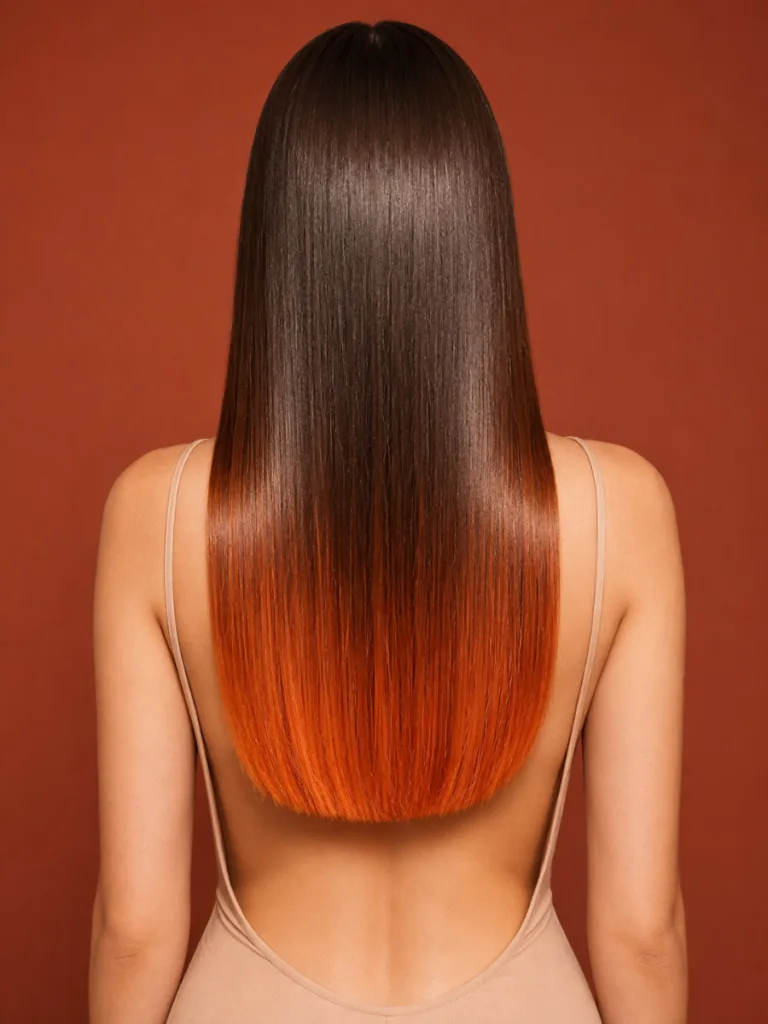
Best for: Dark to medium brunettes, wavy or textured hair, grow-out friendly, gradient lovers
A copper ombre transitions from a natural brown base at the roots to vivid copper tones at the mid-lengths and ends. The transition is gradual, typically spanning several inches before the copper becomes fully saturated at the tips. On wavy or textured hair, the contrast between brown and copper shifts as the hair moves. The gradient is more visible and dynamic than on straight hair. Dark bases usually need pre-lightening at the ends for the copper to appear at full warm-red saturation. The grow-out is clean because the roots stay in the natural color. Regrowth blends naturally.
11. Burgundy Highlights
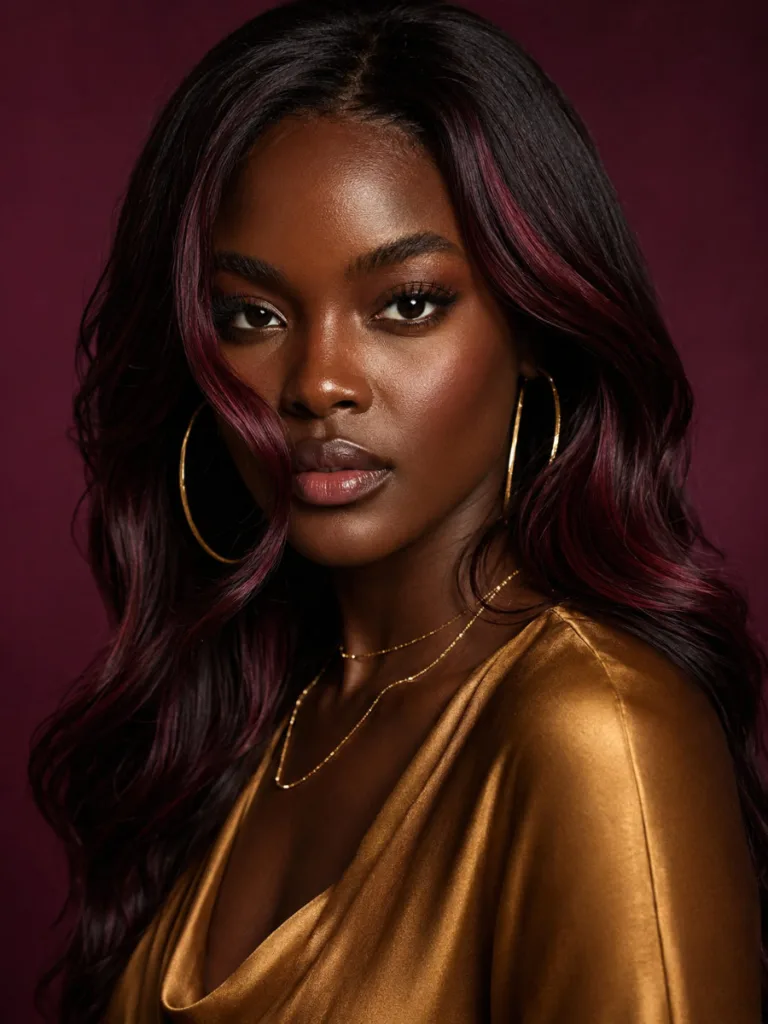
Best for: Cool and neutral skin tones, dark brunettes, professional settings, low-lightening requirements
Burgundy is a deep red with a distinct purple or wine undertone that separates it from warmer reds like copper or cherry. On dark espresso or very dark brown hair, burgundy highlights appear almost black in dim indoor light and reveal their red-purple richness in sunlight or direct light. This dual quality makes burgundy one of the more versatile reds. It reads subdued in professional settings and shows its full richness in natural light. Burgundy suits cool and neutral skin tones best, where the purple depth harmonizes with pink or rosy undertones. Most dark brown bases take burgundy with minimal pre-lightening. Burgundy highlights on brown hair are one of the few reds that register clearly on very dark bases without aggressive lightening. Dark brunettes trying red for the first time will find it one of the more forgiving options.
12. Wine Red Streaks
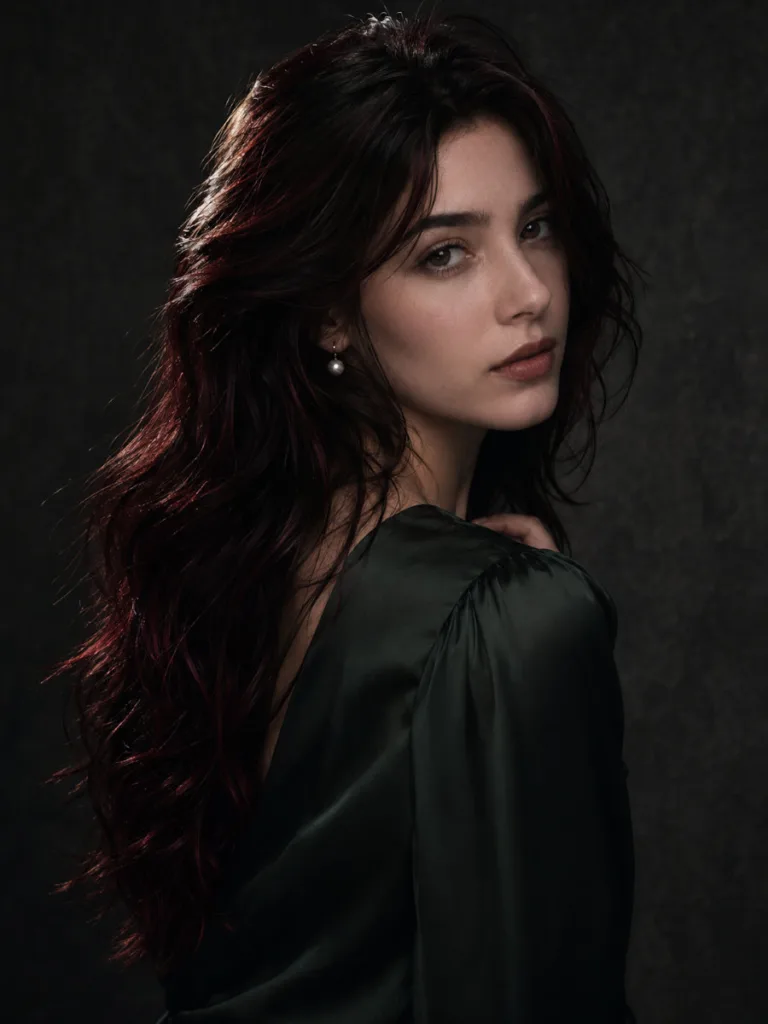
Best for: Cool and neutral skin tones, medium to long hair, moody depth, dark brunettes
Wine red is a deep, dark red that leans slightly toward purple, warmer in tone than burgundy. As streaks through medium-length or long brown hair, wine red adds visible richness to the full length. The streaks are distributed throughout the hair for even warmth across the full length. Wine red sits at the darker end of the red spectrum. It shows up well on medium brown bases but may need a light pre-lightening step on very dark espresso hair. It suits cool and neutral skin tones and photographs well under both indoor and outdoor lighting.
13. Dark Cherry Highlights
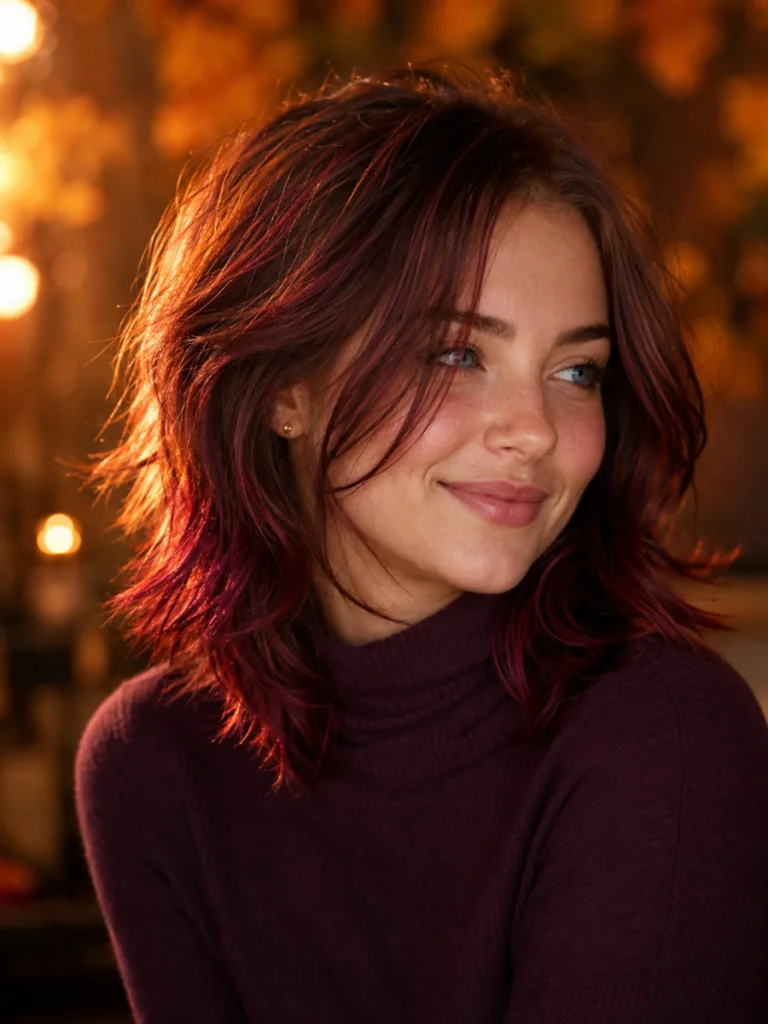
Best for: Cool and neutral skin tones, layered or choppy cuts, autumn and winter, medium brunettes
Dark cherry sits between burgundy and bright cherry red, deeper than classic cherry and warmer than burgundy. On brown hair, dark cherry highlights create clear contrast and stay within a natural-looking color range. The shade shows up well on layered or choppy cuts, where individual sections separate as the hair moves and the color becomes visible through that movement. Medium brown bases take the tone with light or no pre-lightening. Dark cherry suits cool and neutral skin tones and works well in autumn and winter when the rich, dark tone feels seasonally appropriate. Cherry red hair highlights in this deeper shade suit people who want depth over vivid contrast. The color fades gradually toward warm auburn, and the grow-out stays wearable.
Save your favorites from this list before scrolling further. With 25 options, it is easy to lose track of the ones that stood out.
14. Black Cherry Ombre
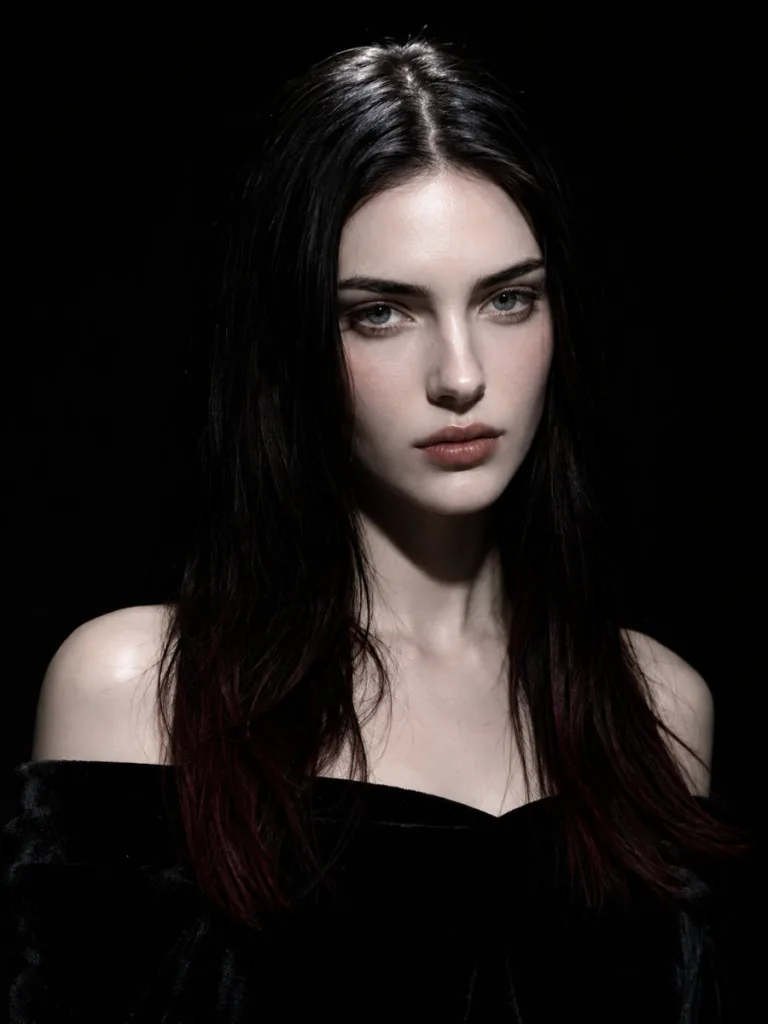
Best for: Very dark brunettes, cool and neutral skin tones, dramatic results, low-maintenance grow-out
Black cherry ombre starts at a near-black or very dark espresso base and transitions to a deep cherry black at the ends, where both red and dark tones are present simultaneously. The transition is gradual and produces a look that reads almost fully dark in low light. In direct sunlight, the red depth shows. This is the most dramatic of the darker red options because the contrast between the very dark base and the cherry ends reads as intentional without crossing into fashion-color territory. It suits darker skin tones and cool or neutral complexions well. The grow-out is clean because the roots are intentionally dark. Touch-ups are minimal between appointments.
15. Magenta-Burgundy Balayage
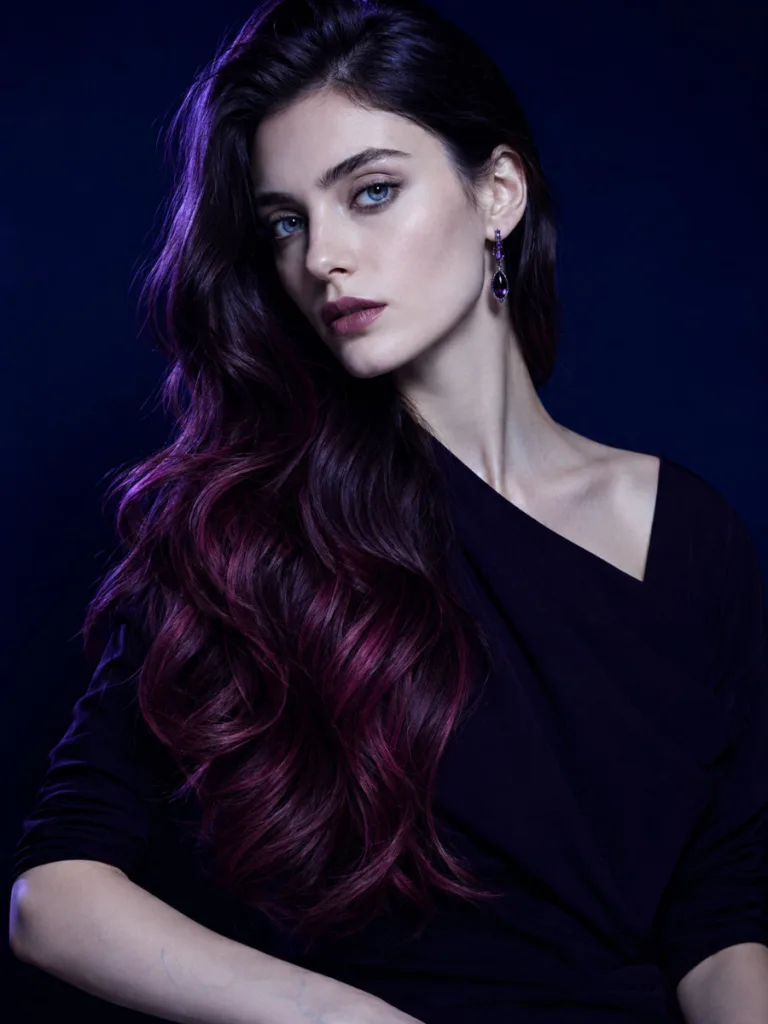
Best for: Cool skin tones, dark brunettes, vivid fashion-forward colors, and pre-lightening required
Magenta-burgundy balayage combines a vivid purplish-red tone with the deeper, cooler quality of burgundy in a freehand application. The magenta element pushes the color further into vivid territory than standard burgundy, with enough depth to keep it from reading flat. On dark brown hair, this combination appears as a rich, layered color that shifts between deep purple and vivid red depending on the light. The freehand balayage technique places color in varied sections. The result is more organic than foil. This look suits cool skin tones and people who want color that reads as a deliberate color choice. Dark bases need pre-lightening.
16. Bright Cherry Red Face-Framing Highlights
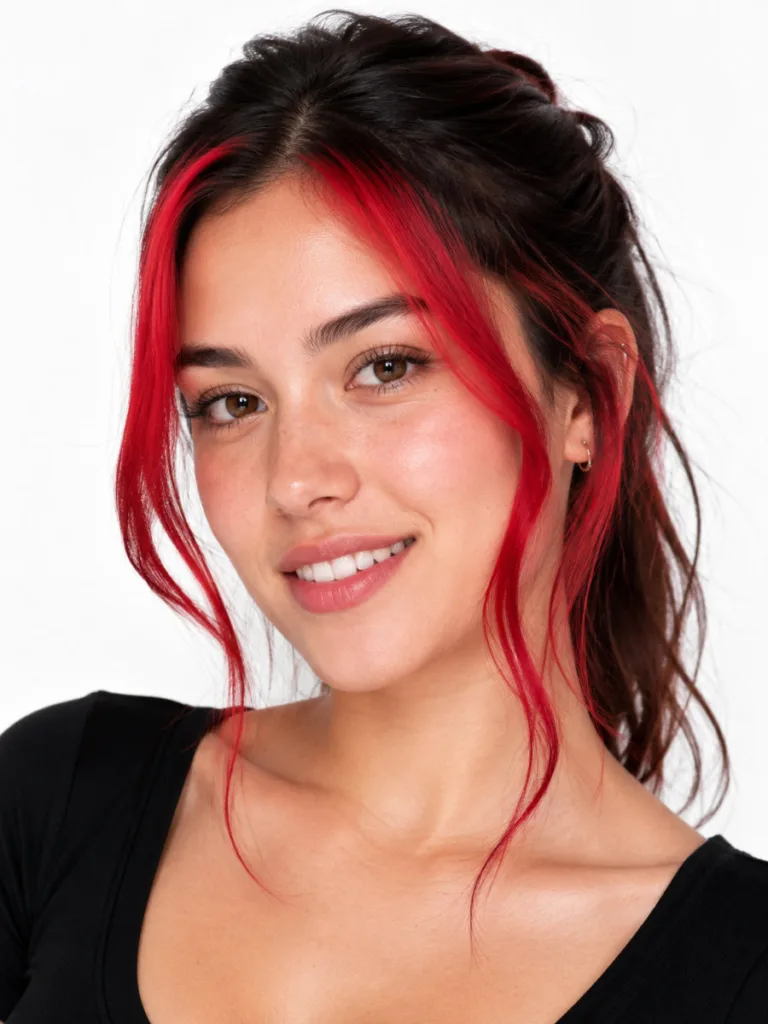
Best for: All brunette bases, face-framing placement, medium- to low-commitment, vivid contrast
Bright cherry red face-framing highlights place vivid cherry color at the temple sections, the pieces beside the cheeks, and the strands that frame the forehead. Because the color is concentrated at the front of the head, it shows up in face-to-face conversation and in photos with no all-over color needed. Cherry red creates the sharpest contrast against dark brown hair in this color family. The two tones separate sharply with no blending. The natural brown on the rest of the hair keeps the overall look balanced. This application is also easier to maintain. Only the front sections need touching up at each appointment.
17. Crimson Balayage
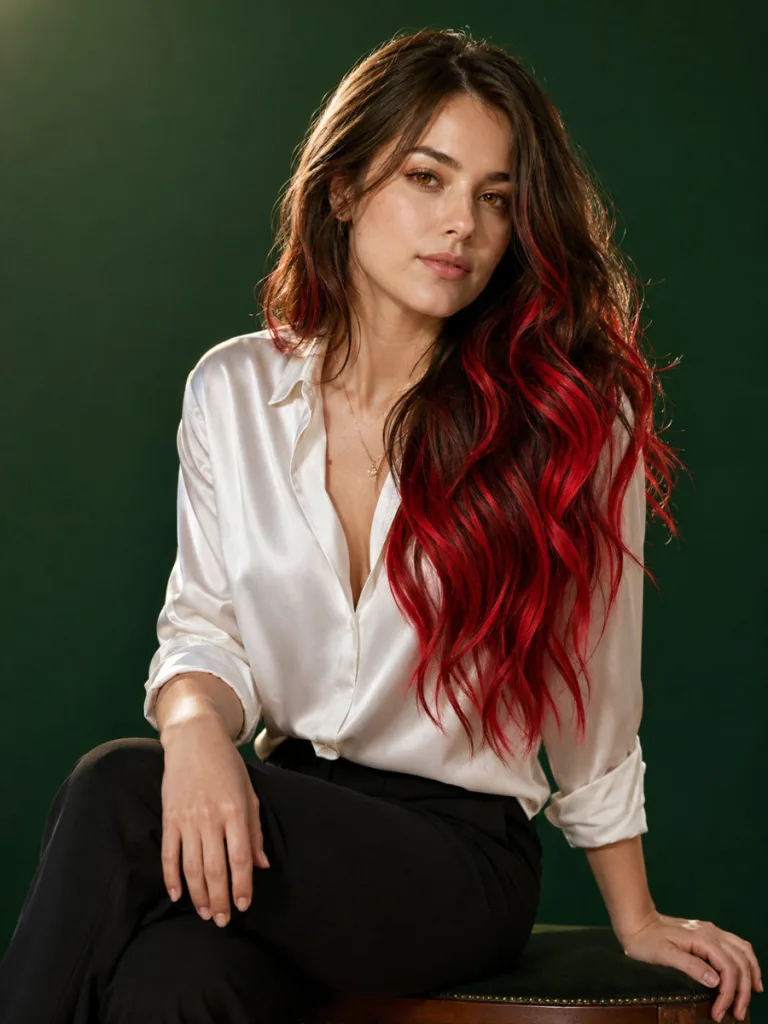
Best for: Medium brunettes, bold direct red statement, all skin tones, vivid red without warm or cool lean
Crimson is a pure, vivid red, distinct from copper’s orange quality and burgundy’s purple depth. As a balayage, the colorist brushes it freehand through the mid-lengths in irregularsections that vary in width and placement by strand. The result is more irregular than foil highlights and blends into the brown base more gradually. Crimson shows up as a straightforwardly red tone with no warm or cool lean. It is one of the more direct color statements in this list. On dark brown hair, a pre-lightening step is usually needed for crimson to read as a true red at full saturation. Crimson works best on medium brown bases where the base is light enough for the color to show.
18. Vivid Scarlet Streaks
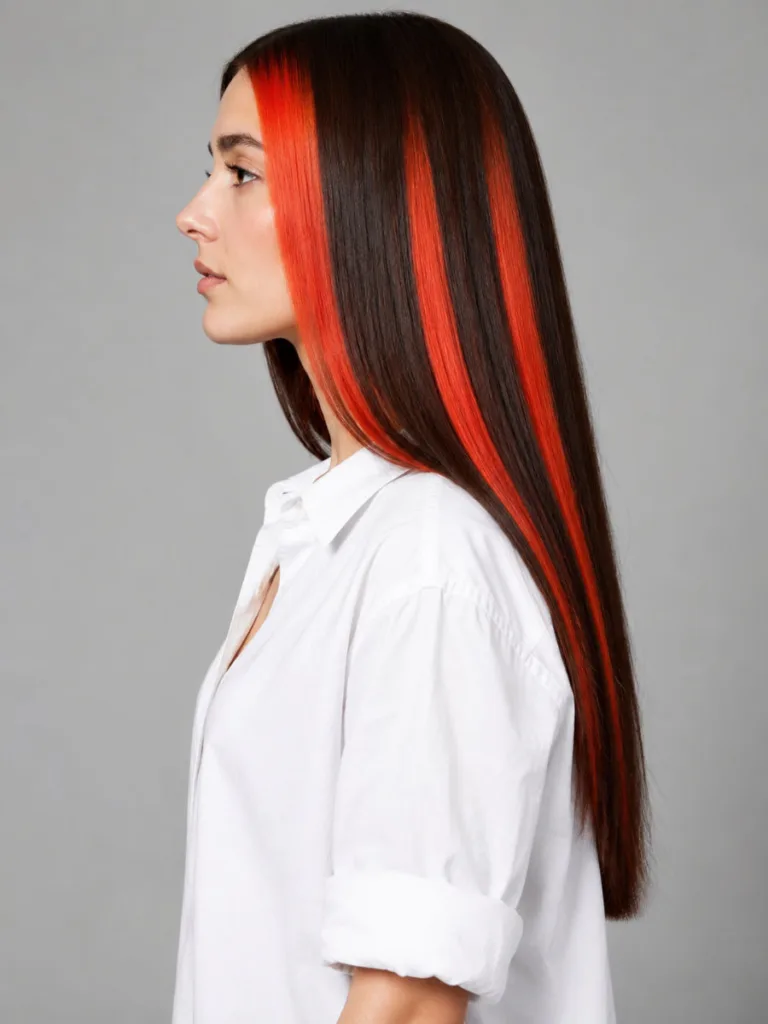
Best for: Warm and neutral skin tones, high-contrast statement, medium to dark brunettes, thick defined sections
Vivid scarlet is a bright, pure red that leans slightly orange compared to crimson. As streaks through dark or medium brown hair, scarlet sits in thick, defined sections visible from a distance. The streaks read as a deliberate, high-contrast choice. On a very dark brown base, the contrast between the scarlet and the underlying hair is the highest of any style in this list, and on that same base, it reads almost jewel-like against the dark base. Dark bases almost always need pre-lightening for the color to appear as a true, bright scarlet. It suits warm and neutral skin tones and photographs with strong saturation in natural light.
19. Two-Toned Red Highlights
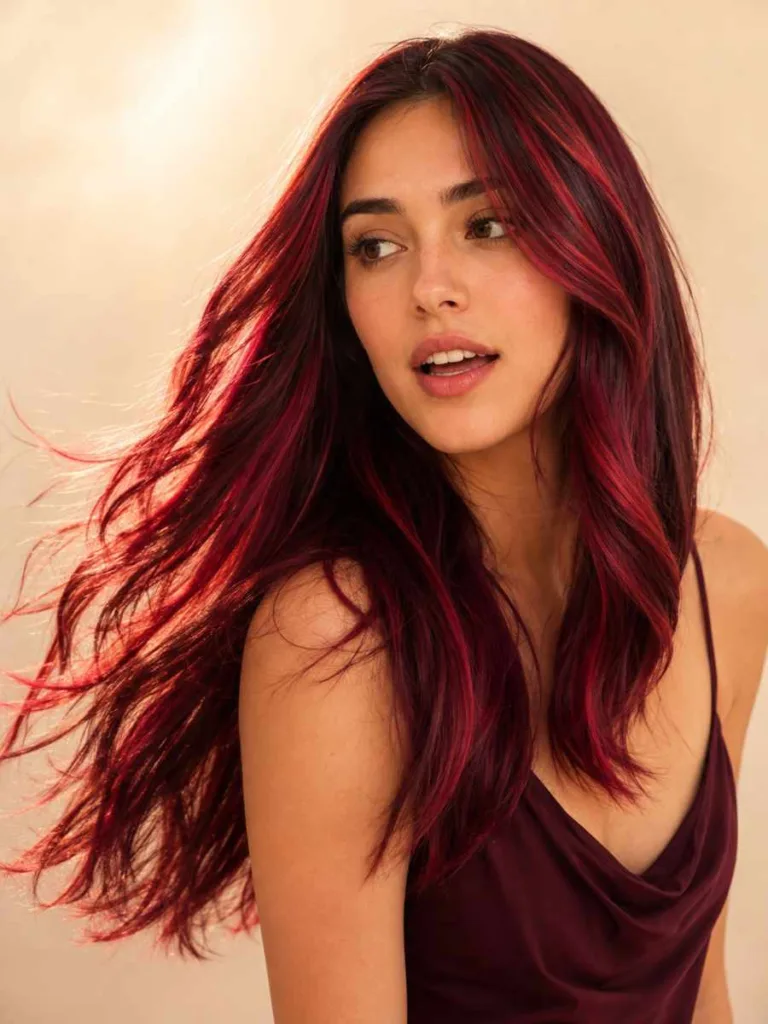
Best for: Medium to long hair, anyone wanting depth and dimension, all skin tones, layered color effect
Two-toned red highlights use both a lighter and a darker red shade in a single color appointment. A common combination is cherry paired with burgundy, or copper paired with auburn. The variation between the two tones produces more depth and movement in the finished color than a single shade delivers. In different lighting conditions, the two tones shift independently. The lighter tone picks up light; the darker tone reads richer in shadow. This approach suits anyone who finds single-tone highlights look flat or uniform across the hair. It works well on medium and long hair where there is enough length for both tones to show as two distinct tones.
20. Raspberry Red Tips
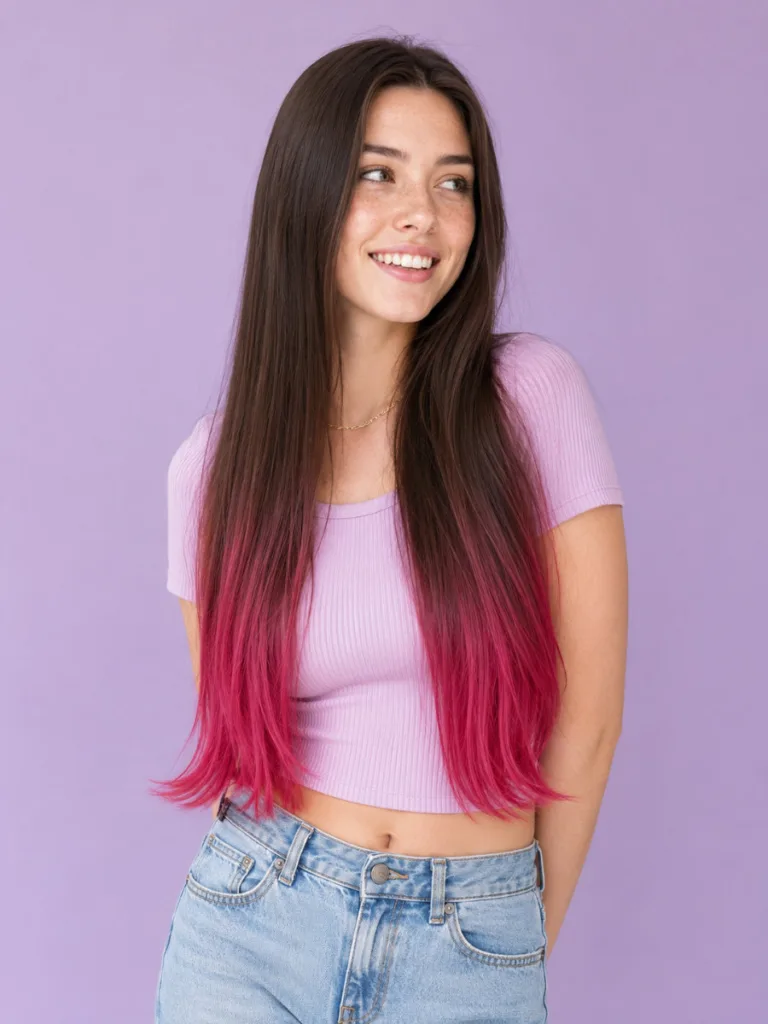
Best for: Medium to long hair, cool and neutral skin tones, ombre lovers, pink-red tone preferences
Raspberry red tips create an ombre transition from a natural brown base to a vivid pink-red at the ends of the hair. The raspberry tone is pink-red in tone, distinct from copper’s orange warmth or crimson’s cooler quality. The transition is usually placed at the mid-length or lower so the brown section stays dominant and the raspberry concentrates at the ends. On medium and long hair, the raspberry section has enough length to be visible and distinct. Because the roots remain in the natural color and the transition is gradual, this style holds its shape between appointments longer than all-over color.
21. Brick Red Highlights
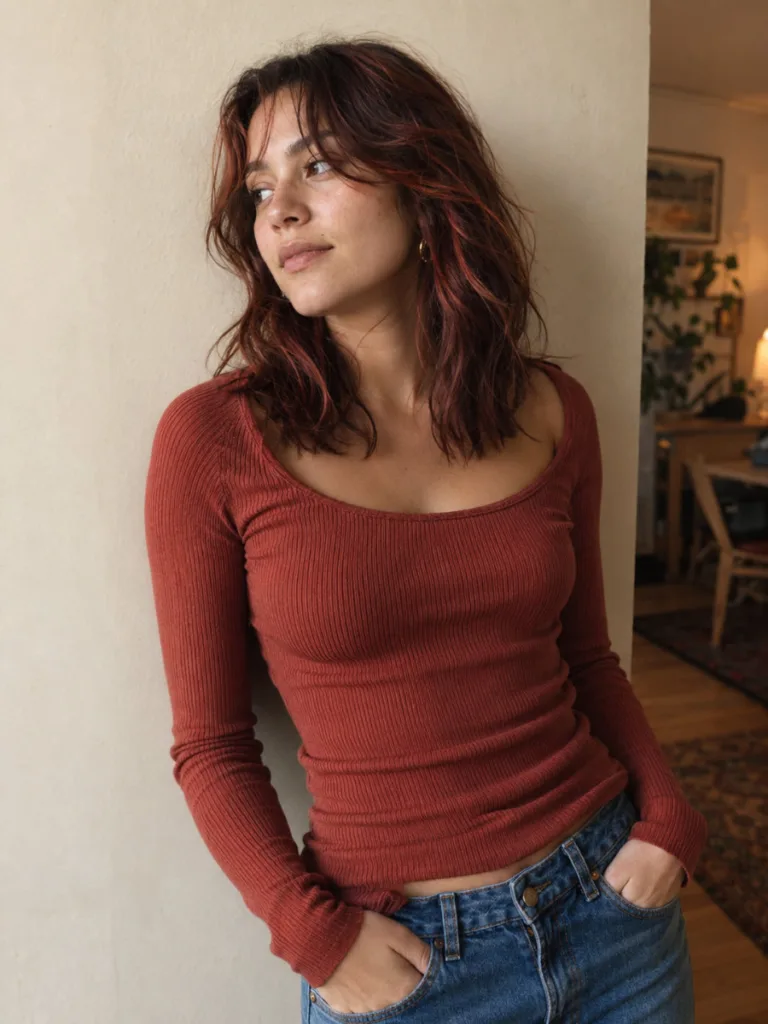
Best for: Warm and neutral skin tones, medium brunettes, earthy statement colors, low-to-medium commitment
Brick red is a muted, clay-warm red with earthy depth, warmer and more saturated than terracotta but without the vivid quality of copper or scarlet. The shade sits in a warm mid-range between earthy and bold, readable as a deliberate color choice without tipping into fashion-color territory. On medium brown hair, brick red highlights create clear contrast that reads warm and earthy in daylight and rich brown-red indoors. The muted quality of the shade means it fades toward warm auburn, not flat or orange. It suits warm and neutral skin tones and works as an all-over balayage application or in thicker, defined foil sections depending on how much contrast you want.
22. Strawberry Red Highlights
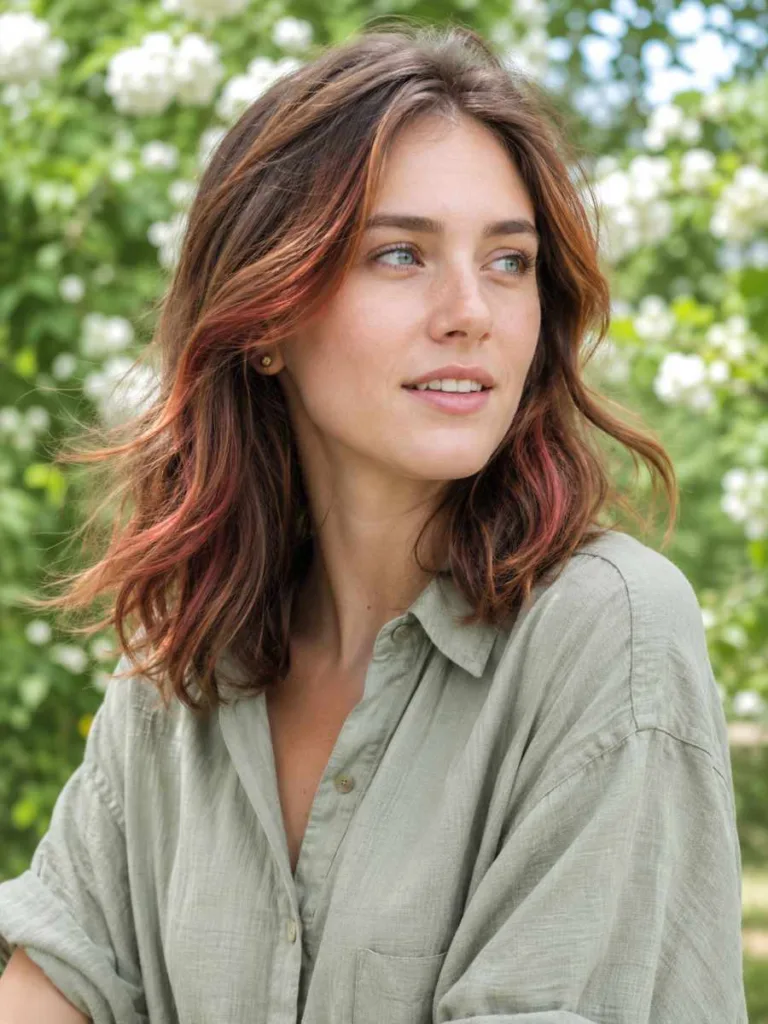
Best for: Fair to medium brunettes, warm skin tones, lighter playful reds, and low pre-lightening on light bases
Strawberry red is a warm, light red with a brightness that sits between copper and raspberry. Compared to copper, it has no orange lean. Compared to raspberry, it has no cool pink tint. The warmth and brightness sit in their own distinct register between the two. On light to medium brown hair, strawberry red highlights appear almost luminous in natural light. In sunlight, the color reads differently from deeper, darker reds. The shade is most effective on lighter brunette bases where the contrast between the red and the natural hair lets the strawberry warmth show fully. Very dark bases need a lightening step for the color to register as strawberry. It suits warm skin tones and photographs with strong color accuracy in outdoor light.
23. Deep Wine Highlights
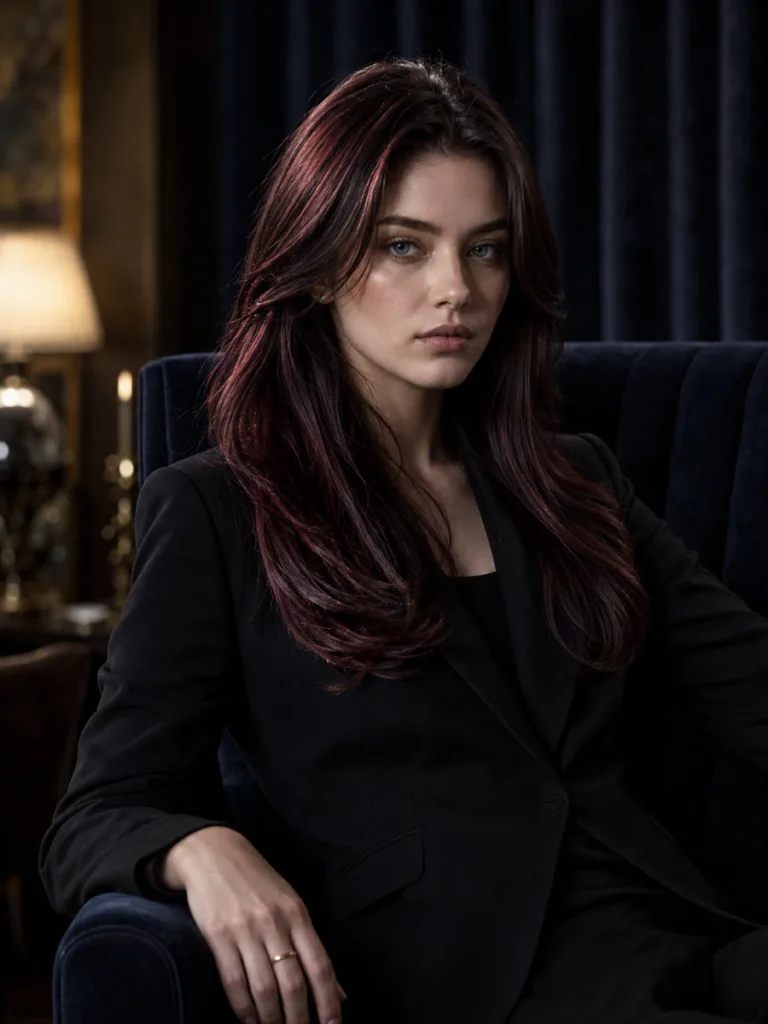
Best for: Cool and neutral skin tones, dark brunettes, discreet depth, moody result
Deep wine is a dark, moody red that leans toward plum without fully entering purple territory. It sits darker and deeper than standard wine-red streaks (style 12), with more visible blue-red depth and a heavier overall tone. Under warm indoor light, deep wine reads as a sophisticated, dark color. In natural light, the red-purple depth becomes visible through the base. The distinction from wine red is most obvious side by side. Deep wine has a more opulent quality that reads closer to a dark berry. It suits cool and neutral skin tones. On dark espresso or very dark brown bases, the wine tone creates subtle contrast that shows mainly in direct light. It is one of the more discreet options in this list and still reads as an intentional choice up close.
24. Chestnut Red Highlights
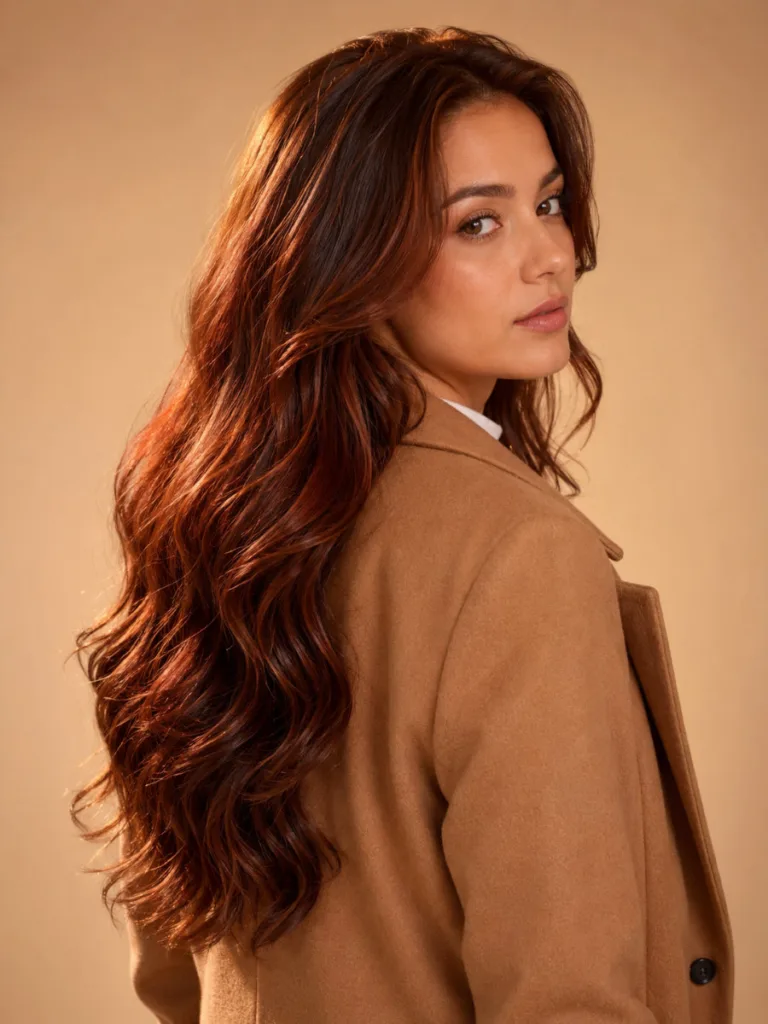
Best for: Warm and neutral skin tones, medium to dark brunettes, rich dimensional warmth, natural-looking depth
Chestnut red is a warm, mid-depth red-brown that sits richer and darker than cinnamon and warmer than mahogany. The shade reads clearly as red, not brown, but the warmth keeps it grounded and wearable. On medium brown bases, chestnut red highlights add a clear warm dimension that deepens in shadow and brightens in light. On dark brown bases, the contrast reads as a warm redness moving through the base color, similar to the way light moves through autumn foliage. The shade suits warm and neutral skin tones and works well in all-over balayage applications where freehand placement creates depth variation across the length.
25. Jewel-Toned Reds Year-Round
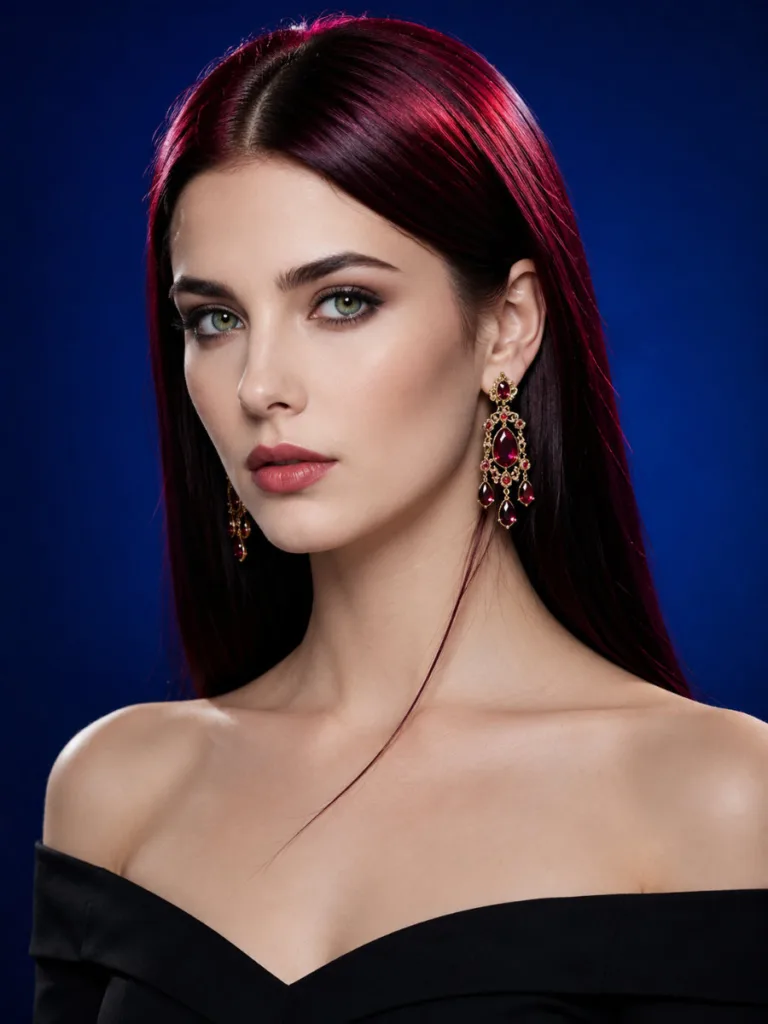
Best for: Cool and neutral skin tones, longer hair, year-round wear, gem-like depth and saturation
Jewel-toned reds include shades like garnet, ruby, and deep cranberry, each with violet, blue, or deep ruby undertones that give the color a gem-like quality. These are distinct from standard burgundy because the saturation is higher and the undertones are more specific. On dark brown or espresso hair, jewel-toned reds create a layered color effect that shifts between deep and vivid depending on the light source. These tones carry no seasonal associations, so they work year-round. They suit cool and neutral skin tones and work well on longer hair, where the depth of color has more surface area to show the full variation in tone.
Ways To Wear Red Highlights In Brown Hair By Texture
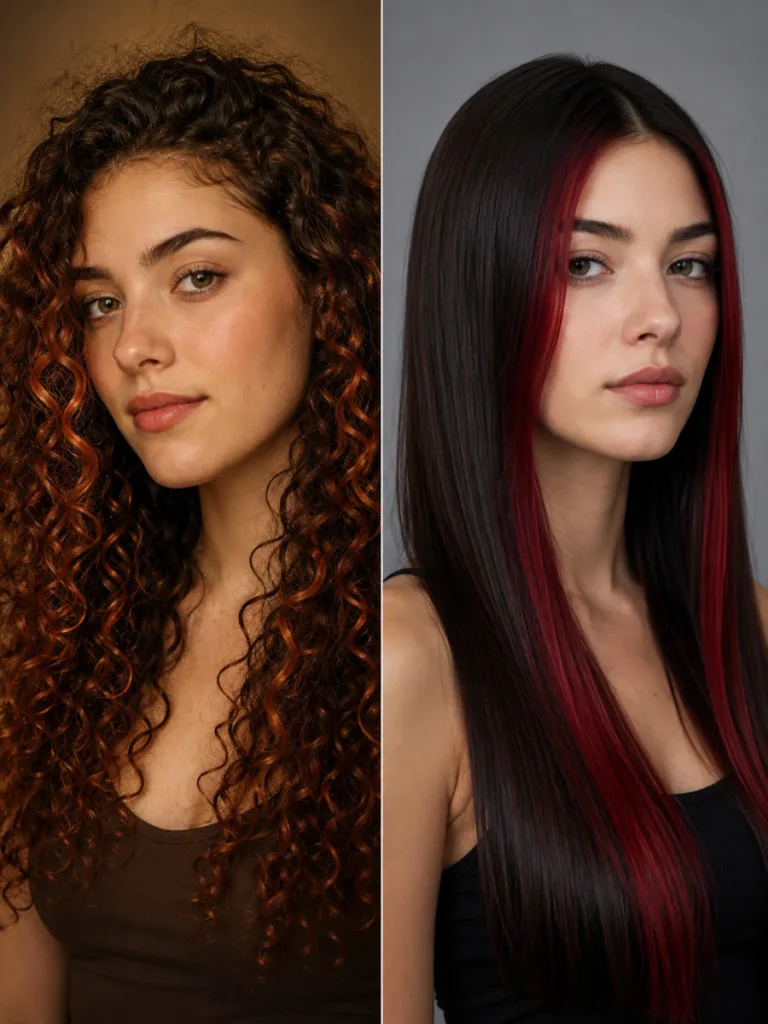
Placement and technique depend on your hair texture. The same shade can look completely different on a tight curl versus a flat, straight strand.
Curly And Wavy Hair
Curly and wavy hair creates natural depth through shape and movement. Red highlights placed on the outermost curls or along wave peaks catch the light at each curve. A scattered balayage sits better in curl patterns than traditional foils. It places color where the light naturally falls on the curl.
Fine curls work best with lighter reds like copper or cinnamon. They add warmth without weighing down the curl. Thicker, coarser curls carry deeper reds better. Burgundy and cherry create good contrast against a dense curl pattern.
Straight Hair
Straight hair shows every highlight as placed. Every section is visible and flat, which means placement precision matters more here than with curly hair. Face-framing red pieces are a high-impact, lower-commitment choice. They only require touching up the front sections and deliver strong visual impact for low overall commitment.
For all-over color on straight hair, foil highlights give the most control over placement and saturation. A mix of fine and slightly chunkier pieces avoids a striped look. Straight hair with bold crimson pieces photographs cleanly because the contrast between the red and brown is easy to read at any distance.
Styling Ideas For Red Highlights On Brown Hair
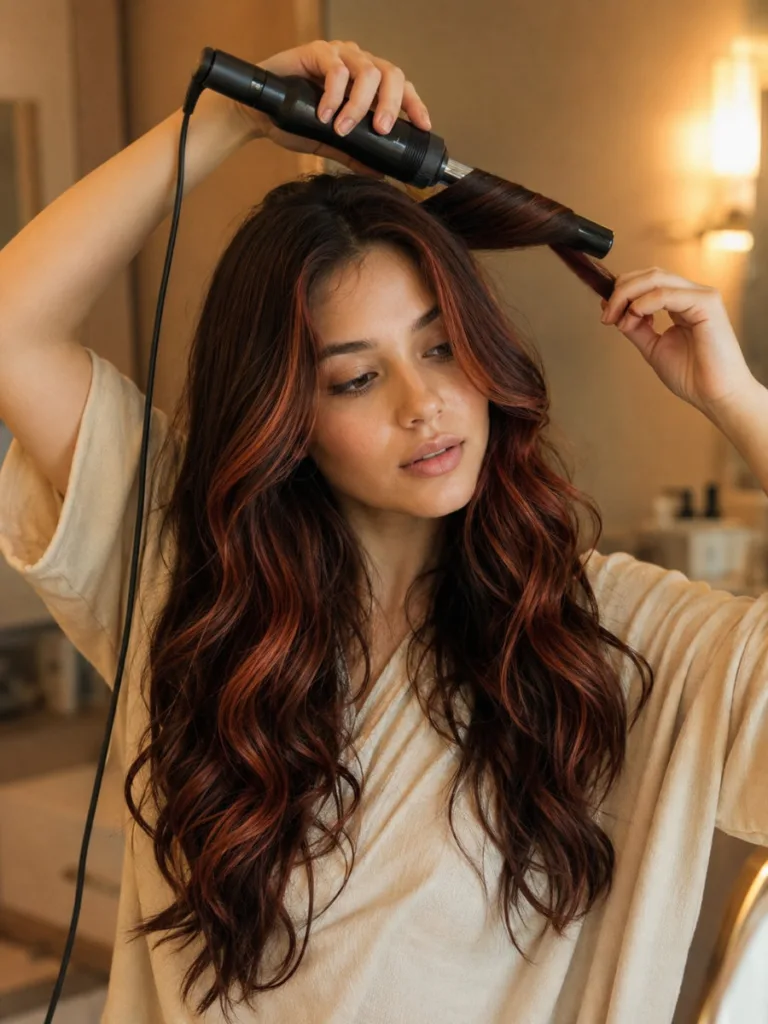
Flat, uniform styling hides the contrast that makes red-on-brown work. Movement and texture reveal it.
Loose waves are the most reliable option for showing highlights. The curves catch light from multiple angles and reveal the red tones. Flat-ironed hair shows them far less. For the same reason, air-dried natural waves often show highlights more than a blowout.
Half-up styles expose both the underneath and top layers at once, so the full range of color shows. The effect is most visible when highlights run throughout the hair.
Braids do interesting things with two-tone colors. A loose fishtail braid or a simple three-strand braid weaves brown and red through each other in a way that looks intentional and almost patterned. A braided updo or French twist for a special occasion makes the color a deliberate part of the hairstyle.
At-Home Vs. Salon: Which Red Highlights Can You DIY?
Most vivid red highlights are a professional job. The exceptions are subtle, close-to-natural shades on hair that is already medium-to-light brown and has not been previously color-treated.
Do at home: Auburn and cinnamon single-process box dye applied as an all-over rinse on medium-brown bases. These shades sit close to natural hair depth, so uneven application is harder to see and easier to correct. A warm-toning gloss product works well on pre-lightened or naturally warm hair that just needs a color refresh between appointments.
Go to a salon for: Anything requiring pre-lightening, balayage or freehand placement; vivid shades (crimson, cherry, scarlet, or magenta); two-tone applications; and anything applied to very dark or previously color-treated hair. The precision and lightening control a professional colorist brings are difficult to replicate at home. Vivid reds applied unevenly are noticeable and hard to fix without stripping.
The clearest rule: if the before-and-after difference is dramatic, book the appointment.
Keeping Red Highlights Vibrant
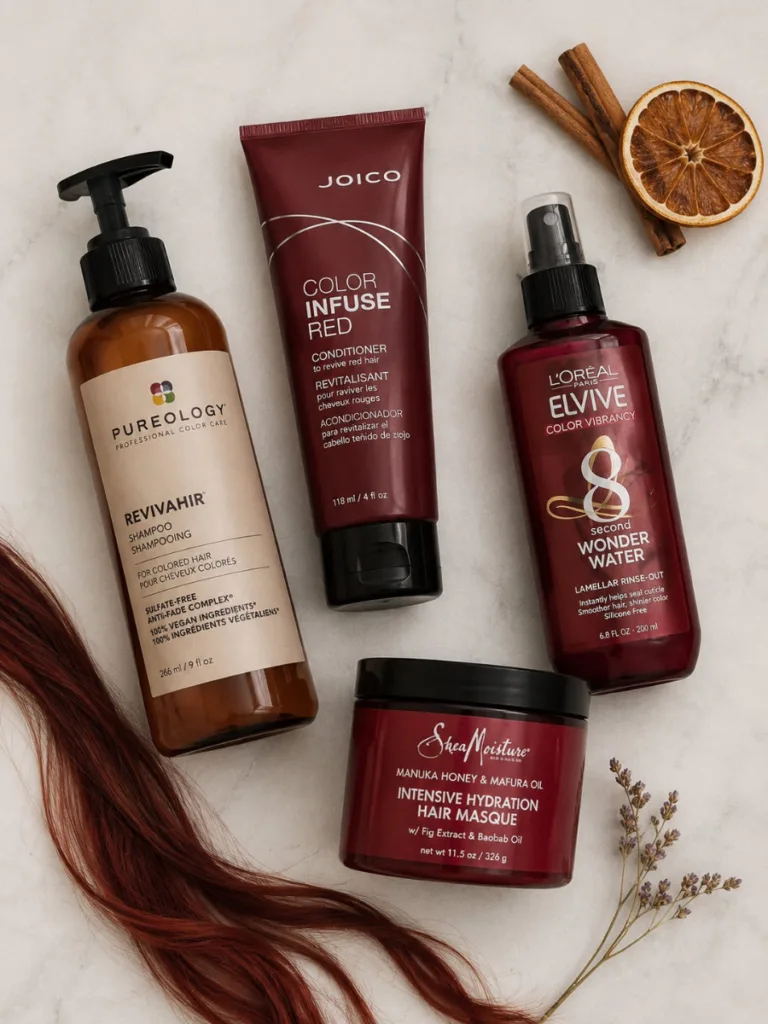
Red fades faster than most other colors, on pre-lightened hair above all. The fade starts immediately and is most visible in the first few weeks.
Sulfate-free shampoo keeps pigment longer. Regular sulfates strip color quickly. Cool or lukewarm water causes less fade. Hot water opens the hair cuticle and accelerates pigment loss. Use a color-depositing conditioner in a matching red or warm tone every other wash. It deposits a small amount of pigment over time and extends color life between salon visits. Products labeled for red or warm tones are more effective than generic color-safe formulas, which deposit little to no pigment.
UV exposure is another cause of red fading. A UV-protectant spray or leave-in treatment adds a layer of protection in outdoor settings.
Touch-ups every 4 to 6 weeks maintain visible contrast for vivid shades. A subtler tone like auburn or cinnamon can usually last 6 to 8 weeks before the roots become obvious.
FAQ
What shades of red work best on dark brown hair?
Burgundy, wine red, and deep cherry work best on dark brown hair. They create visible contrast; most dark bases take them with minimal lightening. Copper and bright red tones may need pre-lightening to show up on a very dark base.
Will red highlights damage my brown hair?
Any color service carries some damage risk, especially if lightening is required. Red tones close to your natural depth cause minimal damage. Vivid reds that require lifting several levels carry more risk, so a deep conditioning treatment afterward helps.
How long do red highlights last in brown hair?
Red highlights fade within 4 to 6 weeks. A color-depositing conditioner, cool-water washing, and a sulfate-free shampoo can push that to 6 to 8 weeks.
Can I add red highlights at home?
You can do subtle auburn or cinnamon tones at home with box color kits, as long as your brown hairs have not been previously lightened or treated. Balayage, vivid reds, and anything requiring lightening are better done by a professional. Uneven application from a kit is hard to fix at home.
How much do red highlights cost?
Red highlights range from around $80 to $250 or more depending on the technique, salon, and location. Face-framing applications are usually the least expensive. Full balayage and vivid color services with pre-lightening sit at the higher end. Always ask for a quote before your appointment. The total typically includes color, processing time, and toning.
Are red highlights permanent or semi-permanent?
It depends on the product. Standard oxidative hair dye is permanent and does not wash out, though it fades over time. Gloss treatments and direct dye applications are semi-permanent and wash out gradually. Vivid reds like cherry and scarlet often use direct dye, which fades faster but re-deposits more easily with color-depositing conditioners.
Do red highlights look good on all skin tones?
Yes, with the right shade. Warm skin tones suit copper and auburn. Cool skin tones suit burgundy and cherry. Neutral skin tones work with almost any red.
What hairstyles show off red highlights best?
Loose waves, braids, and half-up styles. They create movement and expose multiple layers of hair at once, which makes the contrast between brown and red more visible than flat or pulled-back styles do.
Conclusion
Red highlights work on brown hair because the two colors share underlying warmth. Brown hair red color ideas span a wider range than most people expect, from barely there babylights to vivid jewel-toned streaks. They amplify what was already in your base color. Match your shade to your undertone and tell your colorist what you want. Start the maintenance routine from day one so the color holds. Pick a look from this guide and bring the photo to your appointment.
For more helpful articles related to haircut ideas, please visit blushhairflow.