20 Glass Hair Bob Style Ideas To Try In 2026
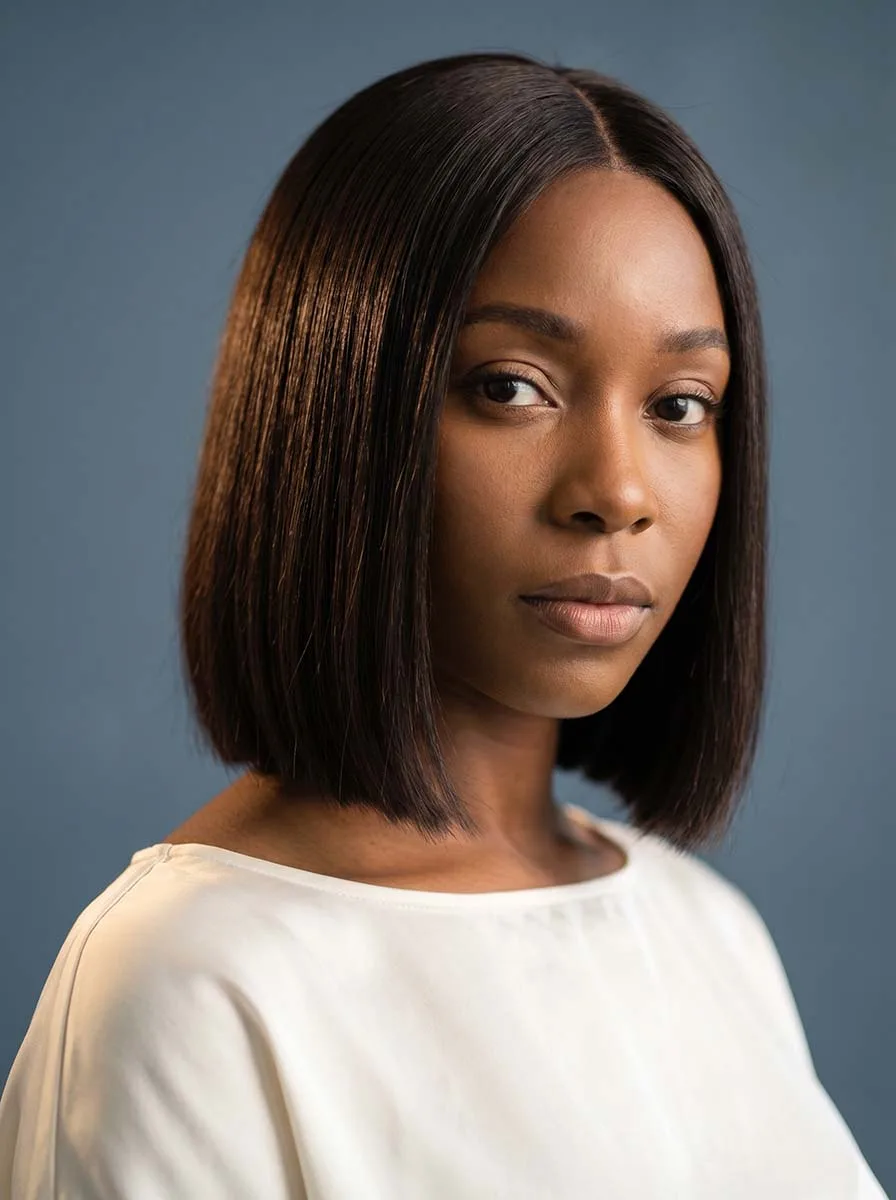
The center-part glass bob gets all the saves, but it’s one of 20 versions worth knowing. Every glass hair bob starts from the same foundation: a precise blunt baseline and a high-gloss finish. What you choose after that determines whether the cut actually works for your face shape, hair texture, and daily routine. Jaw-length reads sharper than chin-length. Copper catches warm light the way platinum never does. A curtain bang opens the face in a way a blunt fringe makes graphic. Part placement alone shifts which silhouettes flatter and which fall flat. These 20 style ideas break down every combination worth considering, so your next appointment ends with exactly the version you wanted.
Classic Glass Hair Bob Styles For 2026
These four foundational versions work across most hair types and face shapes. They’re the right starting point before adding color, fringe, or length variations on top.
1. Center-Part Chin-Length Glass Bob
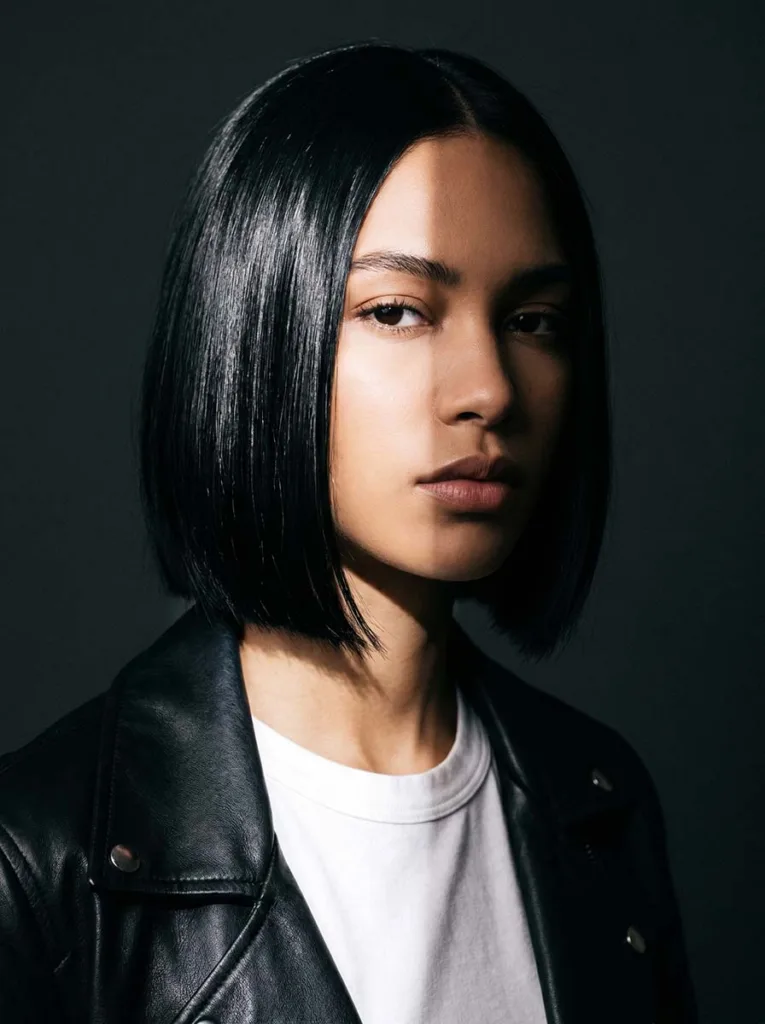
Hair falls to chin length with a clean, straight baseline and no layers. A center part splits the hair evenly, framing the face symmetrically and letting the smooth surface catch light from both sides. Blow-dry downward with a round brush, flat iron in slow passes, then finish with a glossing spray. It suits oval, heart, and square face shapes. One thing to know: the blunt baseline grows out fast. Trims every six to eight weeks are what keep it looking deliberate rather than just long.
2. Jaw-Length Glass Bob With A Deep Side Part
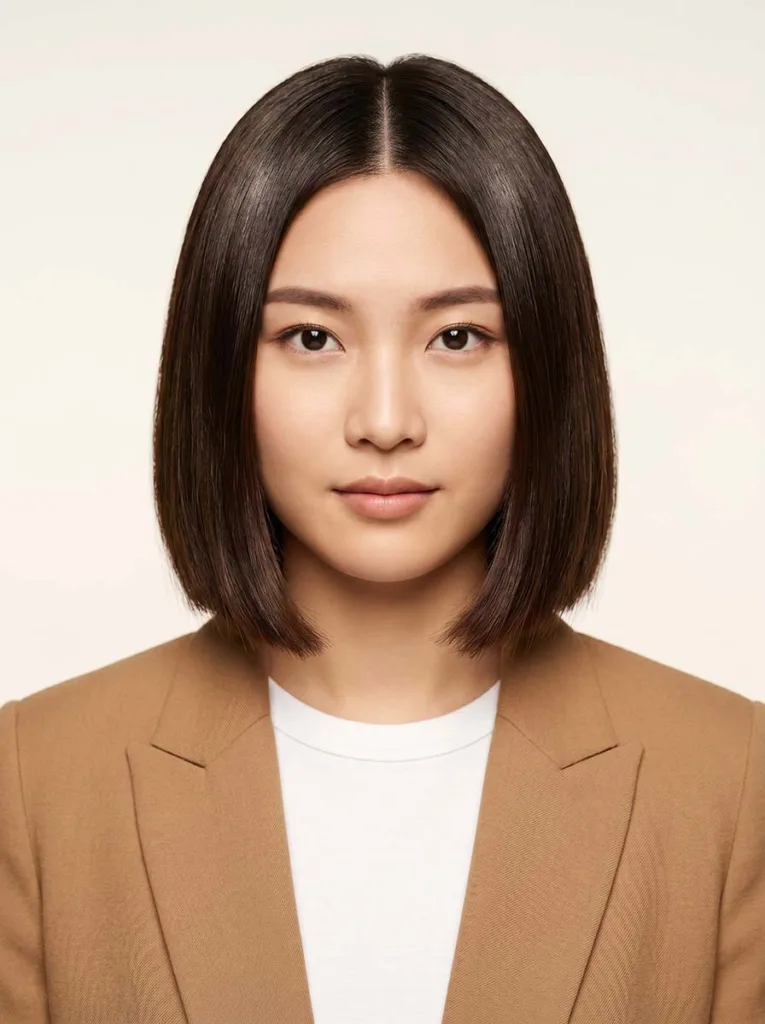
A jaw-length cut hits right at the widest point of the jaw. Adding a deep side part shifts the hair’s weight to one side, so one section sweeps lower across the cheek while the other sits tucked or pinned back. That diagonal softens the sharp blunt line without adding any texture. Round and long face shapes benefit most from this combination because the side part creates the visual impression of length. Style with a round brush blow-dry, directing the hair smoothly toward the heavier side, then lock it in with a flat iron pass and glossing spray.
3. Nape-Grazing Micro Glass Bob
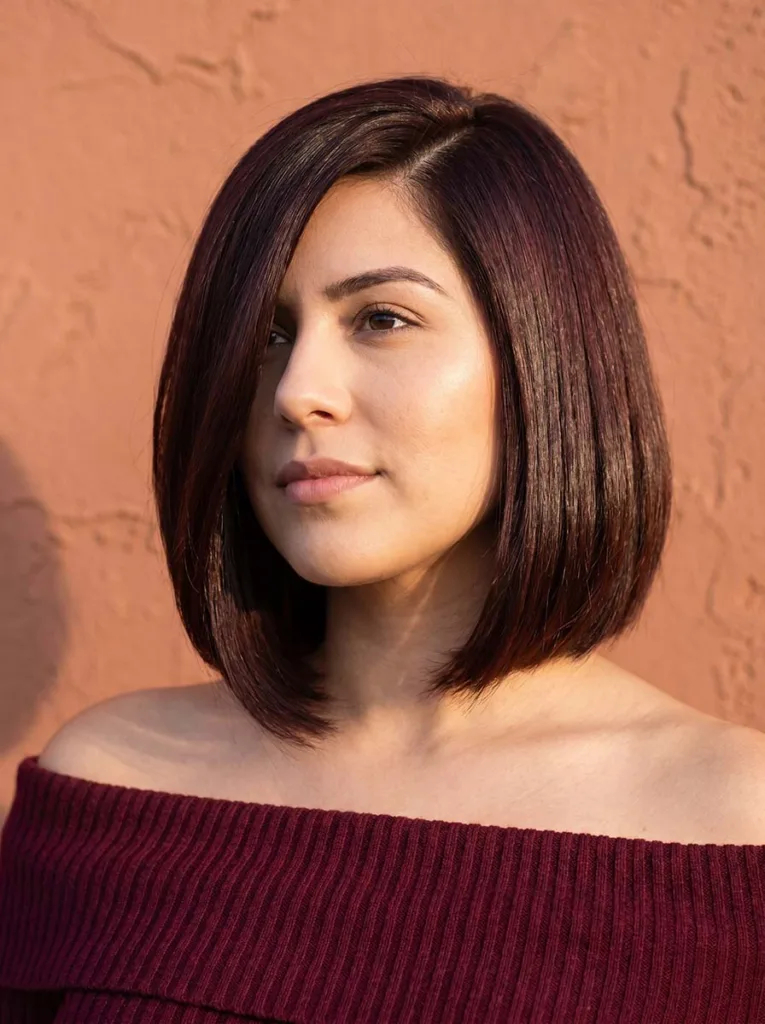
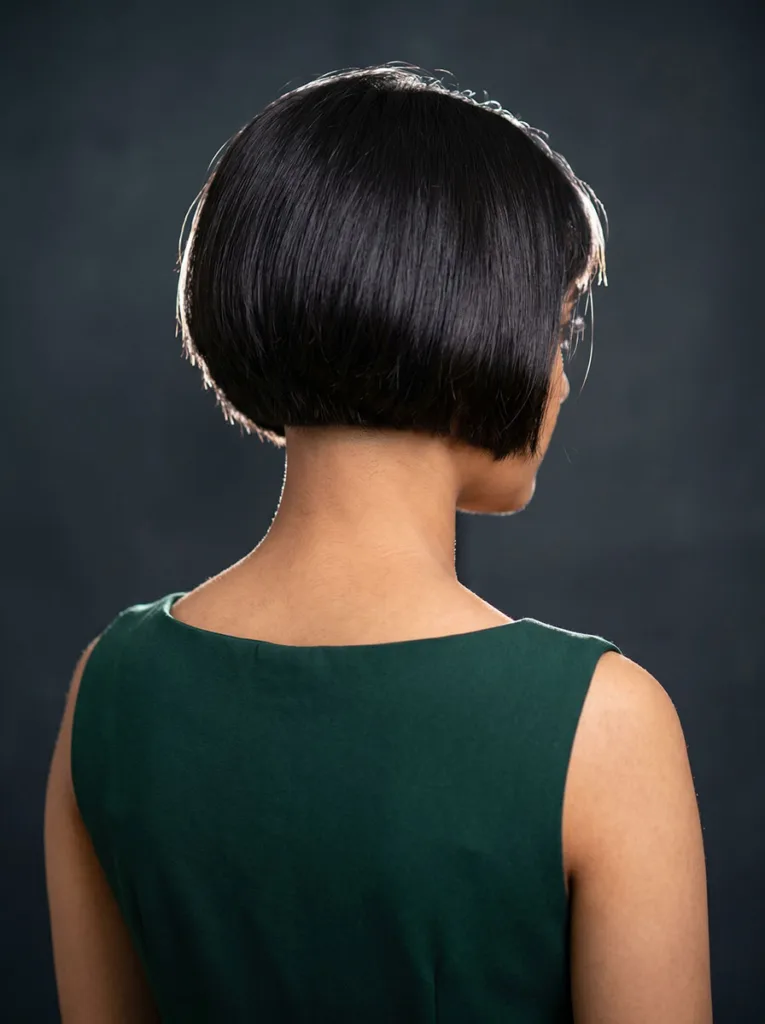
The shortest glass bob variation, sitting just at or slightly above the nape of the neck. At this length, the blunt baseline has almost no tolerance for unevenness, so finding a stylist who handles precision cuts regularly is worth the effort. The cut wraps tight to the head and reads sculptural from the back. Oval and heart-shaped faces suit it well because the short length draws attention up toward the cheekbones. Styling is quicker than longer versions. A flat iron and a finishing serum cover it. Plan for trims every five to six weeks or the shape softens noticeably.
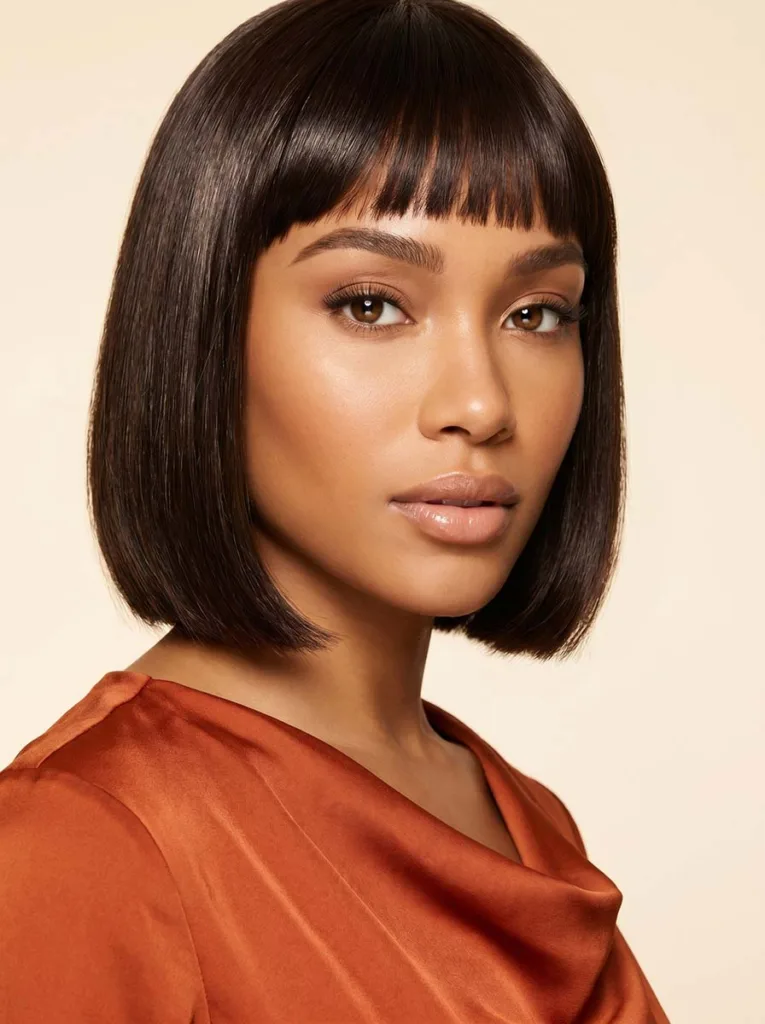
4. Sleek Glass Bob With A Blunt Fringe
A heavy, straight fringe paired with a glass bob creates a graphic, architectural look. Both the fringe and the bob body sit flat and smooth, parallel to each other. The fringe lands at or just above the brow with no tapering at the sides. Blow-dry it downward with a flat brush, then finish with a flat iron. The rest of the bob follows the standard process. Oval and oblong face shapes wear this combination best. Growing out a heavy fringe takes several months, so go in knowing it’s a longer commitment. The upside is that it reads sharp and intentional at every stage while it’s in shape.
Glass Hair Bob Ideas With Bangs And Fringe
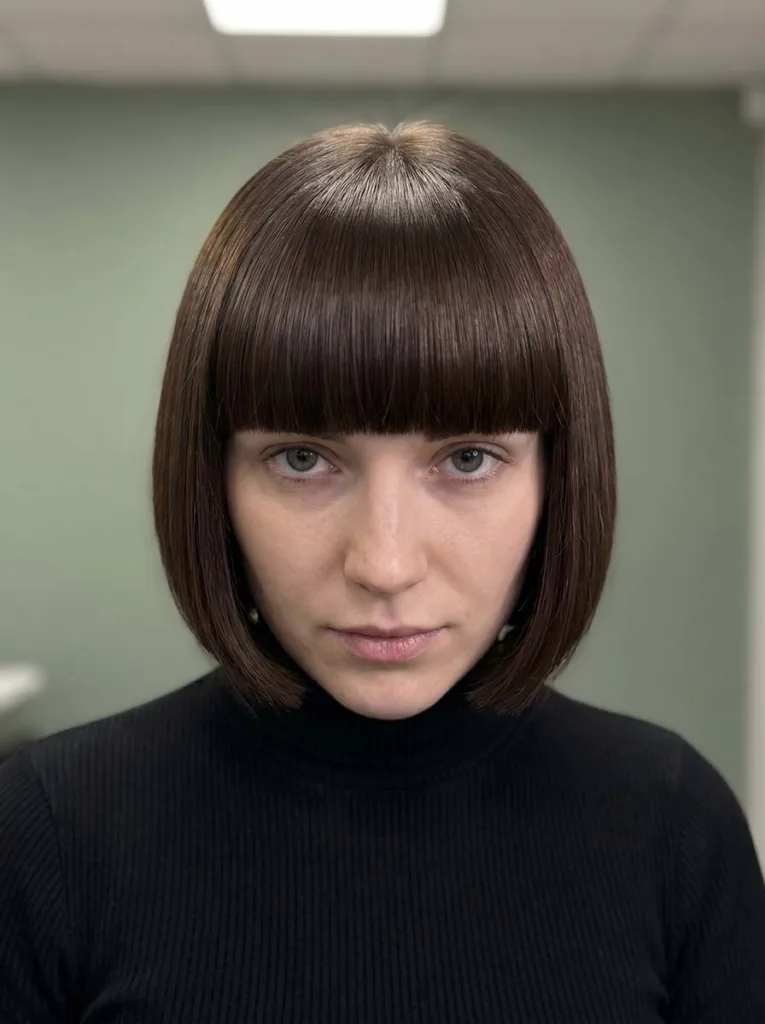
The type of fringe you choose shifts the entire impression of the glass bob. A blunt fringe makes it geometric. A curtain bang makes it approachable. The cut underneath stays the same.
5. Curtain Bangs Glass Bob
Curtain bangs part in the center and sweep outward toward the cheekbones rather than hanging straight across the forehead. On a glass bob, they add warmth to what can otherwise feel like a very minimal look. The bangs blend into the body of the bob gradually rather than sitting as a defined separate section. Style them with a round brush and low heat, directing each side outward as you dry. The rest of the bob gets the standard flat iron and glossing spray finish. Oval, round, and heart-shaped faces suit this combination well. It’s also one of the easier fringe styles to grow out because it can be pinned back between trims without looking awkward.

6. Wispy Fringe Glass Bob
A wispy fringe uses a small amount of hair cut to just graze the brow, so it partially covers the forehead rather than sitting as a solid curtain. A few strands rather than a full fringe. On a glass bob, this adds enough softness to break the cut’s geometric edge without changing the overall polished impression. Fine hair handles this fringe better than a heavy blunt one, which tends to flatten against the forehead. Style with a small round brush or fingers as you blow-dry, then leave it. A flat iron pass is optional depending on how straight you want it. Growing this fringe out is mostly painless since there’s no defined line of regrowth to deal with.
7. Micro Bangs Glass Bob
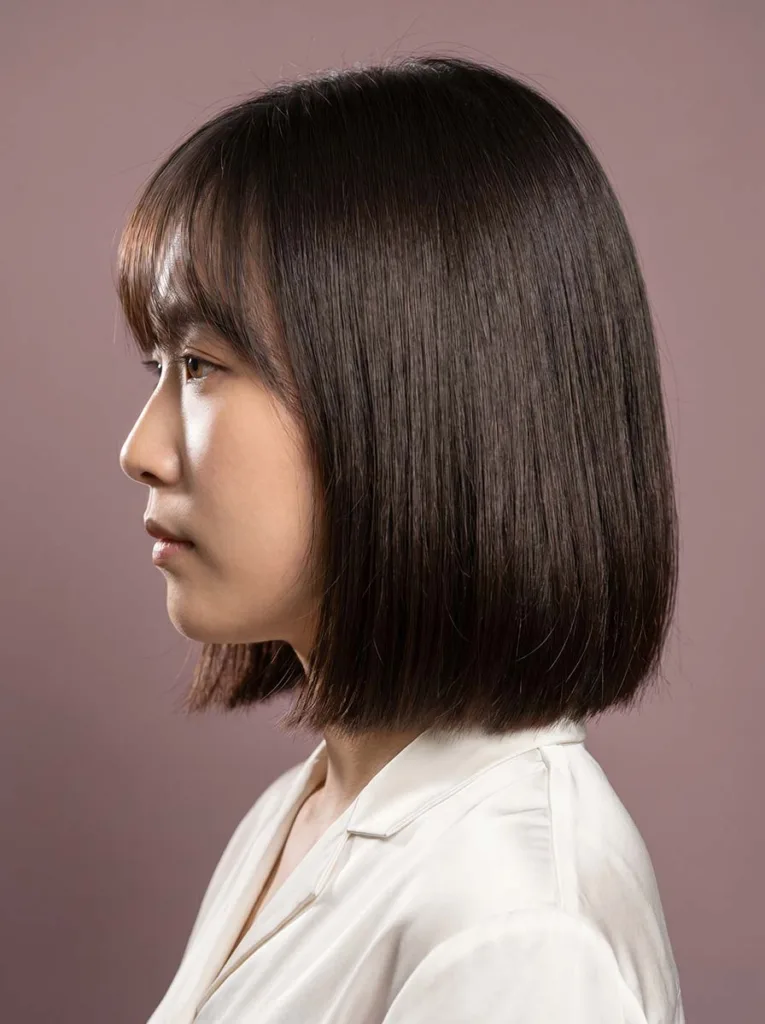
Micro bangs sit at the mid-forehead or higher, well above the brow. The contrast between the short fringe and the smooth length of the glass bob body creates a very deliberate, high-fashion look. It works on oval and oblong face shapes, where the exposed forehead adds length rather than width. The maintenance requirement is high: micro bangs need trimming every three to four weeks or they grow into a different fringe shape entirely. Style them with a fine-tooth comb and a flat iron pass to keep them flat and smooth against the forehead. The rest of the glass bob is styled as usual. Go in aware that there’s no casual or low-maintenance version of this one.
8. Retro Blunt Fringe Glass Bob
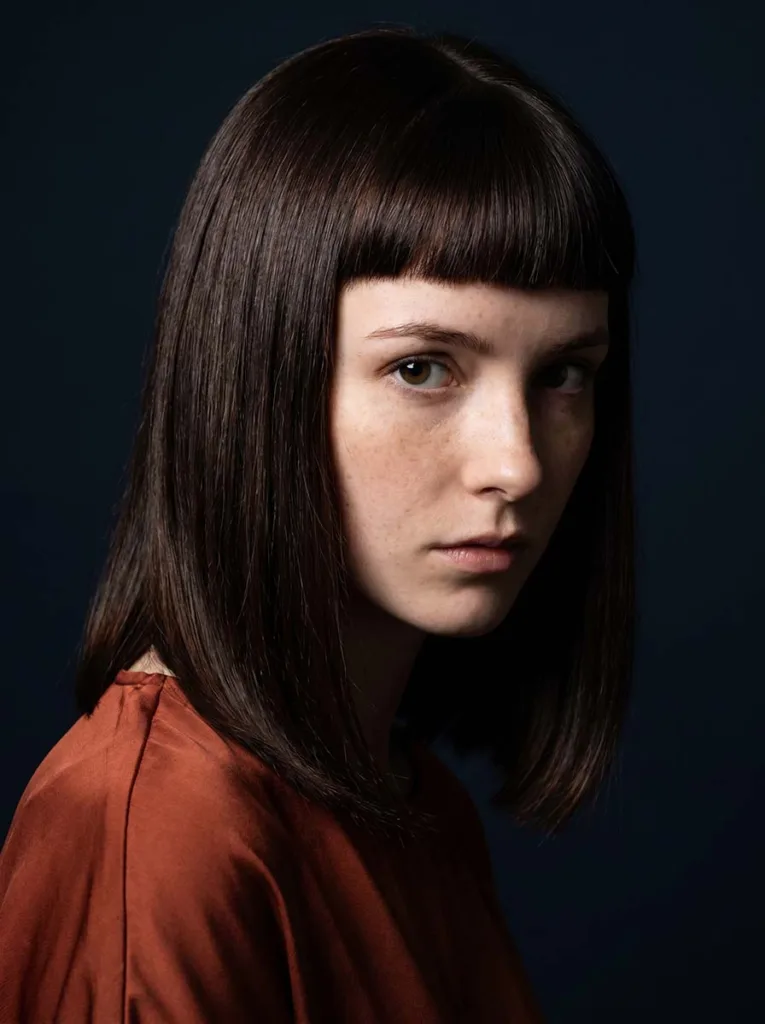
Based on 1960s precision cutting, this version uses a thick fringe cut straight across at brow level, heavier and denser than a standard blunt fringe. With the glass bob’s high-shine finish, the result is very architectural all clean horizontal and vertical lines. Blow-dry the fringe flat with a paddle brush, then finish with a flat iron to remove any curve. The bob body follows the same process. Oval, square, and oblong face shapes suit it best. Because the fringe is heavy and bold, the rest of the styling should stay plain. No accessories, no color variation. Every four weeks, trim the fringe or the shape starts to break down.
Glass Hair Bob Color Ideas For Every Skin Tone
Color affects how the glass finish reads in different lighting. A dark base reflects uniformly. Highlights add dimension. Some combinations are easier to maintain than others.
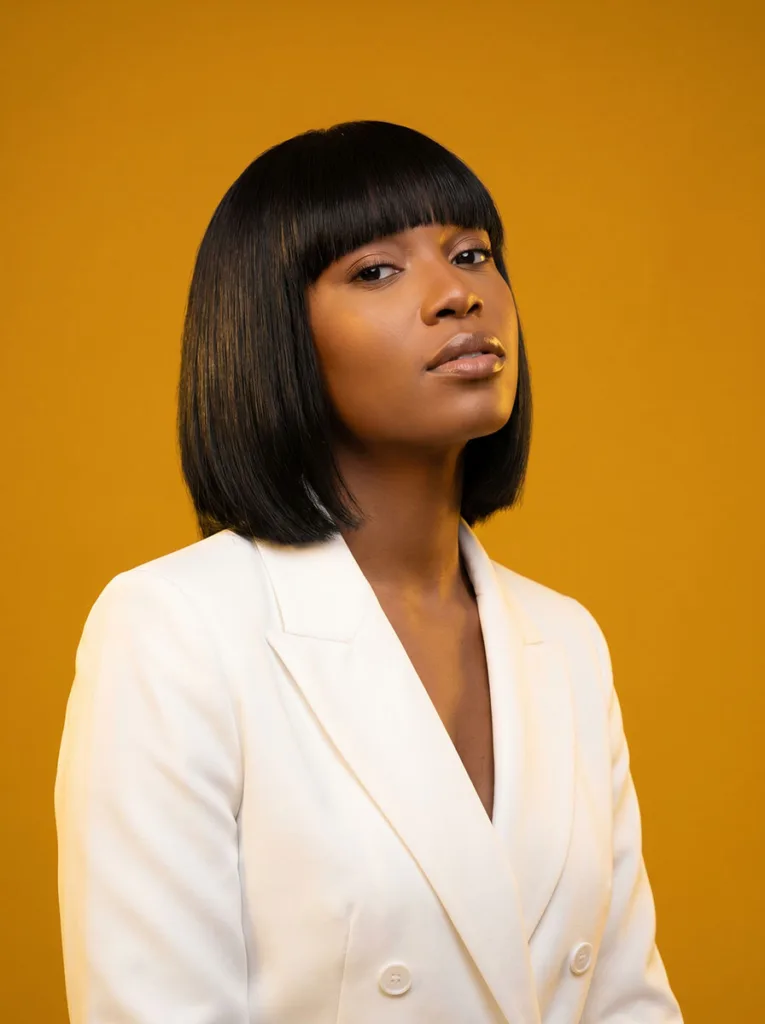
9. All-Over Dark Glass Bob
A single deep color, espresso, onyx, or dark chocolate brown, applied evenly creates a near-mirror surface on a glass bob. Dark hair has concentrated pigment in each strand, so light reflects back uniformly rather than scattering. Under direct light, the result looks almost lacquered. It’s also the most manageable color option for the glass bob since there are no highlights to fade or tone. A gloss treatment at the salon every eight to ten weeks keeps the color rich and the shine consistent. At home, a shine serum on damp hair before blow-drying and a glossing spray at the finish maintain the effect between appointments.
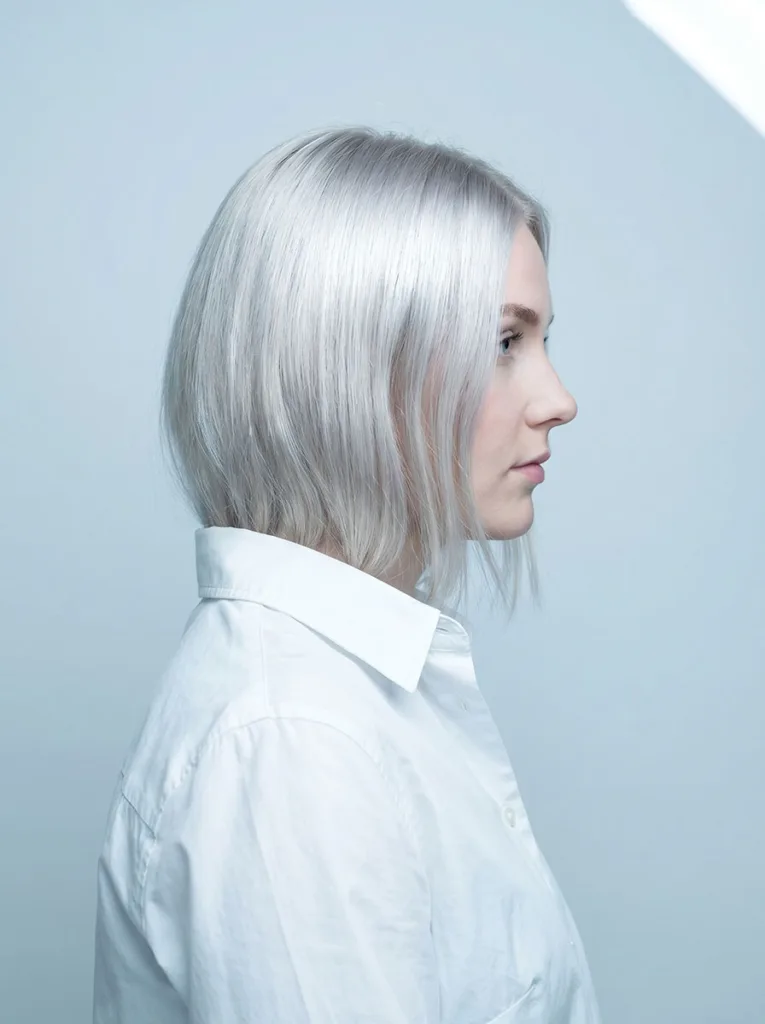
10. Platinum Blonde Glass Bob
Platinum picks up cool, silver-toned light and reads almost metallic on a glass bob in bright environments. The challenge is staying on top of tone. Any warmth creeping into the hair breaks the glass effect, so a purple or blue toning shampoo once a week is necessary. A toning gloss treatment every six to eight weeks at the salon keeps the platinum clean and even. Bond-building treatments matter here too because bleaching weakens the hair shaft, and any dryness dulls the finish noticeably. This color requires more upkeep than most, but it produces one of the sharpest and most dramatic glass bob results when maintained properly.
11. Honey Blonde Glass Bob With Face-Framing Pieces
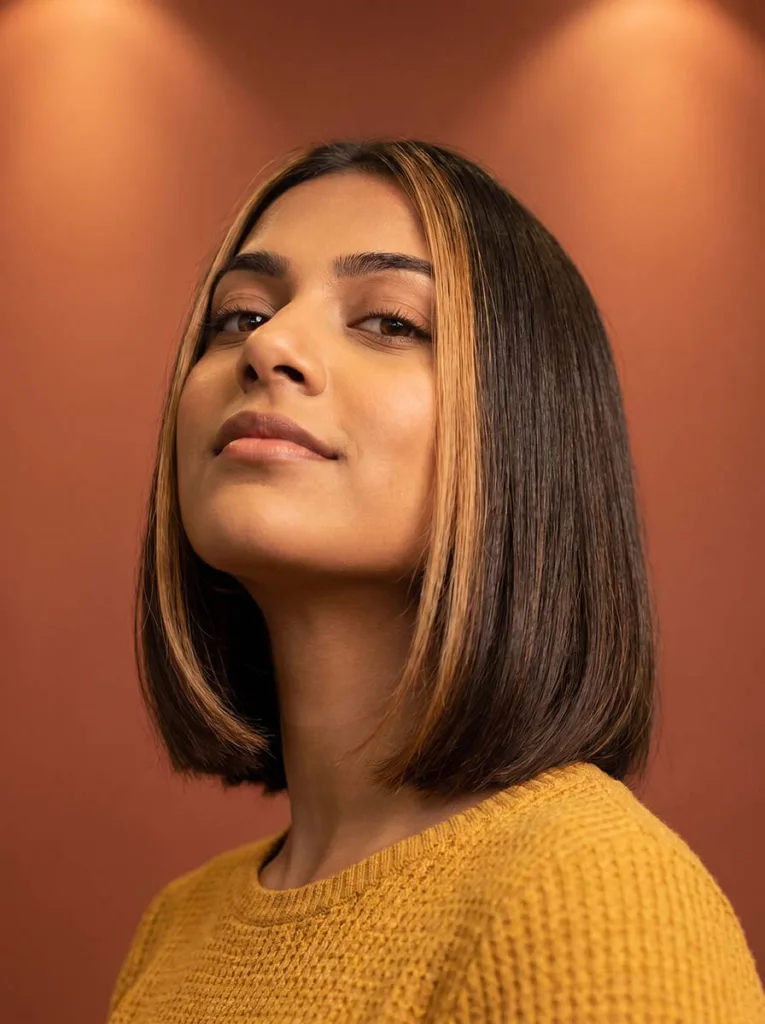
Honey blonde sits in the warm, golden range, softer than platinum and less deep than caramel. On a glass bob, it catches warm light and reads glowing rather than stark. Face-framing highlights, lighter pieces placed around the hairline and front sections, create contrast that draws the eye to the face without disrupting the smooth surface of the cut. The rest of the hair stays a slightly deeper honey tone. This color photographs well in warm and natural light, suits most skin tones, and grows out more gracefully than platinum. Toning appointments are needed less frequently, making it one of the more manageable blonde options for the glass bob.

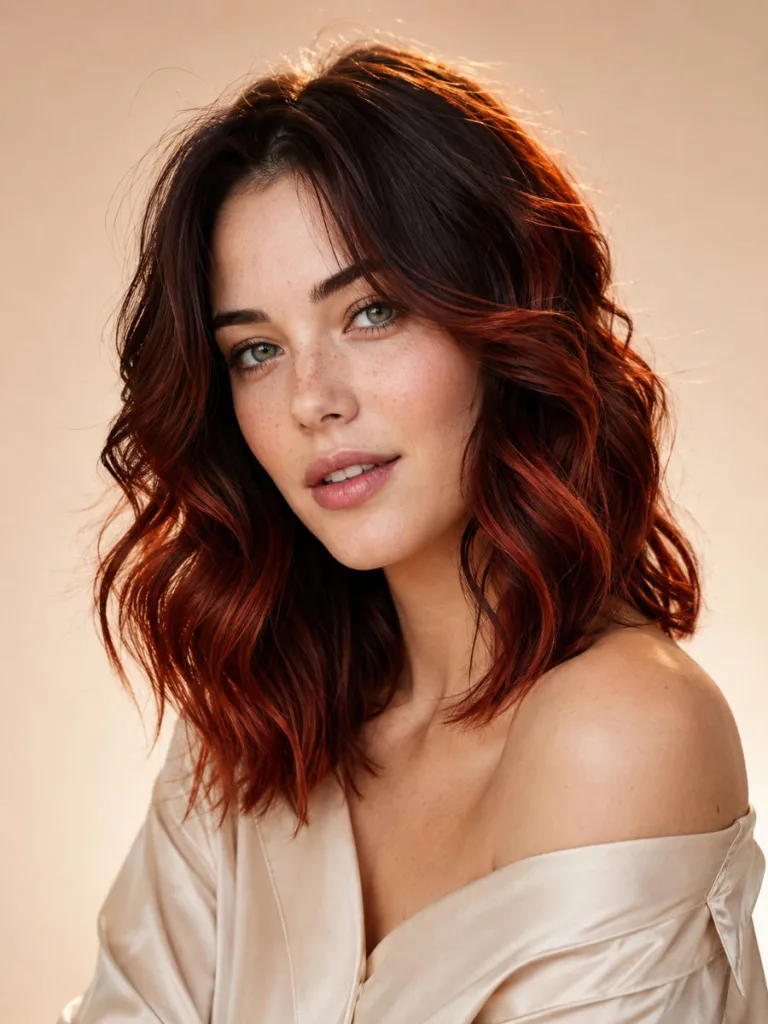
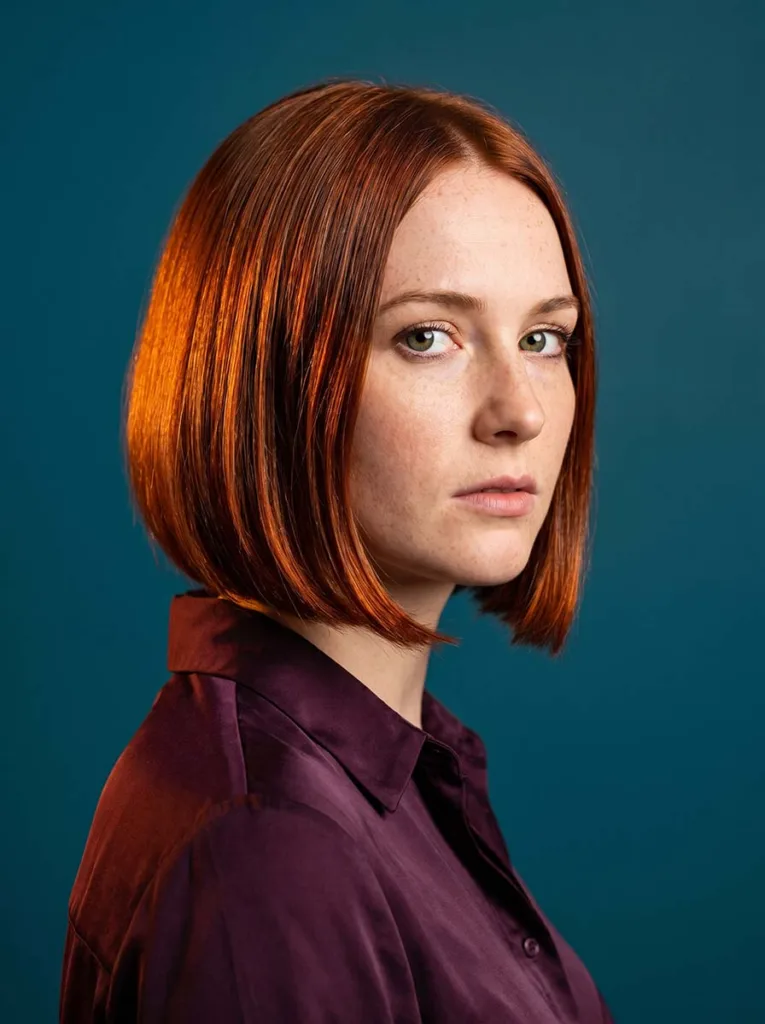
12. Copper And Auburn Glass Bob
A rich copper or auburn tone reads almost metallic under warm or amber light on a glass bob. The color creates natural-looking dimension on its own, even with a single solid application, because lighter copper tones emerge in direct light while deeper auburn recedes in shadow. The styling can stay simple because the color handles the visual interest. Copper fades faster than darker shades, so a color-protecting shampoo and conditioner slow the process between appointments. A gloss treatment in the same copper or auburn family refreshes the tone when it starts to look flat. Medium, warm, and olive skin tones suit this color particularly well, and it works across all glass bob lengths.
13. Glass Bob With Money Pieces
Money pieces are two lightened sections placed at the very front of the hair, one on each side of the face. On a glass bob, they sit at jaw or chin level and create a sharp contrast against a darker base. The pieces are usually two to four shades brighter than the base and draw the eye directly to the face without requiring highlights throughout the rest of the hair. Keeping the remaining hair one solid color preserves the clean surface the glass bob depends on. Style money pieces the same way as the rest of the bob: flat iron, glossing spray. Touch-ups every ten to twelve weeks maintain the contrast as the base color grows out.
14. Balayage Glass Bob
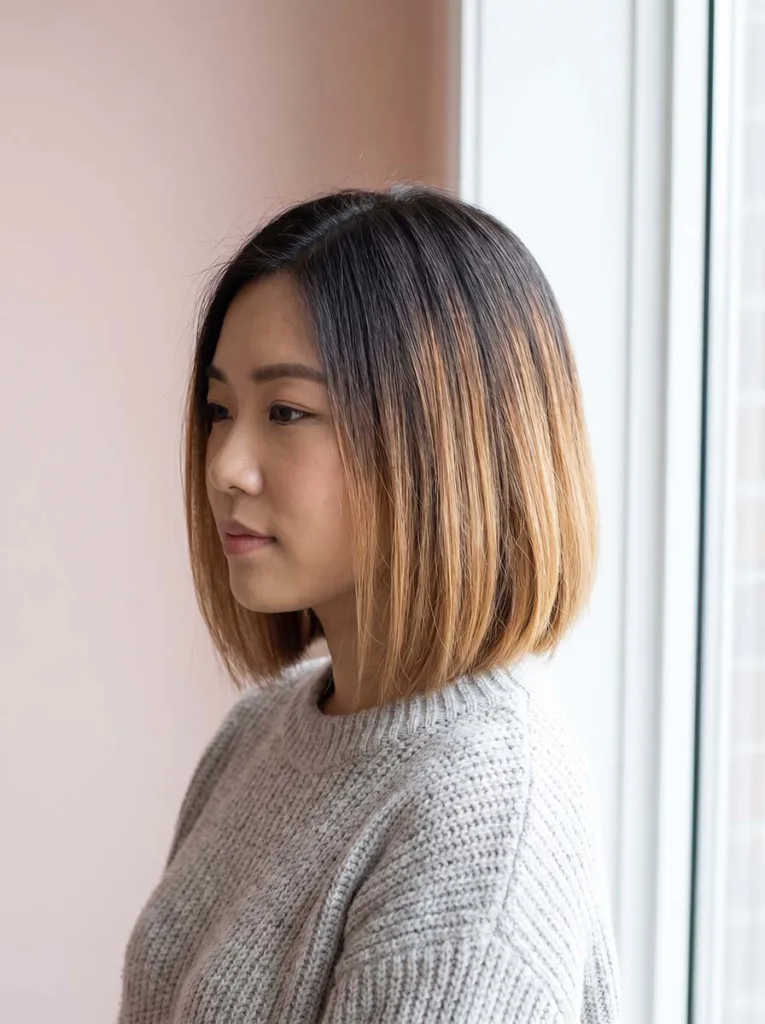
Balayage uses a hand-painted application to shift the color gradually from darker roots to lighter ends. Unlike foil highlights, the transition is soft with no hard line of regrowth. On a glass bob, the roots stay close to the natural color while the mid-lengths and ends pick up more light. The result looks different depending on the environment: more contrast in bright light, more uniform indoors. Because there’s no defined regrowth line, balayage grows out without the same awkward stage as block color or foil work. Touch-up appointments are typically needed every four to six months, making it one of the lowest-maintenance color choices for the glass bob.
15. Natural Black Glass Bob
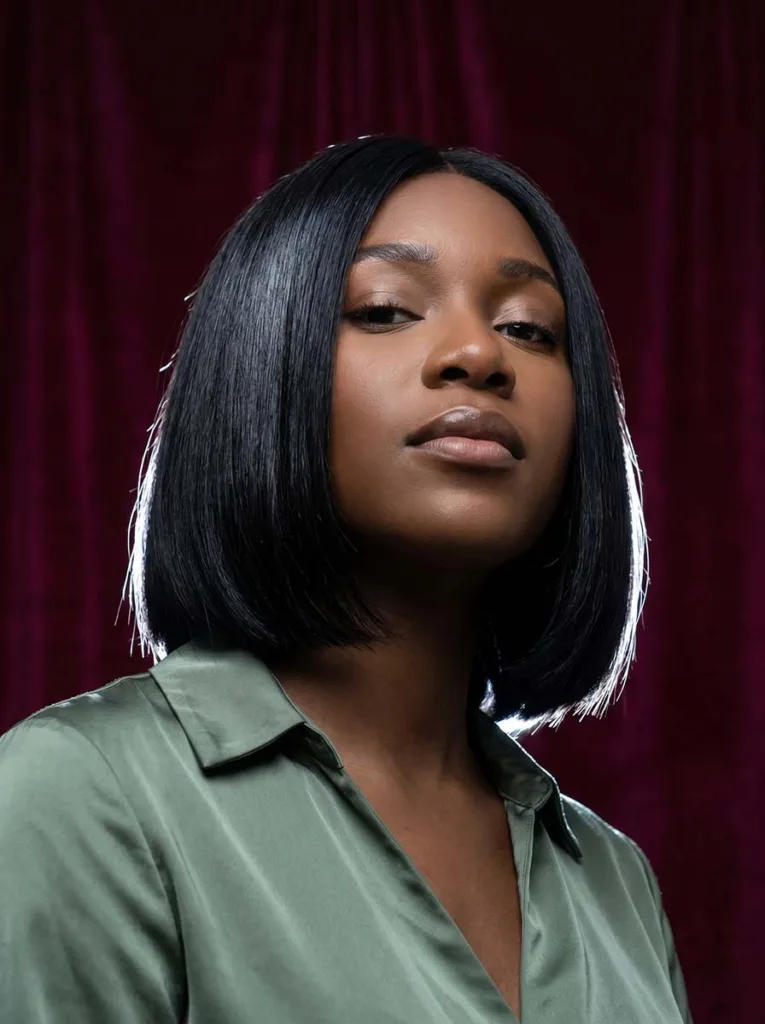
Natural black hair achieves one of the best glass bob finishes because the pigment is dense, uniform, and highly light-reflective when the cuticle is flat. A glossing treatment at the salon brings it to an almost wet-look level of shine without any gel weight. At home, a black-specific shine serum on damp hair before blow-drying, combined with slow flat iron passes and a finishing glossing spray, recreates the effect. It photographs well under almost any lighting because the dark base creates strong contrast and the shine registers clearly. Color maintenance requirements are the lowest of any option: no toning, no fading concerns, just regular glossing treatments to maintain depth.
Glass Hair Bob Ideas By Length: Jaw, Chin, And Lob
A one-inch length difference on a glass bob changes the silhouette, which face shapes it flatters, and how the style behaves over several days.
16. Jaw-Length Glass Bob
Sitting at or just above the widest point of the jaw, this is the shortest of the standard glass bob lengths. The silhouette is tight and close to the face. Less hair means faster styling: a single flat iron pass through each section is usually enough once the blow-dry is complete. Square and oval face shapes suit it well. On square faces, the straight blunt line at jaw level echoes the jawline deliberately, which reads strong rather than harsh. The shorter length also holds the glass finish longer between washes because less movement means the smooth surface stays intact for an extra day.
17. Chin-Length Glass Bob
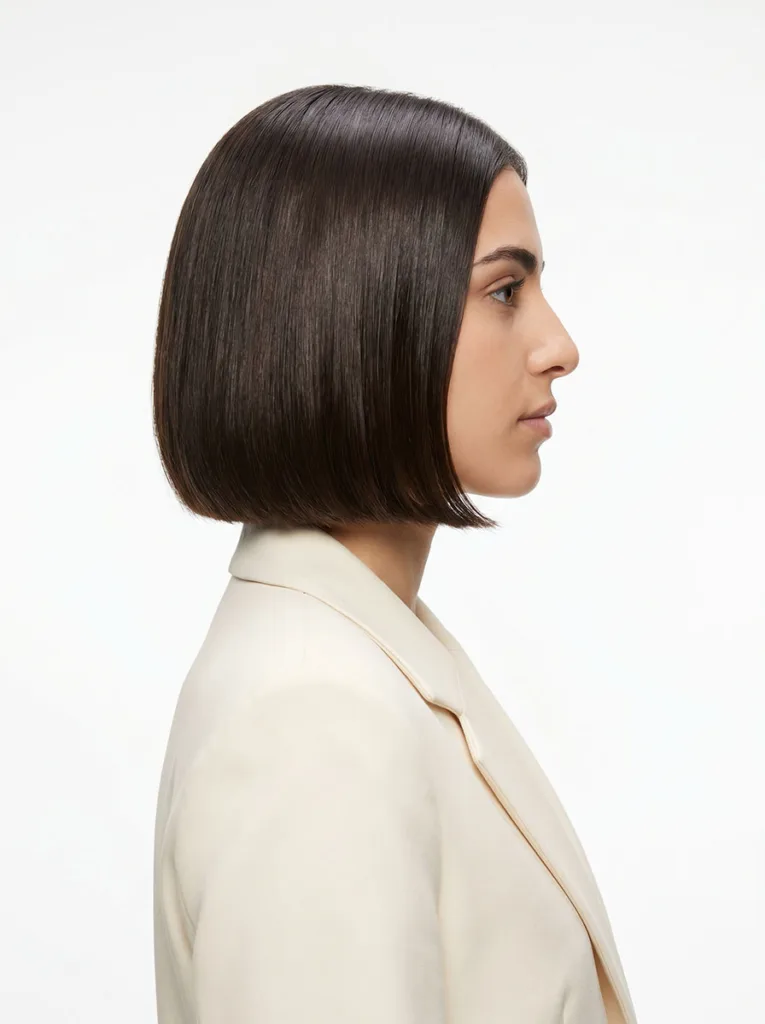
The most widely worn version and the most versatile for face shapes. It falls at chin level, long enough to frame the lower face and create softness around the jaw, and long enough to tuck behind the ear, clip at the side, or wear fully loose. The blunt baseline sits at a visible, well-lit point of the face, which makes the glass finish read clearly. Styling follows the standard process: smoothing serum on damp hair, downward blow-dry with a round brush, flat iron in slow passes, glossing spray to finish. Trims every six to eight weeks keep the baseline sharp. Of all 20 variations here, this one has the lowest learning curve.

18. Extended Glass Bob (Lob)
The glass lob brings the blunt cut down to just above the collarbone. The precise baseline and high-shine finish stay, but the overall impression is softer and less severe than shorter versions. It’s a practical starting point for anyone who wants the glass hair finish without cutting much length. More surface area means more time to style: the blow-dry and flat iron process takes longer and requires more care to keep every section even. Fine hair can lose some smoothness at this length because the weight of longer hair creates slight movement. A strong smoothing serum and a flat iron with floating plates help keep the surface flat.
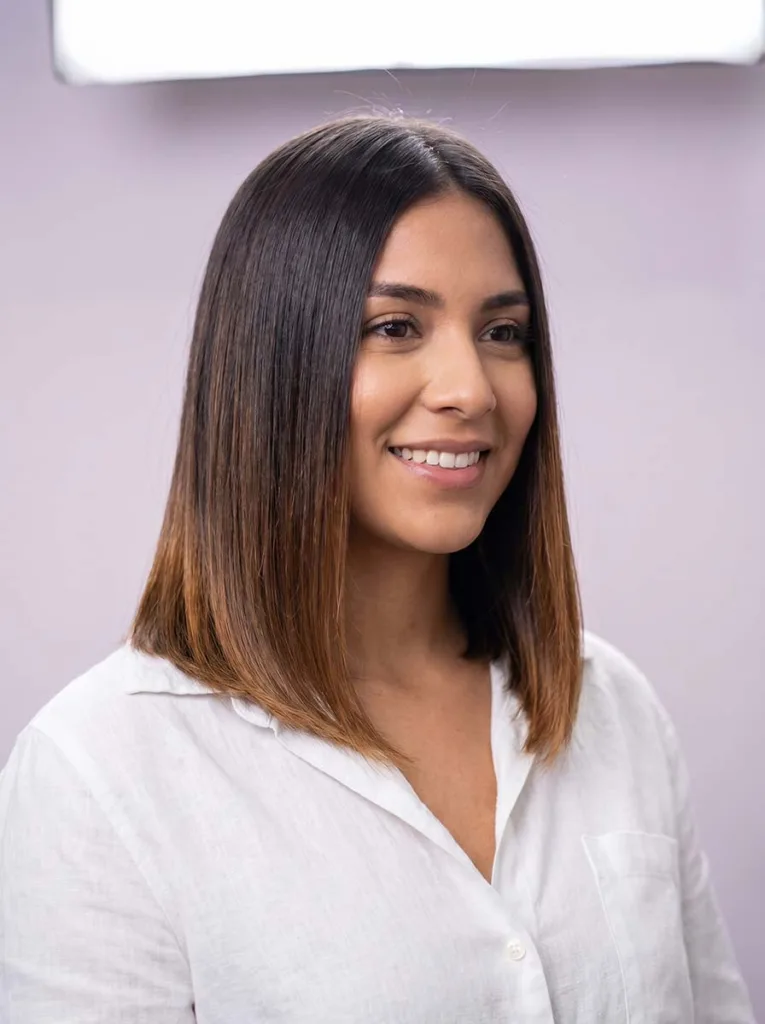
19. Asymmetrical Glass Bob
One side longer than the other, both cut in a clean blunt line. The length difference is usually two to four inches and reads as deliberate rather than uneven. The asymmetry creates visual movement without adding any texture or layers. The longer side needs consistent smoothness: any wave or frizz there is more noticeable than it would be on a symmetrical cut because the length draws attention to the surface. Angular face shapes and oval faces suit it best. Pair it with a solid all-over color rather than highlights, so the shape stays the focal point rather than competing with color variation.
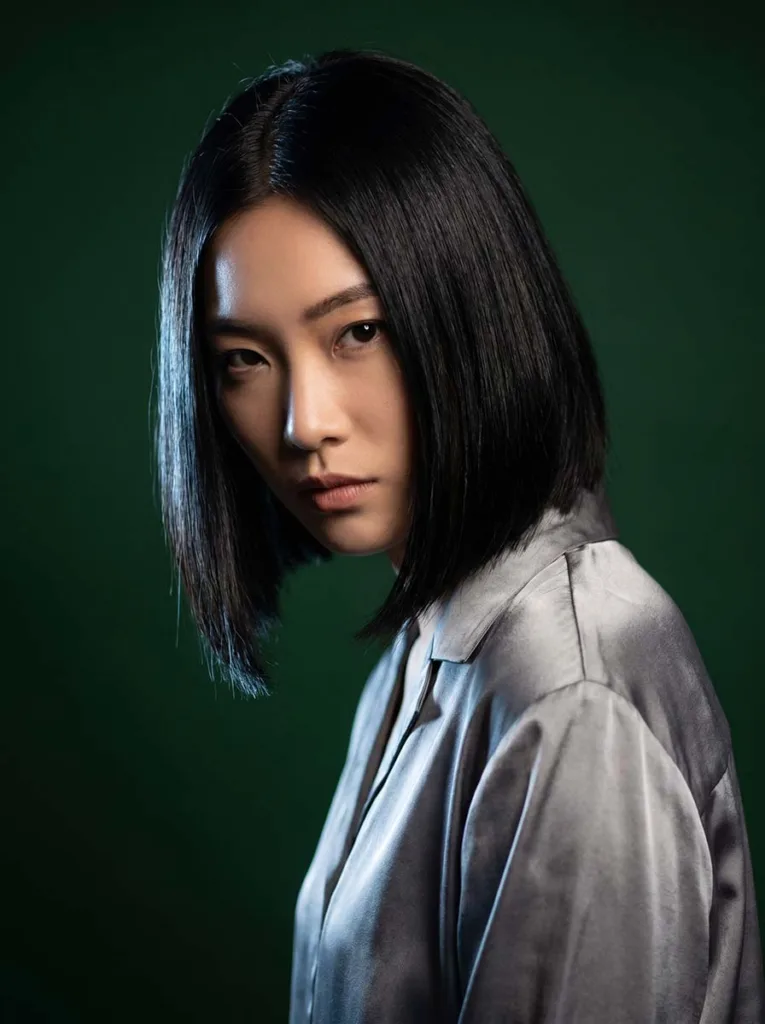
Glass Hair Bob Styling Details
The base cut stays the same. Small choices in how you finish the style create noticeably different results without a salon visit.
20. Glass Bob With Slicked-Back Sections
A light-hold gel or pomade applied to the crown and sides, then smoothed back toward the ears, takes the glass bob into more sculptural territory. The lower sections of the bob keep the usual smooth, free-hanging glass finish while the top sits flat and directed backward. Apply the gel in small amounts. Too much product dulls the finish on the lower sections and adds unwanted heaviness to the slicked areas. This approach works best on jaw-length and chin-length versions. It suits occasions more than everyday wear because the gel builds up and requires a wash before the standard glass bob look returns.
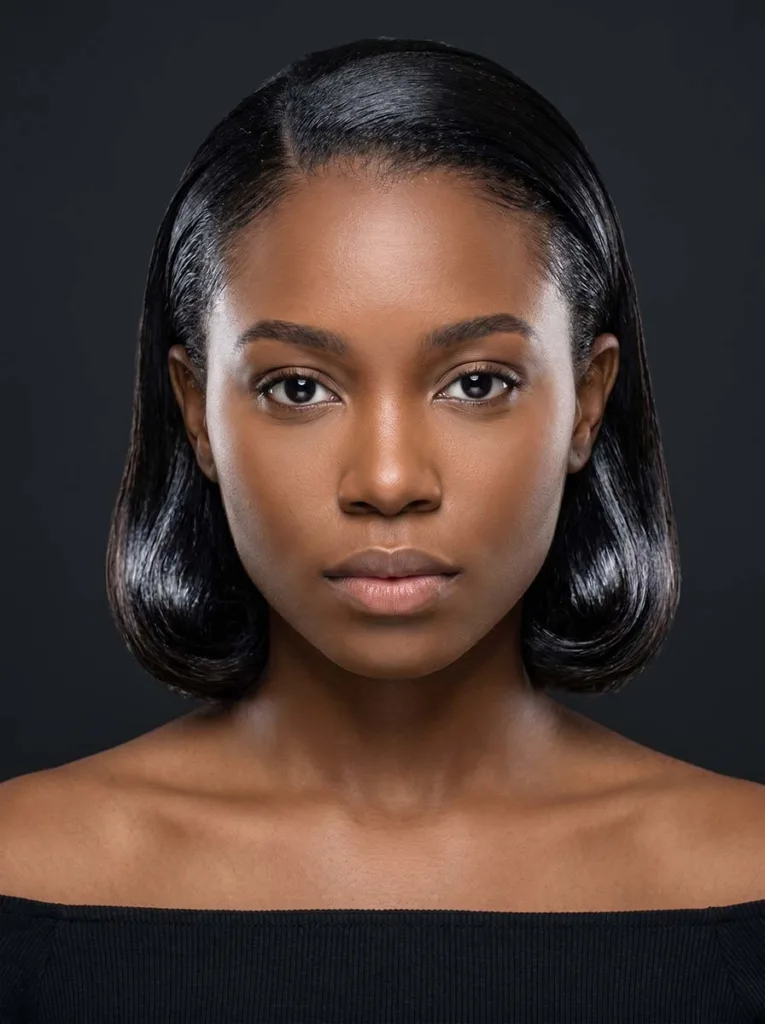
What To Tell Your Stylist
Knowing which variation you want is only half the job. Here is how to communicate it so you don’t leave with something different.
For a classic glass bob: “I want a blunt, one-length bob with no layers and a straight baseline — no graduation in the back. ” State the length using a body landmark: jaw, chin, or collarbone. Specify the part: center, side, or none.
For a bob with fringe: Name the type specifically — curtain bangs, blunt fringe, wispy fringe, or micro bangs. Tell them where the fringe should land: at the brow, above it, or sweeping to the cheekbone. Bring a reference image. Fringe is difficult to undo, so clarity here matters most.
For a color variation: If you want money pieces, say “two face-framing sections, [X shades] lighter than my base, stopping at jaw length.” For balayage, say “no hard regrowth line, gradient from roots to ends.” For all-over color, bring a reference swatch rather than just a color name.
For a length change: Use body landmarks, not inches. Stylists interpret “two inches off” differently depending on how they hold the hair. “Jaw-length,” “chin-length,” and “just above the collarbone” are consistent reference points that leave less room for interpretation.
FAQ
Which glass hair bob is best for fine hair?
The chin-length or jaw-length glass bob with an all-over solid color suits fine hair best. Avoid heavy fringe on fine hair — it flattens against the forehead and loses shape fast. A wispy fringe is a better option if you want fringe at all. Balayage and money pieces add visual density without weight.
Which glass hair bob style is easiest to maintain?
A chin-length glass bob with an all-over solid color. You need trims every six to eight weeks and a consistent blow-dry and flat iron routine. Adding highlights or fringe increases both the frequency and cost of upkeep.
Can I try multiple glass bob styles without recuts?
Yes, for styling-based variations: part placement, accessories, and finishing technique all shift the look without touching the cut. Color and fringe changes require a stylist.
What does a glass hair bob look like before and after styling?
Before styling, a glass bob looks like any other blunt bob — the baseline is there but the surface has no particular finish. After a blow-dry with downward tension and a slow flat iron pass, the cuticle lies flat and the high-gloss finish appears. The difference is entirely in the technique, not the cut itself.
Conclusion
Twenty glass hair bob style ideas and most of them come down to a single decision: length, color, or fringe. The base cut stays the same every time. Pick the version that fits your face shape and how much upkeep you’re willing to commit to. Save the one you want, screenshot the stylist script from the section above, and book the appointment.
For more articles related to hairstyles, please visit blushhairflow.