20 Chin Length Hairstyle Ideas Worth Trying Now
By the BlushHairFlow Editorial Team, hairstyle writers who research cuts, texture, and face-shape guidance with input from working stylists before publishing.
Saved dozens of chin-length haircuts to a board and still can’t decide? You’re not alone. It’s easy to collect inspiration and hard to know which pin will work on your face, your hair type, or your morning routine.
A chin-length hair style sits right at the jawline. It’s short enough to feel like a real change but long enough that you still have styling options. The trouble is most boards mix cuts for every face shape and texture into one feed, with no way to tell which one actually fits you.
This guide sorts through that noise. Below are 20 real chin-length looks, organized by who they flatter, plus honest advice on texture, upkeep, and what to tell your stylist before you book.
What Chin-Length Hair Is And Who It Flatters
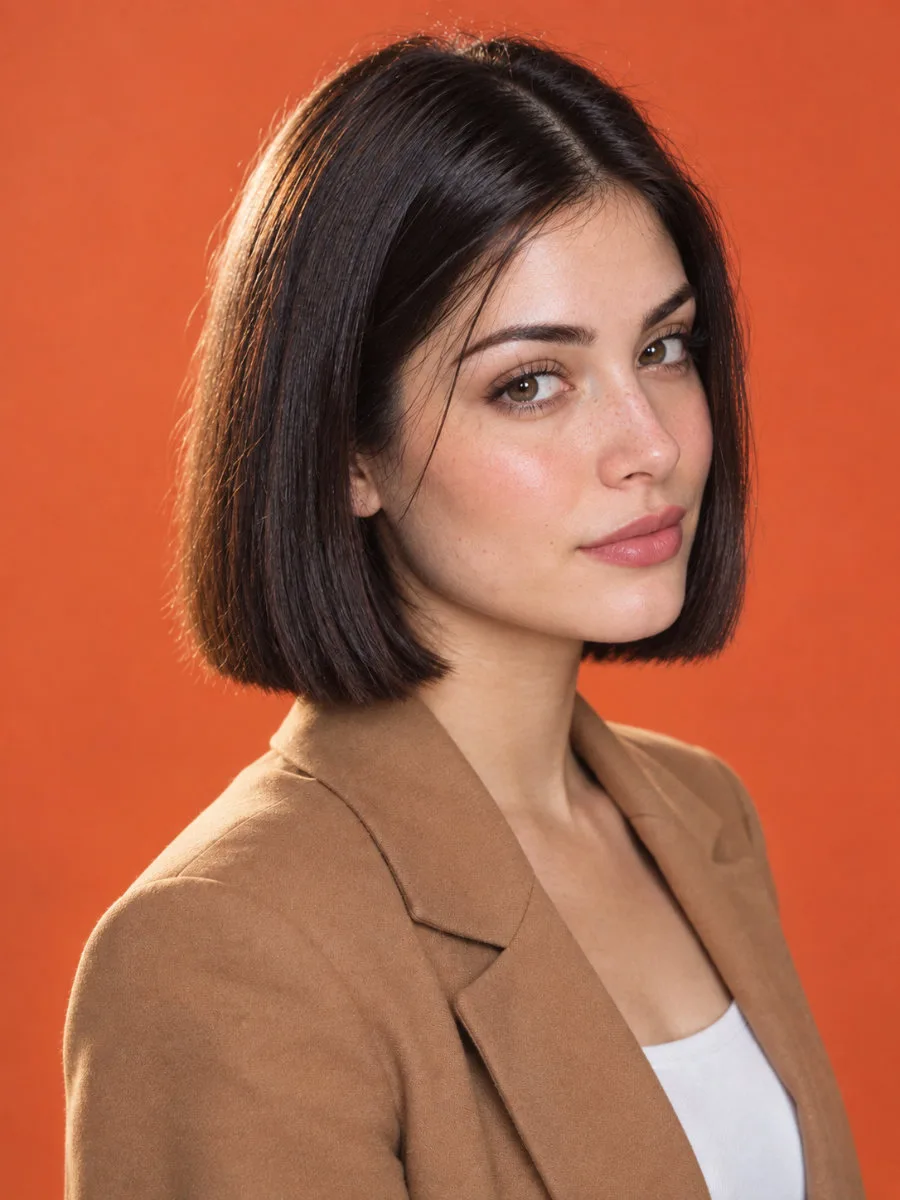
Chin-length hair falls between your jawline and your collarbone. Stylists call it a jaw-length bob, a jaw-length haircut, or a chin-grazing cut. Think of it as the middle ground between a lob and a pixie: short enough to feel fresh, long enough to pull back in a pinch.
Matching the Cut to Your Face Shape
Face shape changes how a chin-length cut looks on you.
- Round faces: an angled or A-line cut adds length instead of width.
- Square faces: soft layers ease the jaw instead of echoing it.
- Oval faces: almost any variation works, including a sharp, blunt cut.
- Heart-shaped faces: side-swept bangs balance a narrower chin.
- Long faces: a blunt, straight-across line adds width where it’s needed.
Does Your Age Really Matter?
Not as much as people think. A well-cut chin-length bob looks fresh at 25 and just as sharp at 55, because the shape carries the look, not your age. Bone structure, hair density, and how much time you want to spend styling it each morning matter more. A stylist who asks about your routine before cutting tends to deliver better results than one working from a photo alone.
20 Chin-Length Hairstyles To Try
Each cut below is built around a face shape, texture, or lifestyle. Skim through and pick the one that fits you, not just the one you like best in a photo. Most of these are bob variations, so if you want more options in this same shape once you’ve narrowed things down, our roundup of stunning bob haircuts has more to compare.
1. Classic Blunt Bob
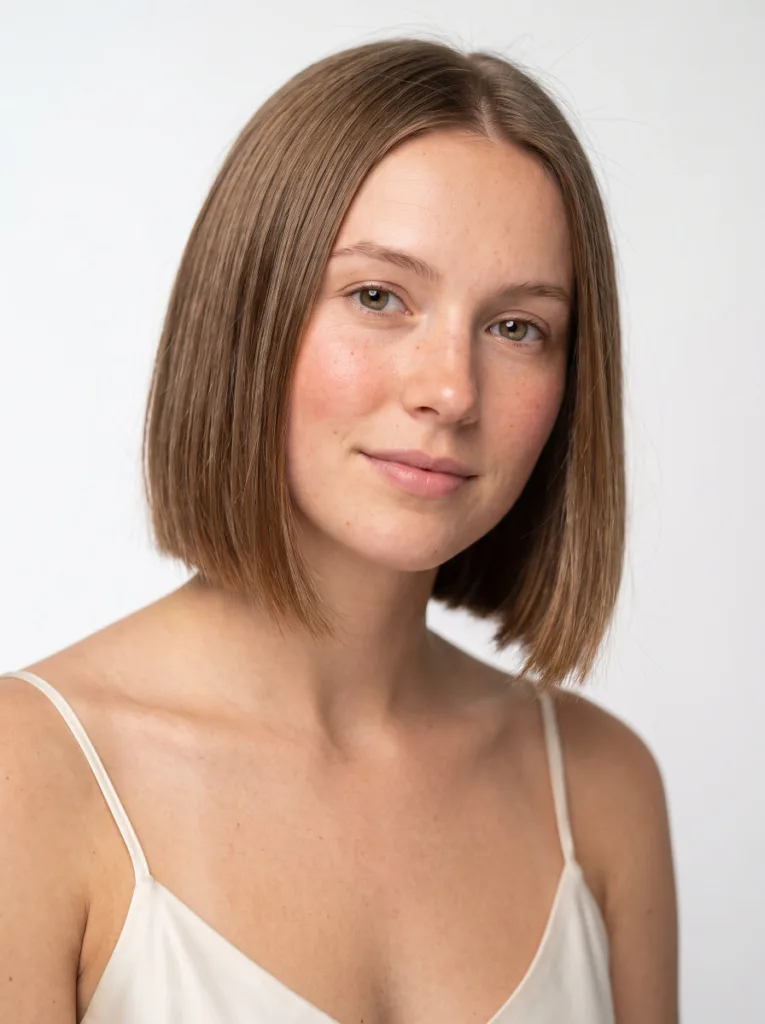
The classic blunt bob is the cut most people picture the moment they hear chin length. One clean line, no layers breaking up the shape. That single line does the work. On oval and long faces, it adds visual width right where you want it.
It also suits straight, medium to thick hair, since blunt lines need some density to look crisp instead of thin. Ask your stylist for a one-length cut with barely any texturizing at the ends, then finish with a shine serum for that glass-like effect. It’s not the lowest-maintenance option here. Flat hair by midday needs a touch-up. But it looks deliberate even on a rushed morning.
2. A-Line Bob

An A-line bob is shorter in back and gradually longer toward the chin in front. Picture the letter A and you’ve got it. That diagonal line slims a round face fast, since your eye follows the slant down instead of tracking the width of your cheeks. If you’ve been searching for short hair for round face options, this is the cut to start with.
It reads as more current than a straight-across bob, which is why stylists often suggest it for a first big chop. Fine hair looks fuller here too: the graduated back lifts the crown without extra layers. Ask for the angle to hit below the ear in back, sloping to the chin in front. A round brush, ends turned slightly inward, finishes the look.
3. French Bob

The French bob has that undone-but-intentional look Paris salons have loved for years and everyone else finally caught onto. It sits right at the chin, often with soft, wispy bangs skimming the brows.
Fine, straight hair takes to this cut well, since there’s less bulk fighting the delicate ends. It also cuts blow-dry time compared to longer styles, useful on tight mornings. Ask your stylist to point-cut rather than cut straight across; that’s what gives the French bob its texture. Curtain bangs pair naturally here and soften the whole face. Expect more frequent salon visits, since bangs grow out faster than the rest of the cut.
4. Textured Shag Bob

A textured shag bob takes the bob shape and piles on layers, so the ends look choppy instead of smooth. If your hair is thin or lacks body, this is one of the better options: the layers fake thickness without adding length.
Shorter pieces around the crown lift the roots. Longer layers near the face add movement with every head turn. It works on wavy hair too, since the texture already matches the tousled finish. Ask for razor-cut ends rather than scissor-cut for a softer shag. A texturizing spray or dry shampoo worked into the roots brings out the lived-in look. Once it grows in, it takes almost no daily effort.
5. Angled Bob With Side Bangs
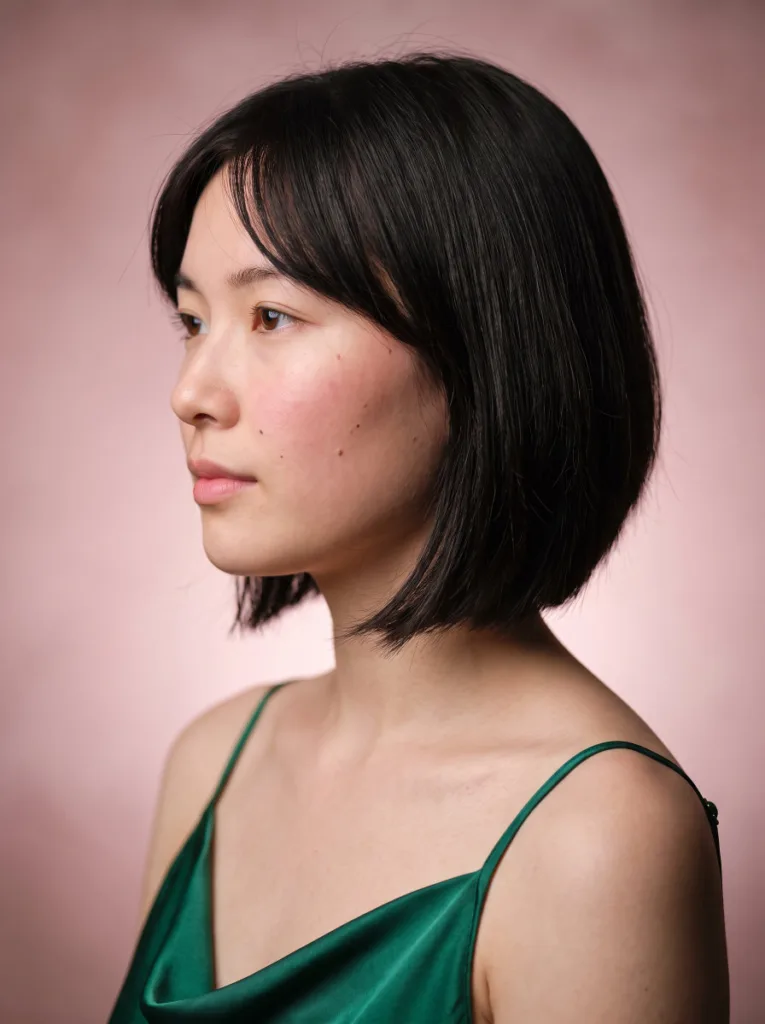
This version pairs a standard angled bob with a sweeping side fringe that grazes one eyebrow. The angle alone, shorter in back and longer at the chin, softens a square jaw. Add the bangs, and that softening goes further, which is why this combination shows up so often for square and heart-shaped faces.
The diagonal fringe breaks up a strong jawline while balancing a narrower chin at the same time. It works on straight or lightly wavy hair without much extra effort. Very curly textures may need the bangs cut a touch longer to account for shrinkage. Style with a flat iron for the sleekest version, or let the bangs air dry for something more relaxed.
6. Stacked Bob
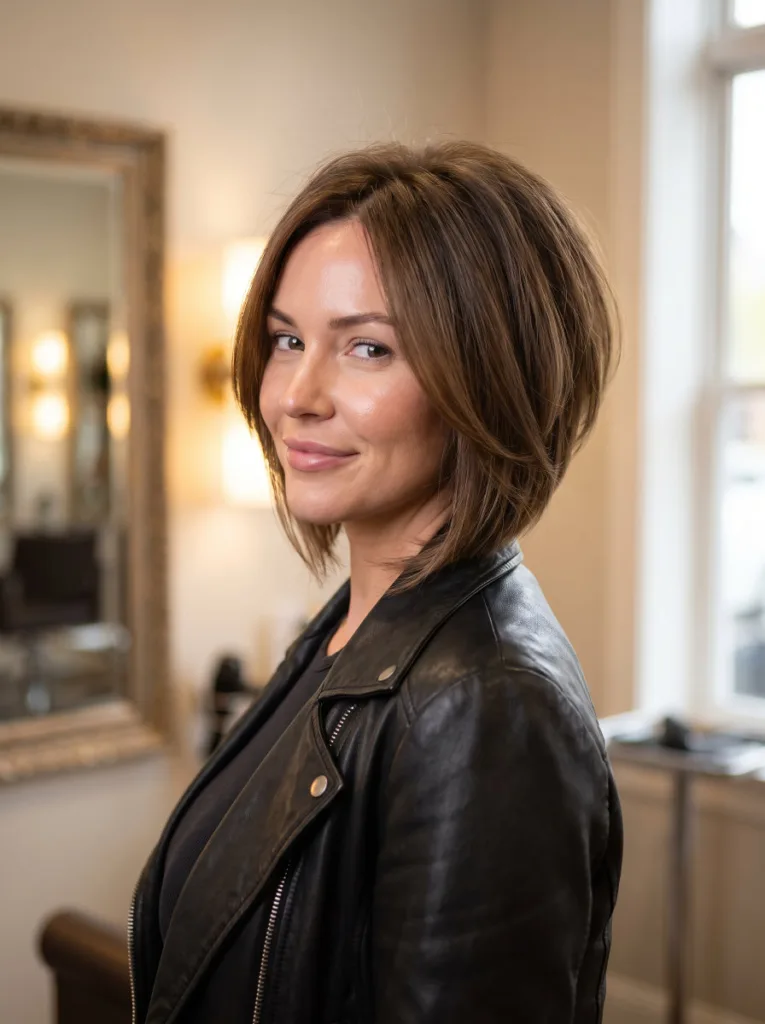
A stacked bob is cut shorter in back, with layers that build height at the crown. From the side you’ll see real volume in back tapering to a longer front. Fine hair benefits most: the stacking lifts hair exactly where it tends to fall flat by afternoon.
Round faces do well here too, since the added height elongates the face and balances wider cheeks. It’s a more technical cut than a basic bob, so look for a stylist whose portfolio mentions stacking or graduation. Blow-dry with your head tipped forward for maximum root lift, then flip back to set the shape. It holds its structure well between washes.
7. Sleek Center-Part Bob
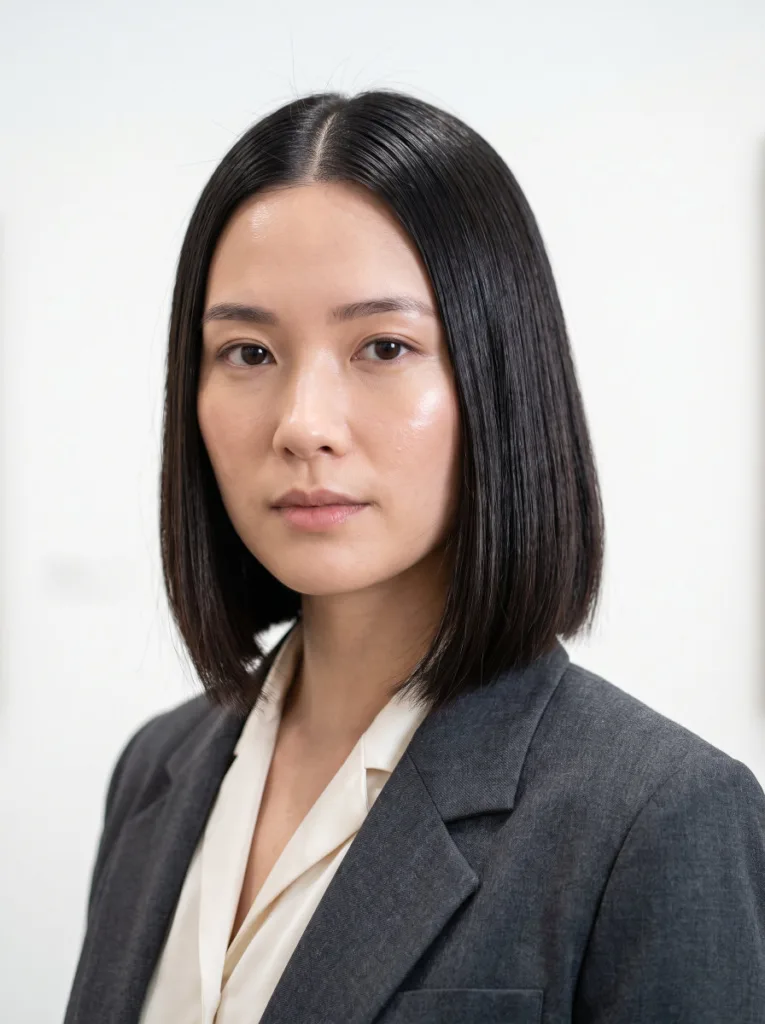
A sleek, center-parted bob reads as polished even if you spent five minutes on it. The cut sits close to a classic blunt bob; the styling sets it apart. Hair pulled straight, parted evenly down the middle, almost no flyaways.
Thick, straight hair is the easiest texture here, since it holds the sleek finish without much product. This look shows up constantly in office and formal settings because it feels put-together without looking overdone. A flat iron and smoothing serum are all you need, plus a heat protectant given how much direct heat this style takes. Fine or wavy hair can still pull it off with a bit more product.
8. Wavy Chin-Length Bob

A wavy chin-length bob leans into texture instead of fighting it, which makes it one of the more forgiving cuts here. Loose, beachy waves add movement without a flat iron session every morning.
Medium to thick hair holds a wave especially well and looks intentional rather than undone. Short on time? A quick scrunch of texturizing spray after air drying gets you most of the way there. The waves soften any face shape, particularly square jaws, where movement breaks up sharp angles. Ask for slightly longer layers around the face so waves fall naturally instead of poofing out. If you want the exact curling method for waves like this, our coastal cowgirl wave hairstyle guide breaks down the technique step by step.
9. Curly Chin-Length Bob

Curly hair at chin length is a different experience from straight or wavy hair at the same length, and it needs its own approach rather than a generic bob cut. The goal is cutting with the curl pattern, not against it, which means your stylist should cut your hair dry or check the dry result before finishing.
Curls shrink as they dry, sometimes by several inches, so what looks chin-length wet can end up much shorter once dry. This cut flatters curly and coily textures well, since shorter layers let each curl move on its own instead of clumping into one mass. It also cuts styling time, since there’s less length to detangle each day. Look for a stylist who specializes in curly cuts specifically.
10. Chin-Length Bob With Curtain Bangs

Curtain bangs part down the middle and sweep to either side, framing the face instead of covering the forehead. Paired with a chin-length bob, they create one of the more universally flattering combinations here, working across round, oval, and long faces alike.
The bangs blend into the rest of the cut instead of standing apart, so there’s no harsh line to manage as they grow. This is a solid pick if you’re nervous about committing to bangs for the first time; curtain styles are more forgiving than a full, blunt fringe. They work on straight, wavy, and curly hair, though curly versions may need extra length to hang correctly. Style with a round brush and a bit of tension, pulling each side back and out.
11. Blunt Bob With Baby Bangs
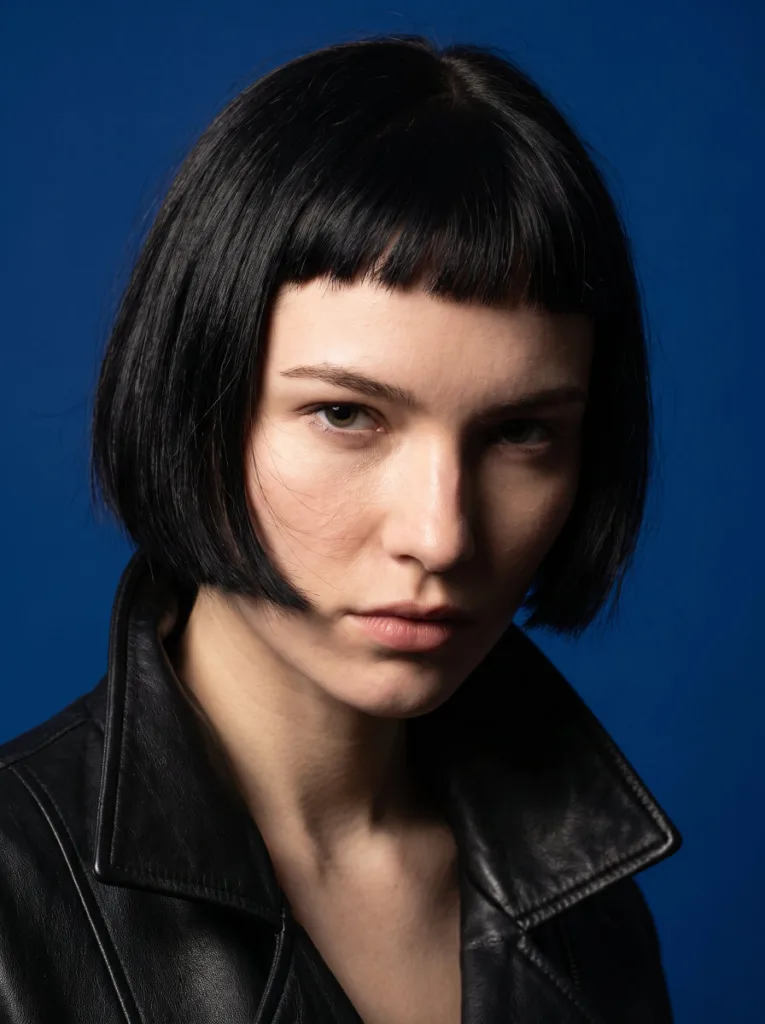
Baby bangs sit high on the forehead, just below the hairline, paired with a blunt bob for one of the boldest looks on this list. It’s not a subtle change. It’s a statement cut, best suited to oval faces that can carry the extra visual weight up top.
Thicker hair holds the shape of baby bangs better than fine hair, which can look sparse at this length. Baby bangs need trimming every two to three weeks to keep their shape, more often than almost any other style here. They also take daily styling with a round brush to stay smooth. This isn’t a low-maintenance choice, but for the right person, it delivers a look nothing else on this list matches.
12. Micro Bob

A micro bob pushes chin-length hair as short as it can go while still qualifying, often sitting just below the ear on one side and angling up toward the back. It’s a dramatic step from longer hair but also one of the more freeing cuts you can get.
There’s barely anything to style, which suits hot climates, workouts, or anyone tired of spending real time on their hair each morning. Straight to slightly wavy hair works best; heavier curl patterns can make a micro bob look more triangular than intended. Because so little length remains, precision matters here, so choose a stylist who cuts short hair regularly. Expect trims every four to six weeks to keep the shape even.
13. Inverted Bob
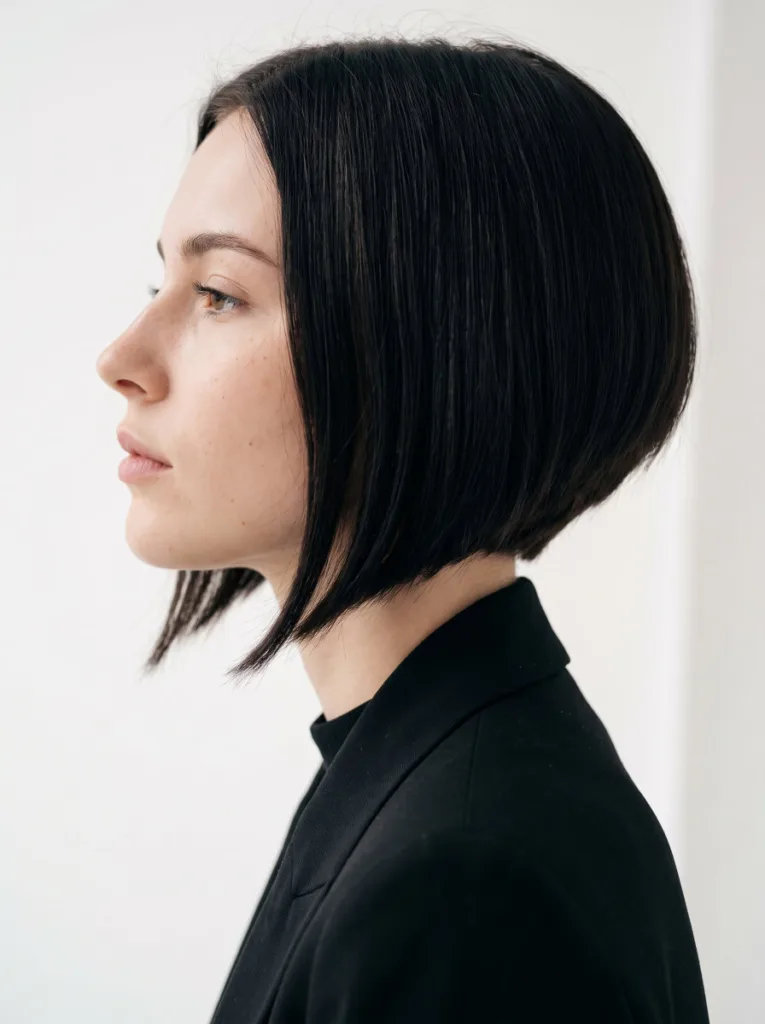
An inverted bob takes graduation to the extreme: dramatically shorter in back, with noticeably longer pieces in front. The result is a strong, architectural shape that looks striking from every angle, especially in profile.
Round and oblong faces respond well, since the longer front pieces create length along the jawline and balance width elsewhere. It’s a structured look, so straight hair shows off the shape most clearly, though a soft wave still works if the layering isn’t too aggressive. Because the back is so short, this cut needs regular trims to keep the graduation crisp, generally every five to six weeks. Style with a round brush on the back and a flat iron on the longer front pieces.
14. Chin-Length Shag With Layers

A chin-length shag piles on layers throughout, creating a loose, textured, slightly undone finish that looks effortless even though cutting it well takes real skill. It’s one of the more versatile options here, holding up on both wavy and curly hair, since natural texture only adds to the shag’s messy charm.
Heavy layering also means less bulk overall, a smart pick if your hair feels heavy or hard to manage at this length. Face-framing pieces soften whatever face shape you’re working with, breaking up hard lines wherever they land. Styling stays casual: scrunch in texturizing cream, let it air dry, done. For extra definition, a diffuser on low heat brings out the layers without flattening them. If you love how layers move and want longer options too, check out our flowy butterfly layer holiday hairstyles for more layered styling ideas.
15. Rounded Bob

A rounded bob swaps the sharp, blunt line of a classic bob for soft, curved ends that follow the jaw’s natural shape. It’s a quieter, more forgiving take on the bob silhouette, a good option if you have a square jaw and want to soften it without heavy layers.
This cut works on most textures, though it looks especially polished on straight to lightly wavy hair, where the rounded line stays clean and easy to see. Finger-comb a light styling cream through damp hair, then blow-dry with a round brush; that’s usually all it takes to maintain the shape. Because there’s no sharp blunt line to maintain, this style grows out more gracefully than a classic bob, buying you extra time between trims.
16. Chin-Length Bob For Thick Hair

Thick hair at chin length has one common complaint: it can look triangular, heavy at the bottom and wide at the sides, if it’s not cut correctly. The fix is internal layering, where a stylist thins the inside of the hair while keeping the outer shape blunt and clean.
From the outside, it still reads as a sleek, one-length bob. Underneath, there’s far less bulk weighing the shape down. This approach solves the biggest complaint women with thick or coarse hair have about shorter cuts. It also cuts drying time, since there’s less hair to dry through. Ask specifically for internal layering or point-cutting, not just thinning, since generic thinning shears can create unwanted texture on the surface instead of underneath.
17. Asymmetrical Bob

An asymmetrical bob breaks the mirror symmetry most haircuts rely on, with one side cut noticeably shorter than the other. It’s an edgier option, and it draws the eye in a way a standard bob doesn’t.
Straight or lightly wavy hair shows off the asymmetry most clearly, since the contrast between lengths reads best without heavy curl competing for attention. This isn’t a cut to try at home. The difference in length needs to be precise, or it just looks like an uneven trim. Once cut correctly, styling is simple: a flat iron for definition, or leave it wavy for something more relaxed. Expect slightly more frequent trims to keep the asymmetry from blurring into an ordinary bob as it grows.
18. Chin-Length Bob With Highlights

Sometimes the fastest way to refresh a bob isn’t a new cut. It’s color. Face-framing highlights or a soft balayage add real dimension to even the simplest blunt or layered bob, catching light with every head turn.
This works on nearly any hair texture, since the color technique doesn’t depend much on the cut underneath. It’s a smart option if you’re not ready to lose more length but still want your hair to feel new. Ask your colorist for highlights concentrated around the face rather than throughout, which brightens your features without a full head of foils. Maintenance runs every eight to twelve weeks for a touch-up, depending on how far the highlights sit from your natural color. Want something bolder than highlights? Our violet gradient hair color ideas guide shows how a true color transition looks on a bob-length cut.
19. Bob For Gray Hair

Gray and silver hair often look best in a crisp, well-defined cut, and a chin-length bob delivers exactly that. The blunt, clean line makes gray read as a deliberate, styled choice instead of something left to grow out by accident.
This cut works well because gray hair often carries a different texture than it did before, sometimes coarser, sometimes finer, and the simplicity of a bob adapts to both. A purple or blue-toned shampoo used weekly keeps brassiness out of lighter gray tones between visits. Regular trims matter more here than with color-treated hair, since split ends show up more against gray strands. Beyond that, a light leave-in conditioner and a quick blow-dry are usually enough.
20. Chin-Length Pixie-Bob Hybrid
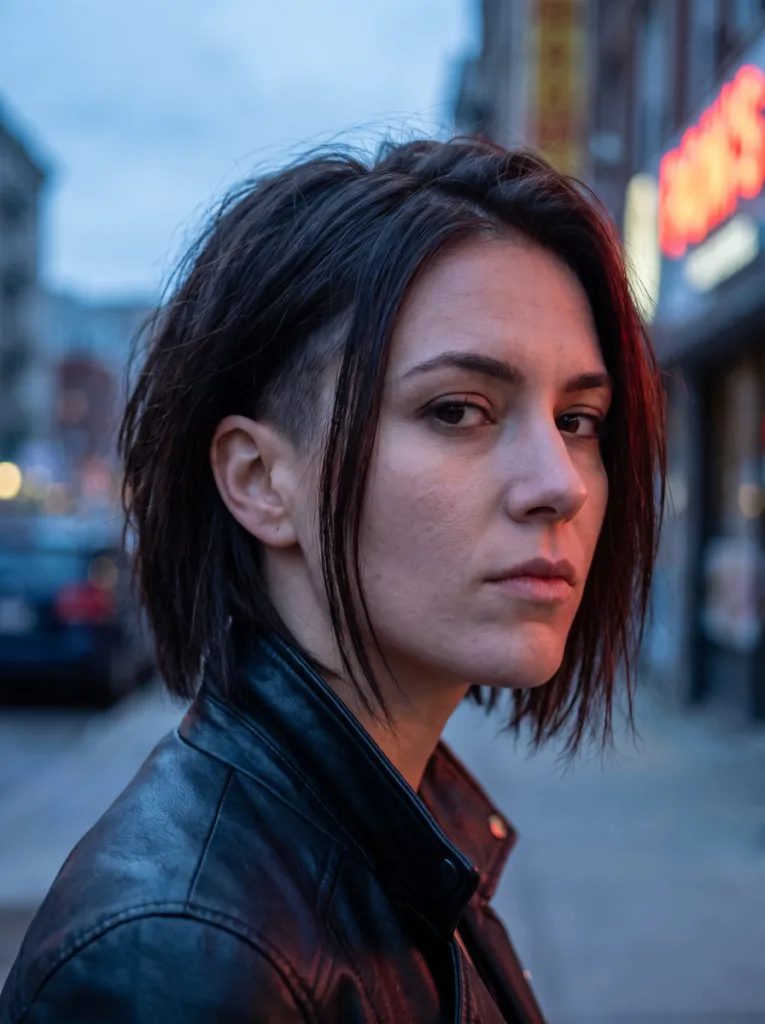
This hybrid blends a bob’s shape with a pixie’s boldness, keeping longer pieces in front while the back and sides go dramatically shorter, sometimes with a visible undercut. It’s the most dramatic option on this list, not a decision to make lightly, but for the right person, it’s transformative.
Low upkeep is the biggest selling point: once cut, there’s little daily styling beyond running texturizing paste through damp hair. It works best on straight to wavy hair, since heavier curl patterns can behave unpredictably around an undercut. Expect to visit your stylist every four to five weeks to keep the shorter sections from growing out and losing shape. If you’ve been considering a major change, this cut is about as bold as chin-length hair gets.
Chin-Length Hair By Texture
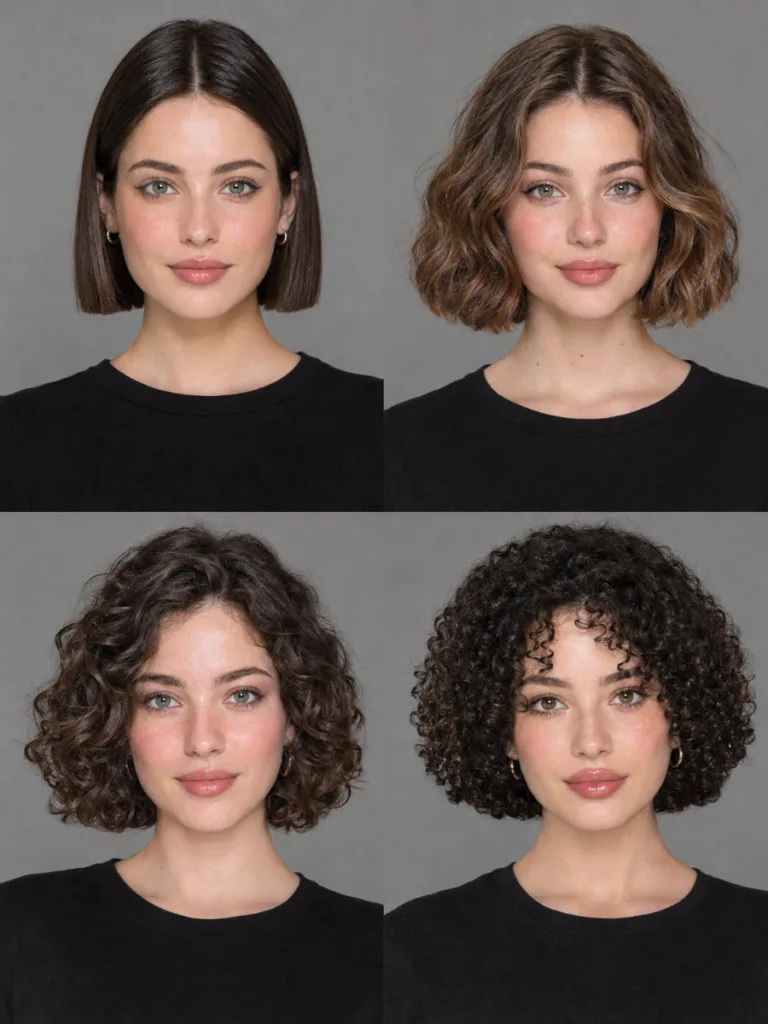
The exact same haircut can look different depending on your natural texture. Knowing this before your appointment can save a disappointing trip to the salon.
Straight And Wavy Hair
Straight hair holds a blunt line cleanly, which is why it shows off sharp, geometric cuts like the classic bob or the sleek center-part style. Wavy hair brings natural texture to shag and layered versions almost for free, cutting down on daily styling. Both textures tend to hold their shape longer between trims than curlier hair, since there’s less shrinkage pulling the line as it dries.
Curly And Coily Hair
Curly hair needs to be cut based on shrinkage, not just measured length, since curls sit higher once dry than they do stretched out wet. A stylist familiar with curls should cut this length dry, or check it dry before calling the cut finished. Coily and tightly textured hair takes this further: cutting by shape rather than length matters more here, since even a small trim changes the whole visible silhouette. Skipping this step is the most common reason curly clients leave a salon disappointed, with a cut that looked right wet and too short once it dried. Between cuts, dermatologists recommend washing curly hair only when needed and detangling it wet with a leave-in conditioner rather than brushing it dry, which helps this length hold its shape longer.
Fine Hair Vs. Thick Hair
Fine hair looks fuller with blunt ends, since layering can make it look thinner than it is. Thick hair goes the other direction: internal layers remove bulk without sacrificing length, keeping the outer shape clean instead of heavy. Bring a reference photo that matches your own texture, not just a celebrity photo you love. It makes a real difference in how close the result comes to what you pictured.
Styling And Maintenance Tips
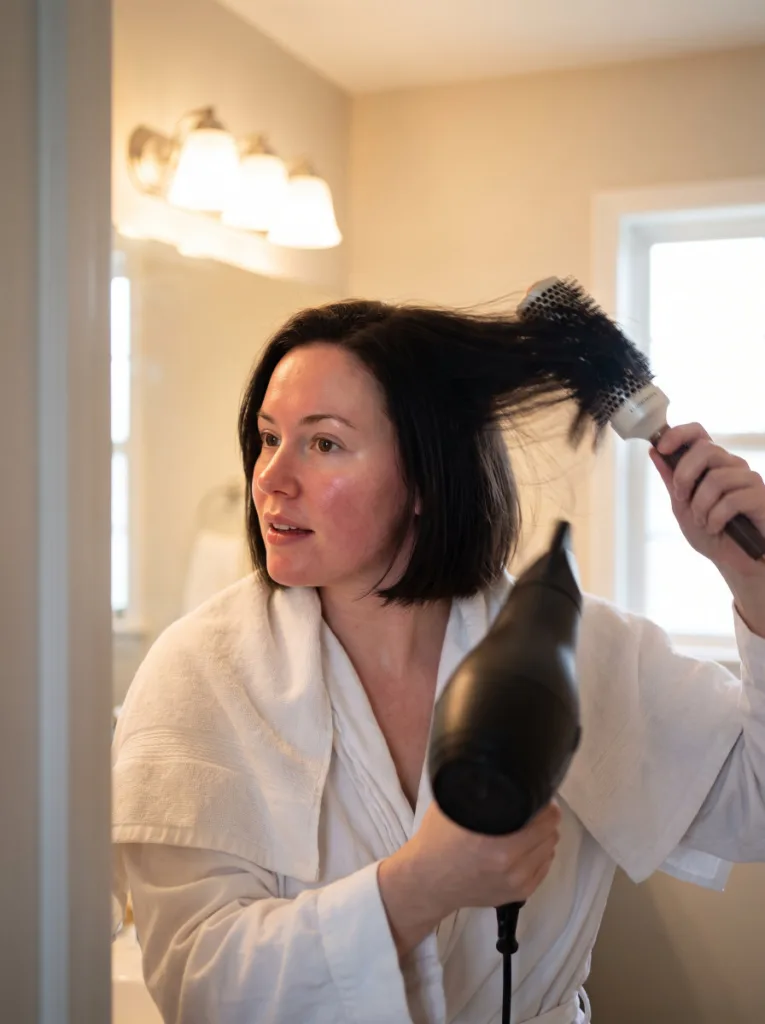
Chin-length hair asks for more upkeep than long hair but less than a pixie. The routine below covers trims, tools, and wash frequency.
How Often You Should Trim
Plan on a trim every 6 to 8 weeks to keep the shape sharp, especially with a blunt or angled cut. Softer, layered styles can stretch longer between visits before they start to look shapeless.
Tools And Products By Texture
- Round brush and blow dryer: creates the smooth, polished finish common in salon photos.
- Diffuser and curl cream: cuts frizz and protects natural pattern on wavy or curly hair.
- Lightweight mousse: works best on fine hair, since heavier creams weigh it down and flatten root volume.
- Smoothing serum on the ends only: controls frizz on thicker or coarser hair without adding grease near the scalp.
- Heat protectant: worth using every time, since chin-length ends take more direct heat exposure than longer hair. Dermatologists recommend keeping styling tools on a low or medium heat setting alongside a heat protectant to limit damage.
- Silk or satin pillowcase: reduces frizz overnight and helps the cut hold its shape between washes.
How Often To Wash
Chin-length hair tends to get oily faster near the roots than longer hair, since there’s less length to soak up natural oils. Washing every two to three days, with dry shampoo filling the gaps, keeps the style fresh without drying out the scalp.
Pros And Cons Of Going Chin-Length
This length isn’t the right call for everyone. Weigh both sides before you book the appointment.
The Upsides
- Faster drying time and less product needed day to day.
- A look that reads as polished even on days you barely tried.
- Flatters nearly every face shape once you pick the right variation.
- Makes fine hair look thicker and adds a youthful edge.
The Downsides
- Less flexibility for updos.
- A shorter grow-out period before it hits an awkward in-between stage.
- More frequent trims to maintain the shape.
- A higher chance of a triangular silhouette if your hair is very thick or very curly and the stylist isn’t skilled at this length.
Ponytails and workouts deserve a mention too. Chin-length hair can still pull back, but front pieces tend to slip out within the hour. A few short claw clips or a headband usually solves it, though it means a little extra planning longer hair never asked for.
Frequently Asked Questions
Does chin-length hair suit thick hair?
Yes, if the stylist thins internal layers. A blunt outer line paired with thinned layers underneath keeps the shape without excess bulk.
How do I grow out chin-length hair gracefully?
Add face-framing layers and light bangs during the growing-out phase. Regular trims of just the ends keep the shape neat while length builds.
Is chin-length hair flattering with glasses?
Yes. A side part and soft layers around the frames balance the glasses and keep your eyes as the focal point.
Will chin-length hair work for a double chin or short neck?
An angled bob that’s longer in front draws the eye downward and elongates the neck, making it a flattering choice for this concern.
How do I ask my stylist for this exact length?
Bring a clear reference photo and specify “jaw-length” rather than just “short.” Mention your face shape and texture so the stylist can adjust the cut to fit you.
How long does it take to grow chin-length hair to shoulder length?
Hair grows about half an inch per month on average, so reaching shoulder length usually takes 6 to 12 months depending on your starting point and trim schedule. Cleveland Clinic’s overview of the hair growth cycle explains why that rate varies from person to person.
Can I color chin-length hair without damaging it?
Yes, but shorter hair shows damage faster since there’s less length to hide dryness or breakage. A bond-building treatment during your color service helps protect the hair, especially with blunt, one-length cuts.
Conclusion
The right chin-length hairstyle works for nearly every face shape and texture, but only when the cut matches your features instead of a photo you saved somewhere. The right style might be a blunt bob, a soft shag, or a cut built around your natural curl pattern. That choice comes down to your face shape, your texture, and how much time you want to spend styling it each morning. Book a consultation. Bring a reference image close to your own texture, not just a celebrity photo you like. Ask your stylist which of these 20 styles fits your face and hair type best, then stick to a trim schedule once you commit.
For more helpful articles related to haircut ideas, please visit blushhairflow.