23 Split Dye Hair Color Ideas You’ll Want This Fall
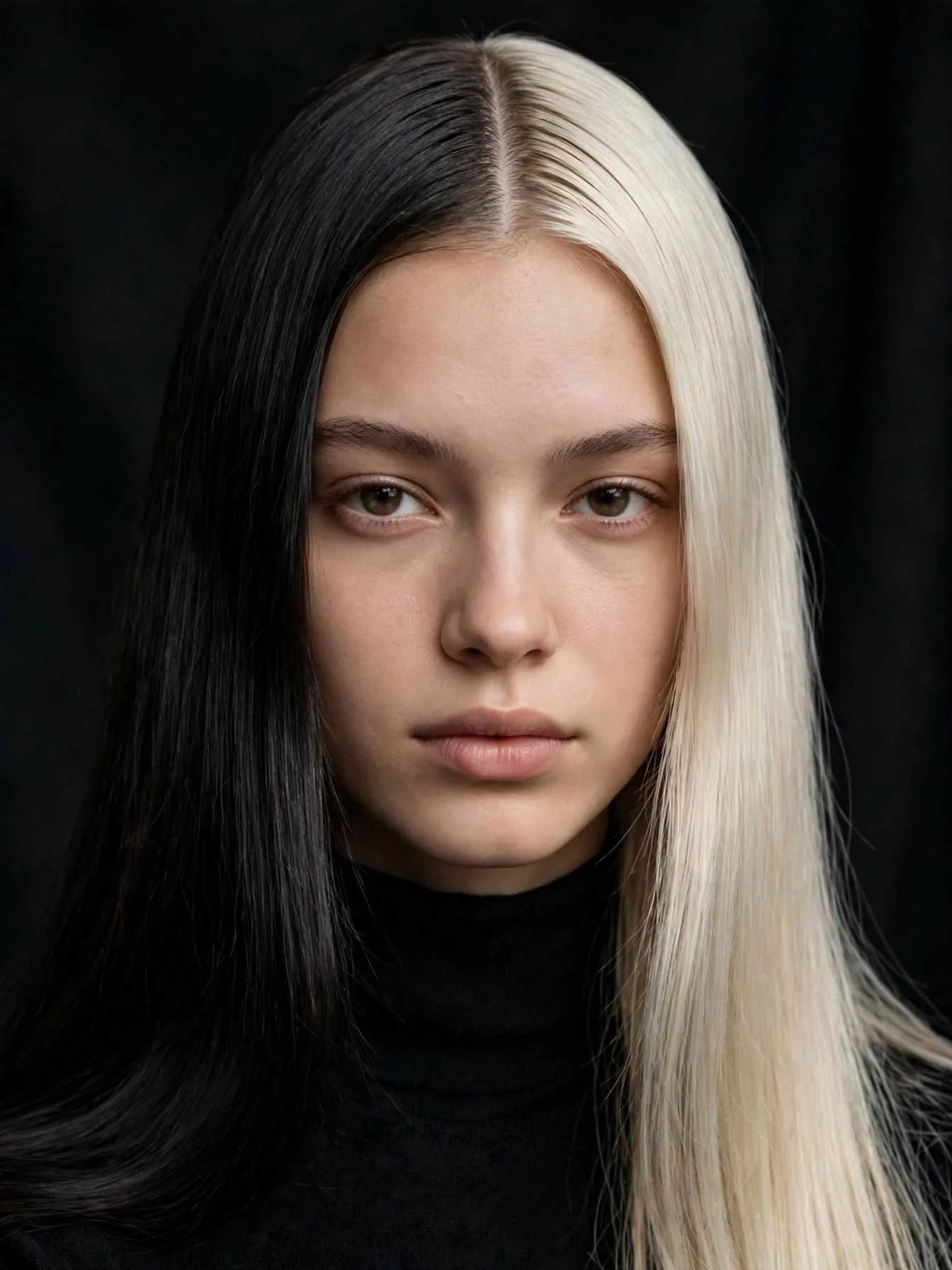
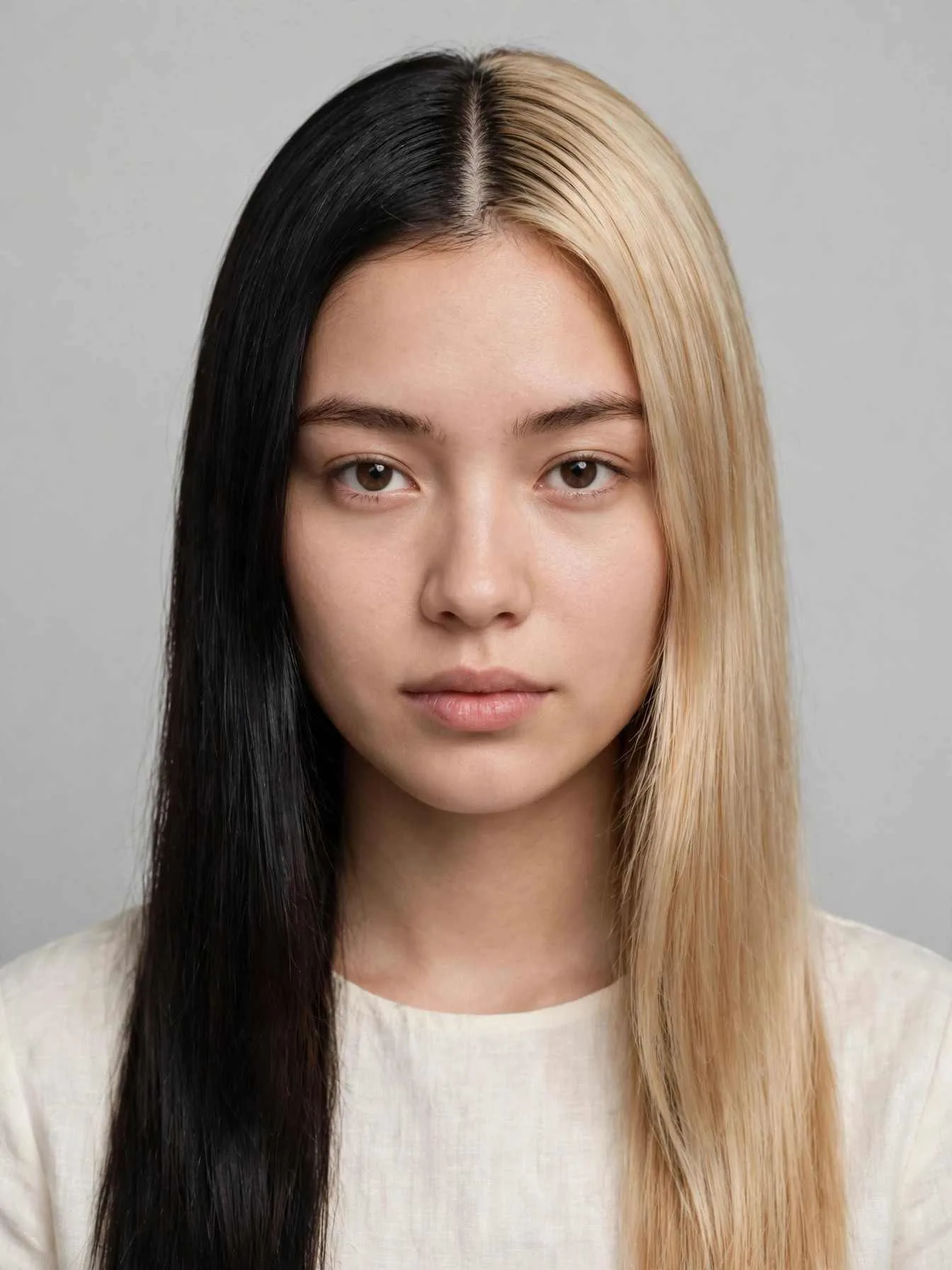
One part line. Two colors. Zero blending. Split dye hair color splits your hair down the middle, with a different shade on each side. The line runs straight from forehead to nape. Each side keeps its own tone. The result reads bold from the front and graphic from the back. Pinterest interest sits near 78 out of 100 this fall. The audience skews young: 84% female, nearly half ages 18 to 24. The look peaked last February and never really left. Below are 23 ways to wear it, plus honest costs, upkeep plans, and the bleed-prevention tricks most guides skip.
Why Split Dye Hair Color Keeps Trending
The appeal is simple. You get two colors without committing your whole head to either. Natural on one side, vivid on the other? That works. The part line does the design work, so the color itself can stay simple. Most versions need bleach on at least one side, which means real upkeep. That is the trade most guides gloss over. This guide does not. Every idea below comes with a maintenance note. Later sections cover costs, grow-out plans, and keeping the two sides from bleeding into each other.
1. Classic Black and White
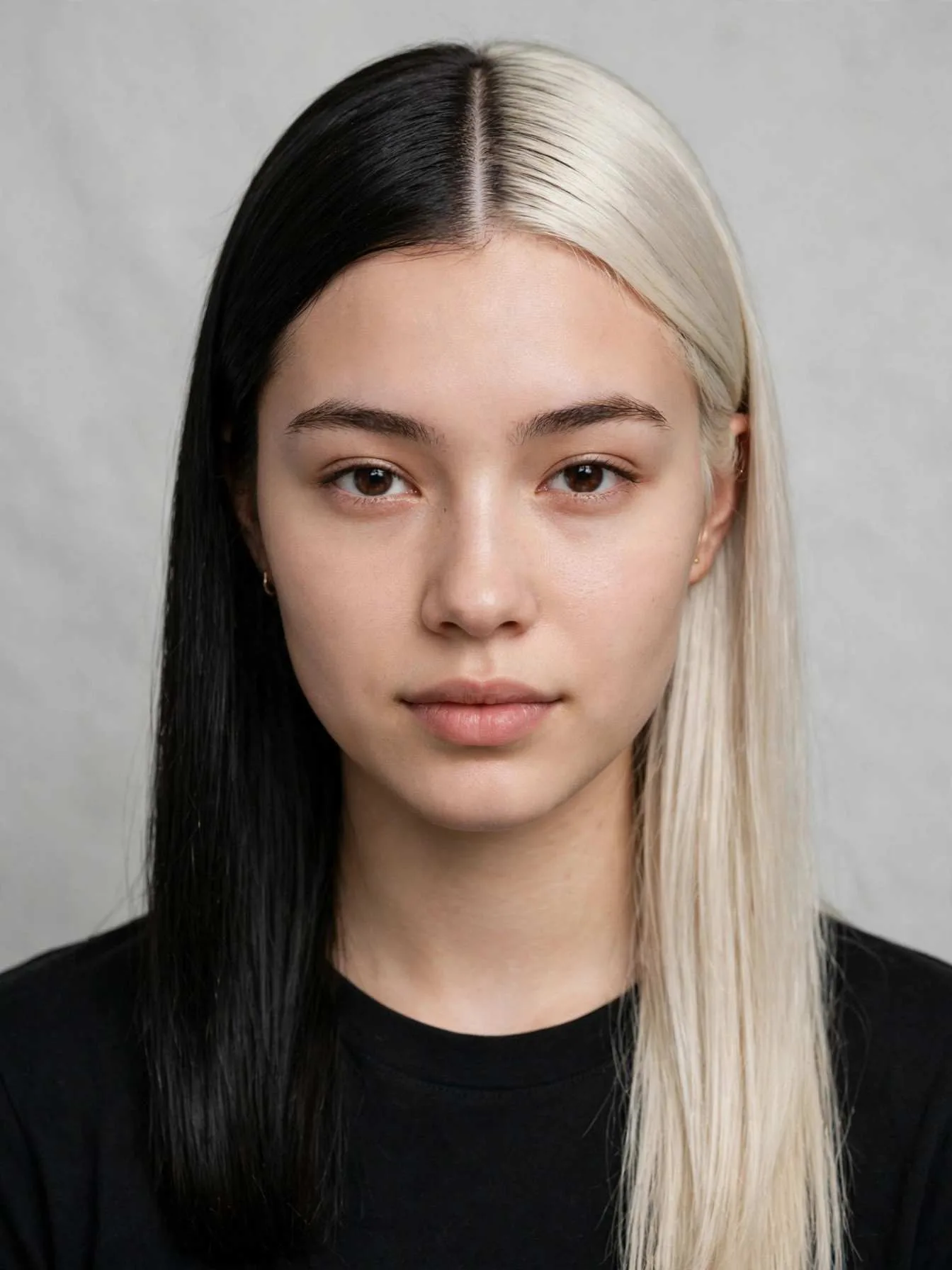
The Cruella divide that started it all. One side goes deep jet black, the other lifts to clean white blonde. The contrast is the whole point, so the center line must stay sharp. Your stylist will foil each side separately and rinse them apart. White needs toner every 3 to 4 weeks to stay white. Black needs gloss refreshes to avoid fading to brown.
Best for: first-timers who want the iconic look; straight hair that shows a crisp line.
Ask your stylist for: level 10 lift on one side, blue-black permanent color on the other, toned to neutral white.
2. Platinum Blonde and Jet Black
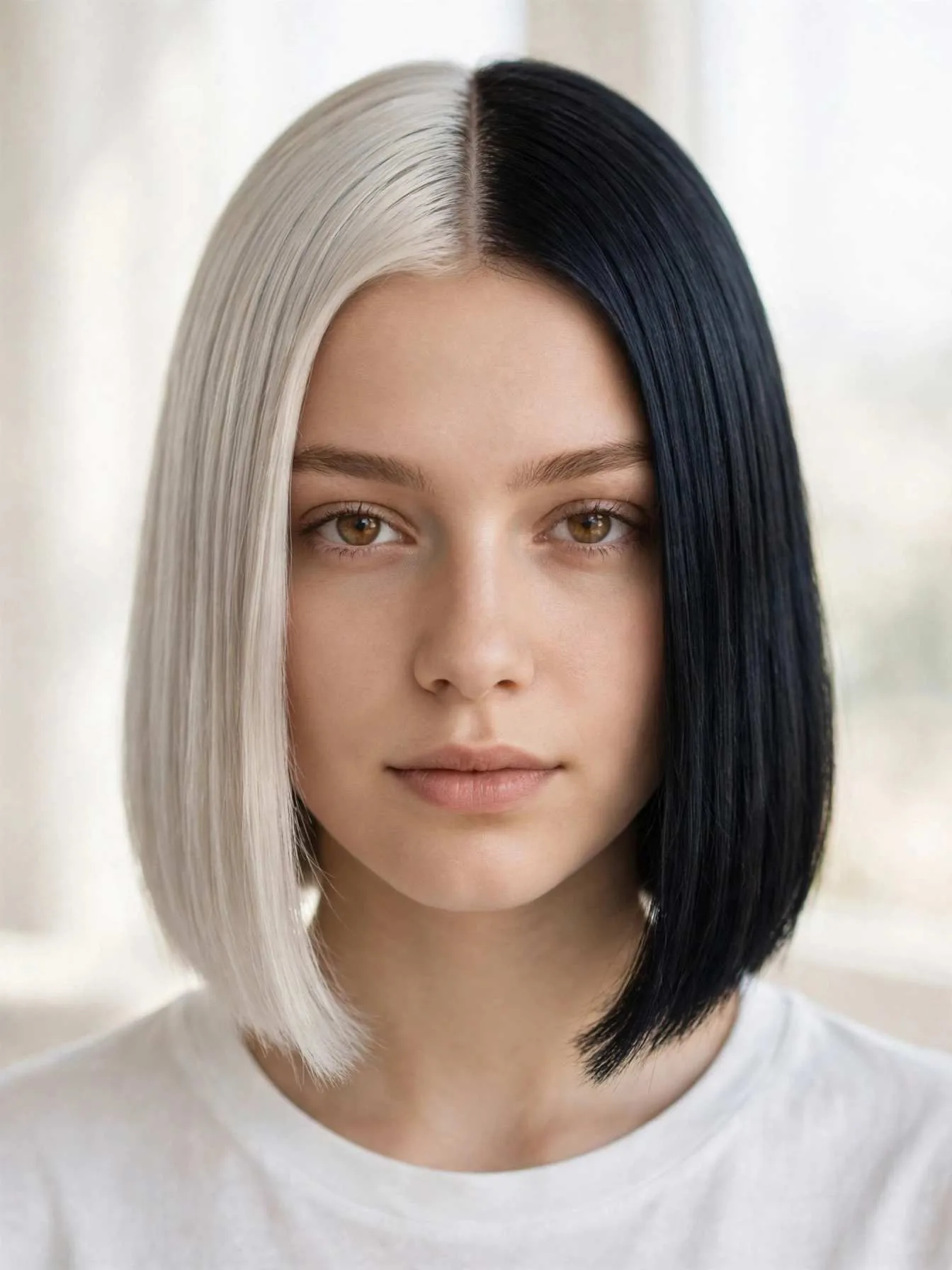
A sharper take on the classic. The blonde side goes full platinum level 10, icy and near-white. The black side stays blue-black for maximum contrast. This pairing demands the most bleach on this list. Expect 2 to 3 sessions if you start from dark brown. A bond builder helps protect hair during lifting.
Best for: dramatic contrast lovers; those ready for high-maintenance blonde.
Ask your stylist for: platinum level 10 with violet toner, jet black permanent on the opposite side.
3. Golden Blonde and Espresso
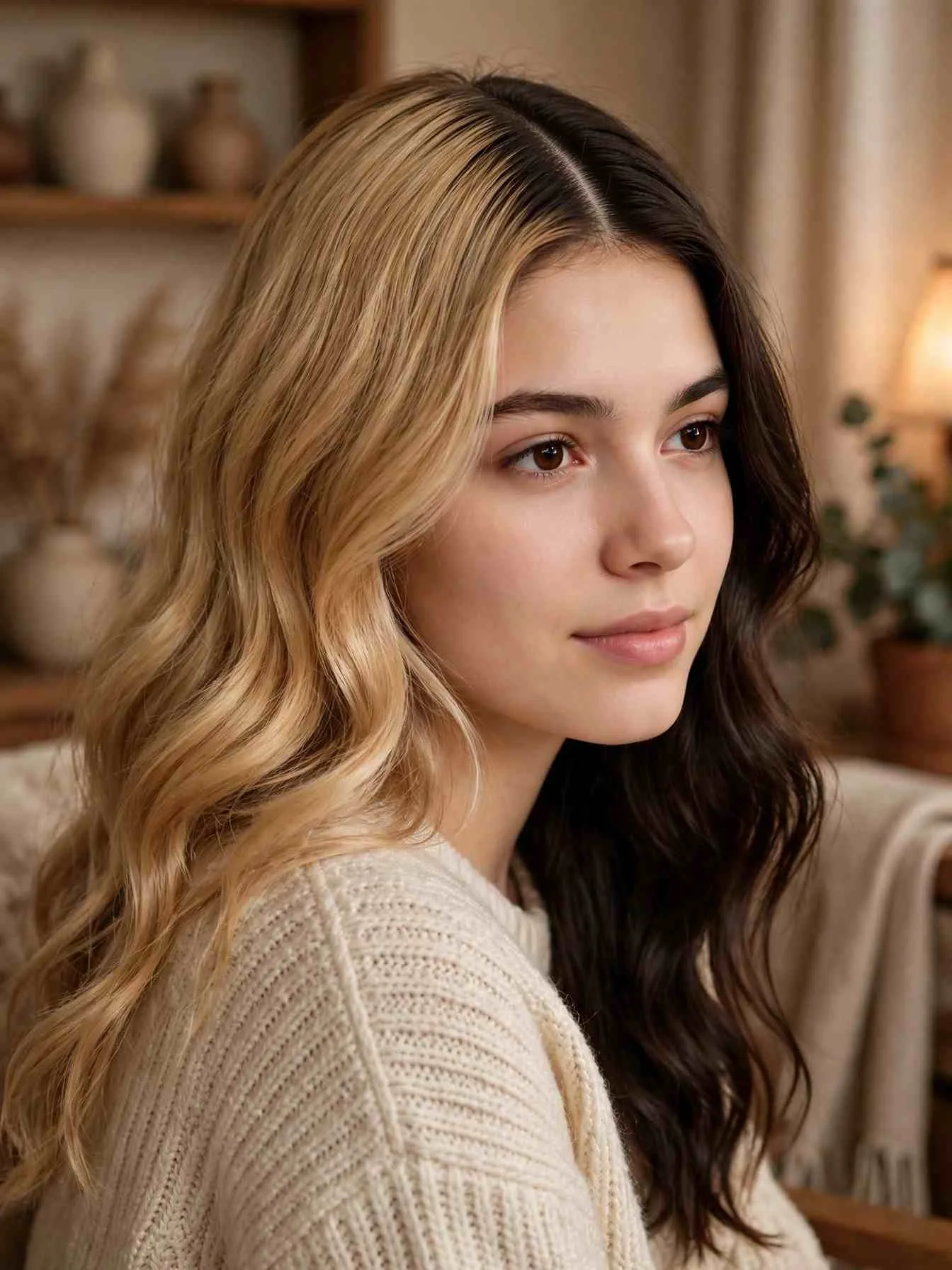
Warm and wearable. One side lifts to golden blonde, the other deepens to rich espresso brown. The warmth on both sides keeps the split from feeling harsh. This suits people who want the style without the punk edge. Grow-out looks softer than the black-and-white versions.
Best for: warm undertones; office-friendly split dye.
Ask your stylist for: level 8 golden blonde, espresso brown demi-permanent, warm gloss overall.
4. Honey Blonde and Chocolate Brown

Soft contrast for cautious beginners. Honey blonde on one side, chocolate brown on the other. The tones sit close enough that regrowth blends gently. This is the easiest split to grow out on the list. It also photographs well because the warmth reads rich in daylight.
Best for: beginners; anyone nervous about harsh lines.
Ask your stylist for: honey blonde balayage-style lift on one side, chocolate brown gloss on the other.
5. Copper and Cream
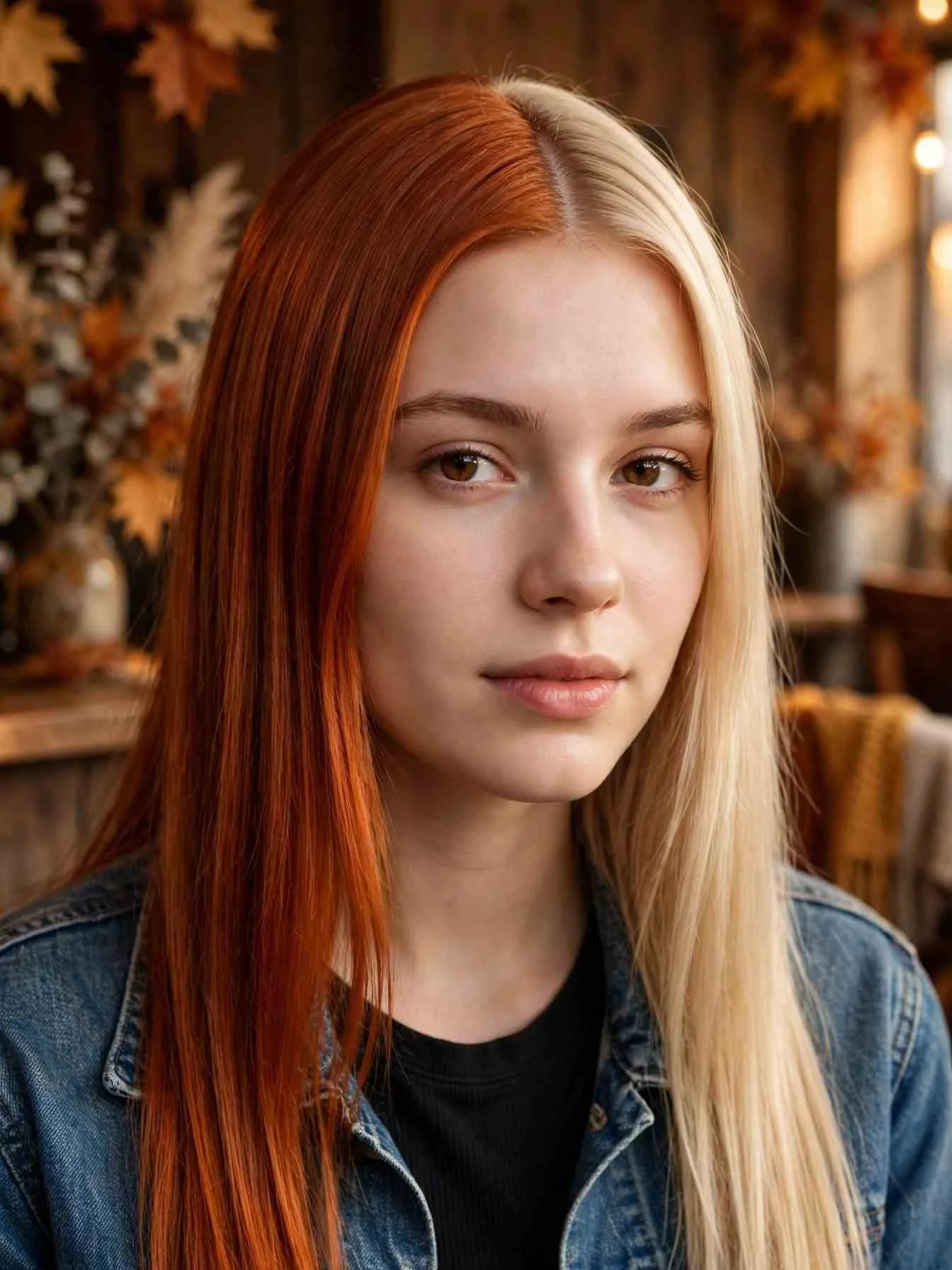
Warm copper meets soft cream blonde. The copper side glows against the pale cream, and both shades share warm undertones. Copper fades fast, so plan a color-depositing conditioner in copper once a week. The cream side needs purple shampoo to stay bright. For more copper inspiration, see our guide to copper hair color ideas.
Best for: warm skin tones; autumn color lovers.
Ask your stylist for: copper permanent color, cream blonde lifted to level 10 with warm toner.
6. Cherry Red and Jet Black
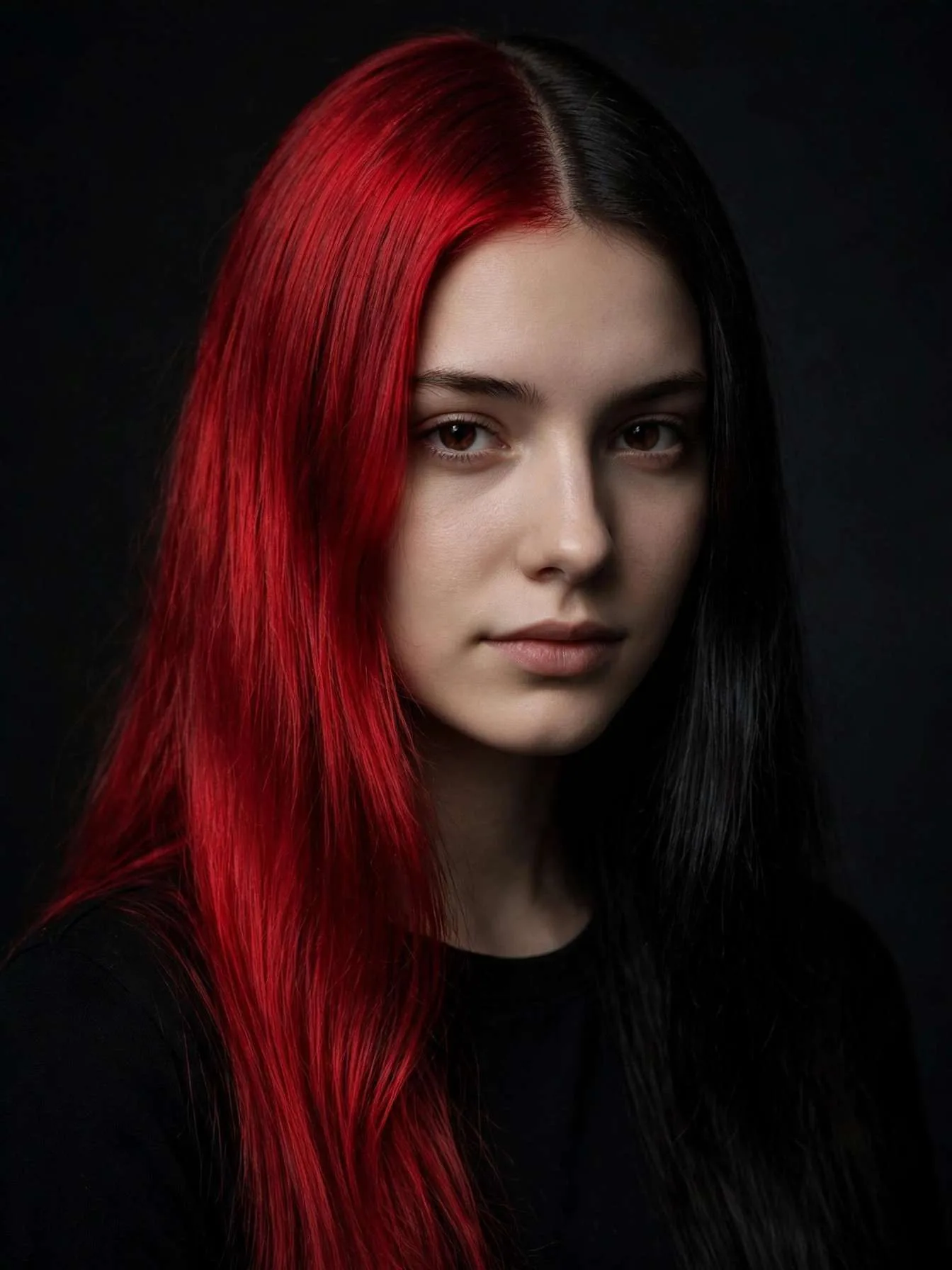
Fiery edge with goth roots. Cherry red pops hard against jet black. Red is the fastest-fading fashion color, so cold-water washing matters here. The black side needs its own care: permanent black can fade to a flat brown without gloss refreshes. For red-on-brown variations, see our guide to red highlights in brown hair.
Best for: statement makers; those who already love red.
Ask your stylist for: cherry red semi-permanent over pre-lightened hair and blue-black on the other side.
7. Burgundy and Dark Brown

Deep wine tones over a dark base. Burgundy on one side, dark brown on the other. The split shows most in sunlight, where the red tones catch light. Indoors it reads subtle and rich. This needs less bleach than brighter reds, so damage stays lower. Burgundy still fades, just slower than cherry.
Best for: dark natural hair; low-key drama.
Ask your stylist for: burgundy demi-permanent over lifted brown, dark brown gloss opposite.
8. Pastel Pink and Lavender
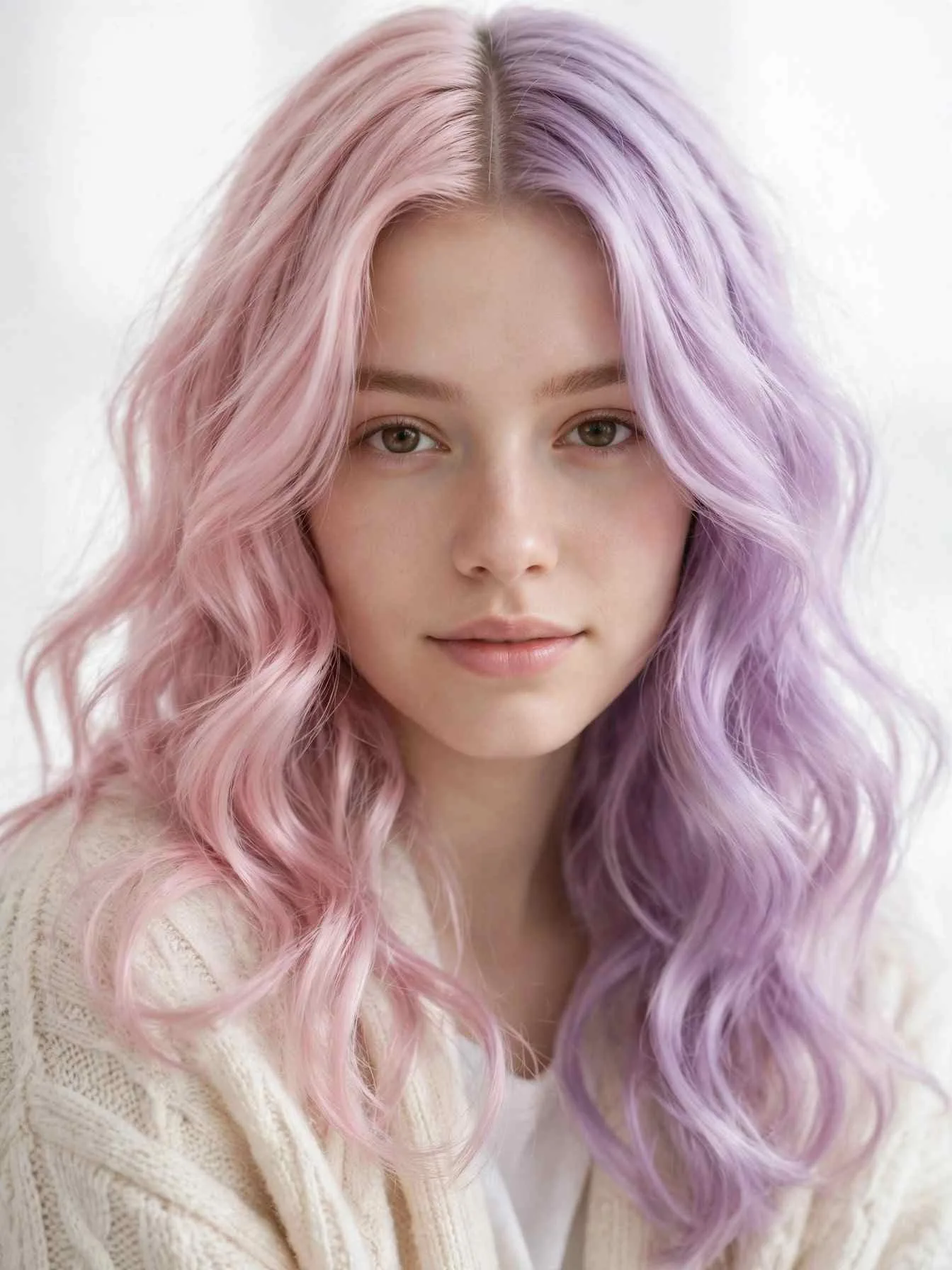
Soft and whimsical. Pastel pink on one side, lavender on the other. Both sides need a pale blonde base, so this starts with full-head lightening. Pastels wash out in 4 to 6 weeks, which makes this a short-term commitment. The fade itself looks pretty, melting into soft blush tones.
Best for: pastel lovers; already-blonde hair.
Ask your stylist for: level 10 base, pastel pink and lavender semi-permanent, applied to each side separately.
9. Hot Pink and Electric Blue
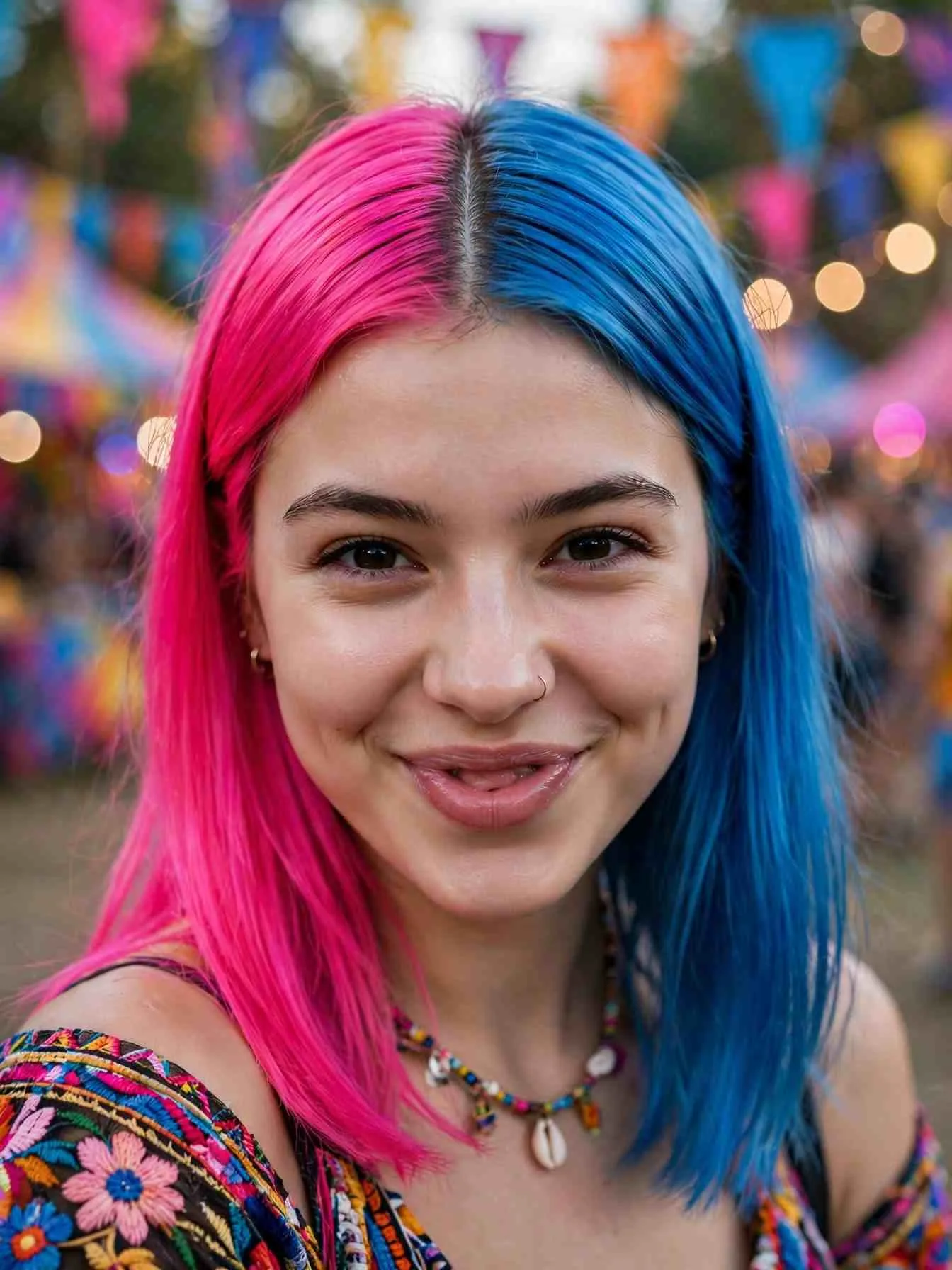
Neon statement energy. Hot pink clashes beautifully with electric blue. Both are semi-permanent dyes that stain hard, so the center line needs careful application. Expect staining on pillowcases for the first week. These shades fade within a month, so plan refreshes or enjoy the fade.
Best for: festival season; bold color veterans.
Ask your stylist for: pre-lightened base, hot pink and electric blue direct dye, barrier cream along the part.
10. Teal and Violet
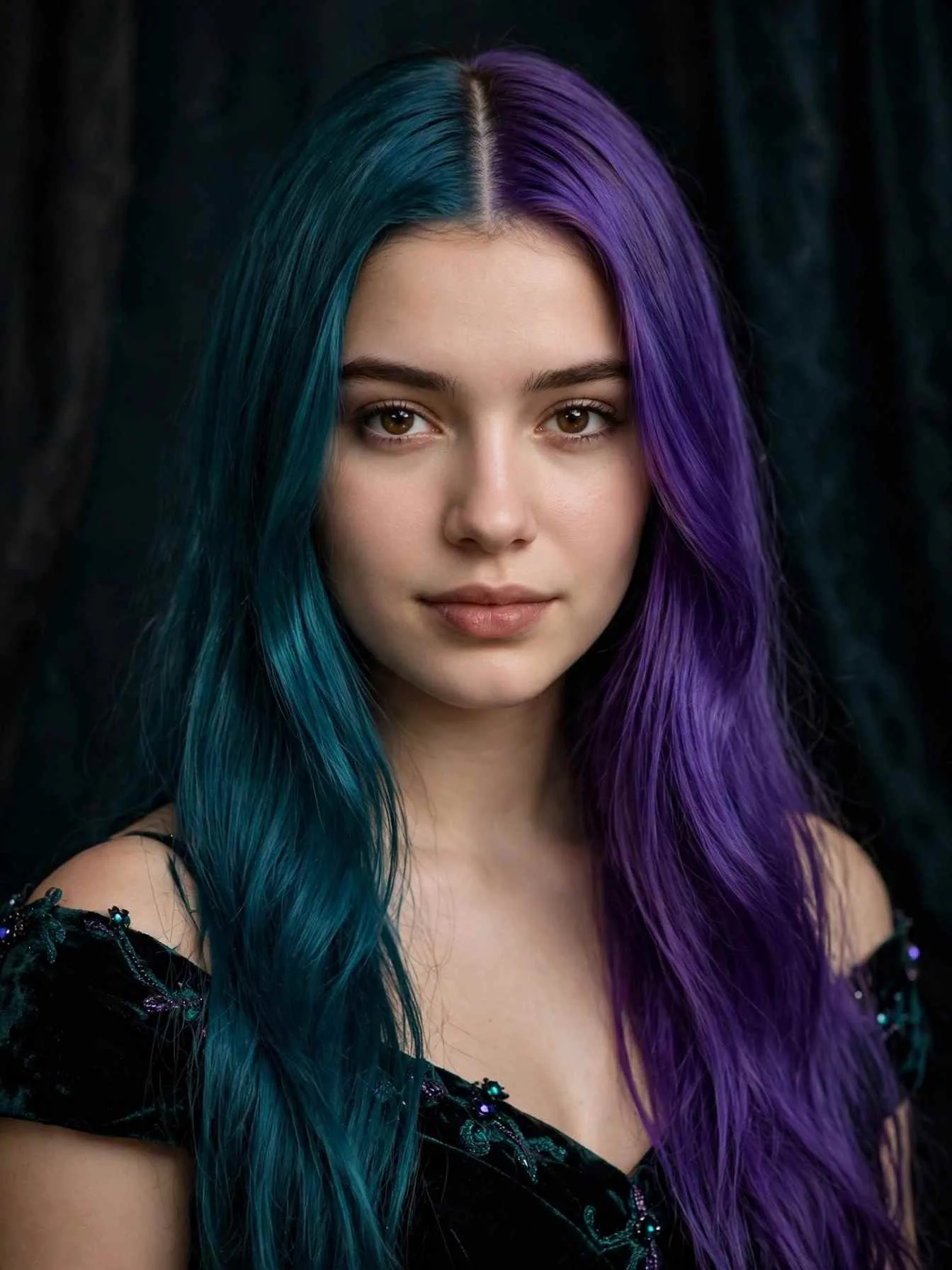
Jewel tones with depth. Teal on one side, violet on the other. Both shades need a light base to show true. Teal tends to fade toward green, violet toward gray. Washing in cold water slows both. This pairing suits people who want color without neon brightness.
Best for: jewel-tone fans; medium-maintenance color lovers.
Ask your stylist for: level 9 lift, teal and violet semi-permanent, cool-toned finish.
11. Mint and Lilac
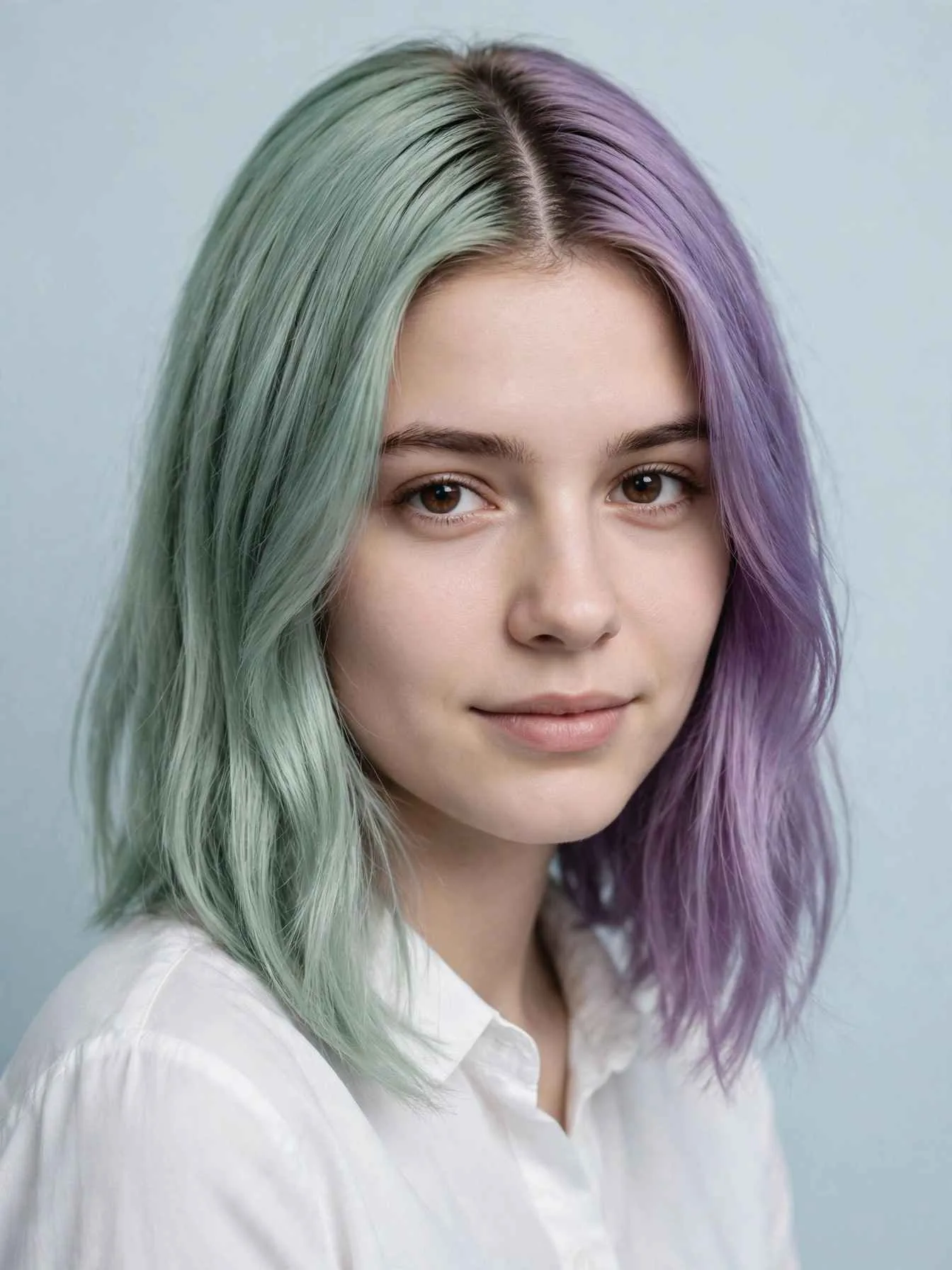
Cool pastel pair. Mint green meets soft lilac. Like all pastels, these need pale hair underneath and fade in weeks. Mint can grab unevenly on porous hair, so an even base matters. The two shades fade into each other prettily at the part line.
Best for: cool undertones; short-term pastel experiments.
Ask your stylist for: even level 10 base, mint and lilac pastel dyes, sulfate-free aftercare plan.
12. Coral and Teal
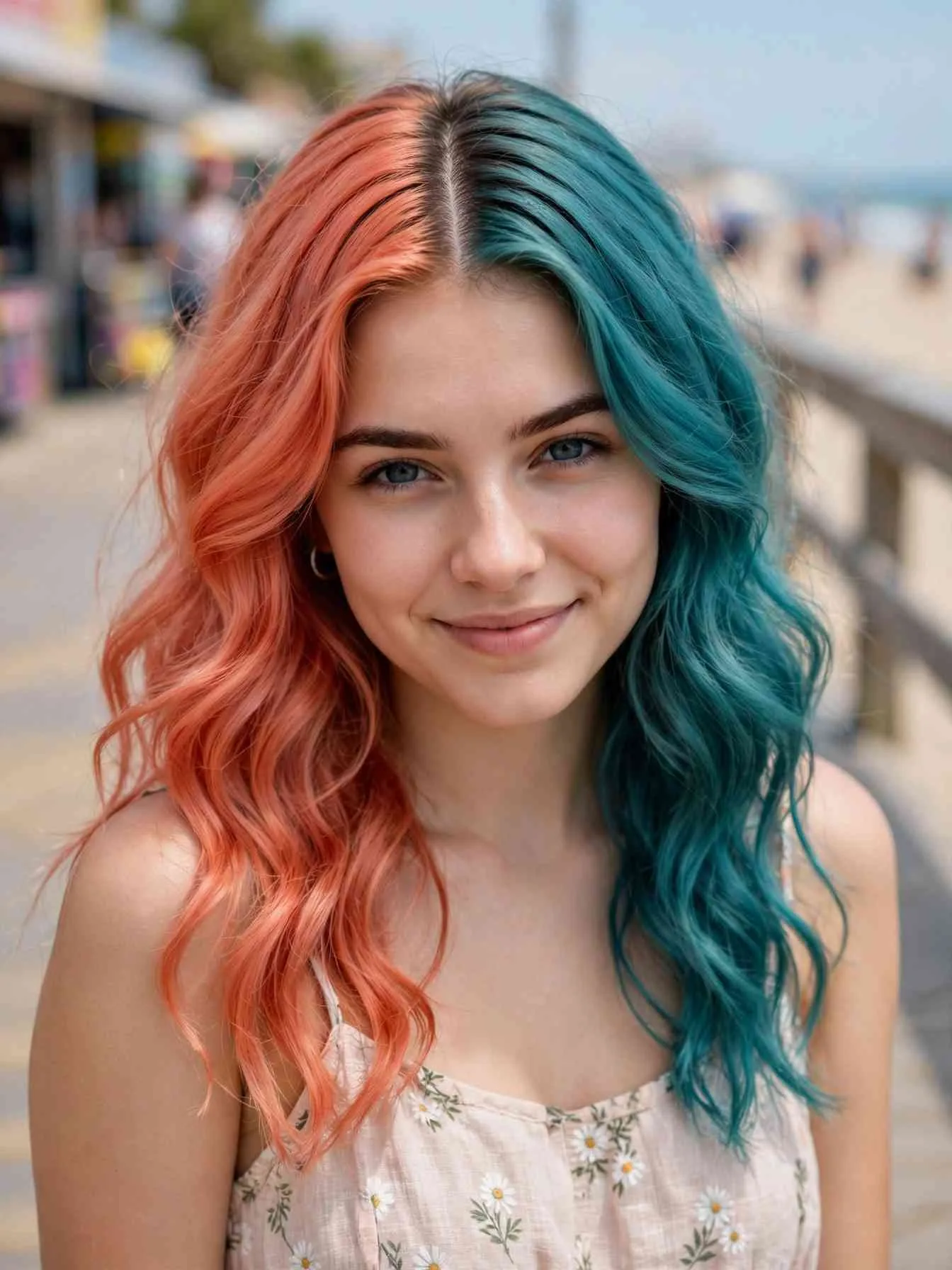
Playful complementary colors. Coral orange-pink sits opposite teal on the color wheel, so the contrast pops. Coral fades faster than teal, which means the two sides age at different speeds. That is normal for split dye. Refresh the coral side more often to keep balance.
Best for: color-wheel contrast lovers; summer into fall.
Ask your stylist for: coral and teal semi-permanent over pre-lightened hair, separate refresh schedule per side.
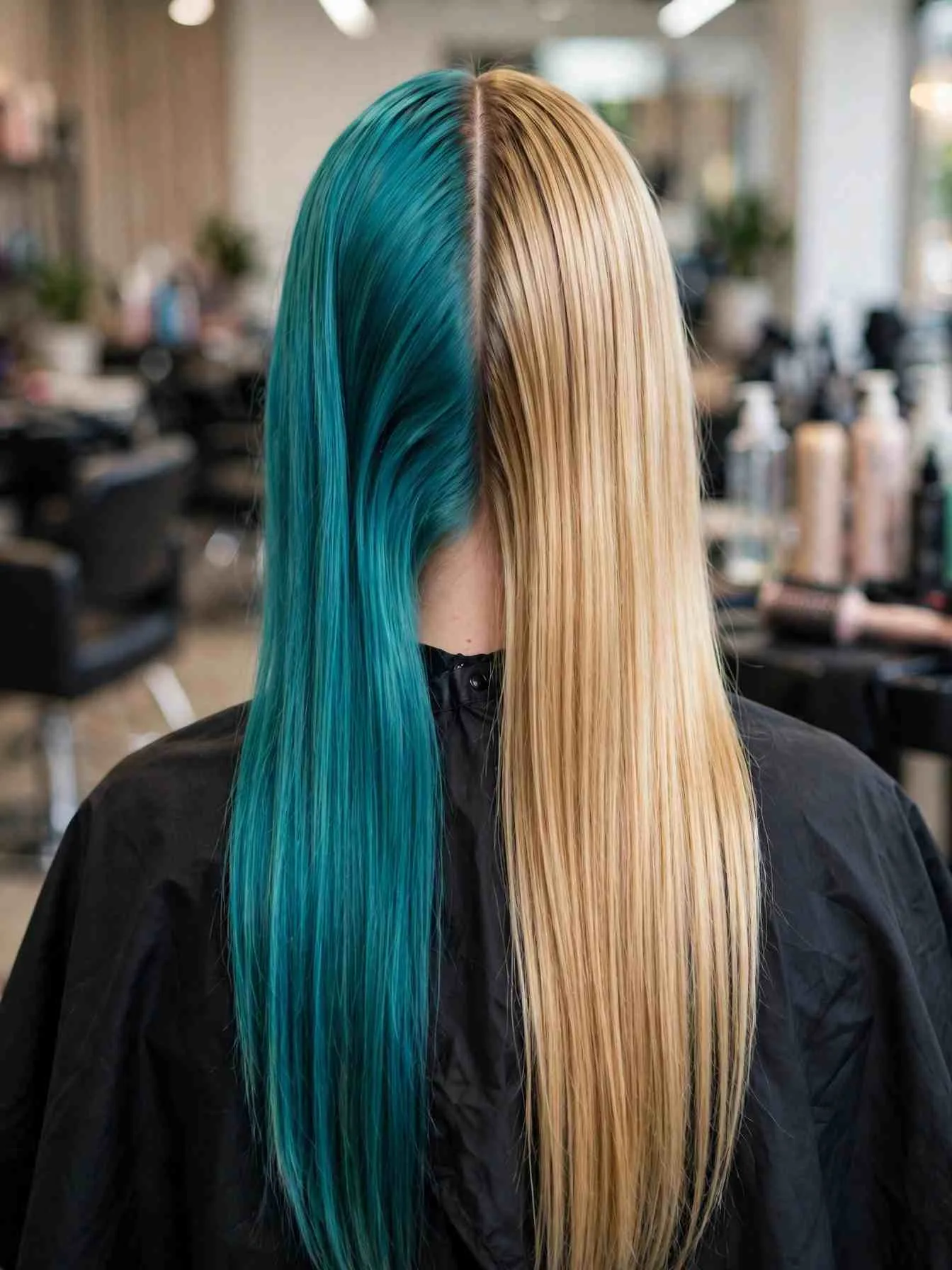
13. Flame Red and Orange

Sunset blend at the part. Flame red on one side melts toward orange near the center line. This is the one split where slight blending looks intentional. The warmth suits fall especially well. Both shades fade warm, so regrowth never looks ashy or dull.
Best for: fall color; warm-tone enthusiasts.
Ask your stylist for: flame red and vivid orange semi-permanent, softened transition at the part.
14. Yellow and Purple
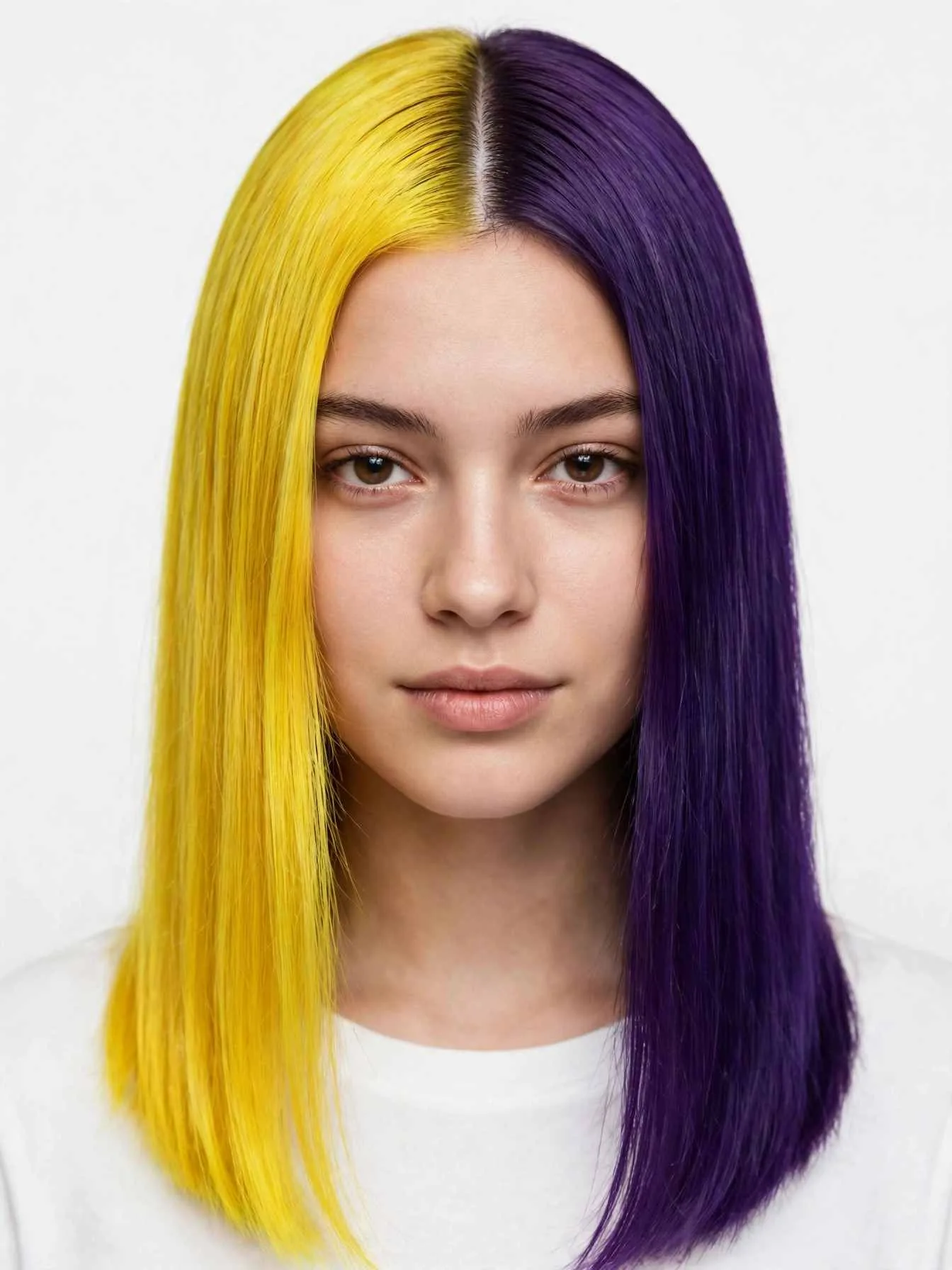
Color-wheel opposites, maximum contrast. Yellow on one side, purple on the other. Yellow needs the palest base of any shade here, true level 10. Purple covers more easily. The two sides will fade at very different rates, so this needs the most frequent touch-ups of any pairing.
Best for: high-impact looks; experienced color wearers.
Ask your stylist for: palest blonde base, vivid yellow and deep purple direct dyes.
15. Icy Blue and Silver

Metallic cool tones. Icy blue meets silver gray. Both need white-blonde hair underneath and toner to stay clean. Blue fades to mint, silver fades to pale gray. A purple shampoo helps the silver side, but keep it off the blue side to avoid dulling.
Best for: cool undertones; metallic-finish lovers.
Ask your stylist for: level 10 base, icy blue and silver toners, separate shampoo routine per side.
16. Emerald and Black
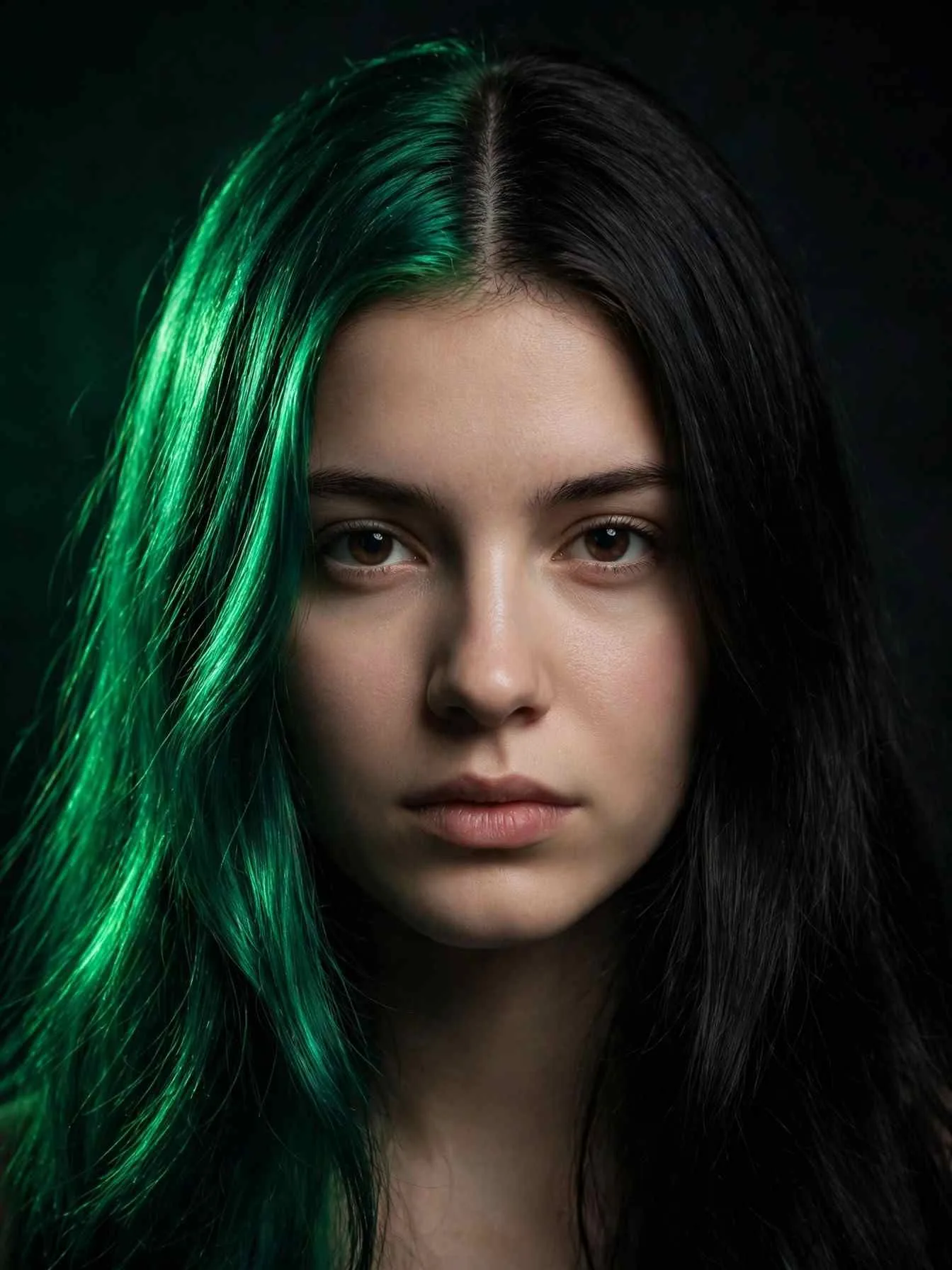
Deep green edge. Emerald on one side, black on the other. The green reads almost black indoors and glows in sunlight. Emerald fades toward teal, then gray. This suits people who want edge without brightness. The dark base keeps grow-out forgiving.
Best for: dark bases; subtle-from-afar drama.
Ask your stylist for: emerald semi-permanent over dark lifted hair, black permanent opposite.
17. Ginger and Butter Blonde
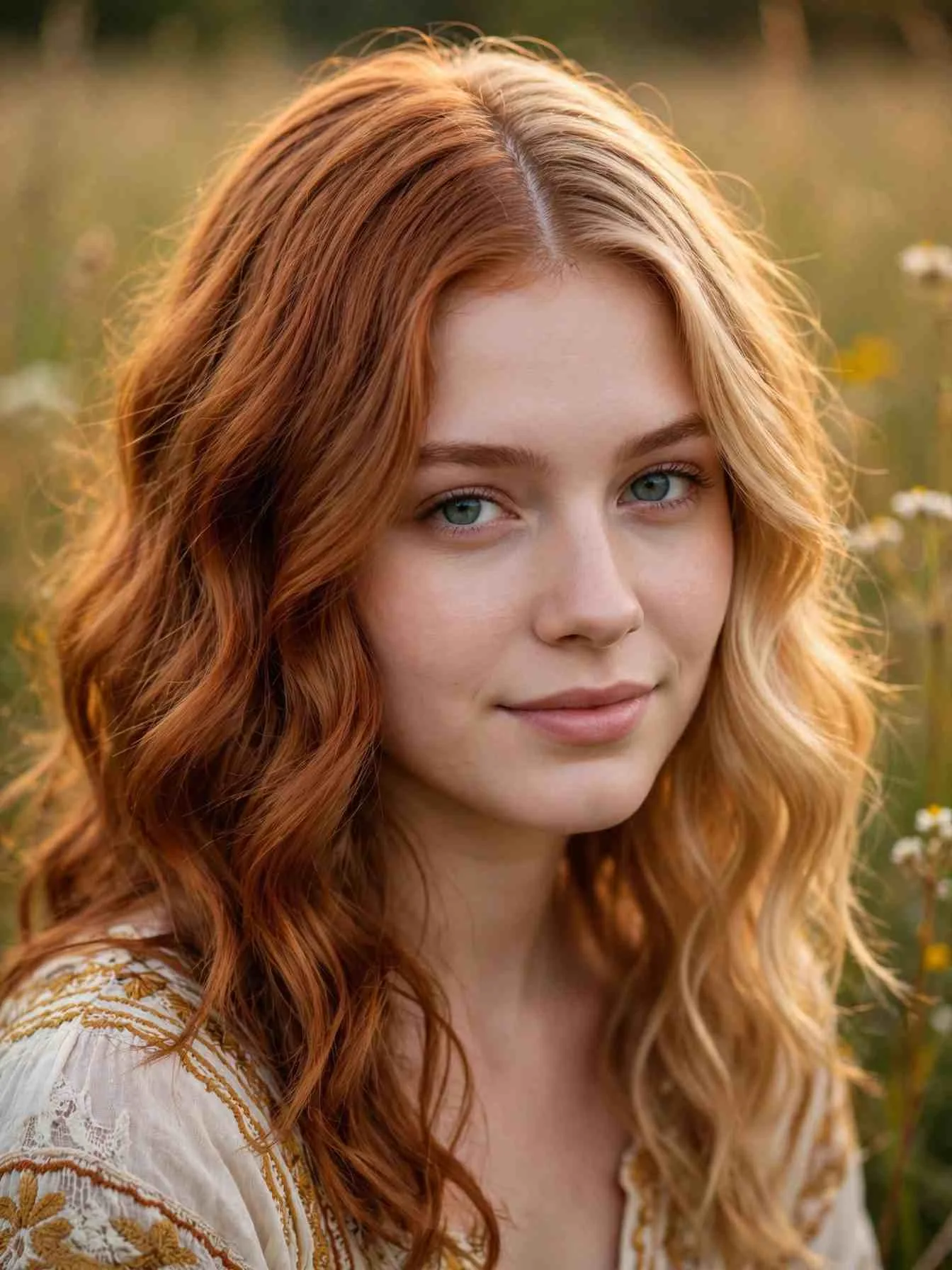
Warm natural pair. Ginger copper on one side, butter blonde on the other. Both shades share golden warmth, so the split feels harmonious. Ginger fades like all reds, while butter blonde holds longer. This is one of the most wearable splits for everyday life.
Best for: natural redheads going bolder; warm complexions.
Ask your stylist for: ginger permanent color, butter blonde level 9 with golden toner.
18. Rose Gold and Smoky Brown
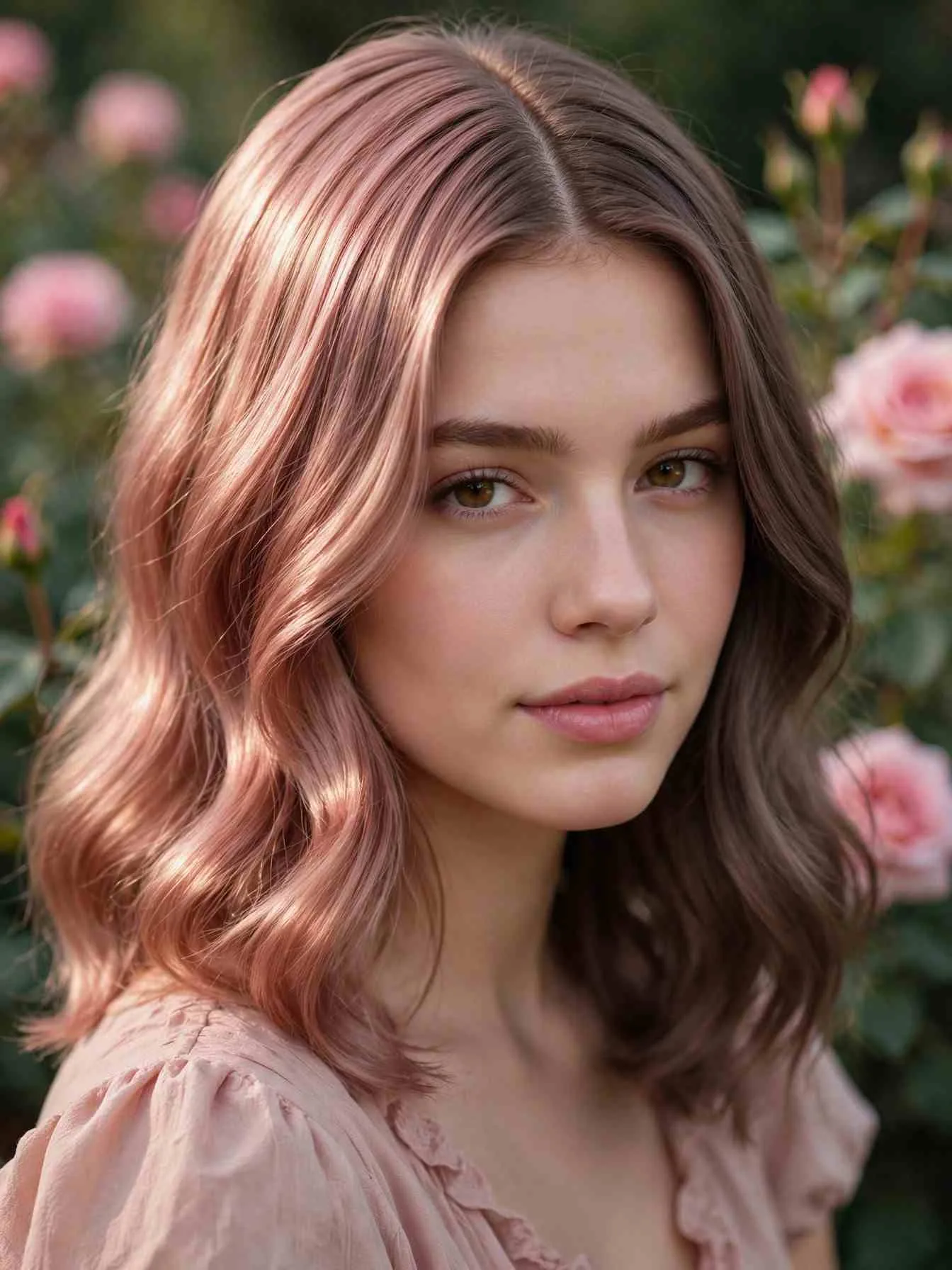
Soft metallic contrast. Rose gold on one side, smoky brown on the other. Rose gold needs a light base and fades to soft pink, then blush blonde. Smoky brown stays put with gloss refreshes. The pairing reads romantic rather than rebellious.
Best for: soft-glam aesthetics; wedding-season color.
Ask your stylist for: rose gold toner over level 9 blonde, smoky brown demi-permanent opposite.
19. Ash Gray and Charcoal
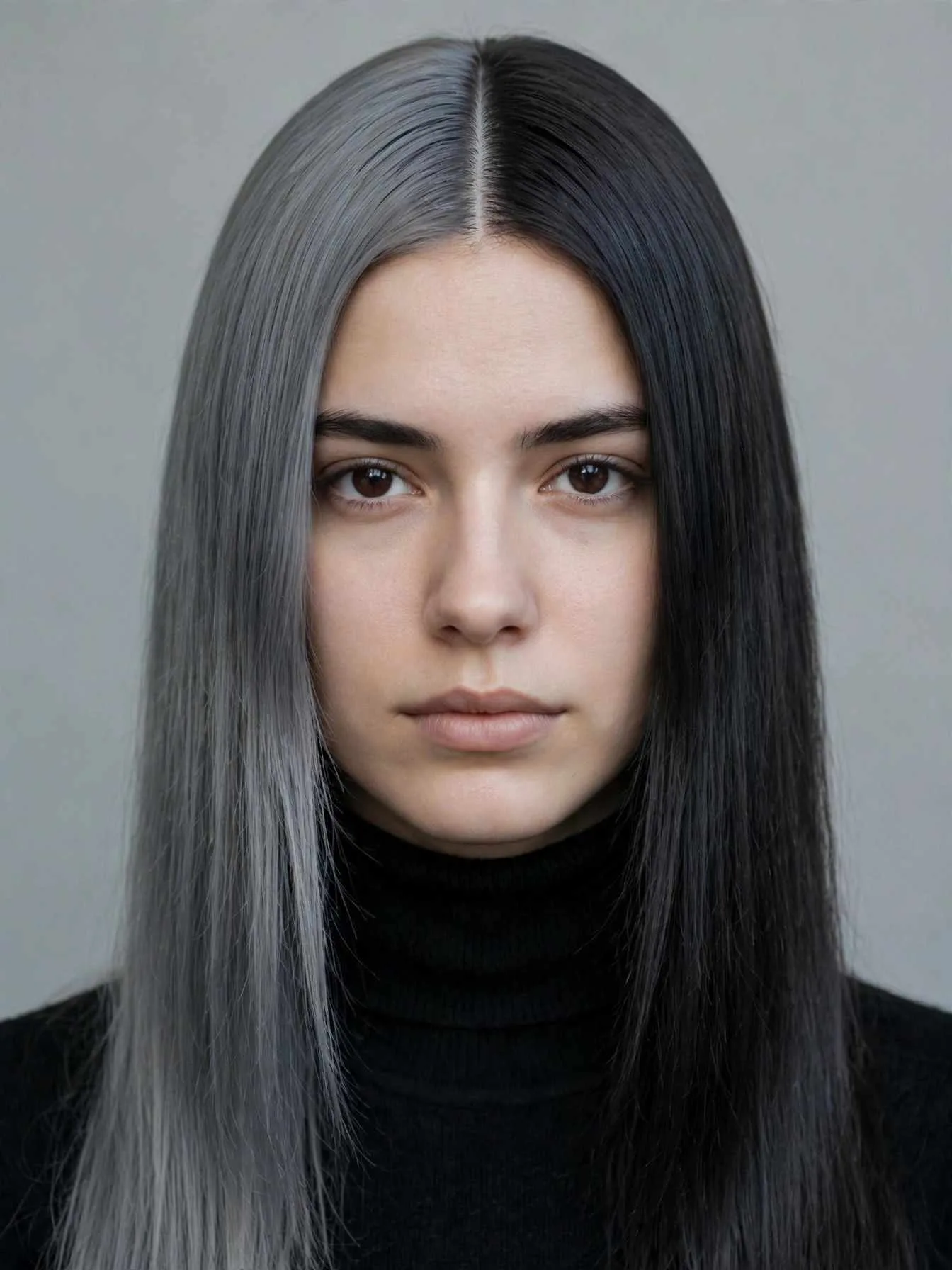
Muted grunge tones. Ash gray on one side, deep charcoal on the other. Gray needs pale hair and constant toning to avoid yellowing. Charcoal is the easy side: dark, forgiving, slow to fade. Together they read cool and modern. This pairing suits straight hair that shows the tonal shift.
Best for: cool undertones; low-saturation aesthetics.
Ask your stylist for: ash gray toner over level 10, charcoal demi-permanent opposite.
20. Split Dye With a Shadow Root
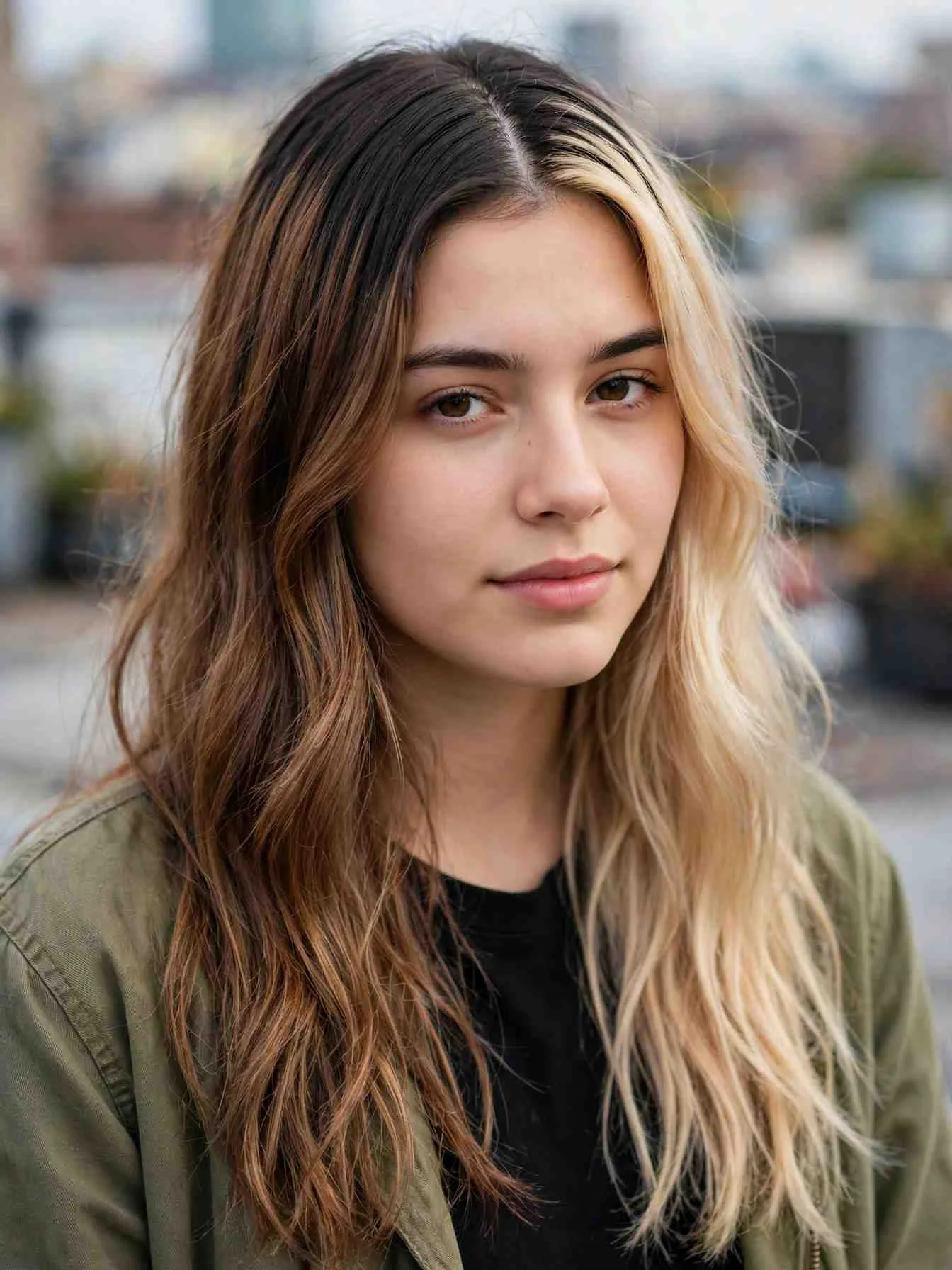
The low-maintenance variant. A shadow root in your natural shade melts into the split below. The dark root softens the center line at the crown and buys months of grow-out time. This works with any color pairing. It also hides the awkward phase when bleach regrowth appears.
Best for: anyone wanting split dye with fewer appointments.
Ask your stylist for: shadow root melted 2 to 3 inches down, split color applied below the melt.
21. Split Dye on Curly Hair

Texture changes everything. On curls, the split follows your natural part and each curl shows its own color. The line looks softer than on straight hair, which many people prefer. Curly hair dries out faster after bleach, so deep conditioning matters more here. Ask for a dry cut so the color placement matches how your curls fall.
Best for: curly and coily textures; softer split lines.
Ask your stylist for: split applied to follow your curl pattern, moisture-focused aftercare plan.
22. Peekaboo Underneath Split
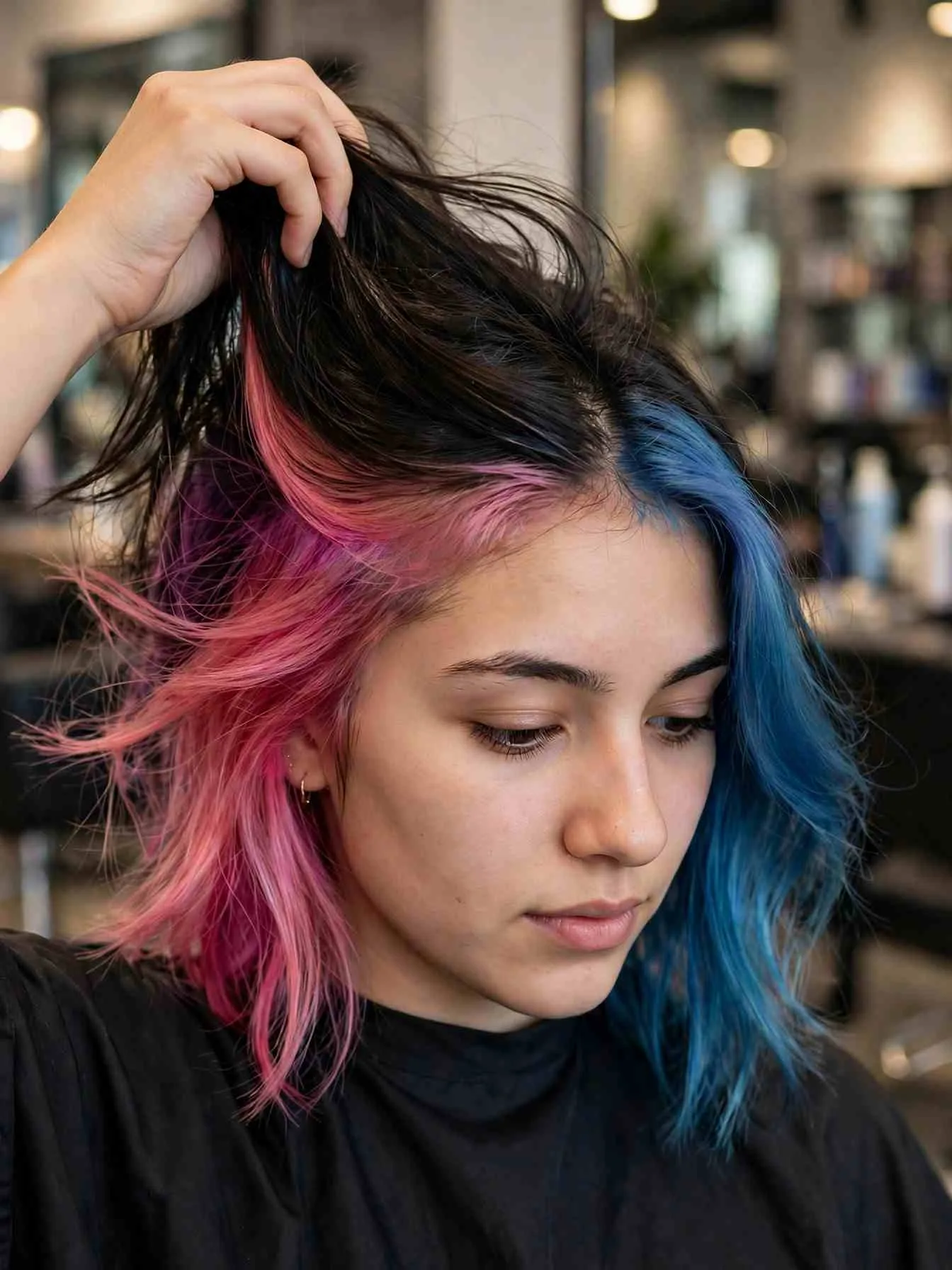
The hidden panel variant. The top layer stays one color while the underneath splits into two tones. It shows when hair moves or goes up. This suits workplaces with strict appearance rules. Upkeep is easier too, since the underneath grows out less visibly.
Best for: conservative workplaces; commitment-phobes.
Ask your stylist for: solid top layer, split-dyed underneath panel in two shades.
23. Split Dye Pixie
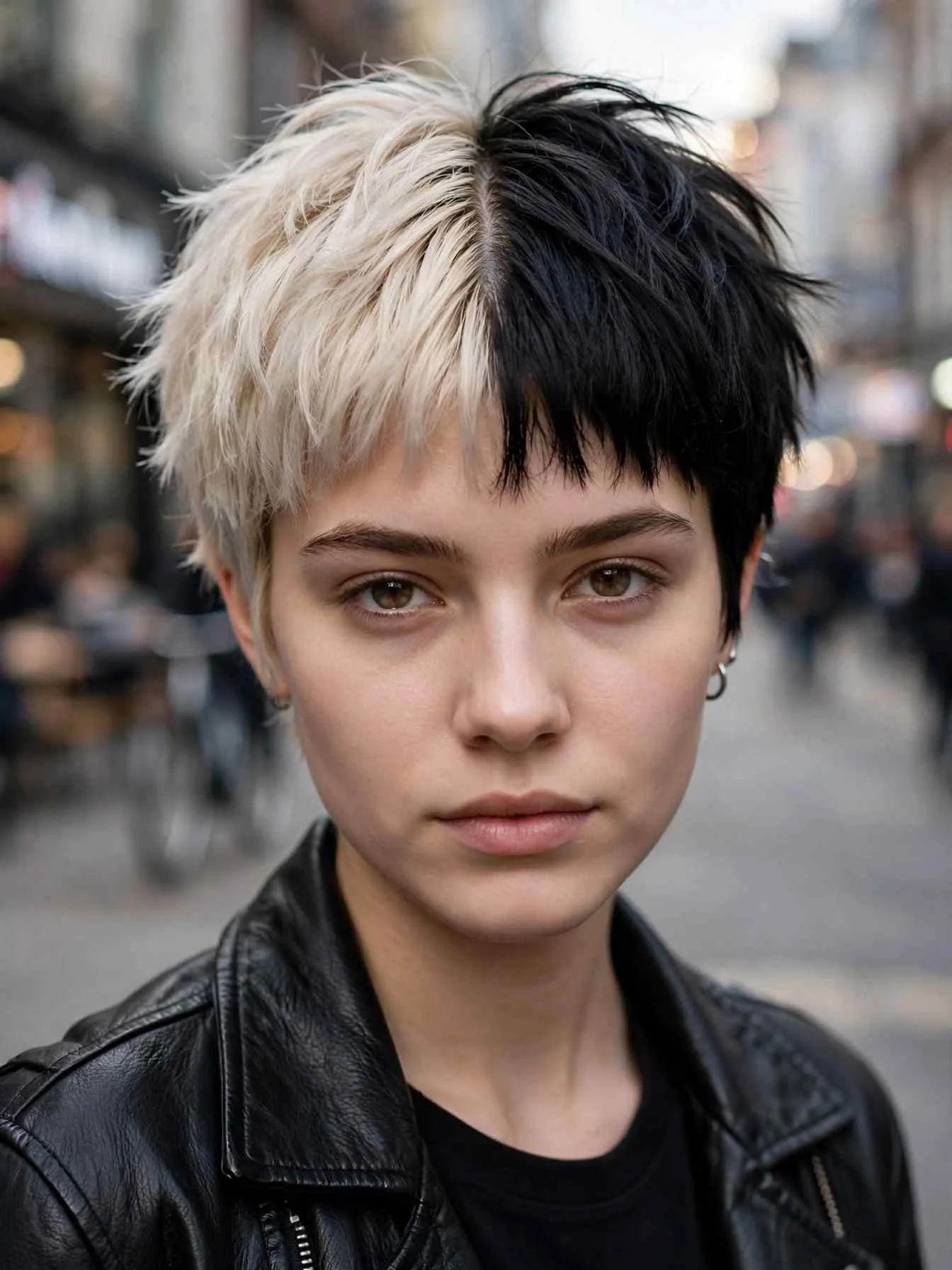
Short hair, big impact. On a pixie, the split runs ear to ear across a short crown. The line stays crisp because there is less hair to shift. This also suits men trying the trend. Grow-out means frequent trims rather than long awkward phases.
Best for: short hair; men; low-grow-out-time commitment.
Ask your stylist for: split applied to a textured pixie, crisp center part maintained with regular trims.
Is Split Dye Right for You?
Run through this checklist before booking. Split dye hair color suits you if most of these sound like you. You have healthy hair that can handle bleach, or you accept the damage trade. You can afford touch-ups every 6 to 12 weeks. You wash your hair 2 to 3 times a week, not daily. You are fine with two different hair routines, one per side. Your workplace allows visible color. Rethink it if your hair is already fragile from past bleach, or if daily hot washing is non-negotiable. Split dye rewards patience and punishes rushing.
Salon vs DIY: Cost and Effort
| Factor | Salon | DIY at home |
|---|---|---|
| Upfront cost | $150 to $500+ | $20 to $50 in products |
| Time | 3 to 6 hours in the chair | 4 to 8 hours, often split across days |
| Line crispness | Sharp, foiled separately | Harder; needs clips and barrier cream |
| Damage risk | Lower; pro assesses hair first | Higher, especially with repeated bleach |
| Fixing mistakes | Stylist corrects on the spot | Often means a salon trip anyway |
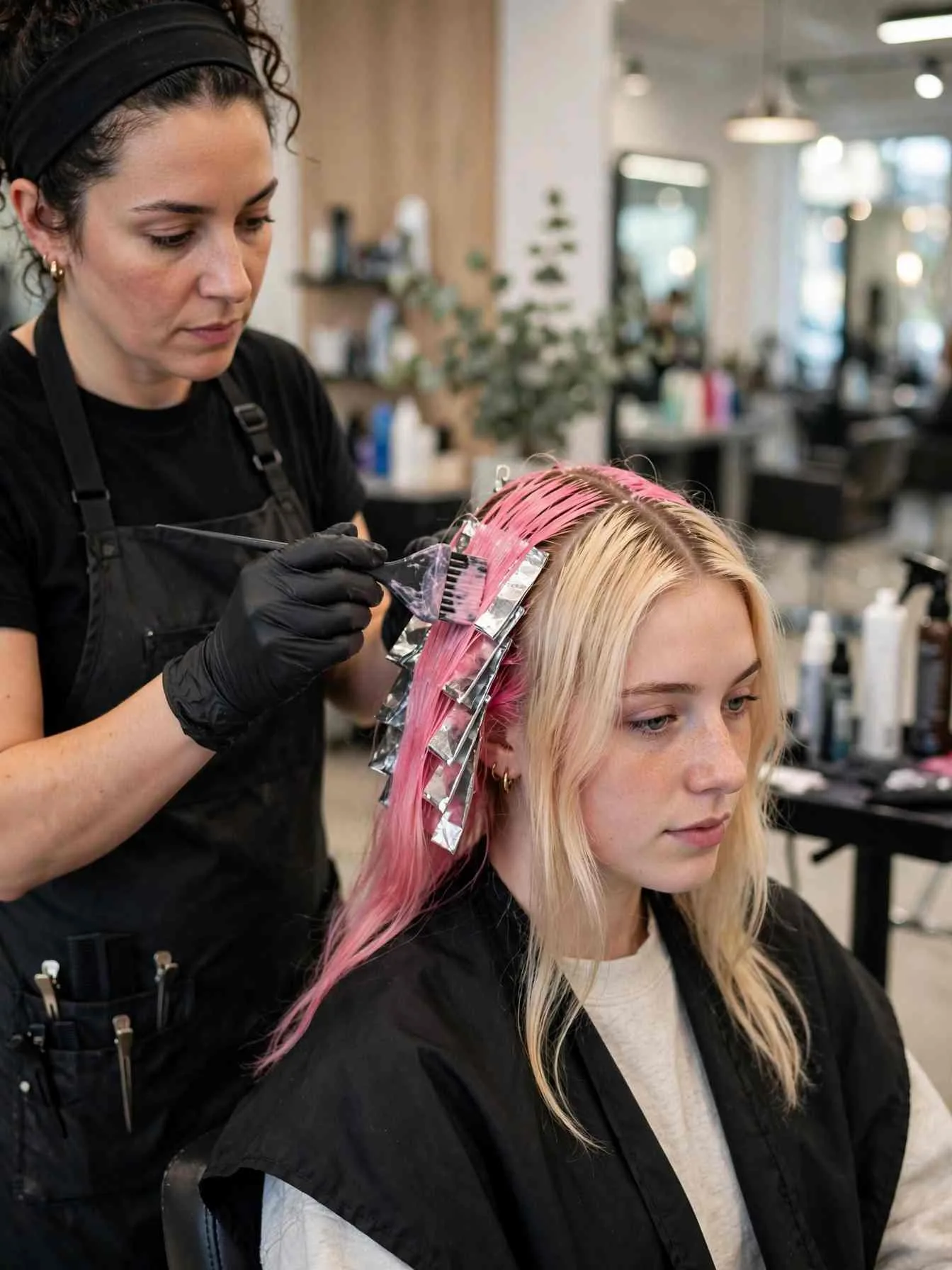
Go salon if either side needs bleach past level 8, or if your hair has old color. DIY suits refreshes of semi-permanent shades on already-light hair. Either way, do a strand test and a patch test 48 hours before any chemical service. That rule has no exceptions.
What Split Dye Hair Color Costs
Treat every number as a starting point and ask your salon for an exact quote. A salon split-dye service runs about $150 to $500 or more, as a rough US guide for fall 2026. The range depends on technique, hair length, and location. Wearers report maintenance visits around $250 and up every 3 to 4 months. DIY costs roughly $20 to $50 in products. Platinum toning needs redoing every 3 to 4 weeks to stay white. Semi-permanent dyes last 4 to 6 weeks before fading. Going from brunette to white can take 2 to 3 bleaching sessions spaced over weeks.
Keeping the Line Crisp: Bleed Prevention
Two colors, one head, water in between. Bleed happens at the rinse. Rinse the dark side first, then the light side, in cold water. Cold water keeps the cuticle flatter so dye stays put. Wash each side separately when you can, leaning your head to one side. Sulfate-free shampoo slows fading on both sides. Sleep on a dark pillowcase for the first week after vivid colors. If the colors do bleed at the part, a thin foil barrier during processing prevents most of it. Tell your stylist bleed prevention matters to you before they start.
Maintenance Schedules by Color Type
| Color type | Refresh every | At-home care |
|---|---|---|
| Platinum/white side | 3 to 4 weeks (toner) | Purple shampoo weekly, heat protectant always |
| Vivid semi-permanent | 4 to 6 weeks | Cold washes, color-depositing conditioner |
| Copper/red side | 4 to 6 weeks | Copper-depositing conditioner weekly |
| Black/dark side | 8 to 12 weeks (gloss) | Sulfate-free shampoo, gloss refresh |
| Pastels | 3 to 4 weeks | Minimal washing, cold water only |
Colorist Emily Weston puts it plainly: “Maintaining the vibrancy of white can be tricky. I always recommend purple shampoo to clients to keep yellow tones away and frequent touch-ups for the black to avoid fading.” Two sides means two routines. Budget time for both, not just the fun one.
Growing It Out: Your Exit Plan
Every split dye hair color grows out eventually. Plan the exit before you start. The graceful route: let the shadow root grow and trim the vivid ends over months. The fast route: dye everything back to one dark shade, which covers most colors in one appointment. Pastels fade out on their own within 2 months. Vivid reds and teals stain and need color remover or patience. Tell your stylist your long-term plan at the first appointment. A good stylist will place color with your exit in mind.
FAQs
What Is Split Dye Hair Color?
Split dye hair color parts hair down the middle with a different shade on each side. The line runs from forehead to nape. Each side is colored and maintained separately.
How Long Does Split Dye Last?
Permanent sides last until they grow out. Semi-permanent shades fade in 4 to 6 weeks. Platinum needs toning every 3 to 4 weeks. Plan touch-ups every 6 to 12 weeks overall.
Does Split Dye Damage Hair?
Bleach causes damage, and most splits need it on at least one side. Bond builder treatments and spacing sessions weeks apart reduce harm. Already-fragile hair should skip the bleach side.
Can I Get Split Dye Without Bleach?
Yes, if your hair is already light or you choose dark-on-dark shades. Going darker needs no bleach. Going lighter or vivid always does.
How Do I Stop the Two Colors Bleeding?
Rinse the dark side first in cold water, wash sides separately, and use sulfate-free shampoo. Ask your stylist for foil barriers along the part during processing.
How Much Does Split Dye Cost?
As a rough US guide, as of fall 2026, salon work runs $150 to $500 or more. Maintenance visits run about $250 and up every 3 to 4 months. DIY costs $20 to $50 in products.
Can Men Get Split Dye Hair Color?
Yes. The pixie and short-crop versions suit shorter hair well. The line stays crisp on short lengths, and grow-out just means regular trims.
Final Thoughts
Split dye hair color earns its trend status by giving you two looks in one head of hair. Pick a pairing that matches your maintenance budget and your bleach tolerance. Book the consultation, bring reference photos, and ask about the exit plan. Your future self will thank you.