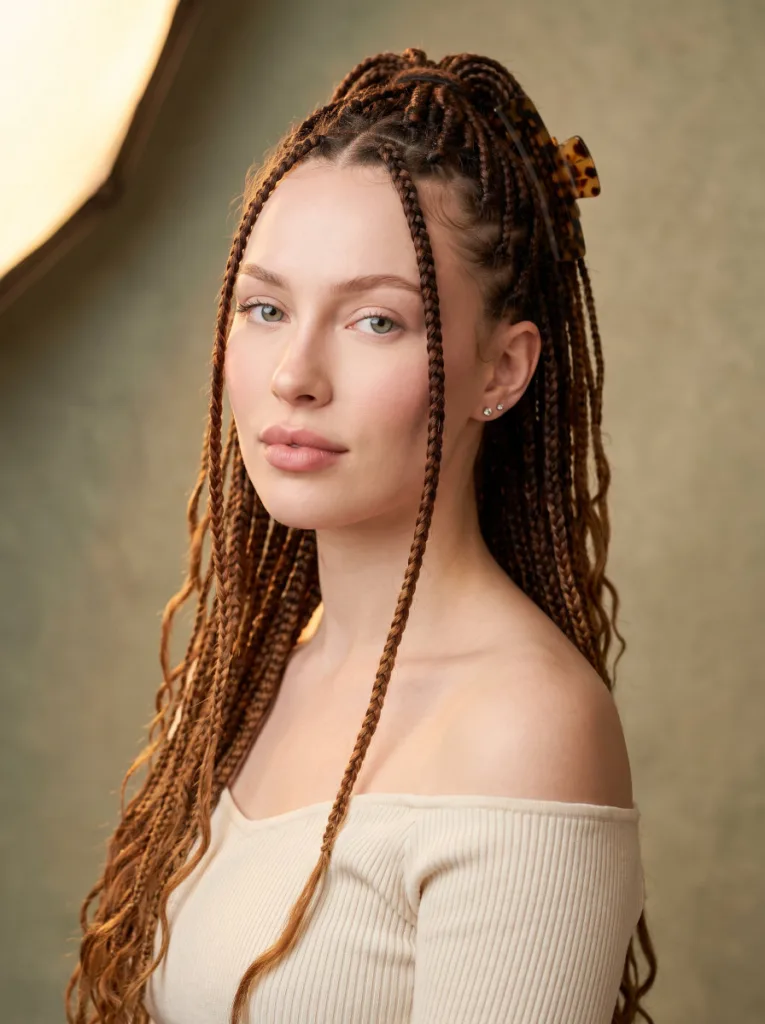
Baby Bang Haircut: Bold Styles That Frame Your Face
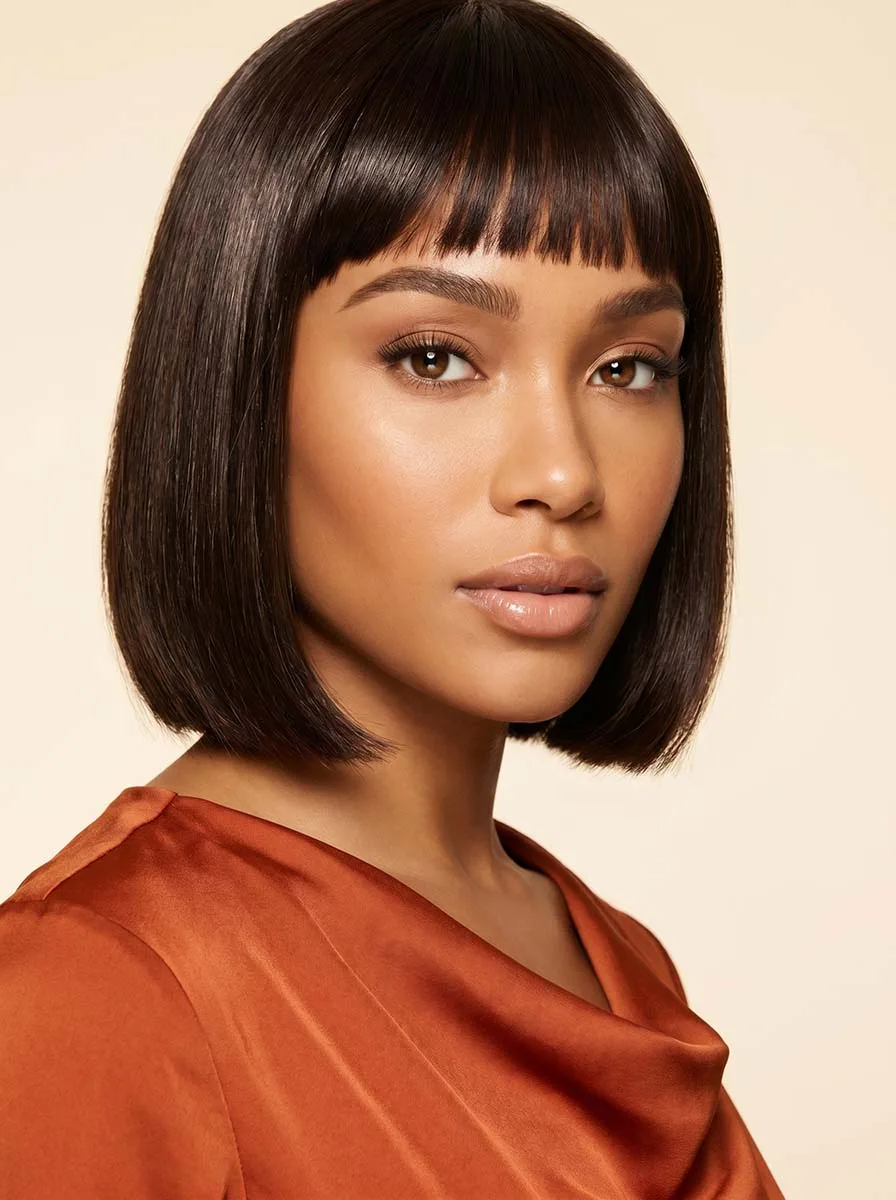
Baby bangs look effortless on some women and slightly off on others. The difference is not the width of the cut. It is where on the forehead the cut starts, and most stylists do not explain this before you are already in the chair.
Placement varies by face shape. On a long face, a full-width baby bang cut close to the brow line works beautifully because it breaks the vertical and adds width. On a heart face, that same width cut in the same position makes the forehead appear even wider. The fix is narrow — cut only from the center, not edge to edge. One centimeter of fringe width changes the entire result, and most people never find this out until the cut is already done.
Before your appointment, know your face shape, ask your stylist how wide and how high the fringe will sit, and understand what maintenance means at this length. This guide covers all of that — face shape matching, 20 style ideas from classic to color, daily styling, at-home trimming, and how to grow them out when you are ready.
What Is A Baby Bang Haircut?
A baby bang (also called a micro bang or cropped fringe) is a super-short fringe that sits above the brow bone, typically cut to half an inch to one inch below the hairline. The distinction from traditional bangs is intentional exposure. The goal is to draw the eye toward the forehead and brows rather than concealing them.
Celebrity hairstylist Justine Marjan describes them as “ultra-short bangs cut from the middle of the forehead” that “draw attention to the eyes and brows, opening up the face.”
Baby Bangs Vs. Micro Bangs Vs. Short Bangs
Stylists use these three terms interchangeably, but they mean different things.
- Baby bangs: sit just above the brow, typically a straight-across cut; the most classic version of the short fringe
- Micro bangs: cut even shorter, often to the middle of the forehead; more avant-garde, less wearable day to day
- Short bangs: slightly longer than baby bangs, sometimes sitting at the top of the brow rather than clearly above it; an easier version to ease into
For most people searching for a baby bang haircut, the goal is the brow-length or above-brow version. Both are covered here.
Does A Baby Bang Haircut Work For Your Face Shape?
Face shape is the most important factor before getting a baby bang haircut. The right version can balance almost any face, but the wrong width or length can work against your proportions.
Oval Face Shape
An oval face is the most flexible. Straight-across baby bangs at the brow or slightly above work well here. The proportions are already balanced, so the bold fringe adds character without disrupting anything.
Round Face Shape
A round face benefits most from baby bangs that are slightly narrower, cut closer to the center of the forehead rather than extending to the temples. This draws the eye upward and creates the illusion of length. Avoid very wide baby bangs that extend all the way across the forehead, as this can emphasize width.
Square Face Shape
A square face has a strong jawline, and baby bangs can soften it by drawing the eye up and away from the jaw. Opt for a slightly wispy or textured baby bang rather than a blunt, heavy fringe. The softness at the forehead balances the angularity at the jaw.
Heart Face Shape
A heart face is wider at the temples and forehead, narrower at the chin. Baby bangs can be tricky here because they can make the forehead appear even wider. If you have a heart face and love baby bangs, go for narrow baby bangs cut only from the center of the forehead, not edge to edge. This minimizes the width issue.
Long Or Oblong Face Shape
A long face benefits from horizontal lines that add width. Full-width baby bangs work well here. They break the vertical line of the face and add width at the top. A bold, wide baby bang haircut suits this face shape more than most.
Triangular Face Shape
A triangular face is narrow at the forehead and wider at the jawline. Very wide baby bangs can highlight the narrowness of the upper face, so narrow or wispy baby bangs are the safer choice here.
20 Baby Bang Haircut Ideas Worth Bookmarking
Classic Baby Bang Styles
1. Classic Straight Baby Bangs: Blunt, Straight-Across Fringe Above The Brow
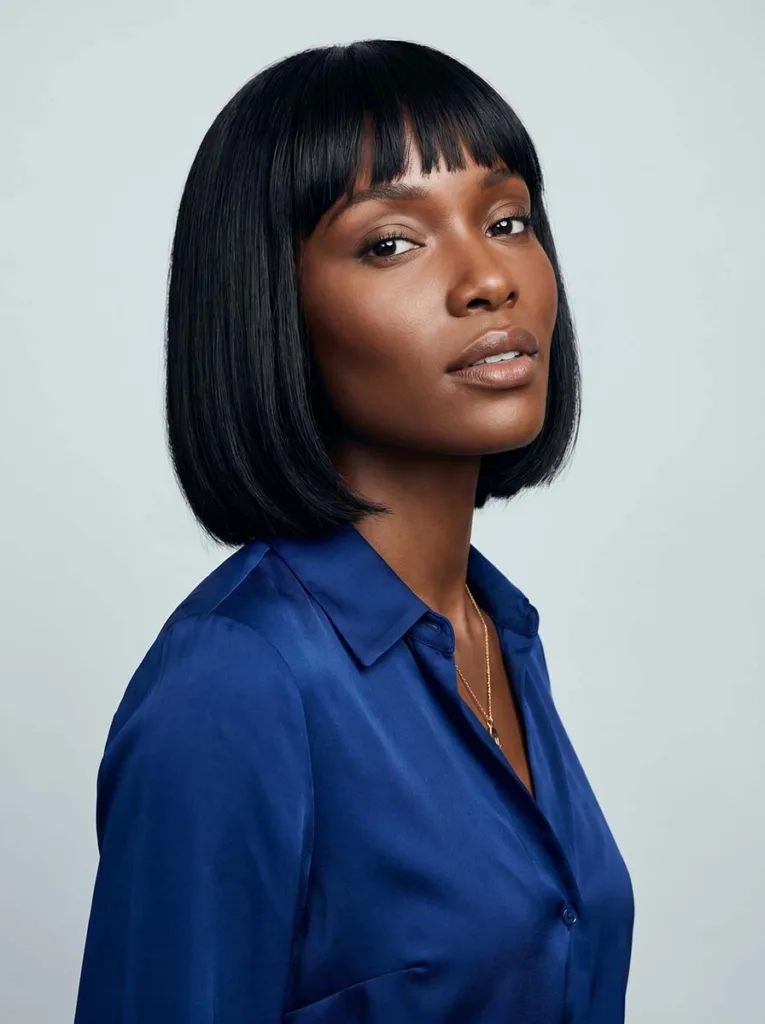
The classic straight baby bang is cut with a straight scissor line across the forehead, sitting clearly above the brows with a clean, defined edge and no texture at the tips. This version pairs with any haircut length from a pixie to waist-length hair without adjustment. Celebrity stylist Dimitris Giannetos calls them “edgy, chic, and playful” with the power to “instantly elevate any look.” They suit oval, long, and square face shapes most naturally. Because the edge is blunt, consistent trimming every 2 to 3 weeks is required to maintain the clean line. Even a few days of growth shows on a blunt edge. This is the version most people picture when they search baby bangs.
2. Wispy Or Textured Baby Bangs: Point-Cut Fringe With A Feathery, Separated Finish
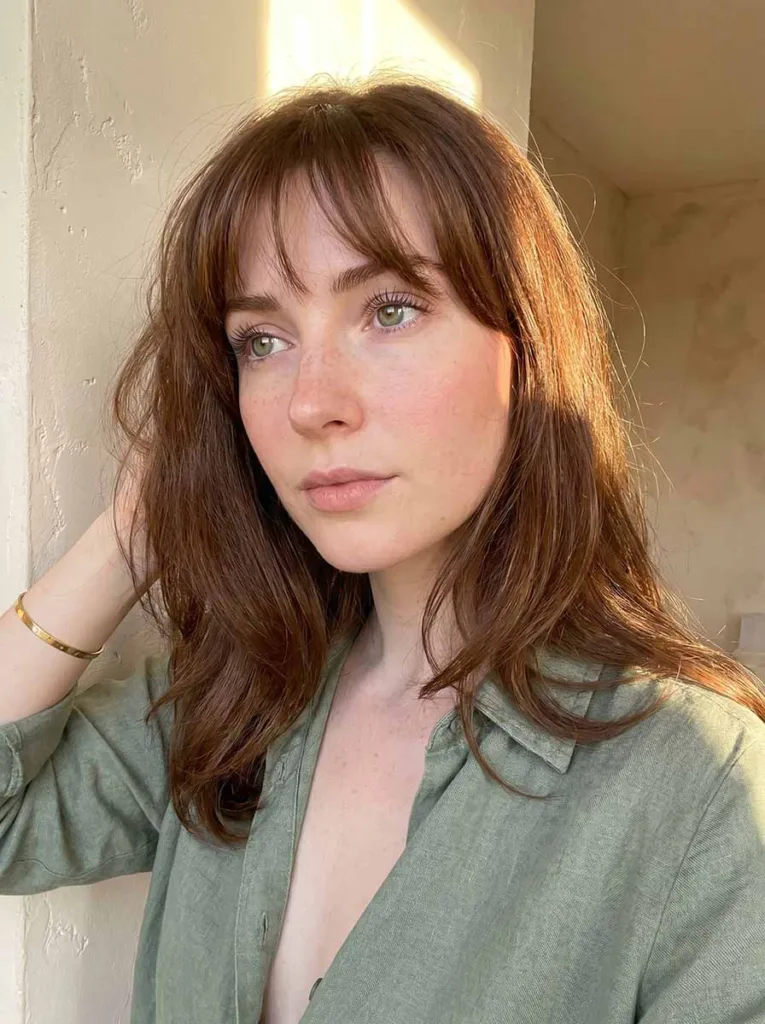
Wispy baby bangs are point-cut or razor-cut rather than scissor-cut straight across. The result is a feathery, slightly separated finish at the tips that moves more freely than a blunt edge. The softer finish suits people who want baby bangs without the high-contrast sharpness of the classic cut. It also makes the grow-out phase less awkward because the soft edge blends into growing-out hair more naturally than a blunt one. This is the recommended starting point for anyone trying baby bangs for the first time. Styling is similar to the classic version: damp hair, Denman brush, and a blow dryer in a side-to-side motion. The razor-cut edge needs trimming every 2 to 3 weeks to maintain the feathery separation.
3. Side-Swept Baby Bangs: Slightly Longer On One Side, Swept Across The Forehead
Side-swept baby bangs are grown slightly longer on one side and swept across the forehead to the opposite side. The longer length on one side allows the fringe to drape rather than sit flat, creating a diagonal face-framing line instead of a straight-across horizontal one. This version suits heart and round face shapes better than the straight-across classic, because the diagonal sweep adds asymmetry that softens those proportions. Styling requires blow-drying the bangs in the direction of the sweep using a small round brush. A small amount of pomade or light-hold wax holds the direction through the day. Because the bangs are grown slightly longer to achieve the sweep, trim every 3 to 4 weeks rather than the usual 2 to 3.
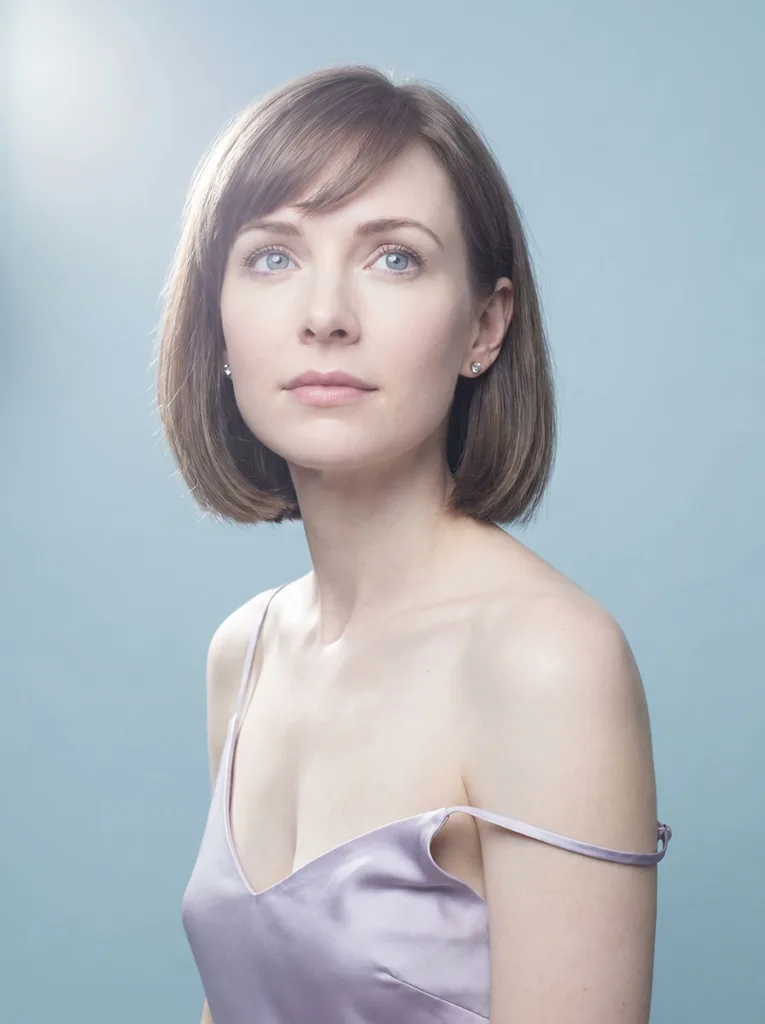
4. Micro Bangs: Cut Shorter Than Baby Bangs, Sitting At Mid-Forehead
Micro bangs are cut shorter than standard baby bangs, sitting at the mid-forehead or closer to the hairline rather than just above the brow. The fringe is so short it barely moves and covers very little of the forehead. This is the most avant-garde version and the hardest to maintain. Because the length is so minimal, even slight growth changes how they sit noticeably within a week or two. Daily blow-drying with a flat brush is needed to keep them lying flat. This version works best on oval face shapes with defined, well-groomed brows, because the cut draws the eye directly to the forehead and brow area with almost nothing else in the frame. Expect to trim every 1 to 2 weeks.
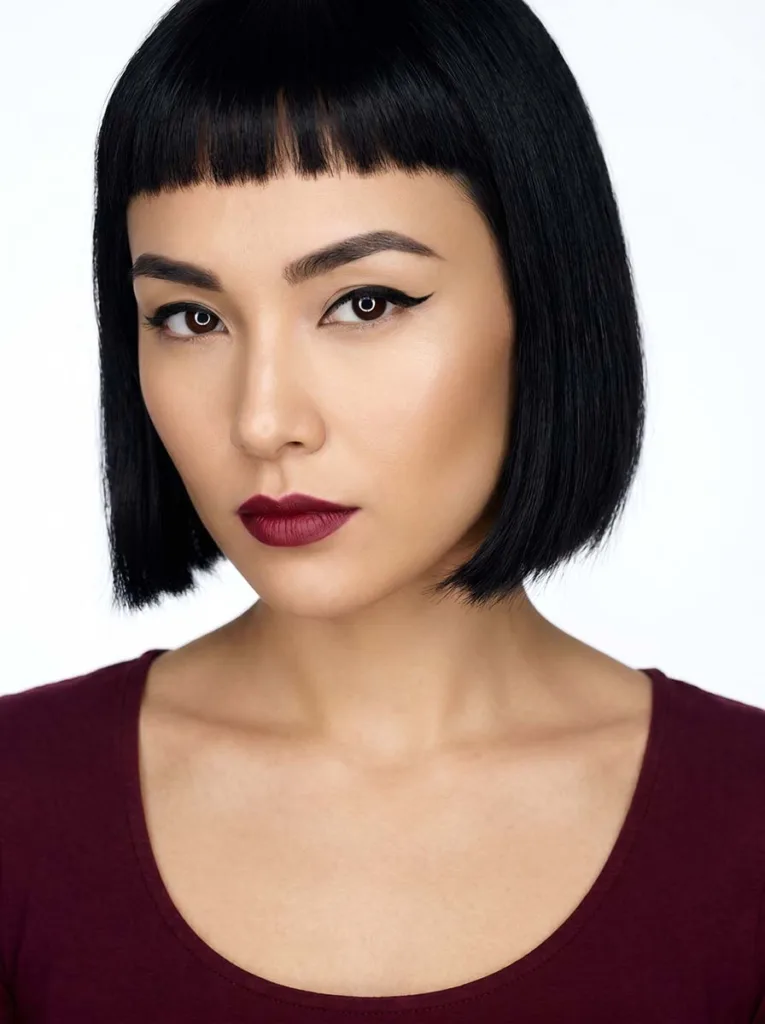
5. Blunt Baby Bangs With A Deep Side Part: Classic Fringe Angled By The Part
A deep side part shifts the entire visual weight of the baby bangs to one side of the forehead. The bangs themselves are still cut bluntly across, but the part changes how they fall. More of the fringe sits on one side, creating an asymmetrical effect rather than a centered one. The diagonal line created by the part benefits round face shapes, where the asymmetry adds an illusion of length. It also softens baby bangs on heart face shapes, where a full straight-across fringe can feel too wide. Styling requires blow-drying the bangs flat in the direction of the part using a boar bristle brush to reinforce the direction and keep flyaways flat through the day.
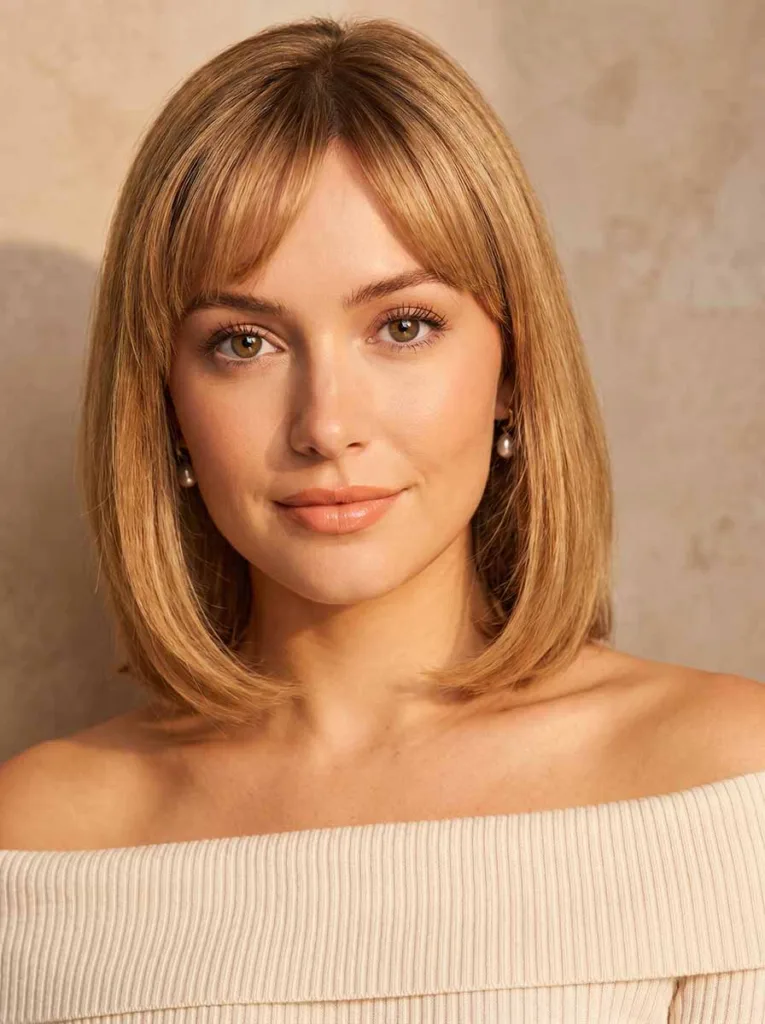
Baby Bangs By Haircut Pairing
6. Baby Bangs With A French Bob: Short, Jaw-Length Bob With Blunt Fringe
The French bob sits at or just below the jaw, and combined with straight baby bangs, the pair creates one of the most graphic haircut silhouettes available. Every line in the cut is deliberate: the clean jaw-length perimeter, the blunt bang edge above the brows, and the space between the two. This pairing suits oval and long face shapes best. Book both the bob and the bangs in the same appointment so your stylist calibrates the proportions together. The bang width relative to the jaw-length perimeter changes the entire balance of the cut. The bob needs a trim every 5 to 6 weeks; the bangs need attention every 2 to 3 weeks independently.
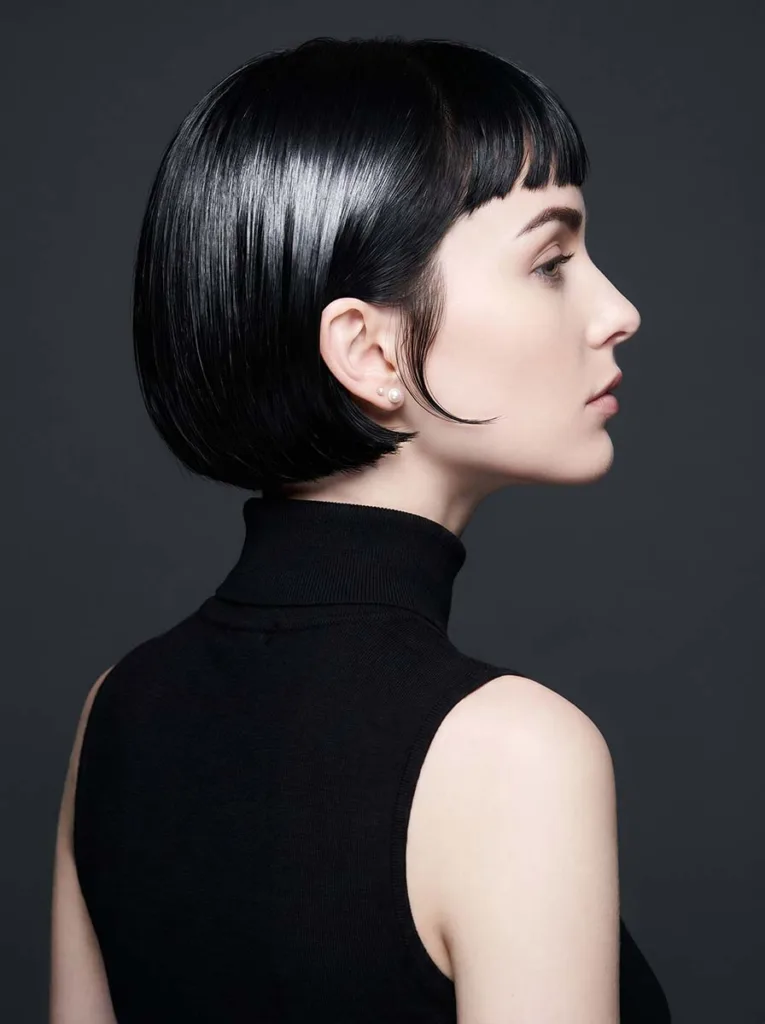
7. Baby Bangs With A Lob: Collarbone-Length Hair With Short Fringe
A lob at collarbone length gives baby bangs a longer, softer backdrop than a bob. The fringe stays short and precise at the forehead while the length below creates a relaxed frame that suits a wider range of face shapes than the bob-and-bang pairing. Square and heart face shapes benefit most from the added length, which keeps the overall silhouette from reading too angular. The lob’s added length also makes the grow-out phase of the bangs less visually jarring, because the rest of the style draws the eye downward past the fringe line. This is one of the more practical combinations for someone who wants to wear baby bangs long term without the rigidity of a bob.
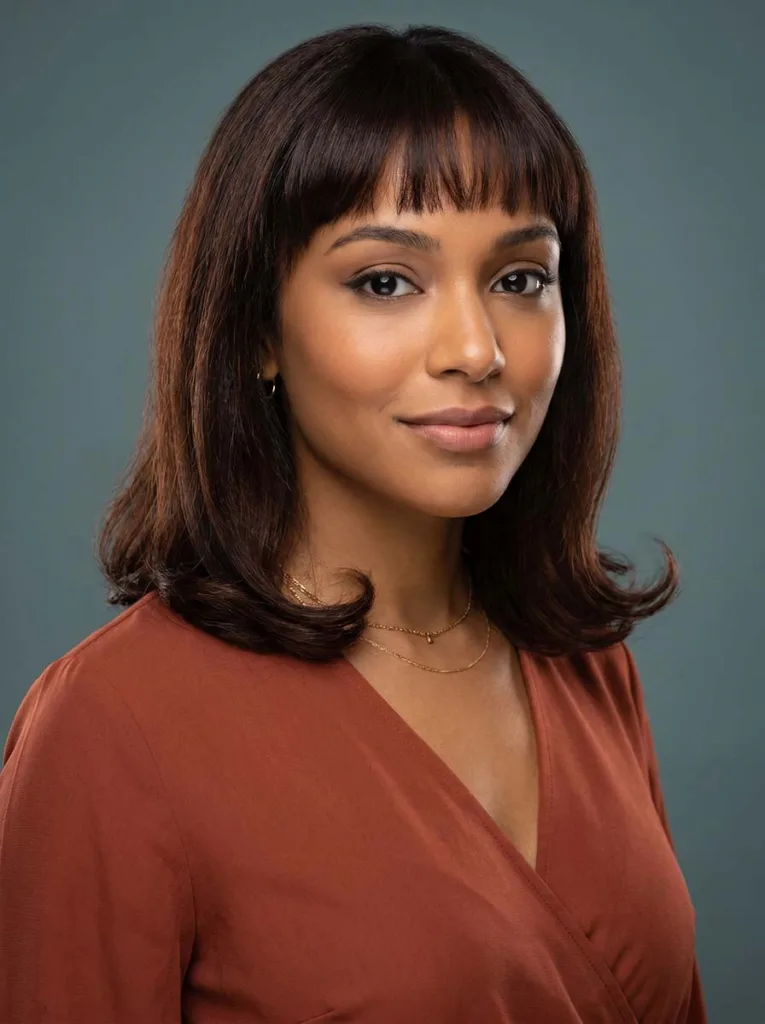
8. Baby Bangs With A Pixie Cut: Ultra-Short Cut With Matching Fringe
On a pixie cut, baby bangs become structural rather than decorative. The fringe sits above the brow while the rest of the hair is cropped close at the sides and back, making the bang the dominant feature of the entire style. This is the highest-commitment version of baby bangs because both the cut and the fringe grow out simultaneously with no length to fall back on during the process. It suits oval and heart face shapes, where the exposed forehead and short overall length balance the proportions without adding visual width. Ask your stylist to cut both the pixie and the bangs in the same session. The transition out of this style takes 12 to 18 months depending on target length.
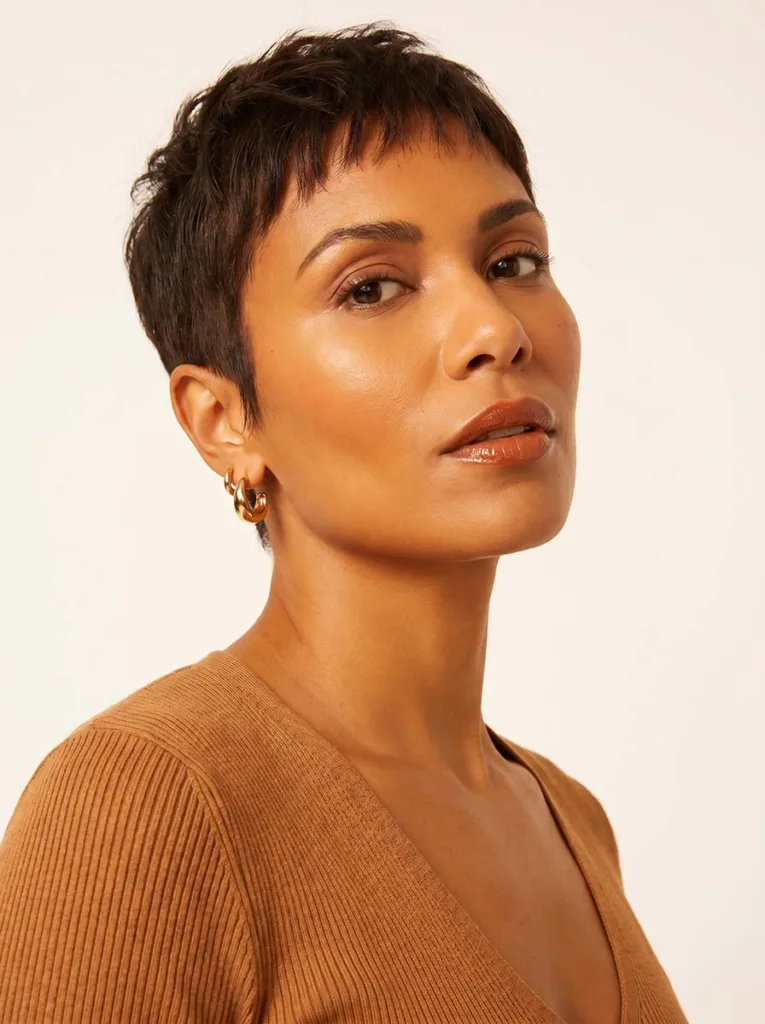
9. Baby Bangs With A Shag Haircut: Choppy Fringe With Layered, Textured Length
The baby bang shag pairs a short, choppy fringe with heavily layered, textured length through the body of the hair. The choppy quality of the bang edge complements the piece-y, lived-in shag layers rather than conflicting with them. The combination has a clear 1970s reference: rock-influenced, deliberately undone. This works best on medium to thick hair where the shag layers have enough density to hold their shape without product. Fine hair often looks thin in a shag because the layers reduce density at the ends. The bang edge should be point-cut rather than blunt to match the texture of the rest of the cut. Refresh the shag every 8 to 10 weeks; trim the bangs every 2 to 3 weeks.
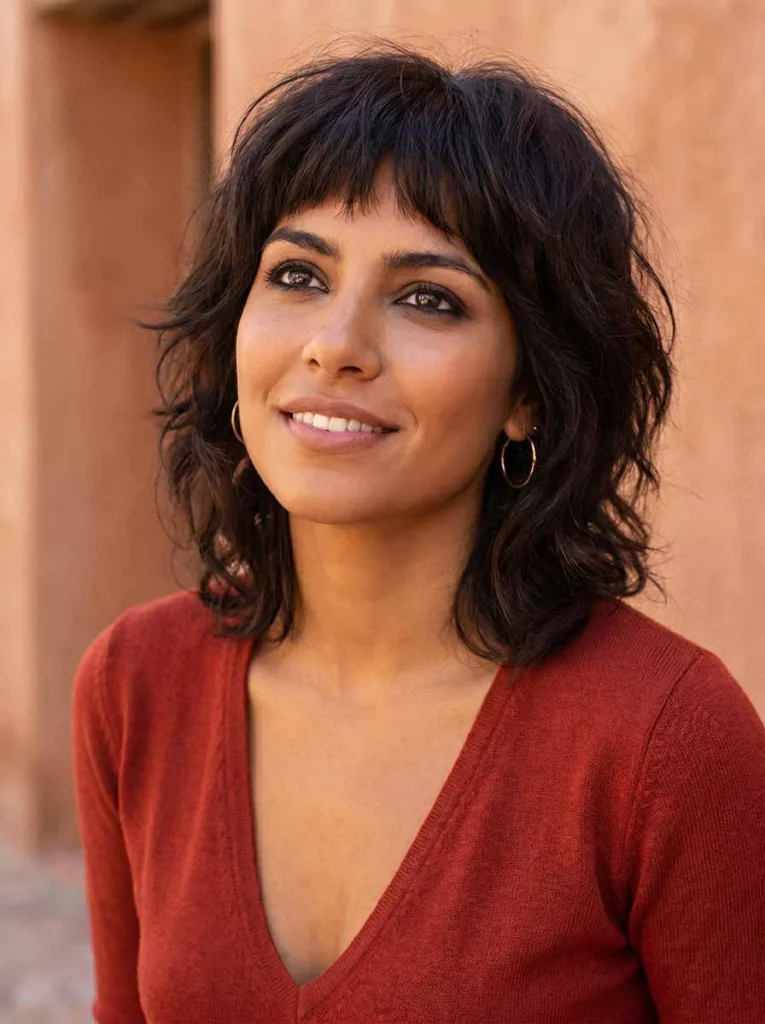
10. Baby Bangs With Long Straight Hair: Tiny Fringe Against Full-Length Straight Hair
Baby bangs with long, straight hair create the most dramatic contrast of any pairing. The tiny fringe at the forehead sits against an unbroken column of straight length below, pulling the eye directly to the brow area. The contrast works because the two lengths are so different. There is no gradual transition. Zendaya has worn this combination across multiple occasions. It works best on straight or slightly wavy hair where the length stays sleek and the fringe reads as intentional. On frizzy or hard-to-control length, the contrast is harder to maintain because the sleekness of the length is what gives the combination its effect. This pairing suits oval and long face shapes best.
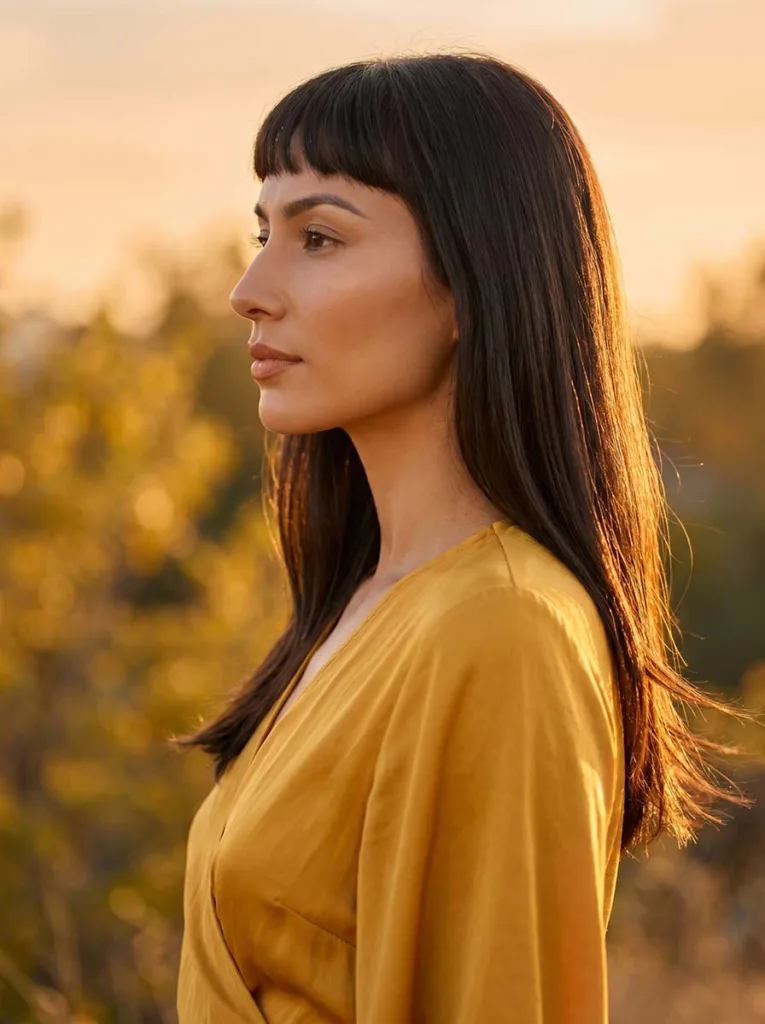
11. Baby Bangs With Long Wavy Hair: Short Fringe With Loose, Romantic Waves Below
Long wavy hair gives baby bangs a softer backdrop than straight length. The loose waves below the fringe add movement that straight long hair does not, and the contrast between the structured fringe and the relaxed waves is what makes the combination work. The fringe should be blow-dried flat and straight while the rest of the hair stays in its natural wave state. Avoid applying curl-enhancing product to the bangs because any texture in the fringe disrupts the contrast with the smooth, precise edge. This suits oval and heart face shapes well, and works across most hair densities as long as the wave pattern is defined enough to read clearly at shoulder length or longer.
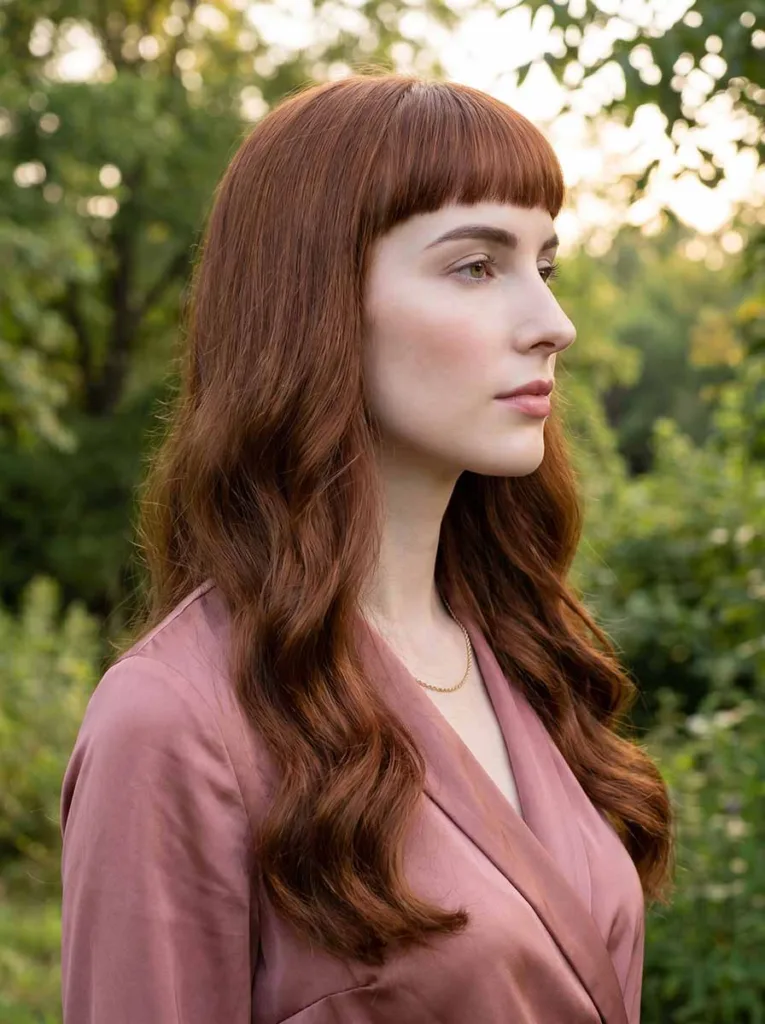
12. Baby Bangs With A Mullet: Front Fringe Paired With Short Top And Long Back
The baby bang mullet combines a short, blunt fringe with a cropped top section and long, tapered back. The fringe anchors the front of the style while the length at the back creates the overall silhouette. The combination is deliberately unconventional, not a transitional or everyday style. Both the mullet and the baby bangs require a stylist with experience in both cuts, because the proportions between the fringe width, the top section length, and the back taper need to work together. If any one element is off, the balance of the entire cut is affected. This suits oval face shapes where the unconventional proportions do not compete with the face shape itself.
Baby Bangs By Hair Texture
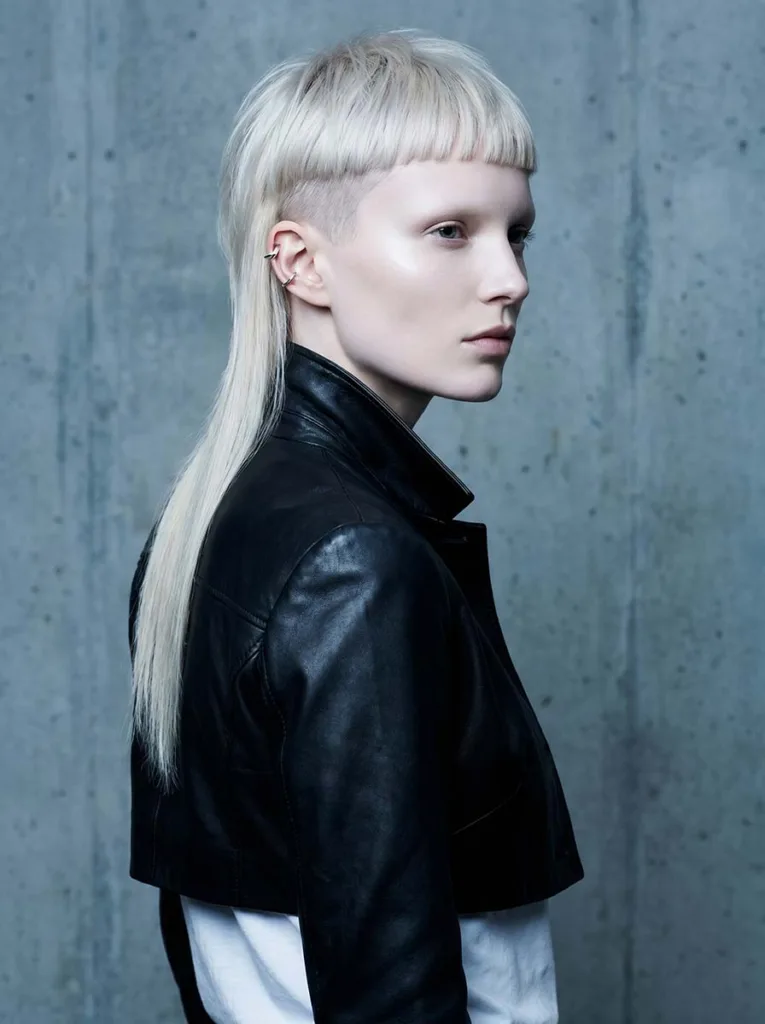
13. Curly Baby Bangs: Natural Curl Pattern Through The Fringe Above The Brow
Baby bangs on naturally curly hair behave differently from every other version because the curls spring upward and outward when dry rather than lying flat. Your stylist needs to cut them considerably longer than the target length to account for curl shrinkage when dry. Skipping this step results in bangs that sit higher than intended and are difficult to restyle. The curly fringe has a bouncier, more voluminous quality than a straight-haired baby bang. Daily maintenance involves finger-coiling the fringe with a curl cream and air-drying, or flat-ironing for a straight finish. Either approach takes about five minutes. Best on oval and long face shapes where the added volume at the brow does not over-widen the forehead.
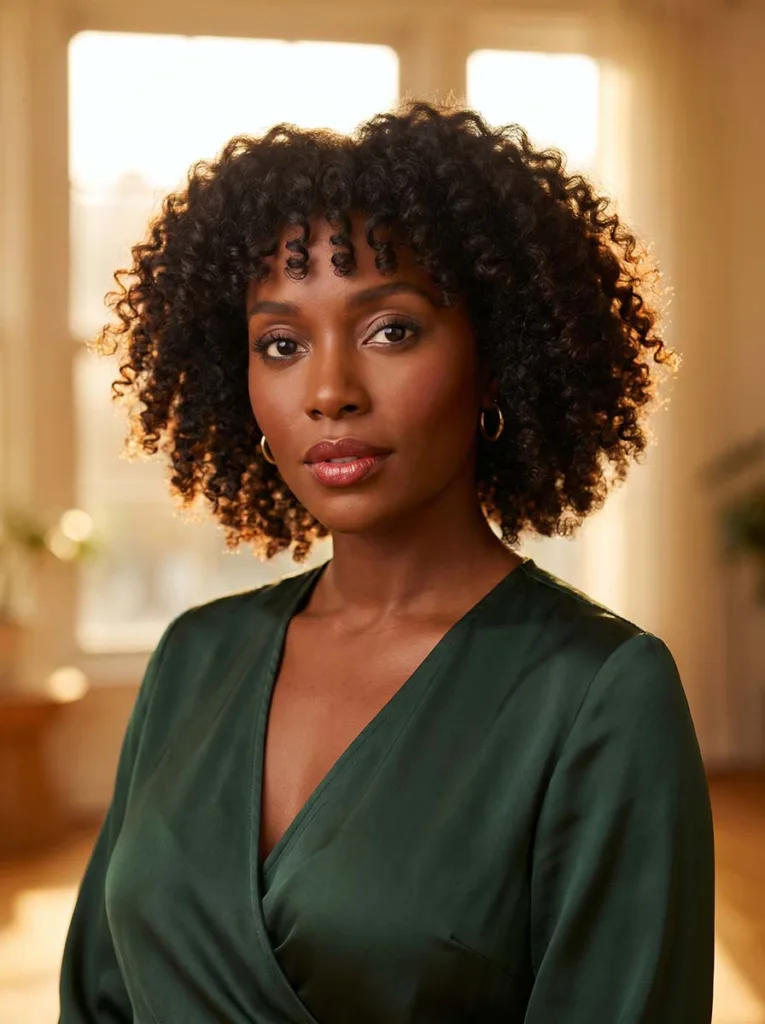
14. Baby Bangs On Coily Or Natural Hair: Short Coily Fringe On Type 4 Hair
On type 4 coily hair, baby bangs create a sculptural fringe that reads differently from any other texture. The coils pull significantly when dry, which means your stylist should cut the fringe while dry to account for the exact shrinkage pattern of your specific curl type. Wet-cutting coily baby bangs almost always results in a fringe that sits higher than intended after drying. Styling options include flat-ironing for a straight blunt edge, or defining the coils with a soft-hold gel and finger-coiling each section. The second approach takes more time but preserves the natural texture. Seek a stylist with documented experience cutting type 4 hair dry before committing to this version. Done correctly, the result is distinctive and relatively rare.
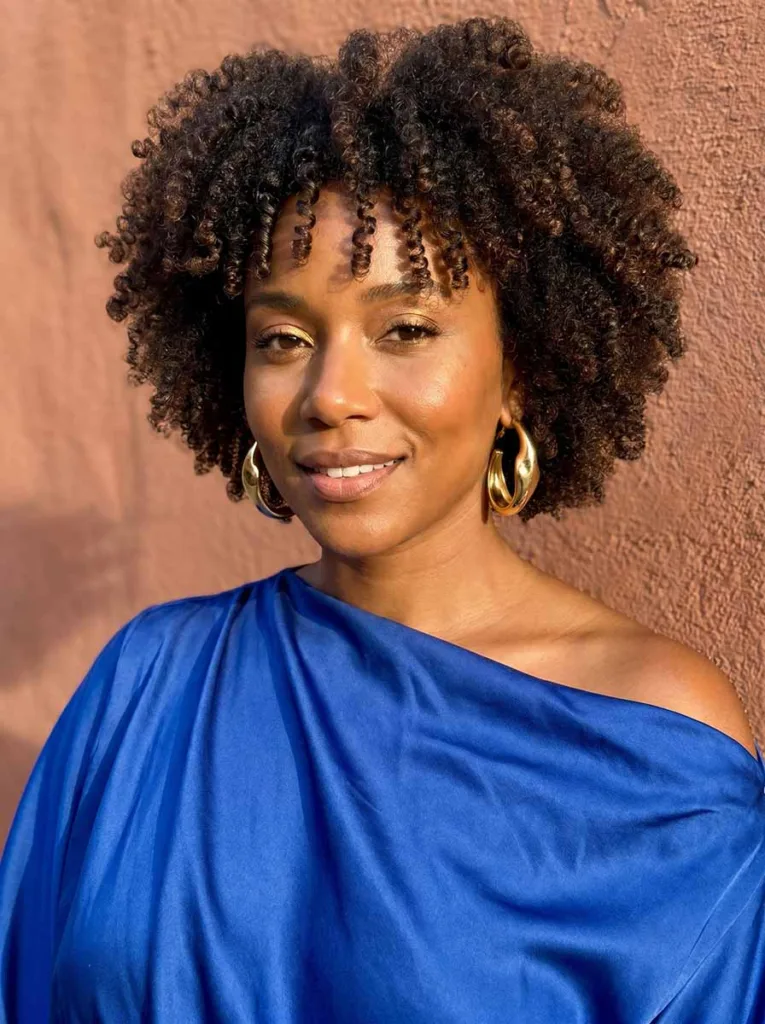
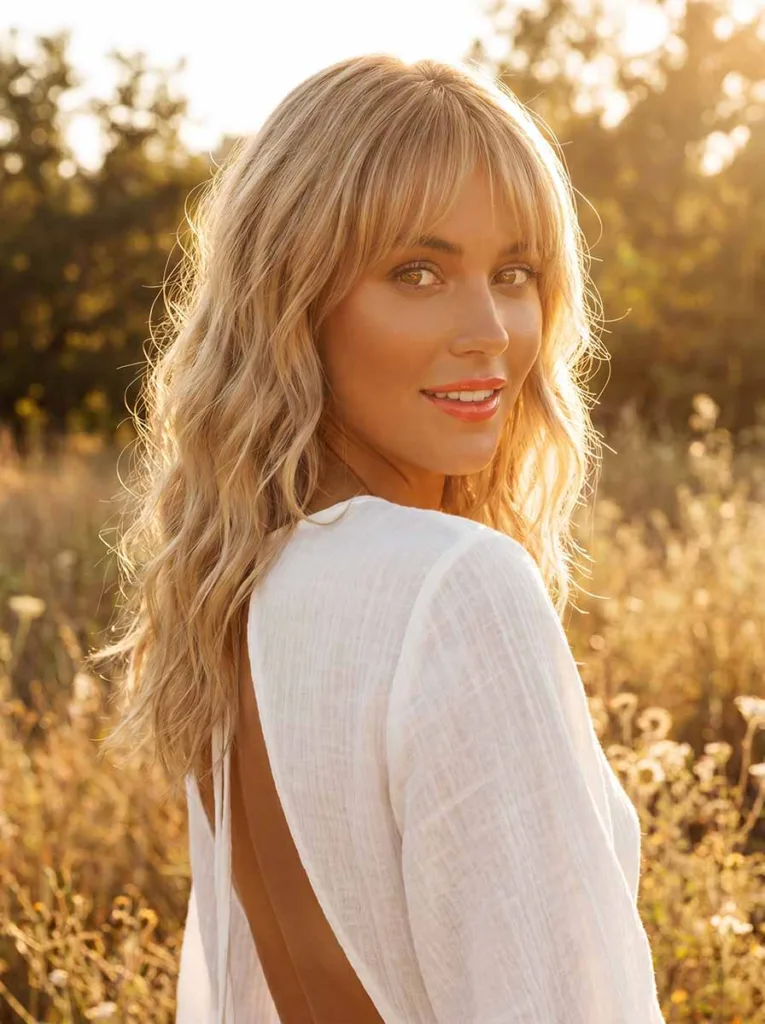
15. Baby Bangs With Beach Waves: Casual Textured Fringe With Wavy Length
Straight-cut baby bangs paired with loose beach waves through the rest of the hair create a contrast between a structured fringe and an unstructured body. The fringe is blow-dried flat and smooth; the rest of the hair is air-dried or scrunched with a salt spray and left to wave naturally. It looks natural because the two textures occupy different parts of the head without overlapping. This works on shoulder-length to long hair with a natural wave pattern. On completely straight hair, a curling wand is needed to create the waves, which adds time. On naturally wavy hair, air-drying handles the body while you only need to blow-dry the fringe.
Baby Bangs By Color
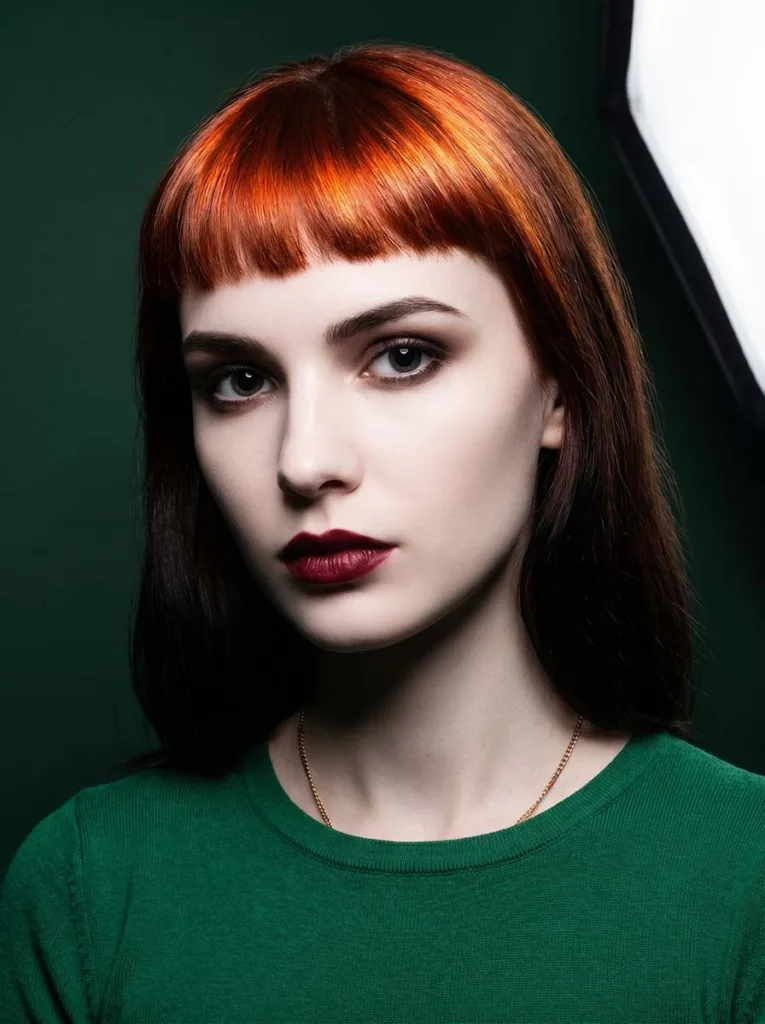
16. Copper Or Red Baby Bangs: Warm-Toned Fringe That Glows At The Forehead
A baby bang in copper or red draws attention to the forehead and brow area because the warm, saturated tone catches light at every angle. The fringe is the first feature you see when looking at the face, and a vibrant color amplifies that. Copper suits warm and olive skin tones best and creates strong contrast against darker natural hair colors. Copper and red tones fade faster than most colors, shifting brassy or washed-out after 4 to 6 weeks without maintenance. A toner every 4 to 6 weeks is necessary to maintain the saturation. Color-safe shampoo and a weekly color-depositing conditioner in a red or copper tone extend the time between toner appointments.
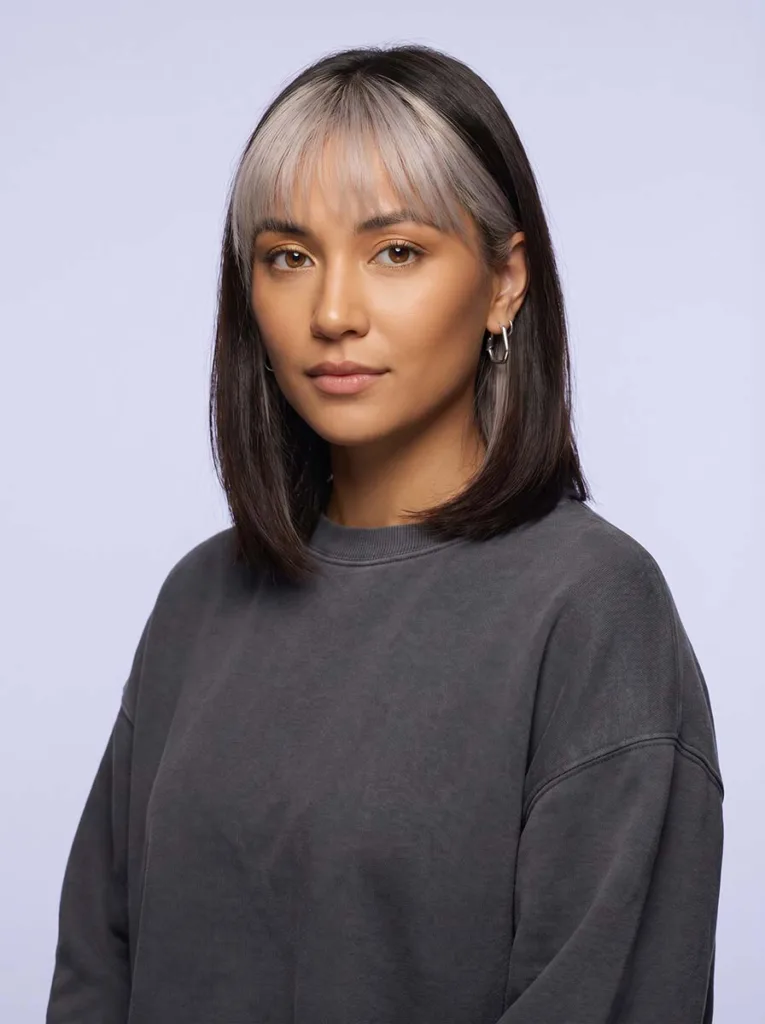
17. Platinum Or Bleached Baby Bangs: High-Contrast Light Fringe Against Darker Hair
Bleaching the baby bangs while leaving the rest of the hair darker creates a two-tone effect where the fringe reads as a deliberate color block separate from the rest of the hair. Only a small section needs to be bleached, which limits chemical damage to a minimal area. The bleached bangs still need toning every 3 to 4 weeks to prevent the platinum from turning yellow, and a purple shampoo used twice weekly slows brassiness between appointments. This color approach works across a wide range of natural base colors, contrast is strongest from dark brunette bases and softest from medium brown. Ask your colorist to tone the bleached section to a cool or neutral platinum rather than leaving it warm after the lift.
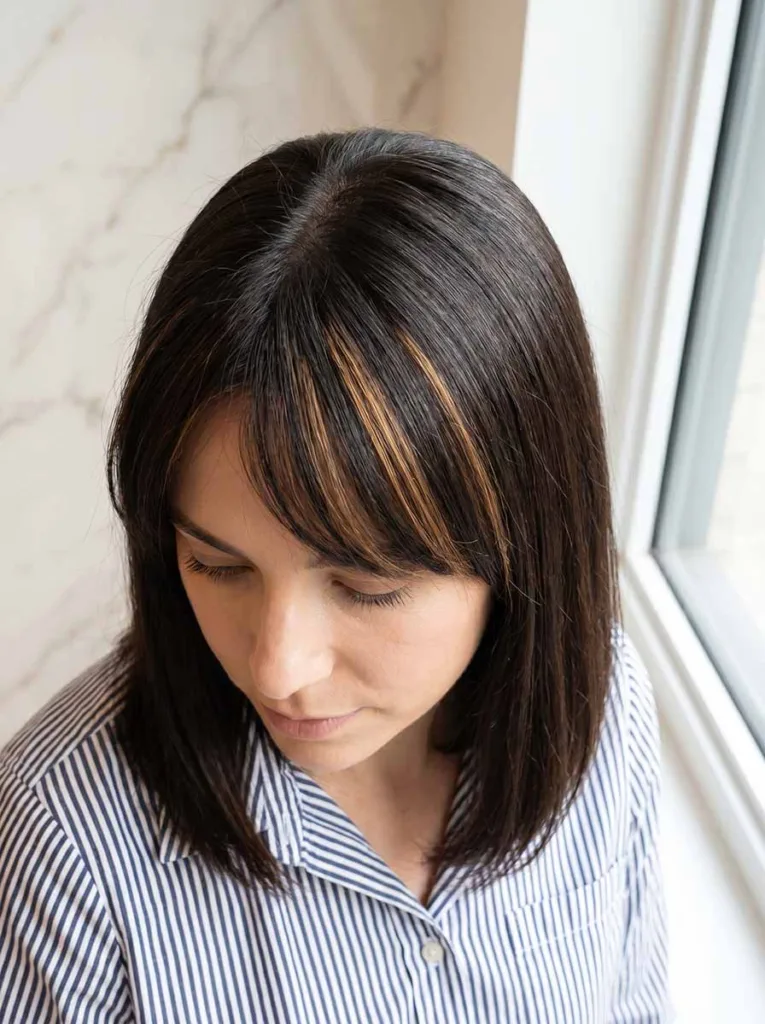
18. Baby Bangs With Balayage Or Highlights: Lighter Ends Through The Fringe
Highlights or balayage through baby bangs add dimension to a section of hair that is too short to show much tonal variation otherwise. The lighter pieces sit within the fringe and catch light differently from the darker base, giving the bang section movement and depth that a single-tone fringe does not have. This works best with warm highlights on brunette bases, caramel, honey, or copper, where the contrast between base and highlight is visible but not abrupt. Avoid very fine, closely placed highlights on baby bangs because the fringe is too short for the subtlety to register. Two or three broader highlight sections show more clearly. A gloss treatment every 6 to 8 weeks maintains the color depth.
Baby Bangs With Styling Accents
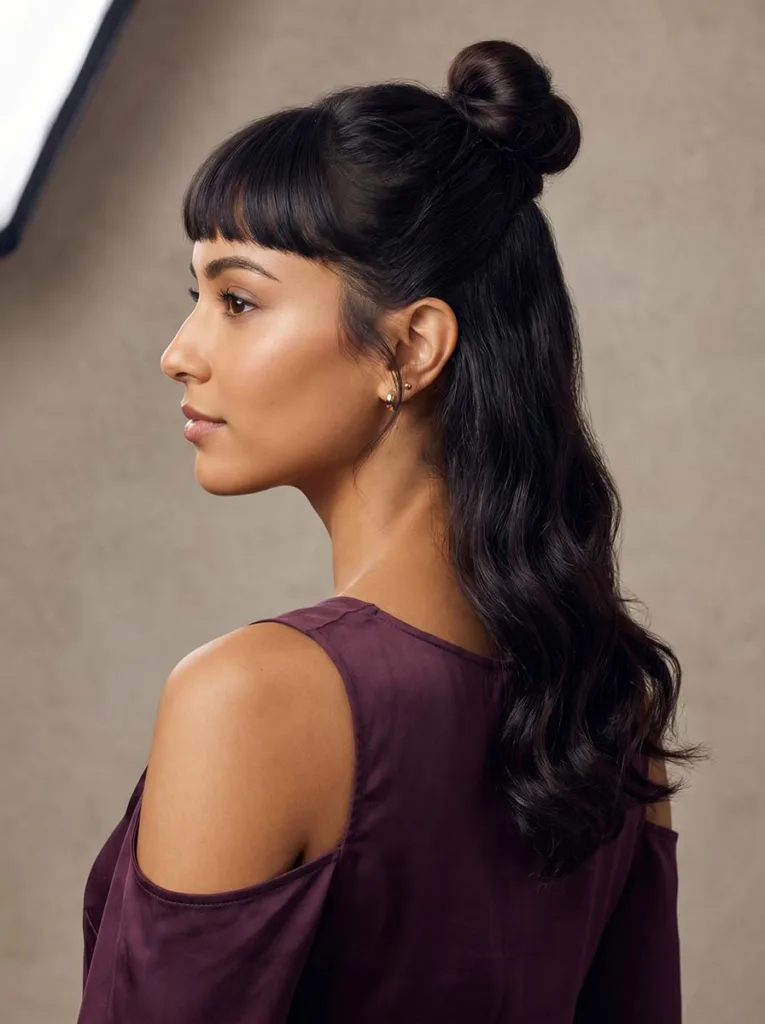
19. Baby Bangs With A Half-Up Bun: Fringe Paired With Hair Pinned Up At The Crown
Wearing baby bangs with the rest of the hair in a half-up bun or top knot creates a graphic frame where the fringe and the pinned section work together around the face. The bun draws the eye upward while the fringe anchors the look at the forehead. This styling option works on any length from a lob upward and takes about two minutes. Position the bun at the crown or slightly behind it, a bun placed too far forward competes with the fringe for attention, while one at the crown creates clear visual separation between the two elements. No additional products are needed on the fringe beyond your usual morning blow-dry routine.
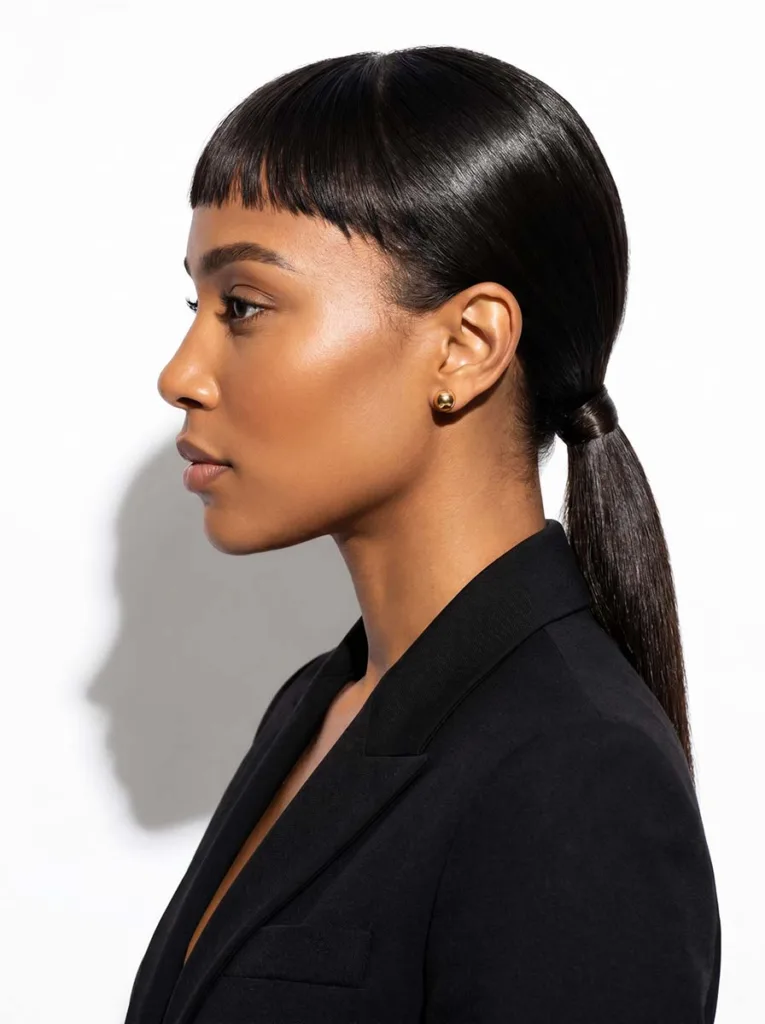
20. Baby Bangs With A Sleek Low Ponytail: Fringe Paired With Pulled-Back Length
A sleek low ponytail worn with baby bangs puts the fringe at the center of attention because all other hair is pulled flat and back. The tiny fringe above the brow becomes the entire style with nothing competing for focus. This works on straight and slightly wavy hair where the ponytail stays smooth without flyaways. On thicker or coarser hair, a light smoothing serum applied before pulling the hair back keeps the ponytail flat. The combination suits both formal and everyday settings because the overall look is clean and deliberate. It is also one of the most practical bad-hair-day options once you have baby bangs, the ponytail handles any texture issues in the length.
How To Style A Baby Bang Haircut At Home
Baby bangs need daily styling. Because they are so short, the whole process takes under five minutes.
The Basic Technique
- Start with damp bangs: dry bangs will not cooperate
- Apply a small amount of lightweight anti-frizz cream or a mousse through the bangs
- Use a small paddle brush or Denman brush with a blow dryer on low-to-medium heat
- Blow dry the bangs in a side-to-side motion: move the dryer left to right while brushing. This prevents harsh bends and creates subtle movement
- Finish with a light flexible-hold hairspray to keep the bangs in place without stiffness
For a blunt, pin-straight look, swap step 4 for a small flat iron with curved edges. Shape the bangs straight across or with a slight inward bend.
Keeping Baby Bangs Under Control
Baby bangs behave unpredictably on humid days or when air-dried.
- Sleep with a silk scarf or satin pillowcase: the friction from cotton causes bangs to crumple overnight
- On in-between days, use a little dry shampoo at the root of the bangs to absorb oil and revive volume
- A fine-tooth comb and a tiny amount of pomade can redirect any stray pieces that separate
Baby Bang Maintenance: Trim Schedule And At-Home Tips
Baby bangs grow quickly. Because they start so short, two weeks of growth changes the look noticeably.
Plan for a salon trim every 2–3 weeks to keep baby bangs at their intended length. Some people learn to trim their own bangs at home between appointments, which is simpler than it sounds at this length.
At-Home Trim Guide
- Start with dry bangs: wet hair appears longer and you will cut too short
- Use sharp haircutting scissors: kitchen scissors create blunt cuts and uneven lines
- Comb the bangs flat against your forehead
- Trim in tiny snips across the edge rather than cutting all the way across in one motion
- Step back and check the line in the mirror before taking any more length off
If you are unsure, leave it to your stylist. A well-maintained baby bang looks intentional; a poorly trimmed one reads as unfinished.
How To Grow Out A Baby Bang Haircut
Not everyone keeps baby bangs. Having a plan makes the grow-out less awkward.
The first 4–6 weeks are the hardest. Bangs in this phase sit just at the brow and look unkempt without daily styling.
Grow-Out Strategies
- Pin them to the side with a barrette or bobby pin: swept to one side, grown-out baby bangs start to read as a side fringe
- Blend them with curtain bangs: ask your stylist to gradually shape the baby bangs into a curtain bang style as they grow. The shape transitions naturally as the length increases
- Incorporate them into an updo: when bangs reach a medium length, push them back into a half-up style or include them in a bun
- Use headbands during the awkward middle phase to push them back and off the face
The grow-out phase takes approximately 3–6 months to reach full brow-grazing fringe length, and 6–12 months to blend into the rest of the hair.
FAQ
What Is A Baby Bang Haircut?
A baby bang haircut features a very short fringe cut above the brow, typically half an inch to one inch below the hairline. They expose the forehead and draw attention to the eyes and brows rather than concealing them.
Are Baby Bangs High Maintenance?
Yes. Baby bangs require a trim every 2–3 weeks and daily styling. They do not air-dry well and need a blow dryer or flat iron each morning to look intentional.
Can baby bangs work on curly hair?
Baby bangs on curly hair are possible but require more care. Your stylist must cut them longer than the target length to account for curl shrinkage. Daily styling with a small flat iron is usually needed.
What face shapes suit baby bangs best?
Oval, long, and square face shapes suit baby bangs most easily. Round and heart faces can wear them with a narrower cut. Triangular faces should approach with caution and opt for wispy, narrow baby bangs.
How long does it take to grow out baby bangs?
Expect 3–6 months to grow baby bangs to a brow-grazing fringe length, and up to 12 months to blend them fully into the rest of the hair.
Do baby bangs look good with long hair?
Yes. Baby bangs with long hair create a striking contrast that frames the face intensely. The combination looks particularly good on straight or slightly wavy hair.
Conclusion
A baby bang haircut is a real commitment. When the length, width, and styling suit your face shape, the result is striking. If you love the idea but feel hesitant, try a clip-in fringe first. Wear it for a few days and see how it changes your face. If you are sold, find a stylist you trust and book the appointment. Save this article and bring it to your consultation.
For more helpful articles related to haircut ideas, please visit blushhairflow.