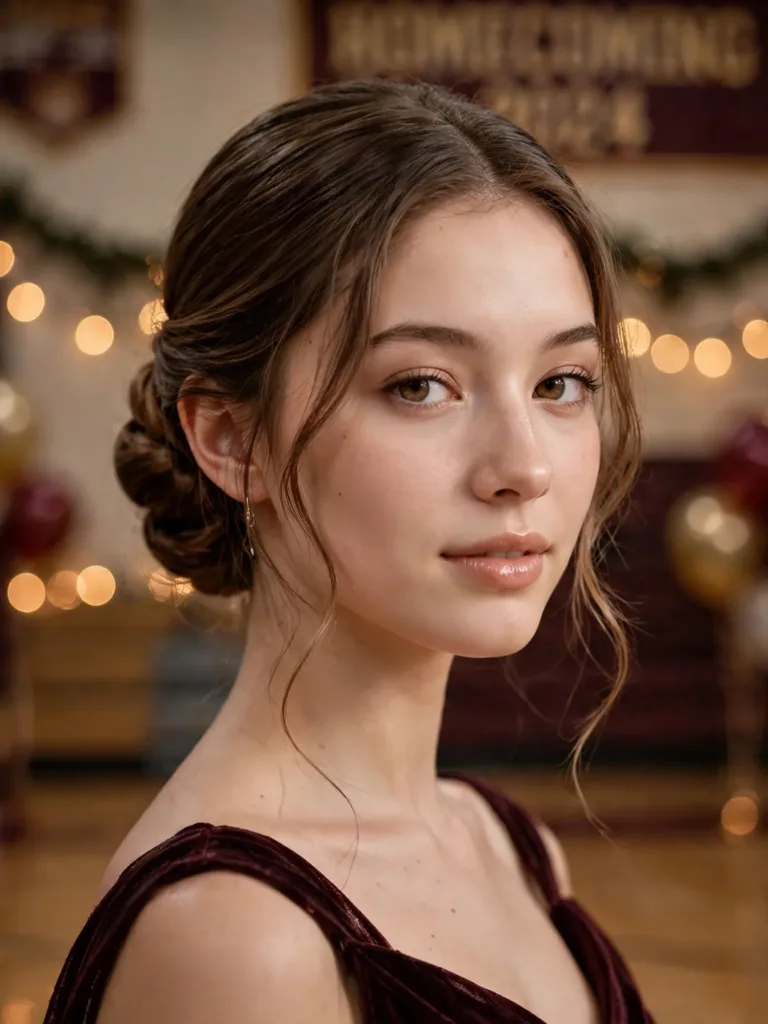
20 Cottagecore Hairstyles Straight From a Storybook
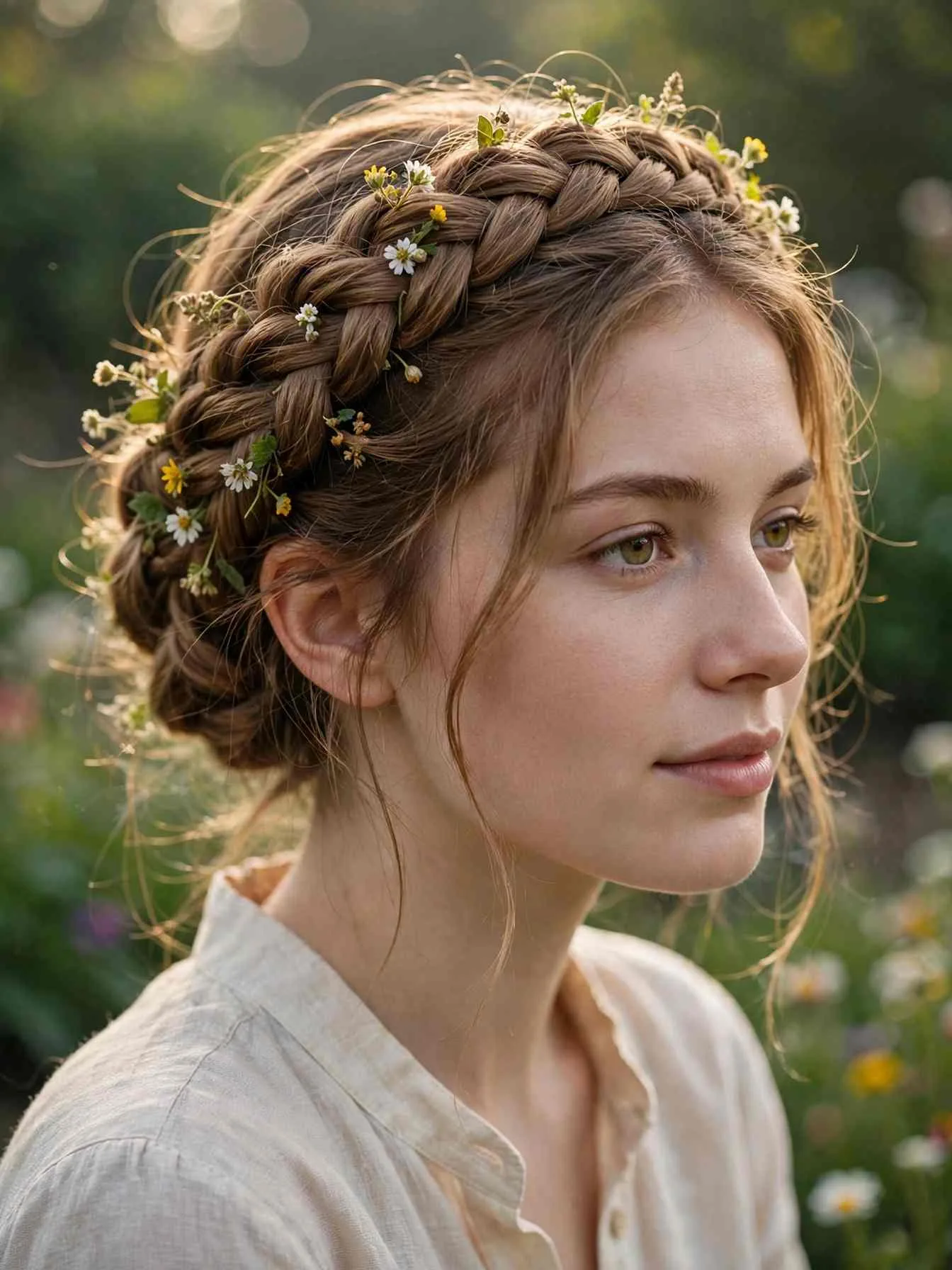
Cottagecore hairstyles win by looking unfinished on purpose. Most romantic styles fail the same test: perfect in the mirror, stiff in every photo taken an hour later. The cottagecore answer is softness built in from the start, a little undone by design.
That is the whole trick. Pancaked braids, loose twists, and accessories that look gathered instead of placed. You need a ribbon or two and the nerve to stop before the style looks finished. Each of these 20 cottagecore hairstyles follows that rule, from five-minute fixes to event-worthy braids. The finish stays touchable, never shellacked.
Every entry names who it suits and what to tell your stylist. Nothing here needs a salon unless you want one. Start with whichever style matches your hair length today.
What Makes a Hairstyle Cottagecore
A cottagecore hairstyle is any soft, romantic style that echoes a slower rural life. Think cottagecore braids, gentle waves, low twists, and nature-inspired accessories like flowers, ribbons, and pearl pins. Texture stays touchable and partings stay relaxed. The whole look reads like you styled it an hour ago, then went for a walk.
Session stylists are braiding the same softness into current work. At Chloé, Anthony Turner sent braids down the runway with a bohemian, jewel-adorned finish. The season’s undone looks rely on a soft parting, tousled strands, and texturizing spray for density. Paris Select Book’s winter 2026-2027 runway hair report Fall 2026’s romantic turn toward soft, natural texture shows the same instinct. The Zoe Report’s fall 2026 textured hair trends
1. Pancaked Milkmaid Braids
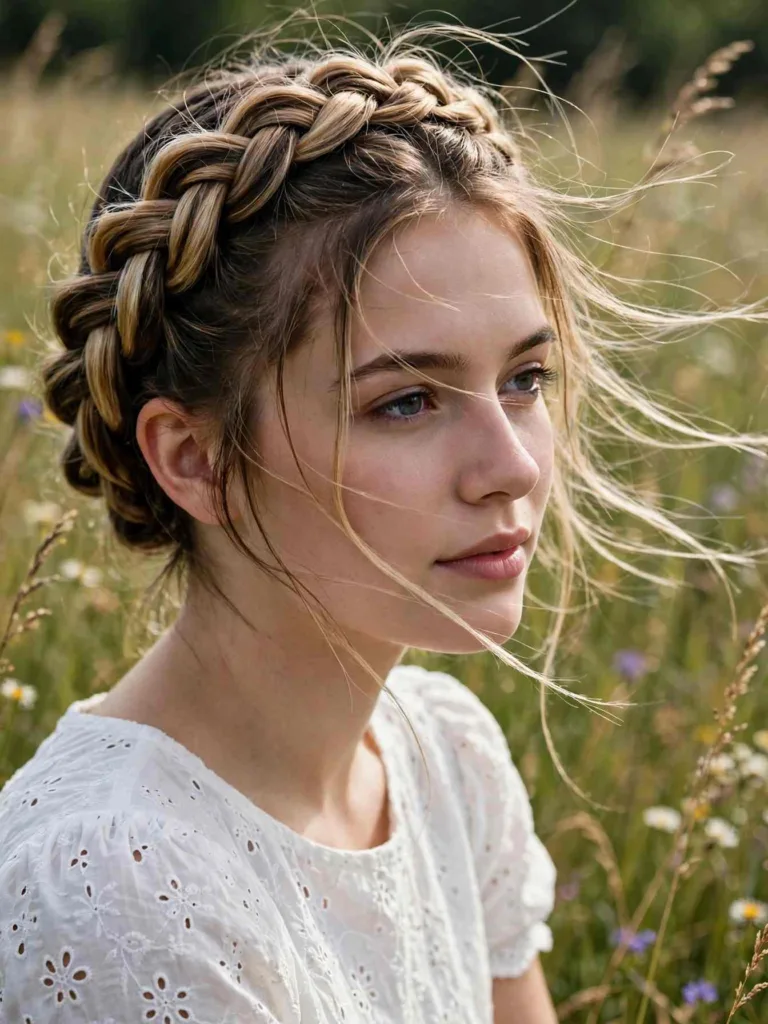
Two Dutch braids wrapped over the crown give the classic milkmaid effect. Pancaking is the move that turns simple plaits into true cottagecore braids. After braiding, tug each loop outward with your fingertips until the braid looks twice as full. Secure the braids across the top of the head with U-pins, hiding the ends underneath. A light mist of flexible-hold hairspray keeps flyaways soft instead of glued.
Best for: Long hair that needs to stay put through a full day outdoors.
Ask your stylist for: Long layers that keep the braid thick from roots to ends.
2. Loose Dutch Crown With Wildflowers
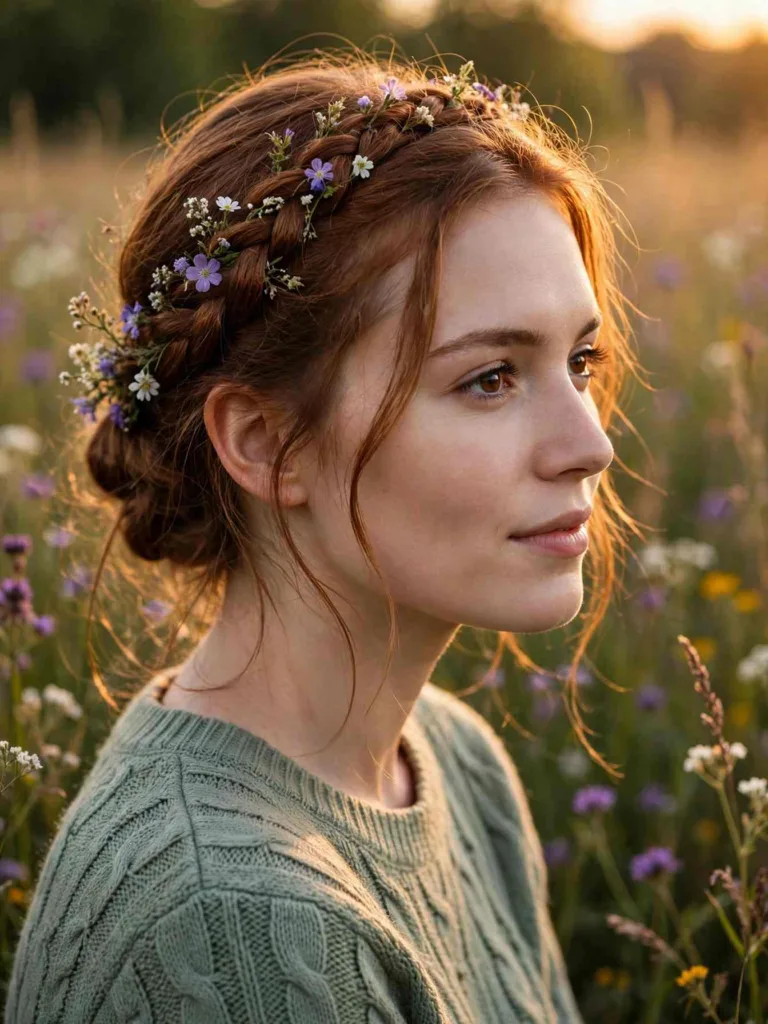
A single Dutch braid travels around the hairline like a headband, with the tail pinned behind the opposite ear. Keep the tension easy near the face so soft pieces can slip free. Press small wildflowers or silk blossoms into the braid with bobby pins, stems pointing down so they sit flat. These are cottagecore braids at their best. They are structured enough to last, yet loose enough to look effortless. This is the style that photographs best at golden hour.
Best for: Garden parties, outdoor ceremonies, and anyone growing out bangs.
Ask your stylist for: Face-framing layers that fall naturally around the braid.
3. Ribbon-Tied Half-Up Waves
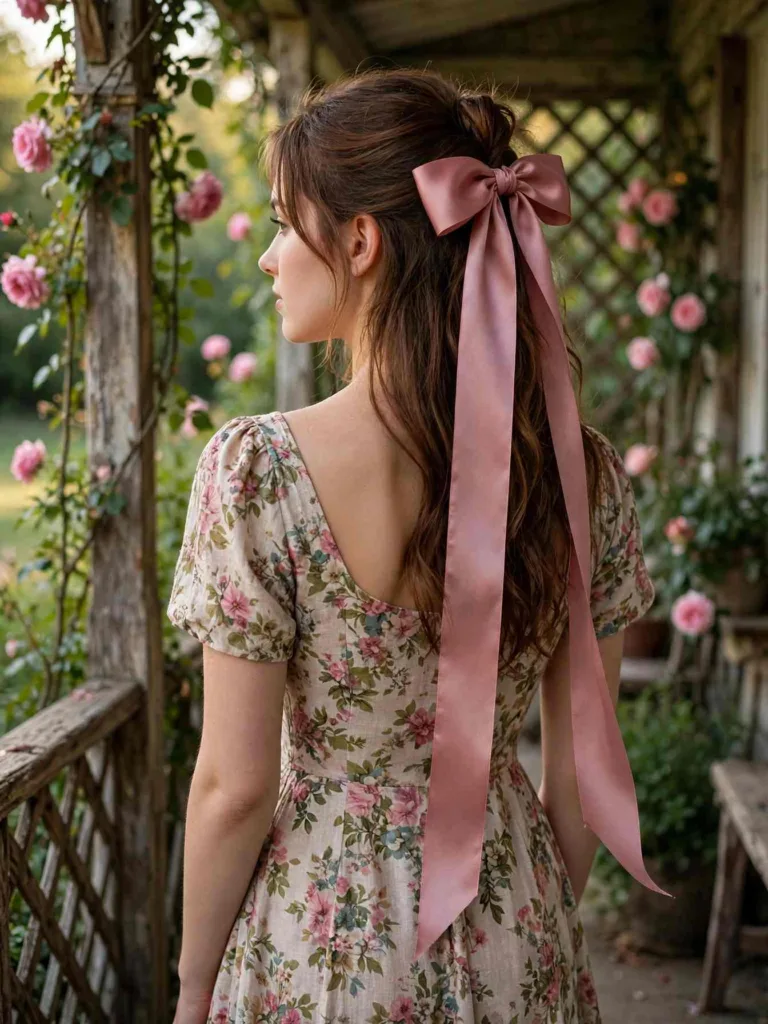
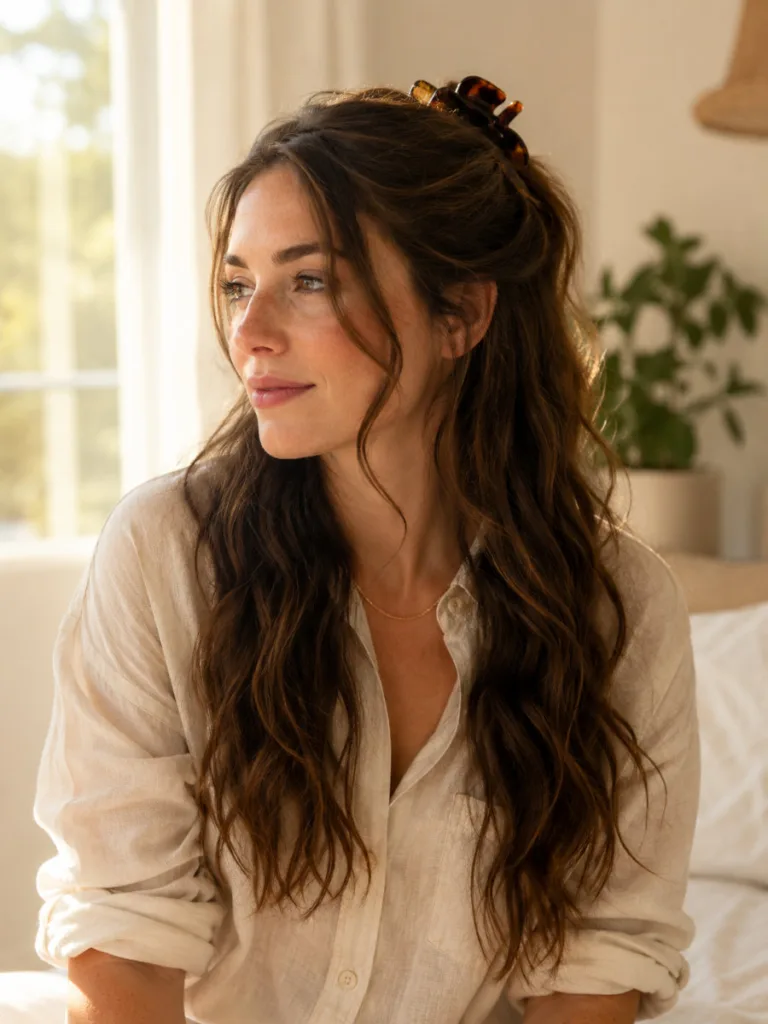
Gather the top half of loose waves and tie it with a wide satin ribbon. Leave the bow’s tails long. The ribbon does the cottagecore work here, so keep the waves themselves simple. A center or soft side part both suit this one. Weave a thin braid along the parting first. The style then joins the half-braided looks readers keep searching for. If the bow slips, anchor the section with a small clear elastic first, then tie the ribbon over it.
Best for: Medium to long hair and second-day waves that need a lift.
Ask your stylist for: Long, blended layers that give the half-up section something to grip.
4. Brushed-Out Heatless Curls
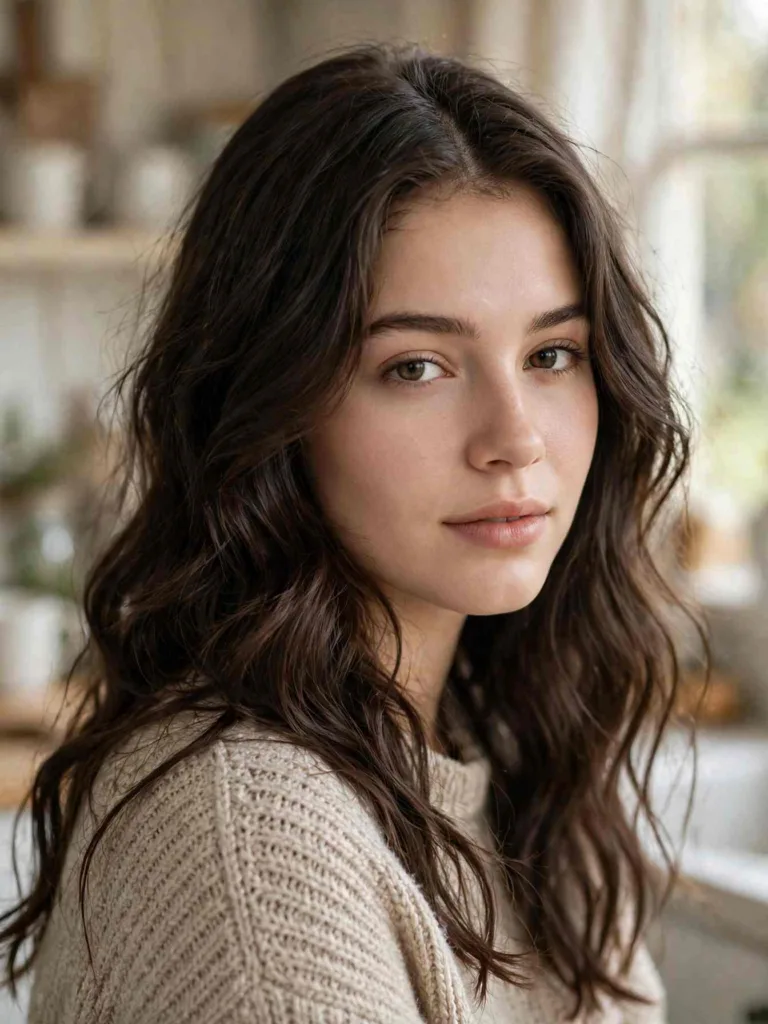
Sleep in two loose braids. In the morning, undo them and brush the curls out with a wide-tooth comb. Brushing is what separates cottagecore waves from defined curls: it softens everything into one flowing texture. A pea-sized amount of hair oil on the ends adds shine without flattening the wave. This base also feeds half the cottagecore hairstyles on this list.
Best for: Naturally wavy or curly hair and anyone avoiding heat tools.
Ask your stylist for: A dusting trim every 8 to 10 weeks so the ends stay full.
5. Waterfall Braid With Silk Blossoms
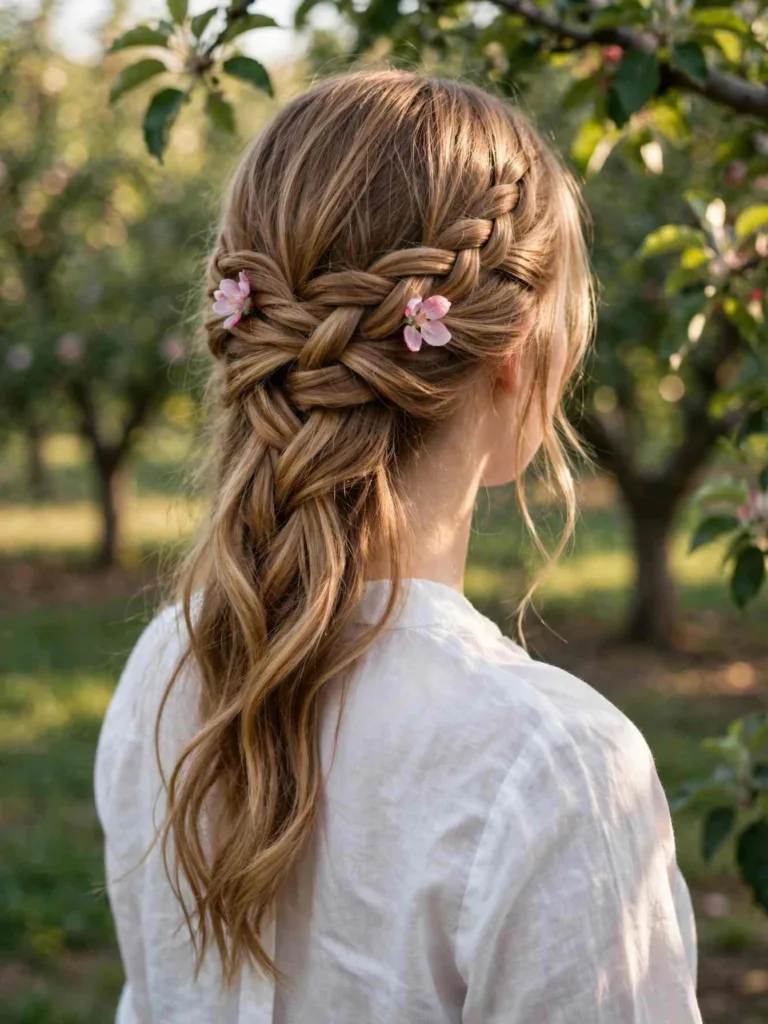
The waterfall braid drops strands as it crosses the head. The finished look reads like hair caught mid-motion. Weave two or three small silk blossoms into the dropped sections where they will be seen from the side. Silk beats fresh flowers here because it survives hugs, wind, and a long afternoon. Pin the braid’s tail under a curl to hide the ending.
Best for: Long, thick hair where the dropped strands show clearly.
Ask your stylist for: Minimal layering through the mid-lengths so the braid stays neat.
6. Low Twisted Chignon With Pearl Pins
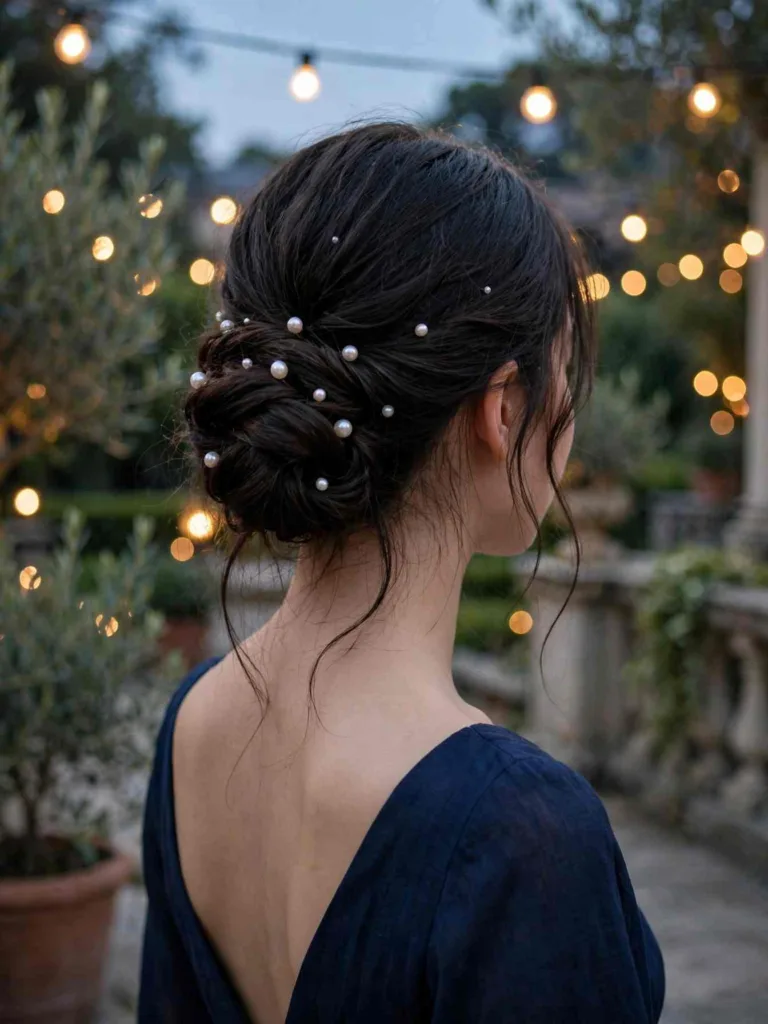
Twist the hair into a low, loose chignon at the nape. Slide in pearl-topped pins at uneven intervals. The uneven placement matters: cottagecore rejects symmetry, so scatter the pins instead of lining them up. Pull a few strands loose around the face before pinning. This is the most formal entry on the list, and it still takes under ten minutes.
Best for: Weddings, dinners, and fine hair that needs the pins’ grip.
Ask your stylist for: A low-maintenance cut that gathers cleanly without short layers popping out.
7. Side-Swept Fishtail With Dried Lavender
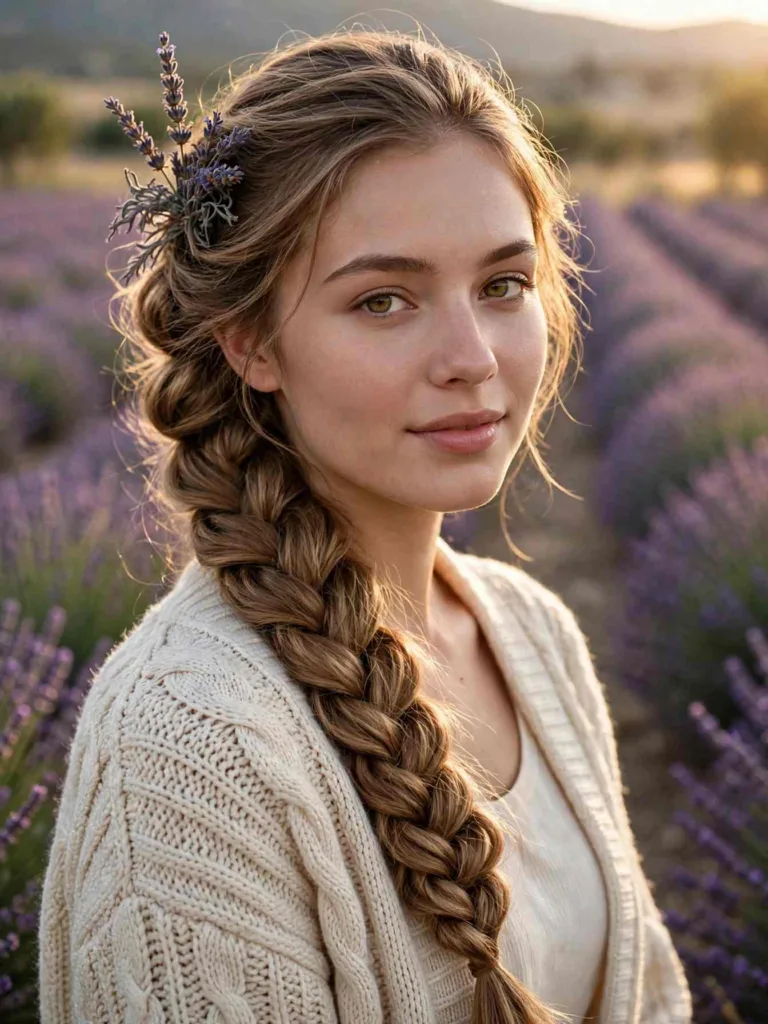
A fishtail braid over one shoulder looks intricate, but the pattern is only two sections crossing back and forth. Tuck two or three sprigs of dried lavender behind the elastic at the top. Dried lavender weighs almost nothing, so it stays put, and the scent is a quiet bonus. Pancake the tail gently for a fuller finish. If fishtails are new to you, these French fishtail braid tutorials break the pattern down step by step.
Best for: Anyone who wants a braid that reads dressy with minimal effort.
Ask your stylist for: One-length ends or very long layers that keep the fishtail even.
8. Face-Framing Tendrils With a Silk Scarf
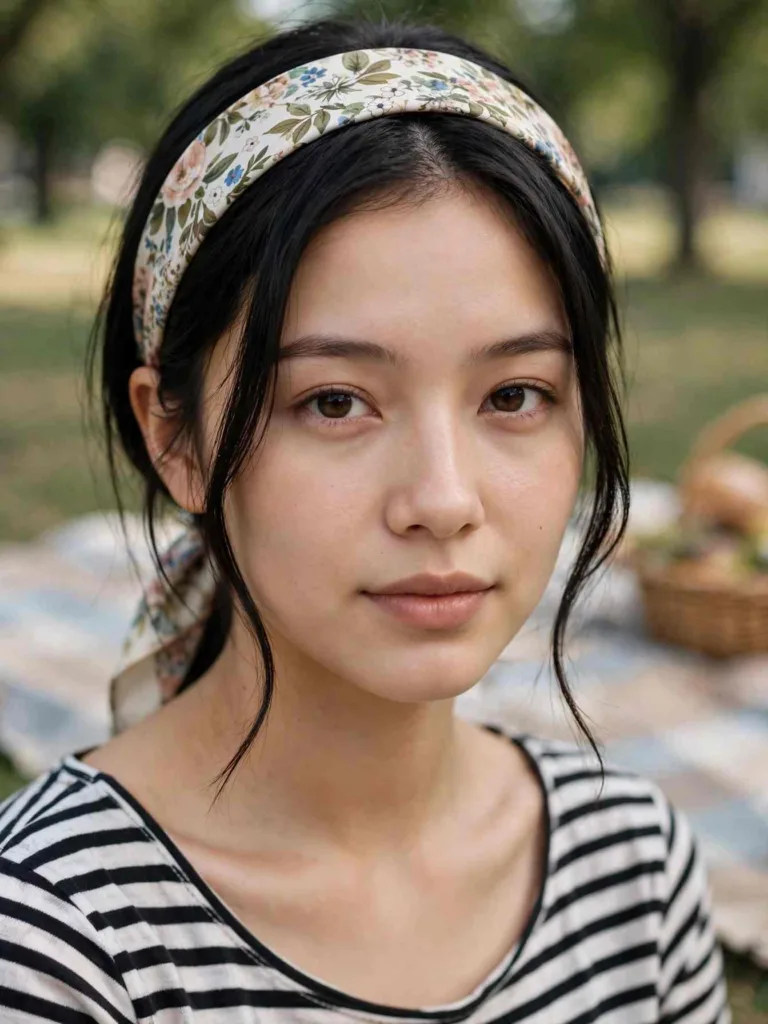
Tie a printed silk scarf as a headband and knot it under the hair at the nape. Pull two soft tendrils free in front. The scarf adds the cottagecore print story: florals, gingham, and tiny ditsy patterns all work. Keep the rest of the hair in loose waves or a low ponytail so the scarf stays the focus. This is the fastest style on the list.
Best for: Short on time, and for day-three hair that needs camouflage.
Ask your stylist for: Wispy front pieces that curl softly around the face.
9. Bubble Braid Ponytail With Velvet Ribbon
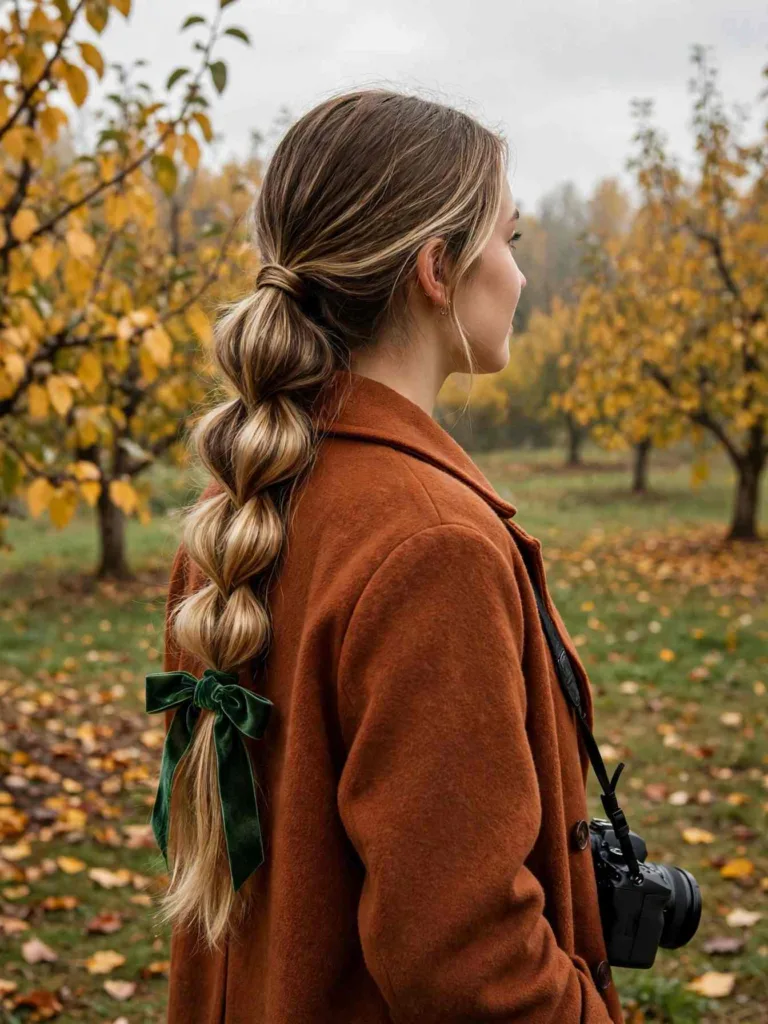
Secure a low ponytail and add elastics every two to three inches down its length. Tug each section outward to form bubbles. Tie a velvet ribbon at the base and let the tails hang with the bubbles. Velvet reads autumnal and rich, which makes this the coziest entry here. Use fabric-covered elastics to avoid dents if you wear it often.
Best for: Thick hair that holds volume, and fall afternoons.
Ask your stylist for: Blunt ends that keep each bubble round and full.
10. Braided Pigtails With Matching Bows (Dolly Braids)
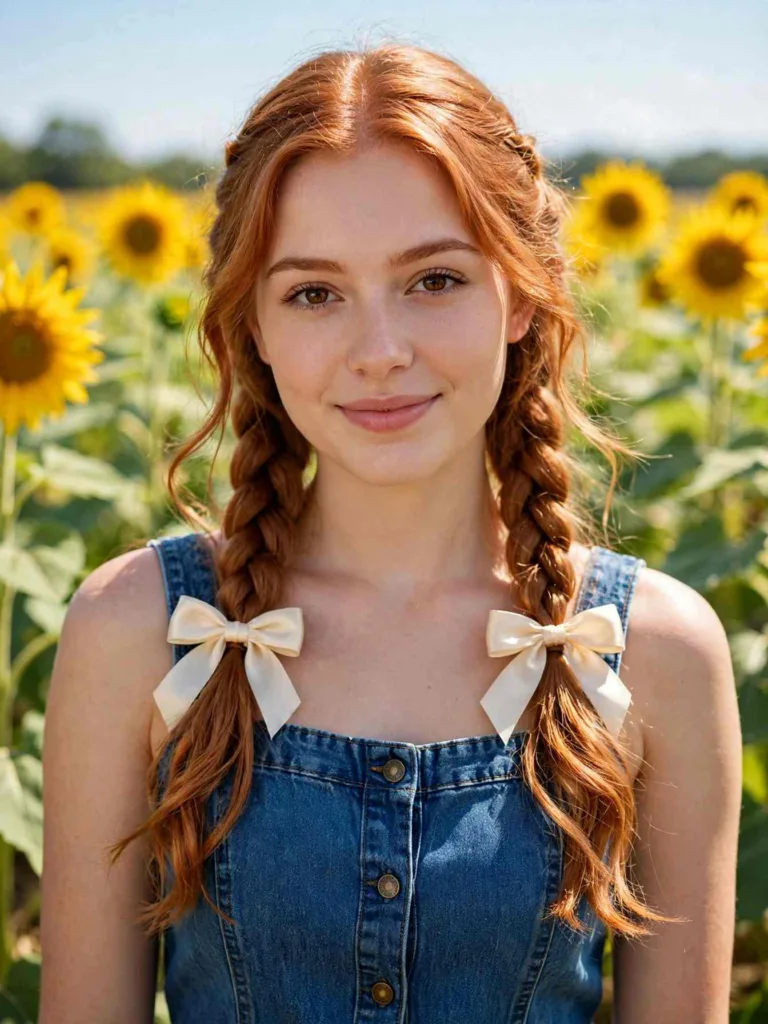
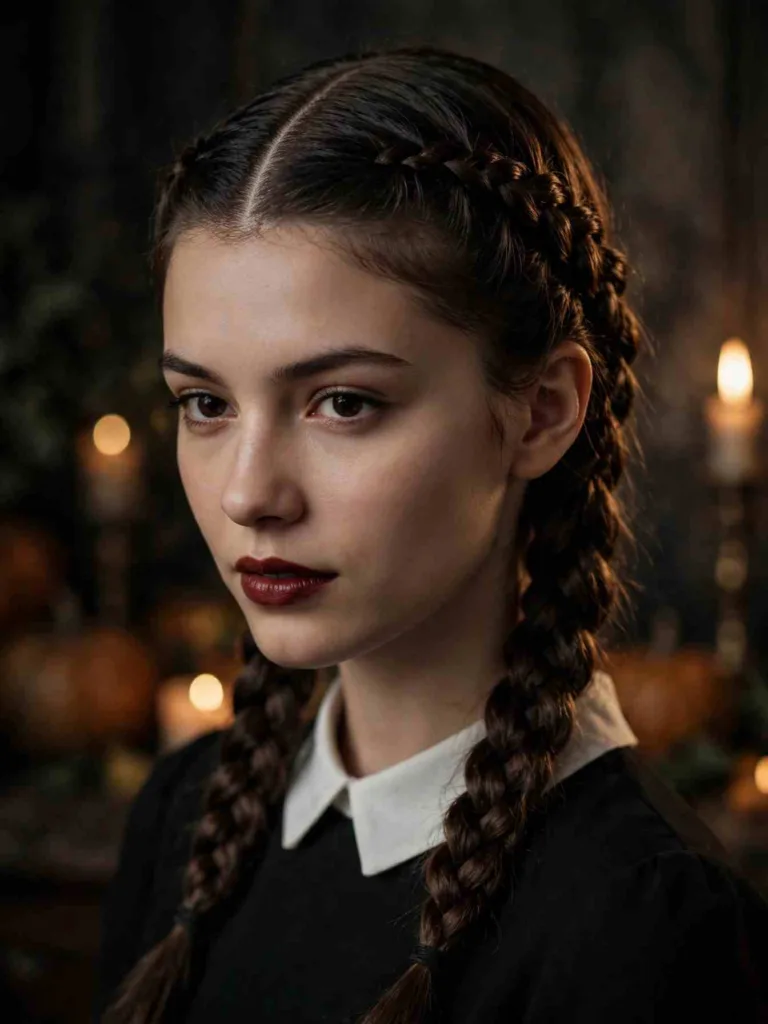
Two loose three-strand braids, one behind each ear, finished with matching satin bows. This twin-braid look travels under the name dolly braids in current searches. The twin-bow finish is what pushes pigtails from schoolyard to cottagecore. Keep the braids soft by braiding with barely any tension and pancaking lightly. This style suits a picnic blanket better than a boardroom, and it knows it.
Best for: A playful weekend look and anyone with very long hair.
Ask your stylist for: Even, one-length ends so both braids finish at the same point.
11. Undone French Twist With Rosemary Sprigs
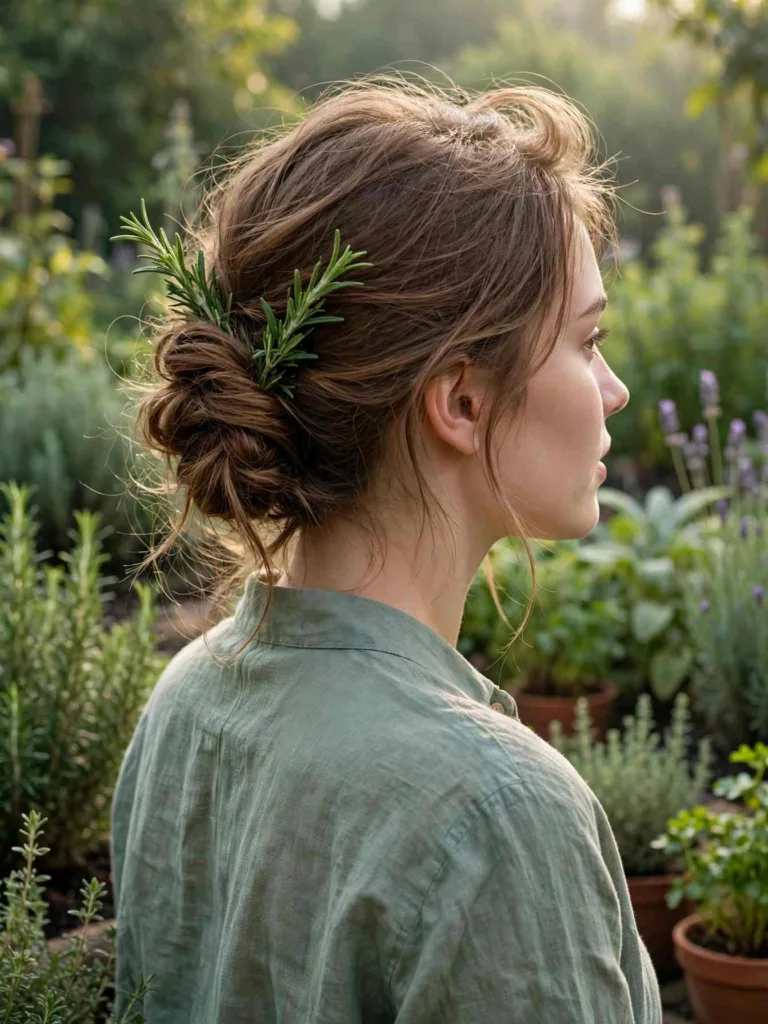
Gather the hair into a loose French twist, leaving the top slightly puffed instead of sleek. Slide two sprigs of fresh rosemary behind the twist’s upper edge. Rosemary holds its shape for hours and smells like a garden. Secure with U-pins in an X pattern so the twist cannot shift. This is the grown-up answer to the milkmaid braid.
Best for: Medium-length hair and anyone who wants an updo with personality.
Ask your stylist for: Enough length at the crown to fold the twist without strain.
12. Floral Claw-Clip Twist
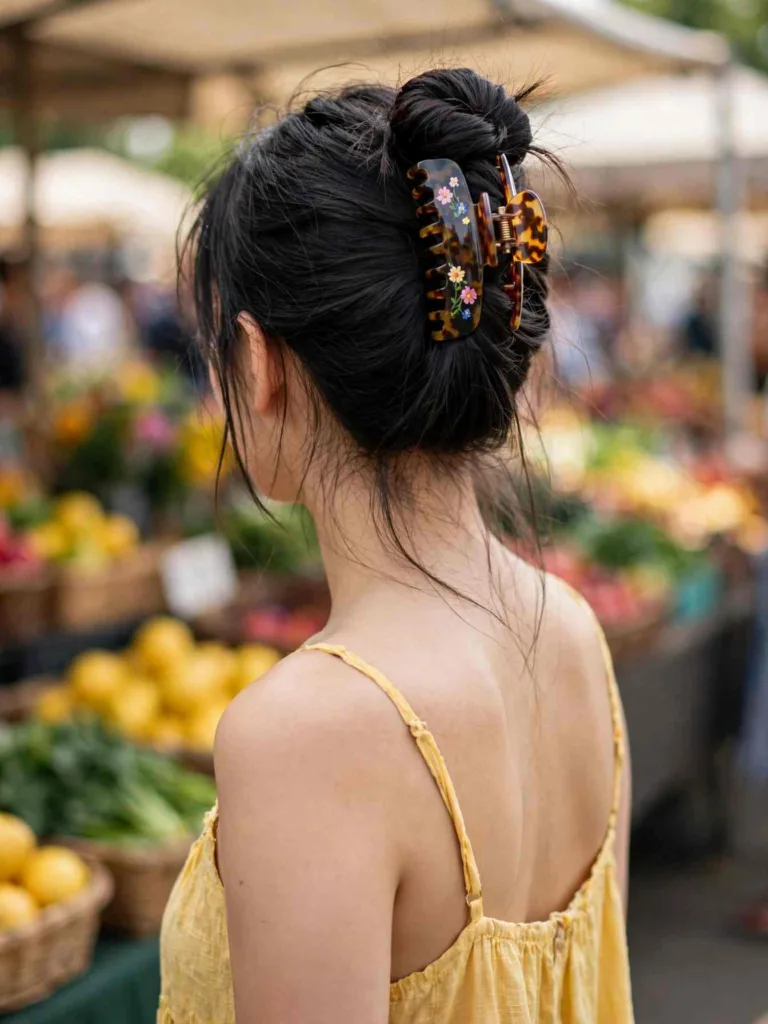
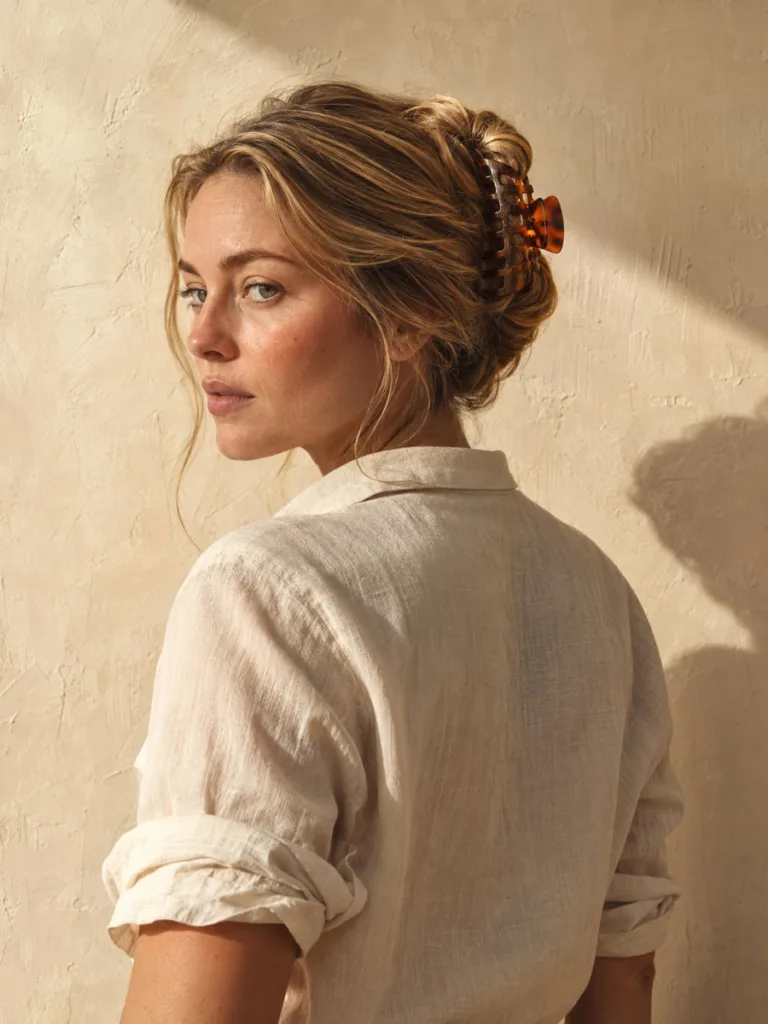
Twist all the hair up the back of the head and fold the ends over. Clamp a large floral or tortoiseshell claw clip over the twist. Pull the front hairline loose in a few spots for softness. Claw clips with floral detailing do double duty here: they hold the style and act as the accessory. Keep a second clip in your bag for touch-ups.
Best for: Thick, heavy hair that eats bobby pins for breakfast.
Ask your stylist for: Internal layering that removes bulk so the twist folds easily.
13. Curtain Bangs With Soft Layers

This entry is a haircut, not a style, and it is the foundation half these looks stand on. Curtain bangs part in the middle and sweep to each side, framing the face the way cottagecore wants: softly. Paired with long, blended layers, they give braids and twists natural face-framing pieces without extra styling. If you commit to one salon change for this aesthetic, make it this one.
Best for: Anyone ready to change the cut, not just the styling.
Ask your stylist for: Curtain bangs that hit cheekbone to jaw length, blended into long layers.
14. Braided Headband Crown
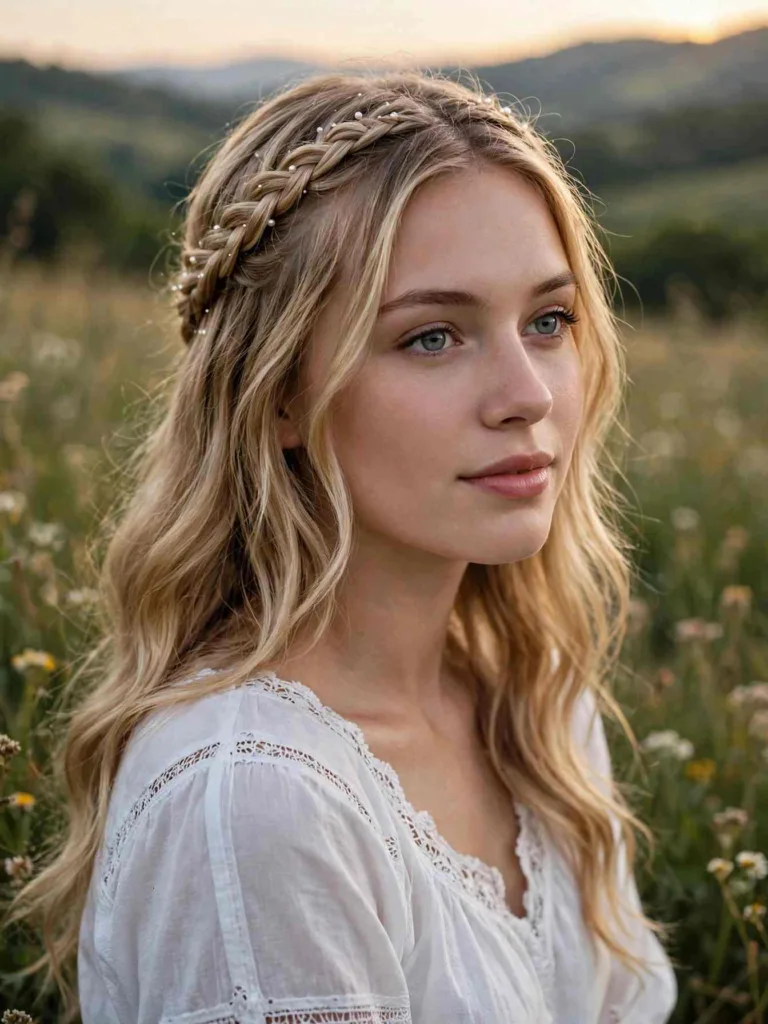
Braid a section from behind one ear across the crown to the other side, pinning as you go. The braid acts as a headband made of your own hair. Pancake it for width and tuck in tiny pearl pins along its length. Unlike a real headband, this one never slides. It pairs beautifully with loose waves underneath. For more braid-and-accessory pairings, see these boho braids styled with accessories.
Best for: Keeping hair off the face on windy days without a single accessory.
Ask your stylist for: Long front layers that reach across the crown when braided.
15. Rope-Twist Low Bun With Ribbon Lacing
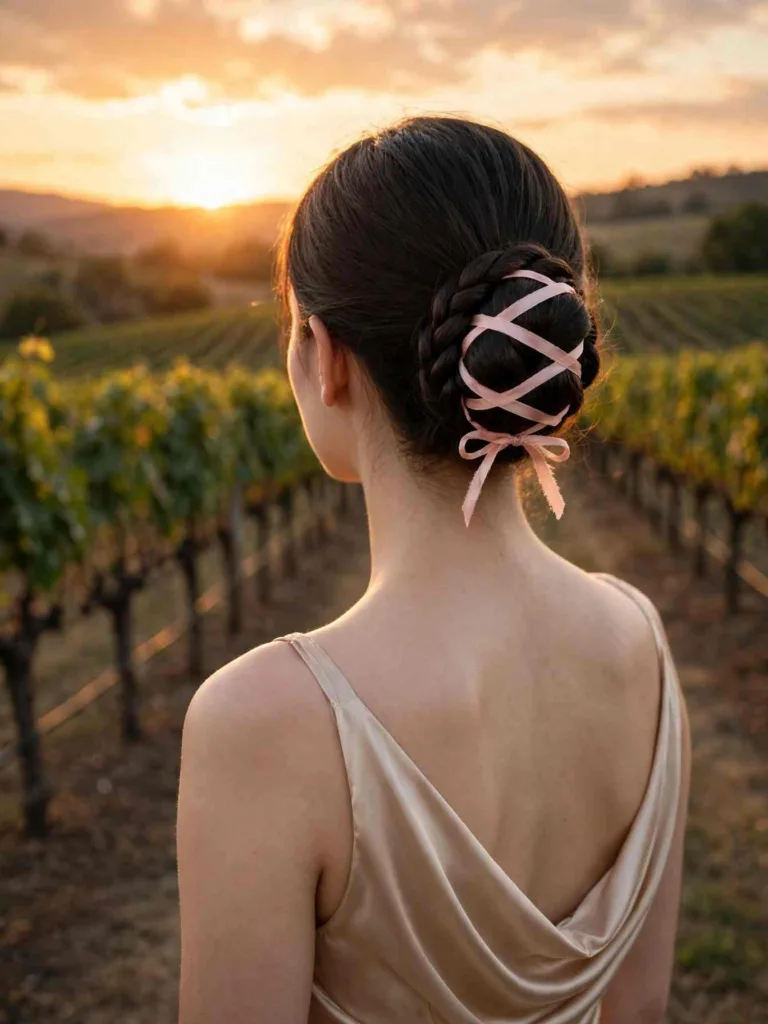
Split a low ponytail in two, twist each section, then wrap them around each other into a rope. Coil the rope into a low bun. Lace a thin ribbon through the twists in a crisscross pattern and tie it in a small bow. The lacing looks far more complex than it is. This bun survives dancing, which makes it a quiet wedding-guest hero.
Best for: Formal events where the hair must last six-plus hours.
Ask your stylist for: Strong, even ends that keep the rope twists smooth.
16. Tousled Low Ponytail With a Floral Scrunchie
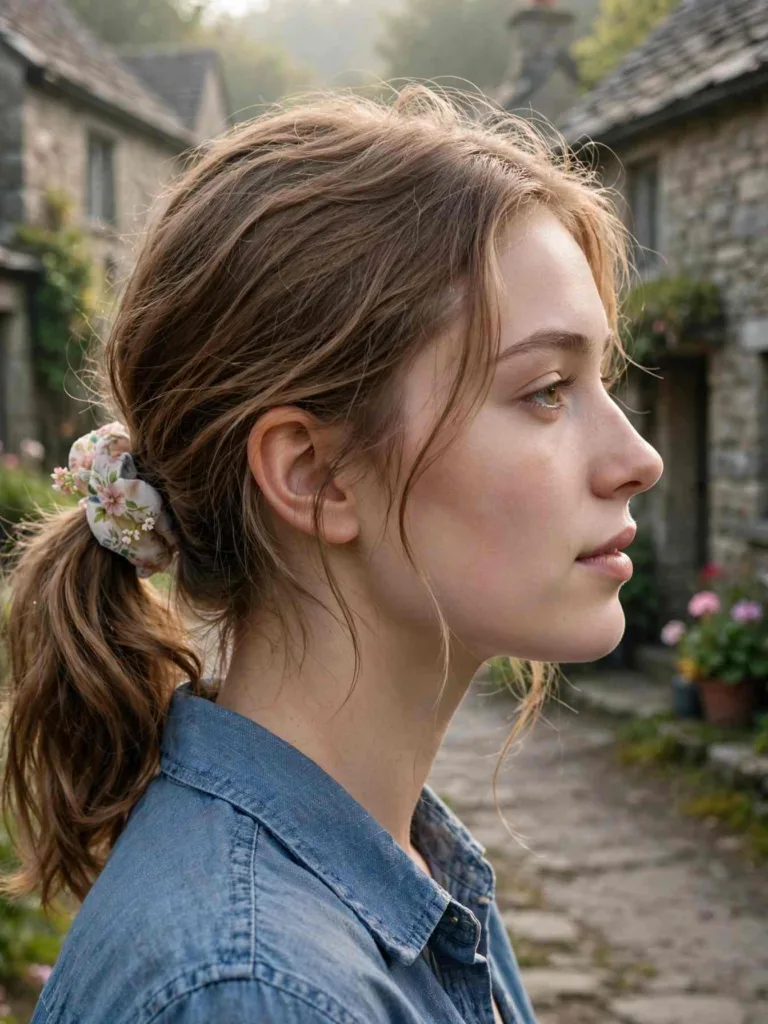
Pull the hair into a low, loose ponytail and wrap a floral-print scrunchie over the elastic. Tug the crown gently for lift and pull two pieces free at the temples. The scrunchie is the whole accessory story, so choose a print with visible flowers. This is the easiest entry on the list and the most wearable daily.
Best for: Everyday wear and gym-to-errands transitions.
Ask your stylist for: A trim that keeps the ponytail ends thick rather than wispy.
17. Crown Braid With Baby’s Breath
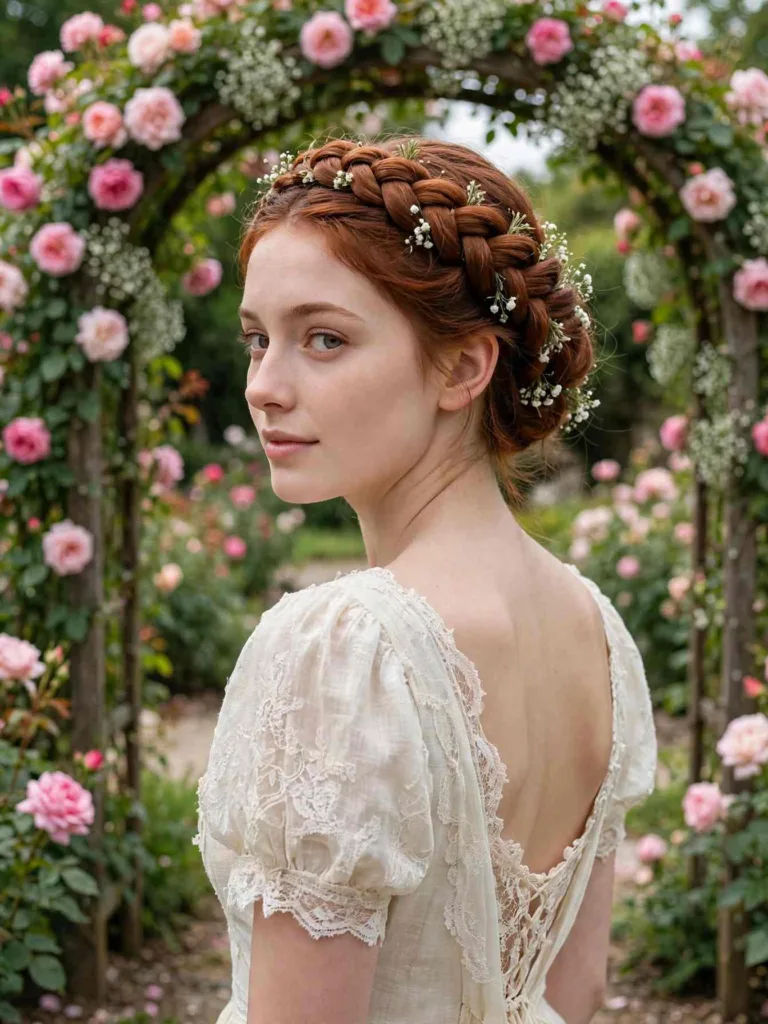
A full crown braid circles the entire head, with the tail tucked under the braid’s start. Weave small sprigs of baby’s breath through the loops at even intervals. Baby’s breath dries well, so this style still looks fresh in evening photos. Keep the braid’s tension even all the way around, or one side will sit higher than the other.
Best for: Bridesmaids, flower girls’ older sisters, and photo-heavy days.
Ask your stylist for: A practice run before any event, since crown braids take skill.
18. Messy Space Buns With Tiny Daisy Clips
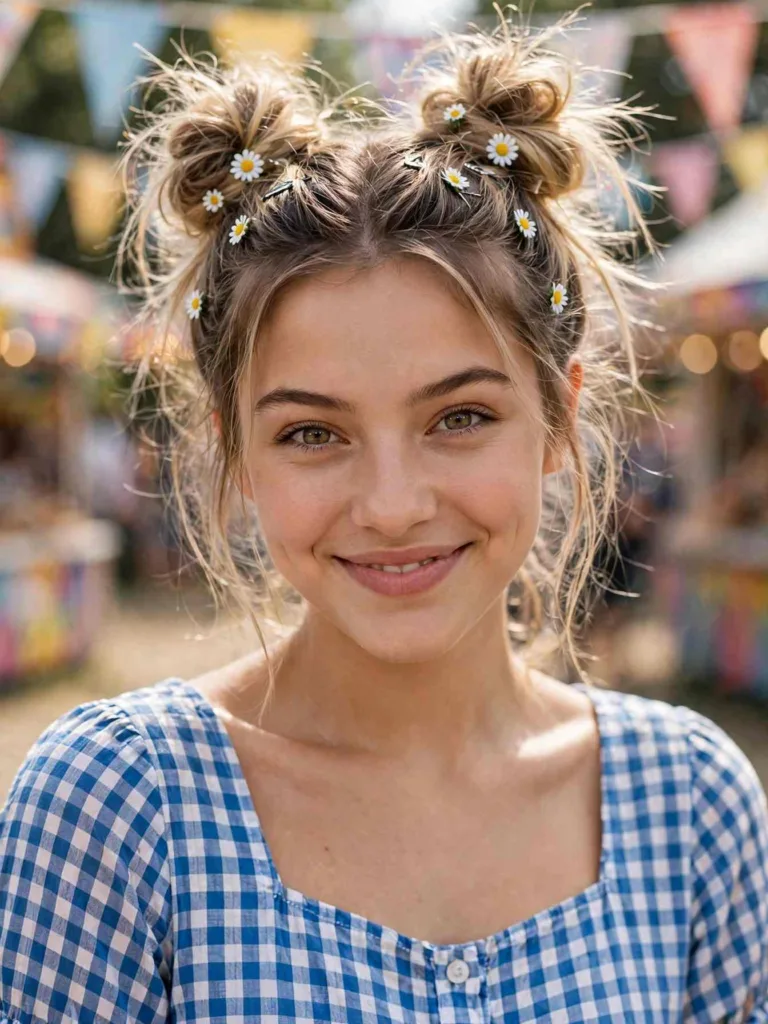
Two high, deliberately messy buns with tiny daisy clips scattered through them. The mess is the point: smooth the buns and the cottagecore charm evaporates. Twist each bun loosely, pin with U-pins, and pull the edges out for texture. The daisy clips read playful from a distance and detailed up close.
Best for: Festivals, fairs, and anyone under no obligation to look serious.
Ask your stylist for: Texturizing layers at the crown that help messy buns hold.
19. Halo Twist With a Lace Headband
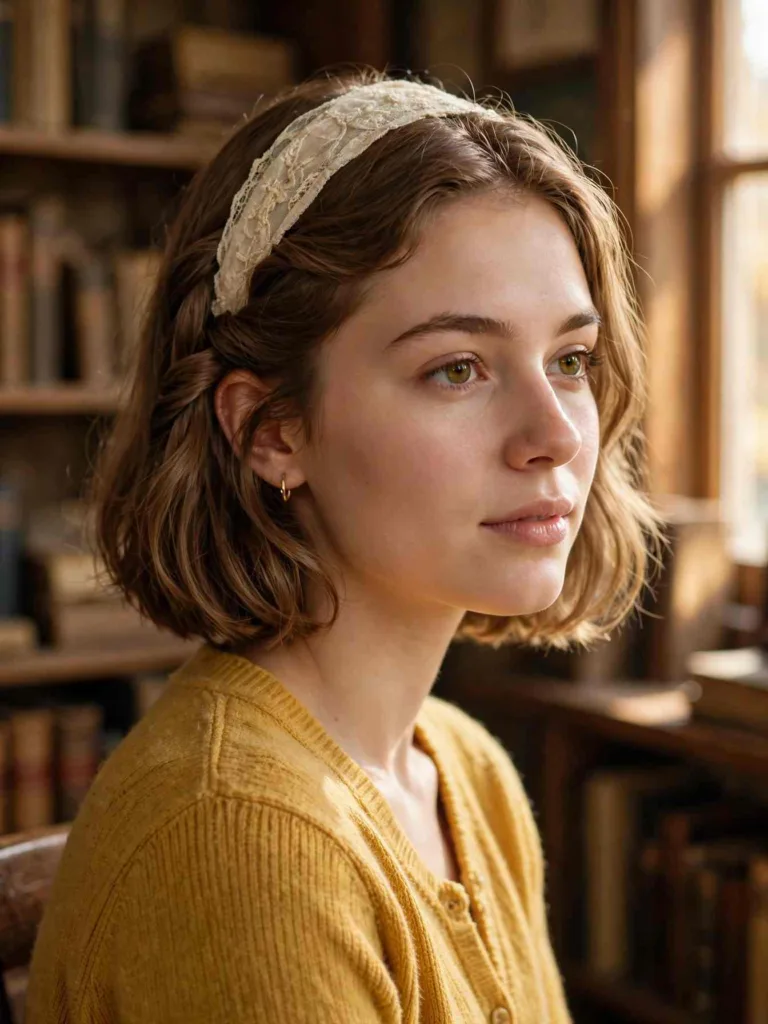
Twist two front sections back along the hairline and pin them where they meet. Slide a lace headband over the crown. The lace adds a vintage textile element that ribbons cannot match. Wear the rest of the hair in soft waves. This style flatters shorter lengths because the twists need only a few inches to work.
Best for: Short to medium hair and vintage-lace lovers.
Ask your stylist for: A bob or lob with enough front length to twist back.
20. Overnight Braid Waves
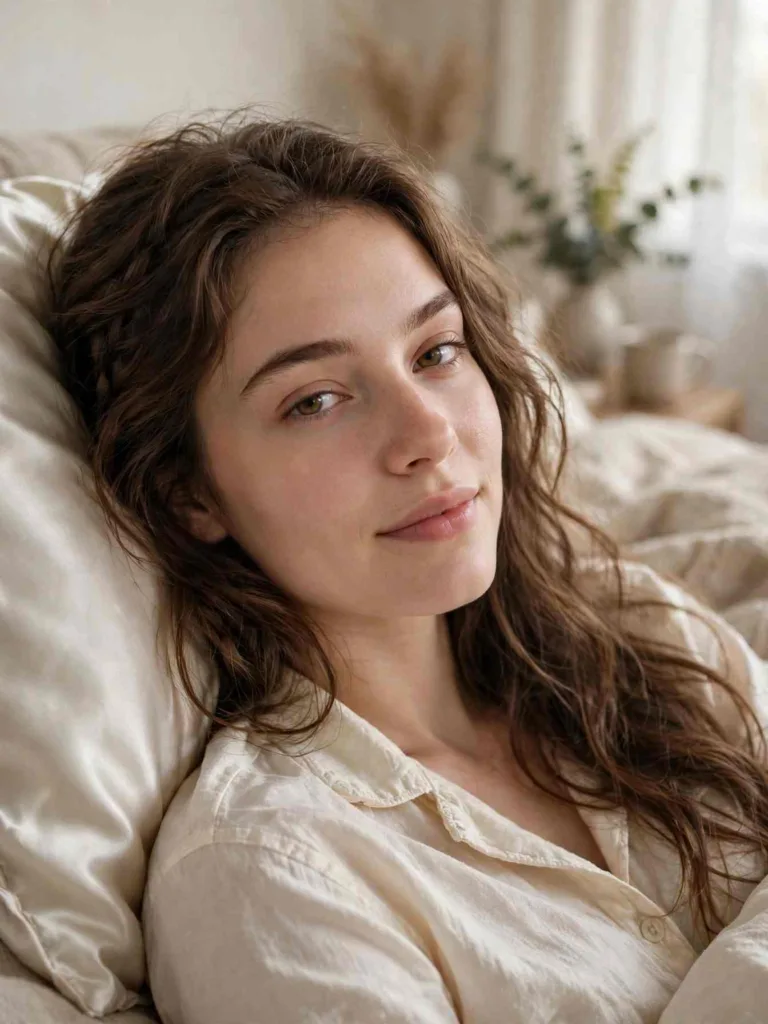
Braid damp hair into four to six loose braids before bed. Sleep on a satin pillowcase and undo the braids in the morning. The result is the soft, consistent wave that supports half the cottagecore hairstyles above. More braids mean tighter waves; fewer braids mean looser ones. This is a base technique rather than a finished style. It is the most useful skill on this list.
Best for: Building the cottagecore texture into your weekly routine.
Ask your stylist for: A leave-in conditioner that keeps damp braids from frizzing overnight.
Pick Your Cottagecore Style by Hair Length and Occasion
Not every one of the 20 cottagecore hairstyles suits every length, so start here. Short hair leans on accessories. The halo twist, silk scarf, and floral claw-clip twist all work at bob length. Medium hair gets the widest menu, from ribbon-tied half-up waves to the undone French twist. Long hair owns the braided entries: milkmaid braids, crown braids, and the side-swept fishtail.
For daily wear, choose the five-minute entries: the scarf, the scrunchie ponytail, and the claw-clip twist. For events, invest the extra fifteen minutes in a crown braid or the ribbon-laced rope bun. For photos, anything with flowers wins, because the camera loves the detail.
How to Get Heatless Cottagecore Waves
The waves underneath most of these cottagecore hairstyles come from one reliable routine. It takes five minutes at night and zero heat.
Start With Mostly Dry Hair
Work with hair that is about 80 percent dry. Soaking wet hair will not dry inside braids overnight, and fully dry hair will not hold the wave.
Braid in Loose Sections
Divide the hair into four to six sections and braid each one loosely. Secure the ends with fabric-covered elastics. Keep the tension even so the wave pattern stays consistent.
Sleep on Satin
A satin pillowcase reduces friction while you sleep, which keeps the braids smooth and the morning waves frizz-free. Cotton pillowcases absorb moisture and roughen the cuticle.
Undo and Separate
In the morning, undo each braid and separate the waves with your fingers, not a brush. A wide-tooth comb gives a softer finish than fingers if you want it brushed out. Add a drop of hair oil to the ends.
Make Cottagecore Work on Your Hair Texture
Curly and coily hair already owns the volume cottagecore loves. Stretch wash-day curls with the banding method or loose twists before styling. Then braid or twist on the stretched hair. Decorative pins and flowers show up beautifully against dense texture.
Fine hair needs grip. A texturizing spray at the roots before braiding gives slippery strands something to hold. Pancaking is your best friend here: it doubles the visual fullness of every braid. Avoid heavy oils before styling, since they flatten fine hair fast.
Short hair is not locked out. The halo twist, scarf headband, and claw-clip twist all work at bob length. Focus on accessories and face-framing pieces rather than elaborate braids.
Keep the Look Fresh Outdoors
Cottagecore hairstyles live outside, so plan for wind. Braided styles survive gusts far better than loose waves: choose a crown braid or milkmaid braids for exposed settings. Pin flowers with two crossed bobby pins rather than one, since single pins rotate in wind.
Humidity swells the hair’s cuticle and loosens smooth styles. A light anti-humidity spray over the finished style helps, and silk flowers outlast fresh ones in damp air. Carry three extra bobby pins and a travel hairspray for touch-ups. If the forecast looks rough, pick an updo over anything worn down.
What It Costs: Salon vs DIY
Every one of these cottagecore hairstyles is DIY-friendly. Most need nothing you do not already own. The accessories are the only real expense. Satin ribbons, silk flowers, and pearl pins typically cost a few dollars each at craft stores.
A salon visit makes sense for the haircut foundation or an event style. Salon updos and special-occasion styling typically run **$50 to $100** or more, as a rough US guide for fall 2026. Published braid menus list cornrows from about **$65** and single French braids from **$100** up. Prices shift with city, stylist level, and hair length, so ask for an estimate before booking. A curtain-bang trim between full cuts usually costs far less than a full haircut.
Cottagecore Hairstyles FAQs
What Is a Cottagecore Hairstyle Exactly? A cottagecore hairstyle is a soft, romantic style inspired by rural life. It means loose braids, gentle waves, low twists, and nature-inspired accessories like flowers and ribbons. The finish stays touchable and a little undone, never stiff or overly polished.
Do Cottagecore Hairstyles Work on Short Hair? Yes. The halo twist, silk scarf headband, and floral claw-clip twist all work at bob length. Short hair leans on accessories and face-framing pieces instead of long braids. The effect reads just as cottagecore.
How Do I Attach Flowers So They Stay in All Day? Use two bobby pins crossed in an X over each stem. Push them into the braid or twist against the scalp. Silk flowers grip better than fresh ones. For updos, U-pins hold heavier blooms more securely than standard bobby pins.
Can I Wear Cottagecore Styles on Curly or Coily Hair? Absolutely. Dense texture gives braids and twists natural fullness. Stretch the hair first with loose twists or the banding method. Then style on the stretched hair so the finished look stays smooth and defined.
How Long Do Cottagecore Braids Last? A well-pinned crown braid or milkmaid braid typically holds from morning to night. Sleeping in the style is possible with a satin bonnet, though the finish loosens by day two. Refresh with a light mist of water and a touch of styling cream.
Is Cottagecore Hair the Same as Coquette Hair? They overlap but differ in mood. Cottagecore leans pastoral and handmade: wildflowers, linen ribbons, garden textures. Coquette leans romantic and polished: bows, pearls, soft glam. Many styles cross over with a simple accessory swap.
What Are Dolly Braids? Dolly braids are two soft, loose braids worn like pigtails, usually finished with bows or ribbons. The name comes from their doll-like charm. They sit at the playful end of cottagecore. Keep the tension easy and pancake the braids for the full effect.
Do I Need a Haircut to Get the Cottagecore Look? No, but curtain bangs and long layers make the styling easier. Every style on this list works on unlayered hair. The cut simply gives braids better face-framing pieces and helps updos grip. Start with styling before committing to scissors.
Final Thoughts
These cottagecore hairstyles reward a light hand and a little patience. Pick one style that fits your length, gather two or three accessories, and give yourself ten unhurried minutes. The pastoral glow follows from there. Save this list, try the overnight braid waves first, and build your cottagecore rotation from the base up. Pin your favorite, gather your ribbons, and give the first style a try this weekend.