18 Violet Gradient Hair Color Ideas To Try Now
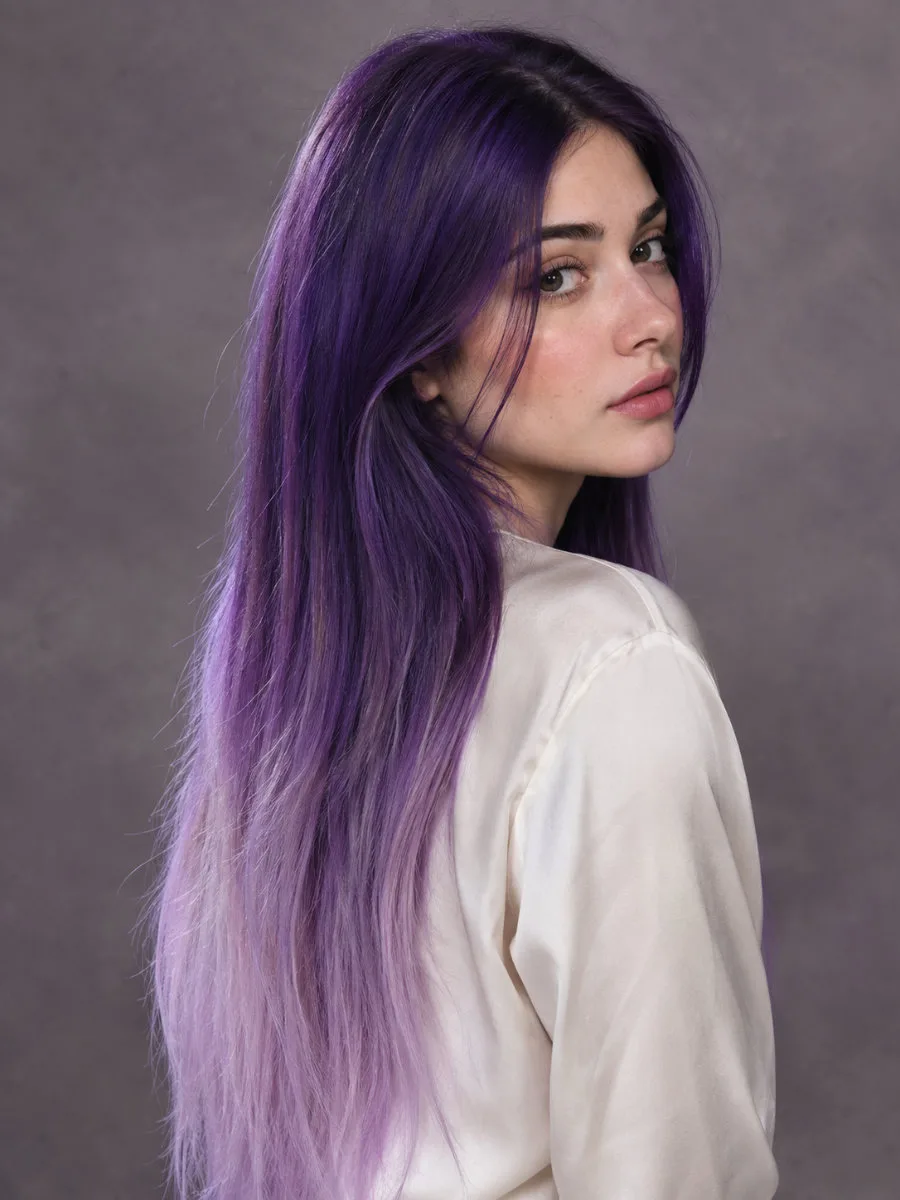
Ever pin a violet gradient photo, walk into the salon with it, and leave with a flat, one-tone purple instead? It happens more than it should. Most photos tagged “violet gradient hair color ideas” online are just solid violet shades with no real transition, which sets you up to ask for the wrong thing.
A true gradient blends two or three violet tones into one smooth, moving color. Getting one means knowing the right words for your colorist, picking a shade your undertone can actually carry, and understanding what it costs to keep vibrant.
You’ll get the terminology, the undertone matching, and the real cost and upkeep numbers first. Then come 18 violet gradient hair color ideas that are genuine gradients, not just pretty photos, so you can walk into your next appointment and ask for exactly the right look.
Gradient Vs Ombre Vs Balayage: What’s The Real Difference
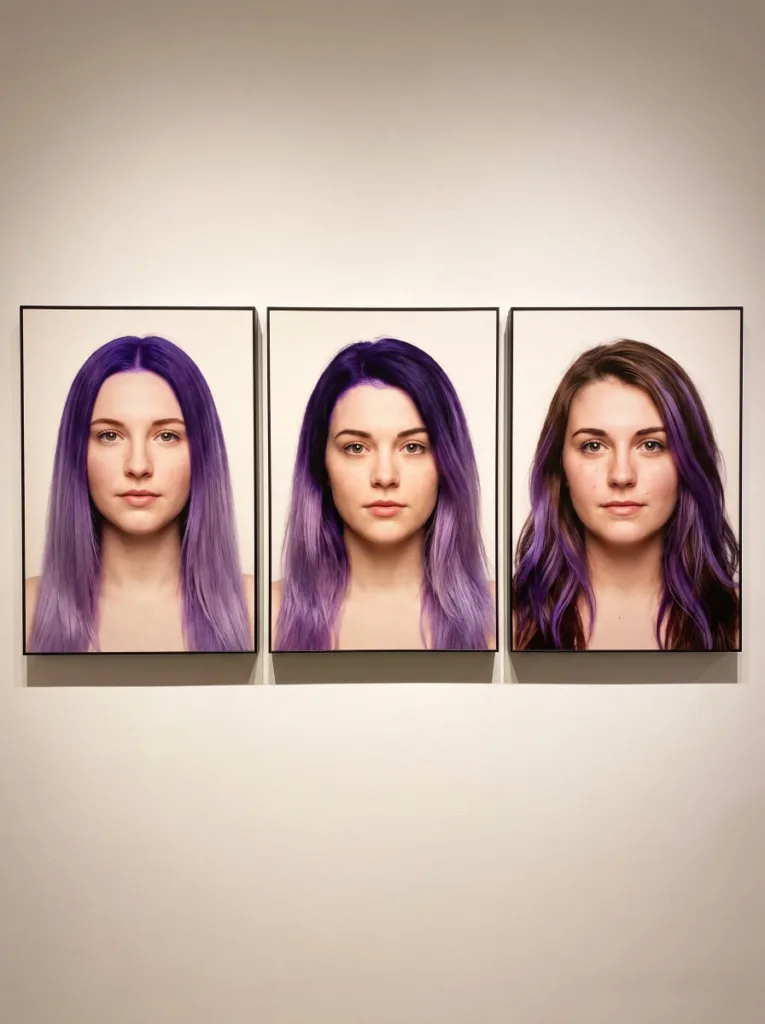
These three words get tossed around like they mean the same thing. They don’t. Knowing the difference helps you ask for exactly what you want.
What Is a Gradient?
A gradient blends two or more colors in a smooth, even transition across the length of the hair. The shift is gradual. It’s usually symmetrical from root to tip. Think of it like a color wheel melting into itself.
What Is Ombre?
Ombre is a specific type of gradient. It moves from dark to light, almost always root to tip. The transition line is a bit clearer than a full gradient. Violet ombre hair usually starts dark at the crown and fades to a lighter violet or pastel lilac at the ends.
What Is Balayage?
Balayage is a hand-painted technique, not a direction of color change. A colorist sweeps lightener onto sections of hair freehand. This creates a softer, more irregular gradient effect. A violet balayage technique also grows out with less noticeable regrowth lines than ombre.
Ask For A Color Melt
For a true violet gradient, ask your colorist for a color melt. This term tells them you want a seamless blend between two or three violet-adjacent tones. You’re not asking for a hard split.
Matching Violet Gradient Shades To Your Skin Tone
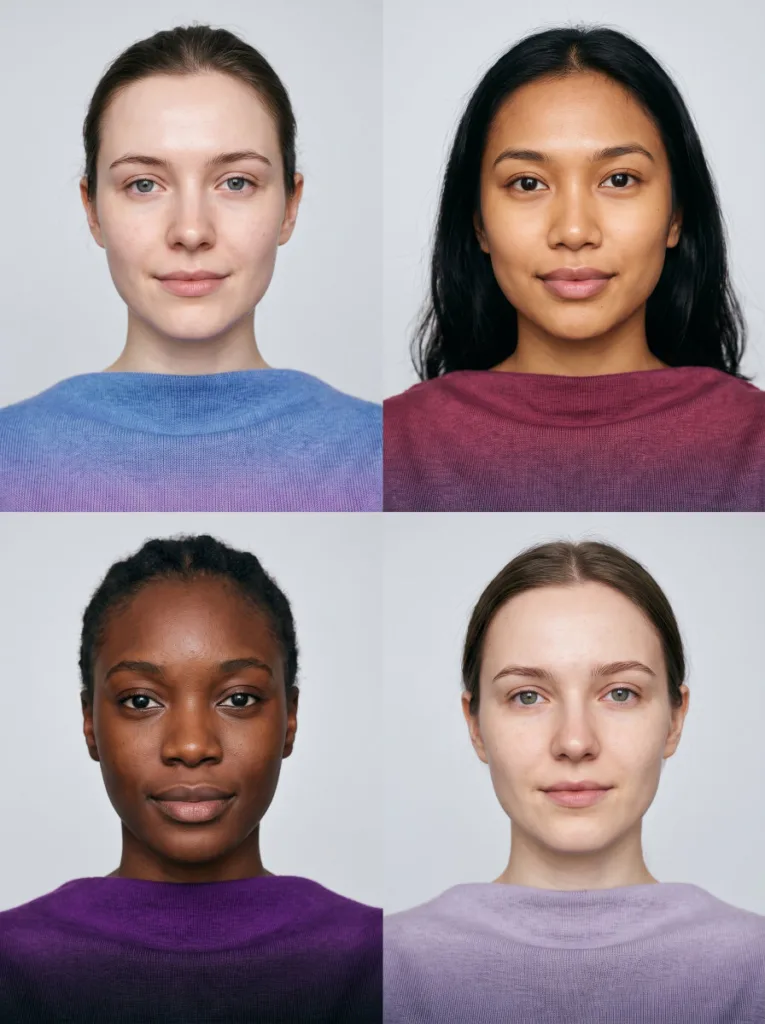
Violet has cool and warm variations. Picking the wrong one can wash you out. Your undertone, easiest to check with a quick vein or jewelry test, matters more than your skin’s overall depth.
Cool Undertones
If you have a cool undertone, meaning pink or blue undertones and veins that look blue, a blue-violet or true purple gradient hair color looks the most natural against your skin. Icy lilac tips also work well here. Ask your colorist to keep the base tone cool rather than warming it with red.
Warm Undertones
Warm undertones, think golden or peachy skin with green-toned veins, pair better with red-violet or plum gradients. A violet-to-magenta or violet-to-burgundy fade adds warmth instead of fighting it. This combination tends to look richer on warm skin than a straight blue-violet does.
Deep Skin Tones
Deep skin tones carry saturated violet beautifully. Rich amethyst, deep plum, and violet-to-black gradients read as luxurious rather than washed out. Don’t be afraid to go bold here. Saturation is your friend.
Fair Skin Tones
Fair skin tones tend to look best with a softer entry point. Ash violet fading into lavender works well, since the color doesn’t overpower the face. A heavily saturated violet can sometimes overwhelm very light skin, so ease into it.
When in doubt, bring reference photos to your consultation. A colorist can adjust the exact violet mix, whether it leans blue or red, to suit your undertone before any bleach touches your hair.
At-Home Vs Salon: What A Violet Gradient Actually Costs
A true gradient is hard to do alone. Most dark or medium hair needs lightening first. Uneven bleaching is the top mistake DIY colorists make.
| Option | Typical Cost | Best For |
| Salon color melt | $150 to $400 | Dark, untouched, or previously colored hair |
| At-home kit | $15 to $40 | Hair that’s already light blonde |
| Semi-permanent on pre-lightened ends | $10 to $25 | Blonde or light brown ends only |
Salon Pricing
Salon pricing for a violet gradient typically runs $150 to $400. The exact cost depends on your starting color, hair length, and how much lightening the gradient needs. Dark brunette or black hair often requires multiple lightening sessions, which raises the price. Salons in major cities also tend to charge more than salons in smaller towns.
At-Home Kits
At-home kits cost far less, usually $15 to $40 for bleach and dye. But they carry real risk. Uneven lightening, brassy patches, and hair damage are common when you apply gradient techniques without training. At-home gradients work best on hair that’s already light blonde, since less lifting is needed.
A Middle-Ground Option
Buy semi-permanent violet dye and apply it only to pre-lightened ends. This creates a simple two-tone gradient without full balayage skill. It works well if your ends are already blonde or light brown, and it’s far more forgiving than a full-head DIY job.
Common DIY Mistakes To Avoid
The most common DIY mistake is applying bleach unevenly, which creates blotchy patches instead of a smooth transition. Section your hair carefully and work in small, controlled strokes to reduce this risk. If your hair has been previously colored, tell your colorist before any lightening starts. Layered chemical history can cause unpredictable results.
How Long A Violet Gradient Lasts (And How To Maintain It)
Violet is a fashion color, which means it fades faster than natural-looking dyes. Expect noticeable fading within 4 to 6 weeks, especially on the lightened sections.
Wash Routine
Wash hair in cool water and space out shampoo days to 2 to 3 times per week. Hot water and frequent washing strip color fast. A color-safe, sulfate-free shampoo extends vibrancy by weeks.
Purple Shampoo
Purple shampoo isn’t just for blondes. It works on basic color theory: violet pigment neutralizes brassy, yellow undertones, the same principle that keeps a fading violet gradient looking cool instead of muddy. Used once a week, it refreshes violet tones between full color appointments and slows the shift toward a dull, grayish fade.
Touch-Up Schedule
Plan a root touch-up or color glaze every 4 to 6 weeks if you want the gradient to stay crisp. Because gradients blend gradually, minor regrowth is far less obvious than with a single all-over color. That means you can often stretch appointments longer than a solid-dye client would.
Heat Styling And Conditioning
Heat styling speeds up fading too. Turn down flat irons and blow dryers to a lower setting, and use a heat protectant every time. A weekly deep conditioning mask also helps. Lightened hair loses moisture faster, and dry strands release color pigment more quickly than well-hydrated ones.
18 Violet Gradient Hair Color Ideas
Each of these looks is a true two-tone or three-tone gradient. They cover a range of hair lengths, textures, and starting colors, so there’s something here whether your hair is short and curly or long and straight.
1. Deep Violet To Lilac Melt
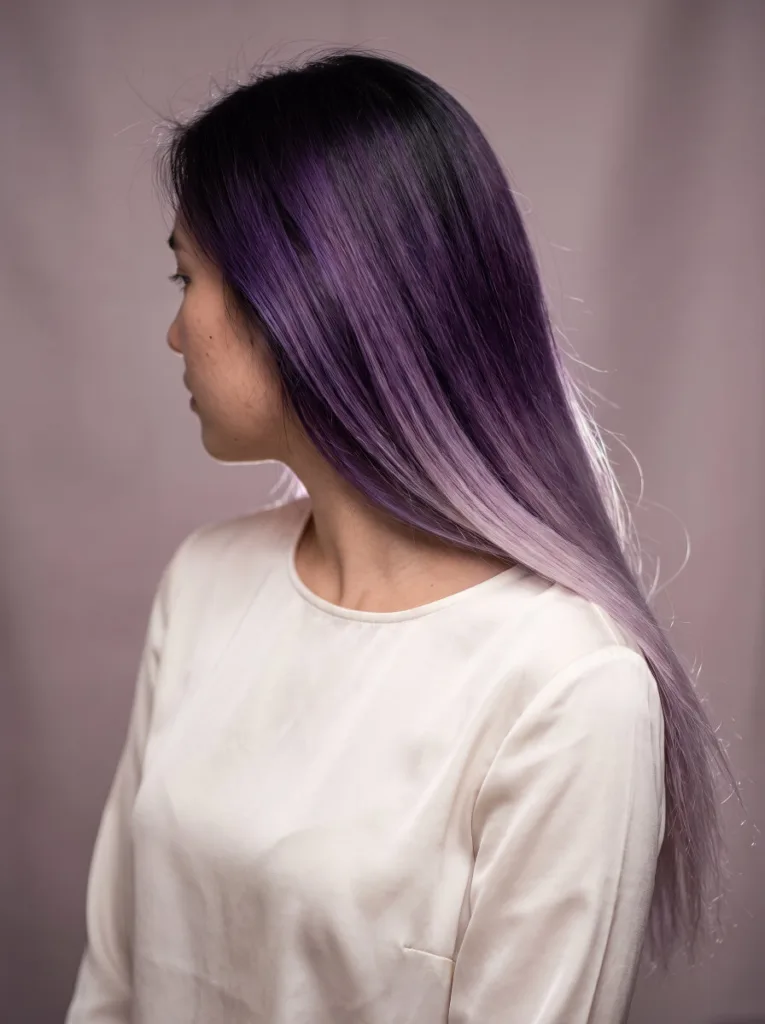
This look starts with a deep, saturated violet at the roots and melts into a soft lilac by the ends. The transition needs room to show off, so it works best on long, straight hair or hair with loose waves. Curly textures can blur the line between shades, which softens the effect even more. Ask your colorist for a gradual color melt rather than a hard ombre line, since a smooth blend reads more expensive and more natural. Lilac fades fastest of any violet shade, so plan a toning treatment every five weeks to keep the ends from turning brassy or dull. This combination suits cool undertones especially well, and it photographs well under both natural light and warm indoor lighting.
Best for: long, straight, or loosely waved hair | Undertone: cool | Touch-up: every 5 weeks
2. Black To Violet Ombre
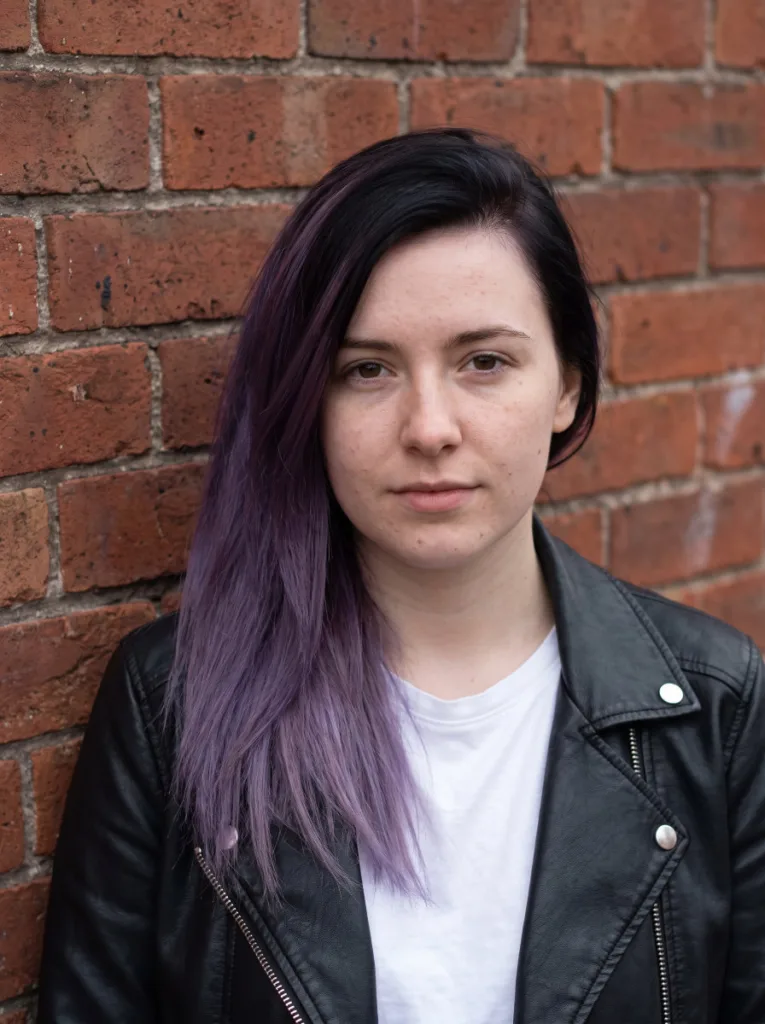
Natural black roots grow into a vivid violet through the mid-lengths and tips in this look. It’s one of the lowest-maintenance gradients on this list, because your regrowth blends into the dark base almost seamlessly. You can often stretch touch-ups to eight weeks instead of the usual four to six. This gradient works on any hair length, though it shows up most dramatically on hair past the shoulders. Thick, dark hair holds the violet pigment longer than pre-lightened hair, so the color stays vibrant between salon visits. If you want maximum contrast, ask your colorist to keep the black section glossy and the violet section matte. The difference in finish makes the gradient pop even more in photos.
Best for: any hair length, most dramatic past the shoulders | Undertone: any | Touch-up: every 8 weeks
3. Ash Blonde To Smoky Violet
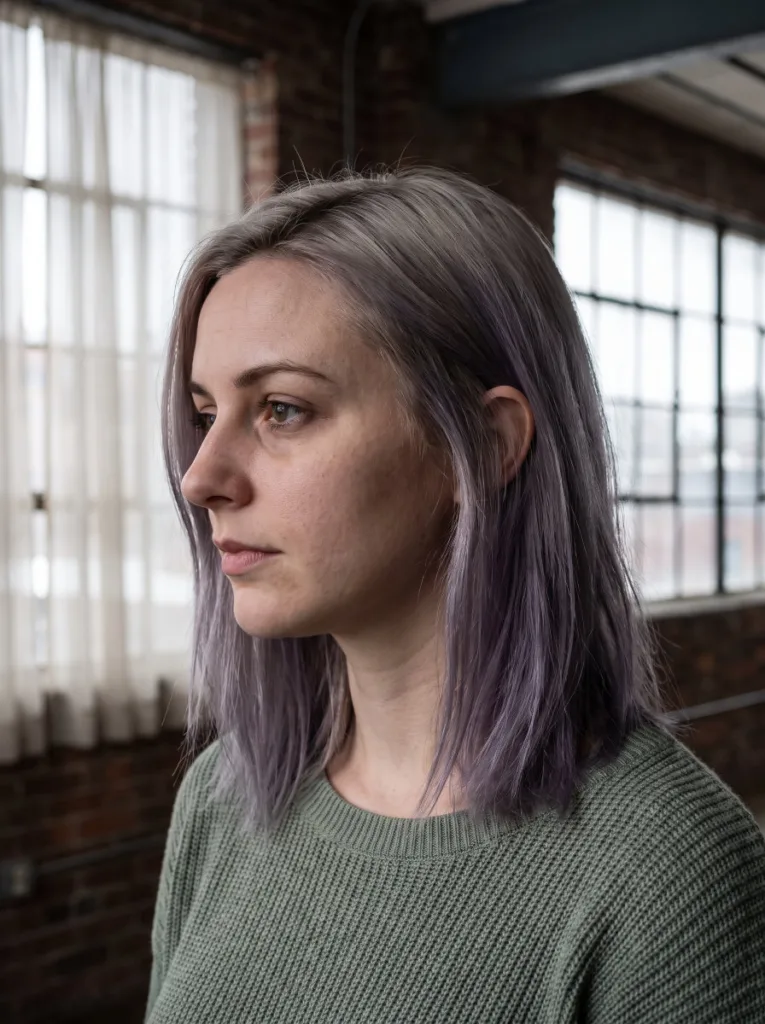
Cool ash blonde roots melt into a smoky, muted violet in this pairing, and the result feels moody without being too dark. Fine or medium hair shows this gradient off well, since thinner strands let the two tones blend more smoothly than thick hair does. Cool undertones are the best match here, since the ash base can look muddy on warm skin. Ask for a toning gloss once a month to keep the ash roots from shifting yellow, which happens fast on pre-lightened blonde. The smoky violet portion holds its color a little longer than a brighter violet would, since muted tones show fading less obviously. This is a solid pick if you want fashion color without looking like you tried too hard.
Best for: fine to medium hair | Undertone: cool | Touch-up: monthly toning gloss
4. Violet To Pink Gradient
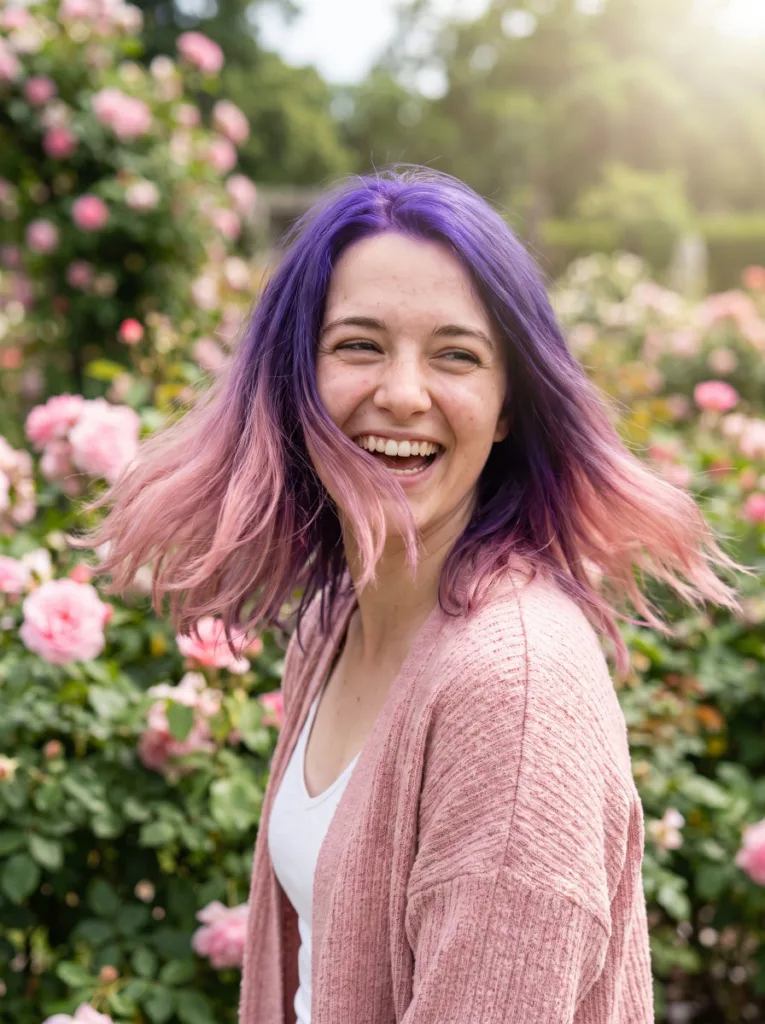
This playful gradient shifts from a deep violet at the crown to a soft rose pink at the ends, and it reads more fun than edgy. Medium to long layered hair shows off the transition best, since the layers catch both colors at different angles. It photographs beautifully in natural light, which makes it a popular choice for anyone active on social media. The pink section fades fastest, so expect to refresh it every four weeks if you want the color staying bright. Warm undertones tend to suit this combination more than cool ones, since the pink leans warm even against a cool violet base. Ask your colorist to keep the violet-to-pink transition soft rather than sharp for the most natural-looking result.
Best for: medium to long layered hair | Undertone: warm | Touch-up: every 4 weeks
5. Plum To Rose Gold Fade
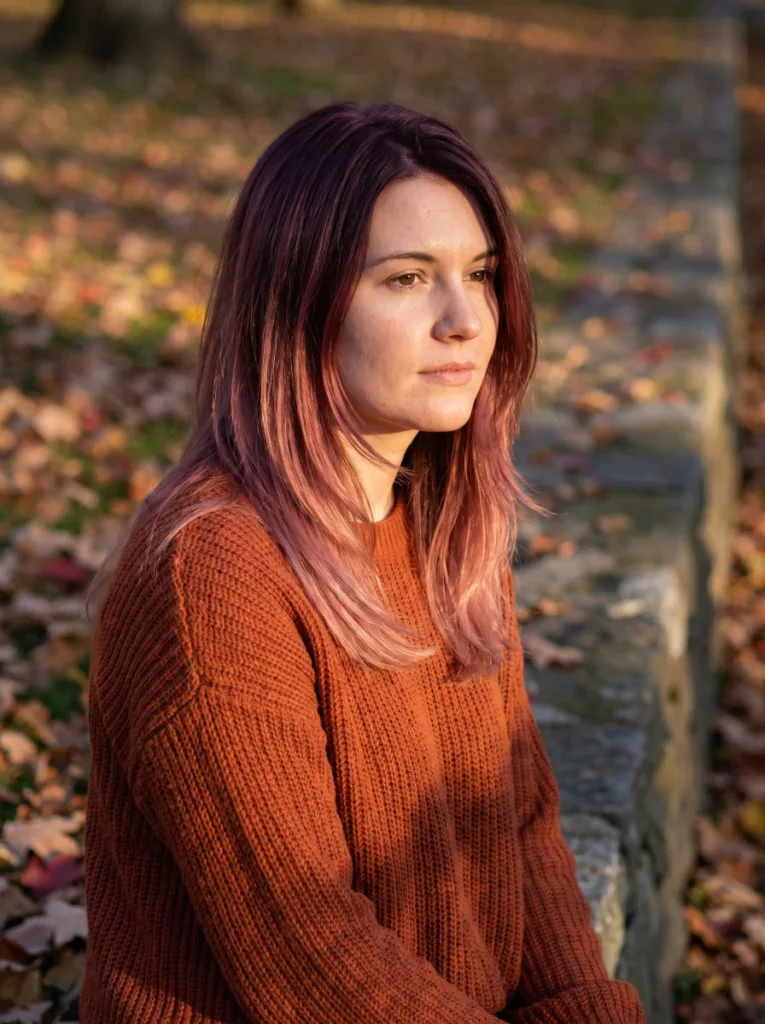
Warm plum roots blend into a rose gold tip in this cozy, autumn-leaning gradient. The combination flatters warm undertones especially well, and it works on brunette base hair with only minimal lightening needed at the ends. That makes it one of the more affordable gradients to achieve, since your colorist isn’t lifting your whole head. Medium-length hair with some layers shows the fade at its best. The plum portion holds color longer than the rose gold section, so expect the ends to need a refresh sooner than the roots. This gradient works well through fall and winter, when warm, rich tones feel right. It’s also a gentle way to try fashion color without going full vivid.
Best for: medium-length, layered brunette hair | Undertone: warm | Touch-up: ends fade faster than roots
6. Silver To Violet Color Melt
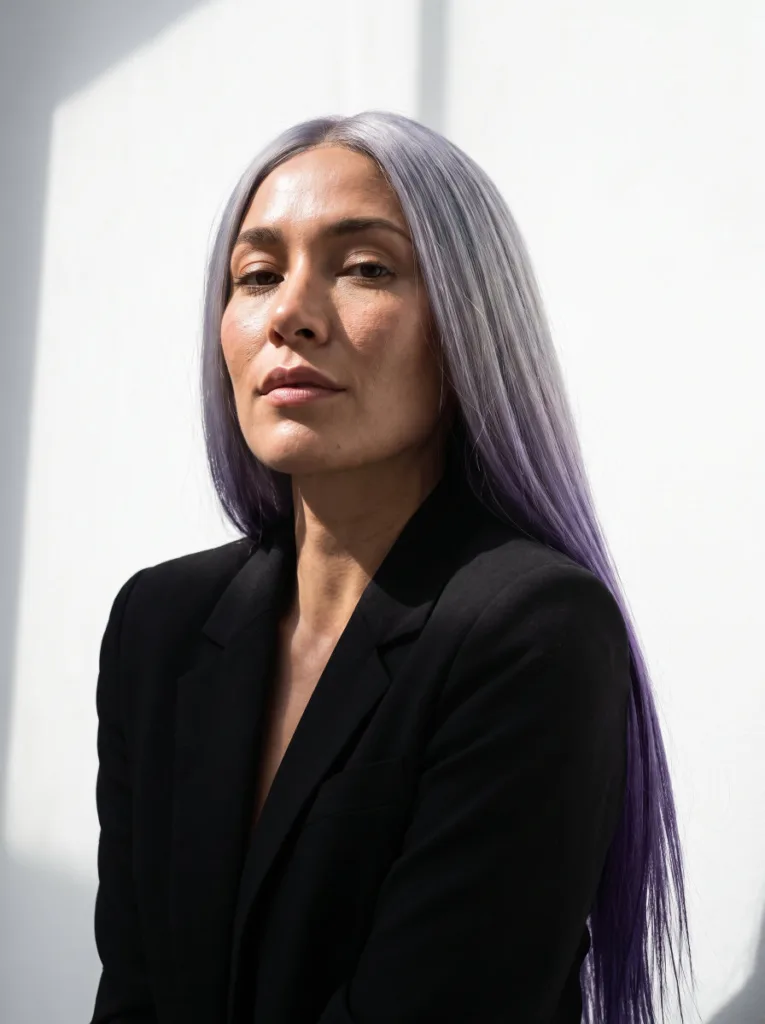
Metallic silver at the roots fades into a rich violet below in this high-fashion gradient. It’s one of the more demanding looks on this list, since it needs previously lightened hair to start and regular toning to keep the silver from warming up into a brassy yellow. Long, straight hair shows the color melt most clearly, though it also works on hair with loose curls. Cool undertones pair best with this combination. Plan on visiting your colorist every four weeks for a toning refresh, since silver fades to warm tones faster than almost any other shade. This look tends to cost more than a standard violet gradient because of the upkeep it demands, so budget accordingly before committing to it.
Best for: long, straight, or loosely curled hair | Undertone: cool | Touch-up: every 4 weeks
7. Violet To Orange Sunset Ombre
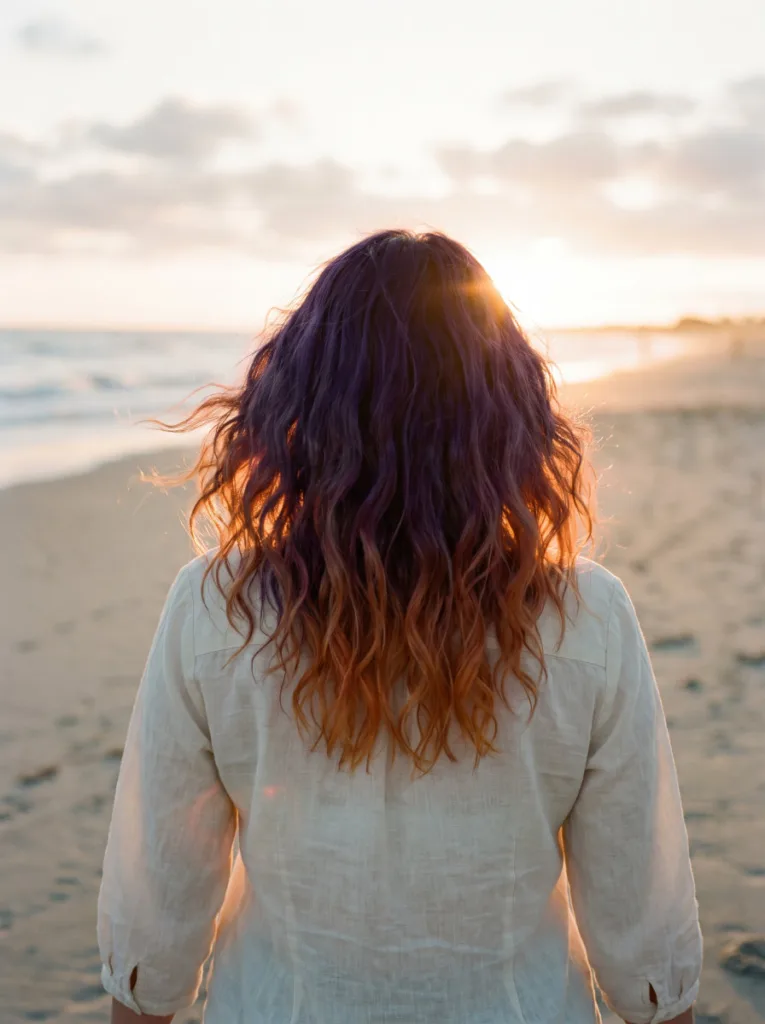
This unexpected pairing puts dark violet up top and fades it into warm orange tips, creating a sunset-inspired look that stands out. It suits bold personalities who want a gradient that gets noticed. Thick, long hair holds up well here, since there’s enough length to show the full blend between the two contrasting colors. Warm undertones complement this combination more naturally than cool ones do. The orange section fades toward a softer copper over time, which actually extends the life of the gradient rather than ruining it. Ask your colorist about a color-depositing conditioner in orange tones to maintain vibrancy between salon visits. This one takes real upkeep, but it’s one of the most memorable looks on this list.
Best for: thick, long hair | Undertone: warm | Touch-up: color-depositing conditioner between visits
8. Dark Roots, Icy Lavender Ends
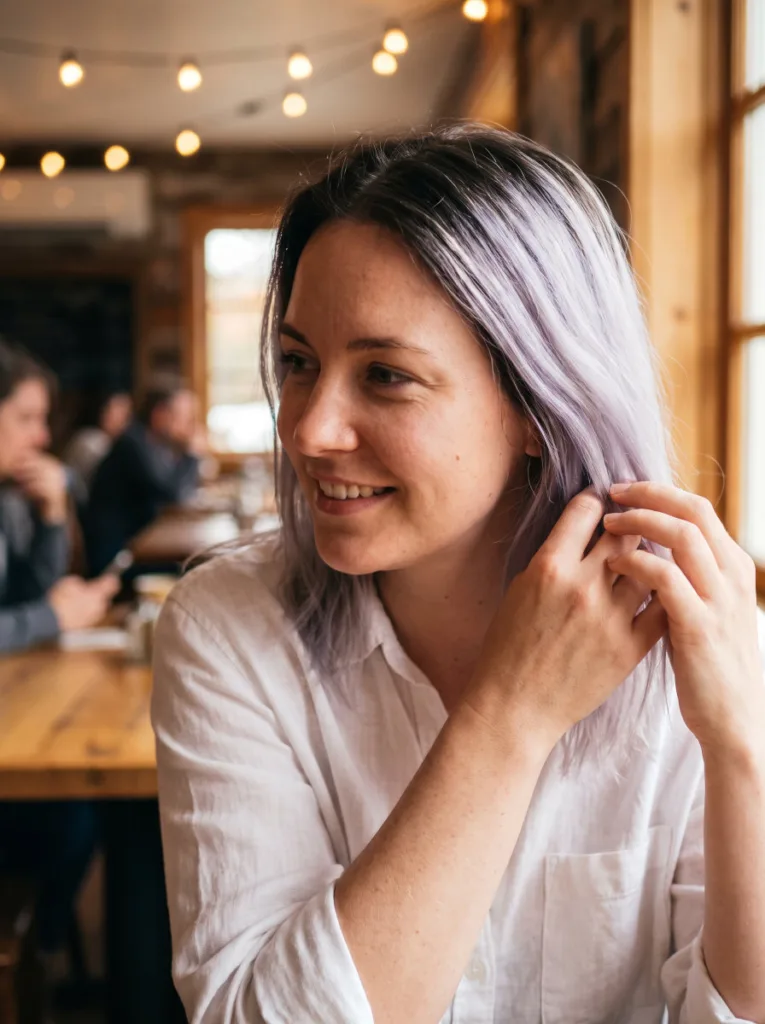
Natural dark roots transition into pale, icy lavender tips in this low-commitment gradient. It’s popular with first-timers because only the ends need lightening and dye, which keeps both the cost and the damage to a minimum. This look works on almost any hair length, though it shows up most clearly on hair past the collarbone. Cool undertones suit the icy lavender best, since warm undertones can make the pastel shade look slightly dull. Because the roots stay natural, regrowth is barely noticeable, so you can stretch touch-ups out much longer than a full-head color job. Purple shampoo used weekly keeps the lavender from fading into a washed-out gray, which is the main risk with any pastel violet shade.
Best for: hair past the collarbone | Undertone: cool | Touch-up: minimal, roots stay natural
9. Violet And Blue Duo-Tone
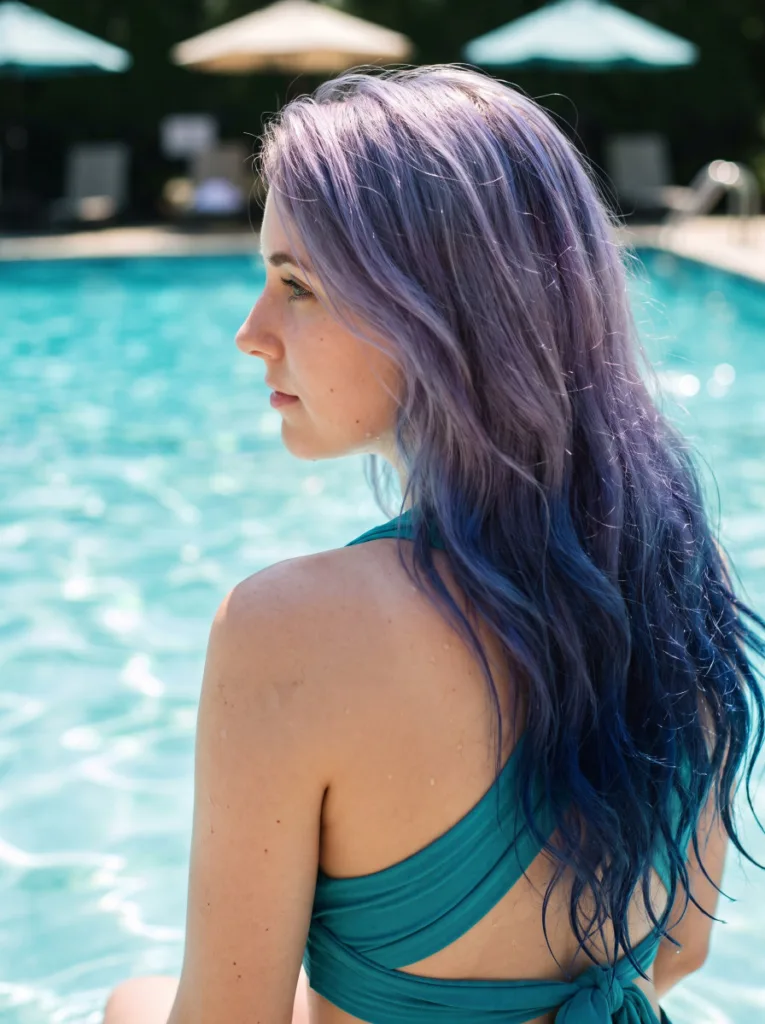
Cool violet blends into a deep blue at the tips in this mermaid-inspired gradient. Long hair with loose waves is the best canvas for this combination, since the waves let both colors catch the light separately instead of blurring together. This look leans firmly toward cool undertones, and it can look slightly harsh on very warm skin. Maintenance sits in the middle range: expect a toning appointment every five to six weeks to keep both the violet and blue sections from fading unevenly. Because two vivid colors are involved, this gradient usually costs more than a single-tone violet look. It’s worth it if you want something that looks different from the standard violet gradients everyone else is trying.
Best for: long, wavy hair | Undertone: cool | Touch-up: every 5 to 6 weeks
10. Chocolate Brown To Violet Balayage
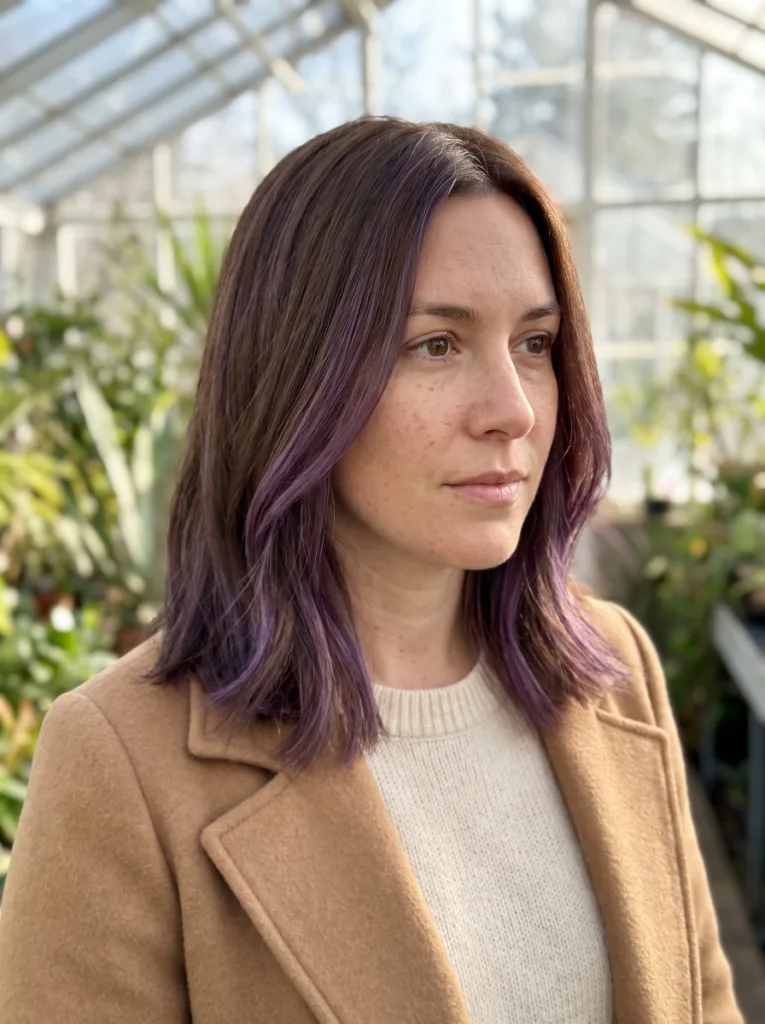
Hand-painted violet strands melt into a chocolate brown base in this balayage-style gradient. It’s one of the lowest-maintenance options on this list, because the brown base needs no touch-up at all. Only the violet sections need occasional toning to stay vibrant. This look works on nearly any hair length and texture, including curly hair, since balayage placement is flexible by nature. Warm undertones and brunettes with warm natural color get the most seamless blend here. Because the base color is left mostly untouched, this gradient causes less overall damage than a full lightening job. It’s a smart entry point if you want to test violet hair color without a major commitment or a big change in your regular routine.
Best for: any length or texture, including curly | Undertone: warm | Touch-up: occasional toning only
11. Magenta To Violet Reverse Gradient
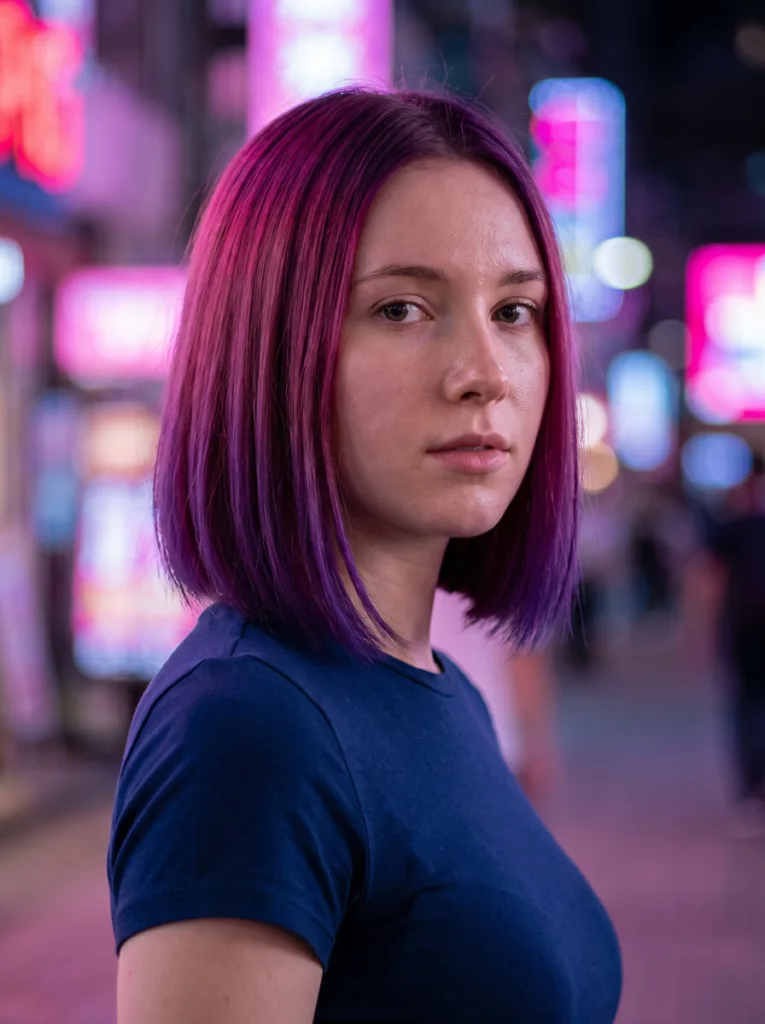
Unlike most gradients on this list, this one goes bright at the roots and deepens into violet at the tips. It suits shorter styles like a bob especially well, where the compact length keeps the color shift bold without becoming overwhelming. The magenta section fades the fastest of the two colors, so plan on refreshing it roughly every three to four weeks if brightness matters to you. Warm undertones pair naturally with magenta, while the violet ends soften the overall warmth. This is a striking option for anyone who wants a shorter cut that still reads as a true gradient rather than a single flat color. Expect more upkeep than a traditional root-to-tip fade, since the boldest color sits closest to your face.
Best for: short styles like a bob | Undertone: warm | Touch-up: every 3 to 4 weeks
12. Pastel Violet To White-Blonde Fade
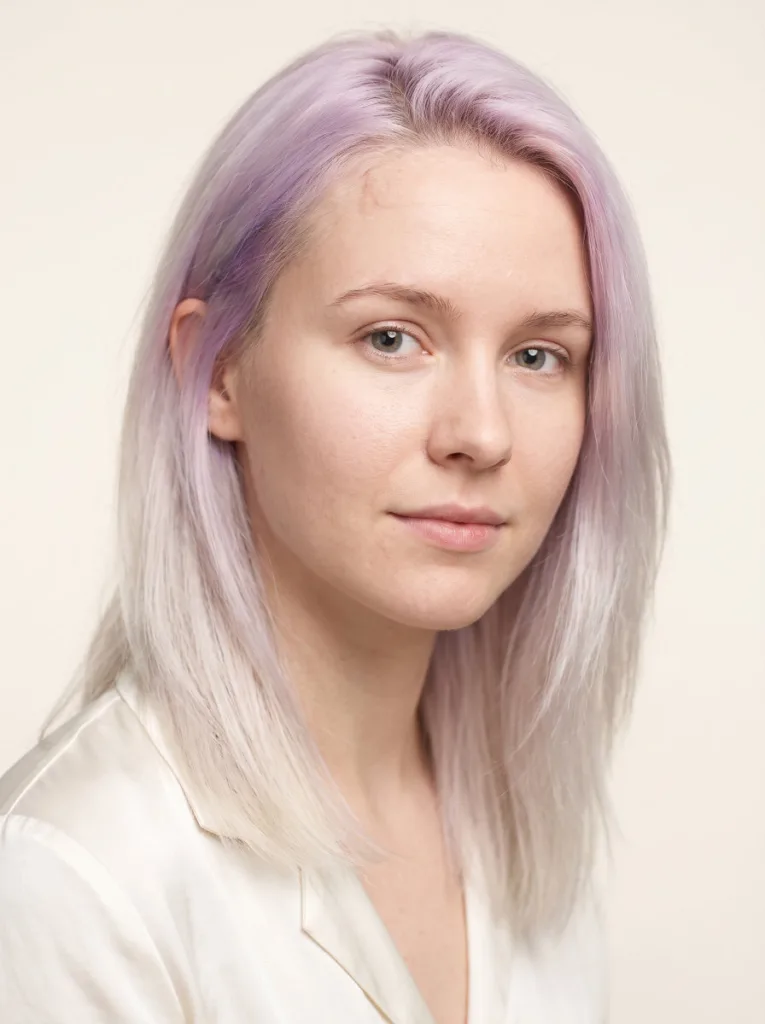
Soft pastel violet fades into a near-white blonde in this delicate, high-maintenance gradient. It needs heavily pre-lightened hair to start, which usually means several sessions if you’re not already blonde. Frequent purple shampoo use is non-negotiable here, since the white sections yellow quickly without it. Fine to medium hair textures show this pastel blend the most clearly. Fair to cool undertones suit this combination best, since the icy white base can look stark against warmer skin. This gradient photographs beautifully but fades faster than almost any other look on this list, so budget for a toning appointment every three to four weeks. It’s a striking choice for anyone already rocking platinum or white-blonde hair who wants to add dimension.
Best for: fine to medium hair | Undertone: fair, cool | Touch-up: every 3 to 4 weeks
13. Burgundy To Violet Blend
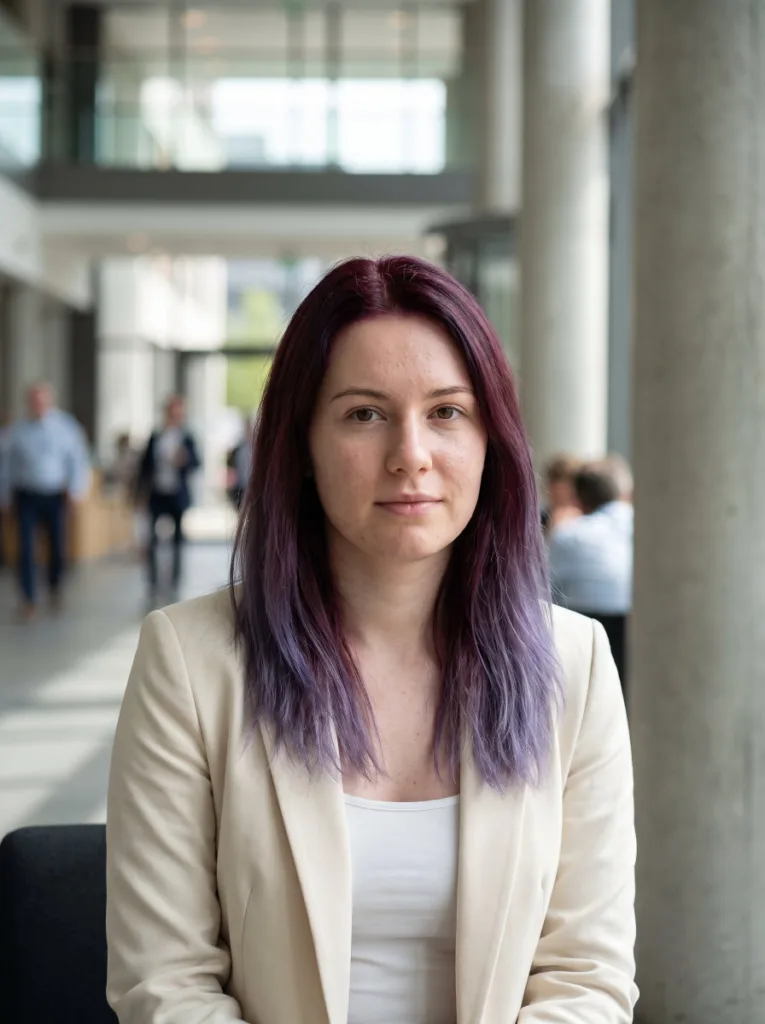
Deep burgundy roots shift into a cooler violet through the mid-shaft and tips in this rich, wine-toned gradient. Warm-toned brunettes get an easy entry into fashion color with this combination, since it reads richer than jarring against warm skin. The burgundy base requires less lightening than most gradients on this list, which keeps both cost and hair stress lower. Medium to long hair with some natural body shows off the blend best. Maintenance sits on the easier side, since burgundy holds pigment longer than most vivid shades and needs a touch-up only every six to eight weeks. This is a good option for anyone who wants a gradient that still looks polished enough for a professional setting most of the year.
Best for: medium to long hair with body | Undertone: warm | Touch-up: every 6 to 8 weeks
14. Violet Root Smudge With Blonde Balayage
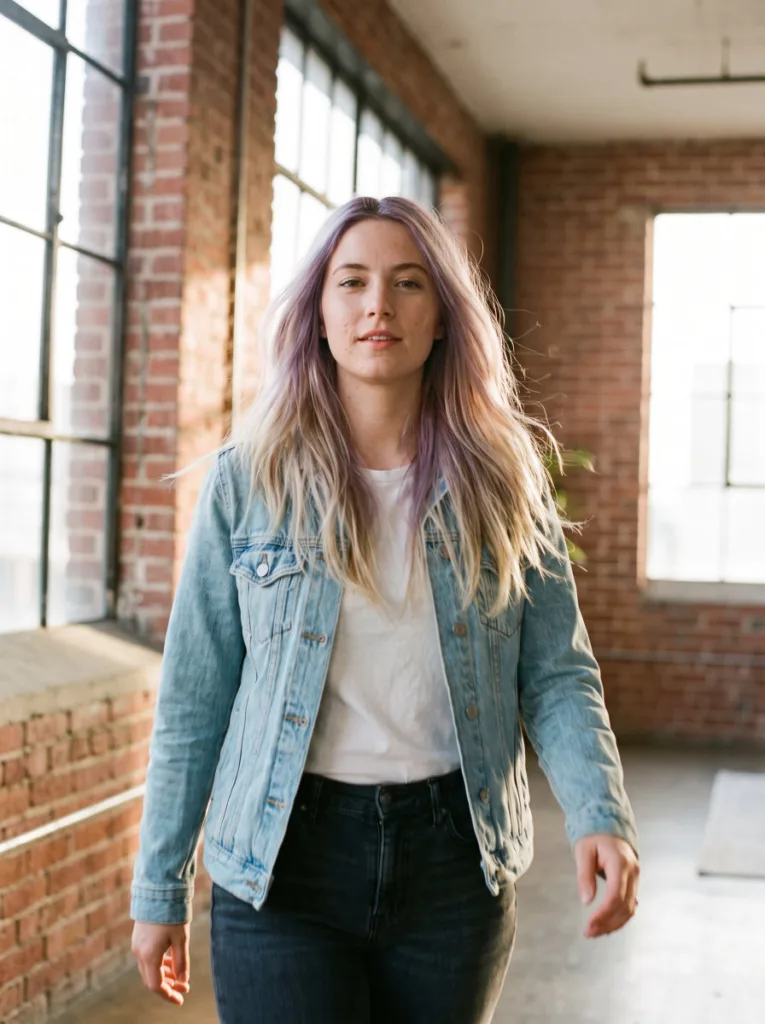
A soft violet root shadow blends into classic blonde balayage in this understated gradient. It’s ideal for anyone who wants a hint of color without full commitment, and it grows out gracefully thanks to the balayage placement. This look works on almost any hair length, and it’s especially popular on long, layered hair where the balayage already creates natural dimension. Both warm and cool undertones can wear this combination, since the violet is used sparingly rather than as the dominant tone. Maintenance is minimal: the blonde balayage needs its usual upkeep, while the violet root shadow can go eight to ten weeks before it needs a refresh. This is one of the most office-friendly violet gradients on this list.
Best for: long, layered hair | Undertone: any | Touch-up: every 8 to 10 weeks
15. Grape To Amethyst Ombre
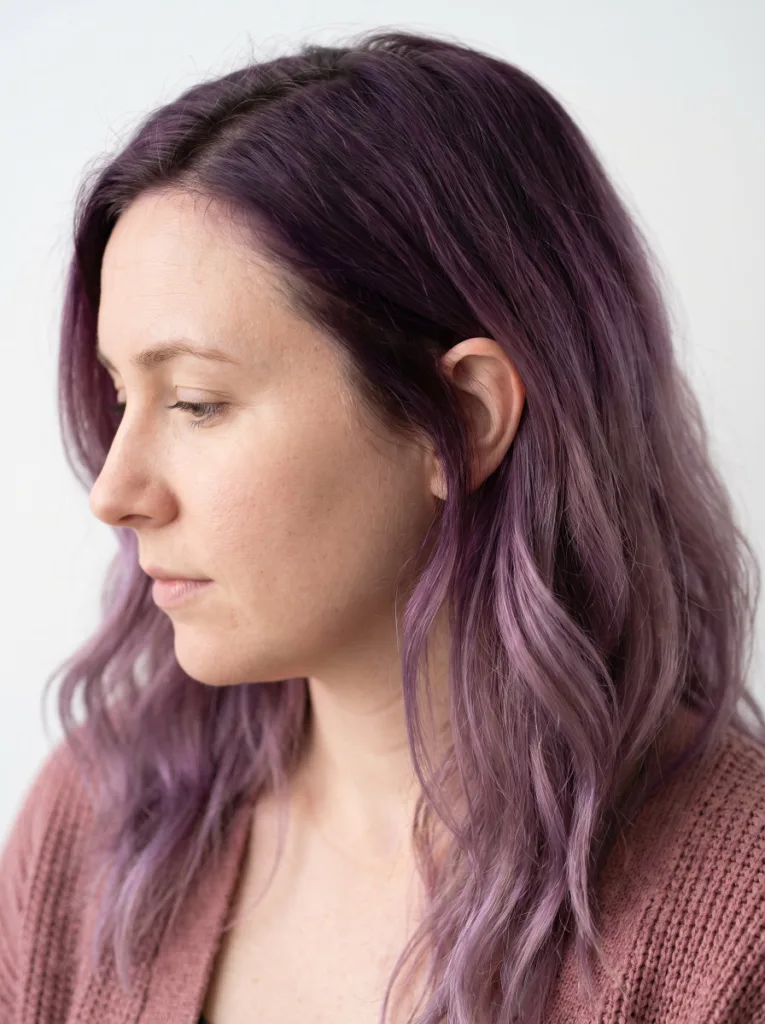
Two closely related violet shades, grape and amethyst, blend into each other for a tonal gradient that reads more subtle than most fashion colors. This approach works well for office-friendly environments that limit bold colors, since the shift is tonal rather than a dramatic jump between hues. Medium to long hair in any texture can carry this gradient, since the closeness of the two shades forgives an imperfect blend. Cool to neutral undertones suit this pairing best. Because both shades are within the violet family, fading is less noticeable than with a high-contrast gradient, so touch-ups can wait six to seven weeks. This is a smart pick if you want to dip into violet hair color without committing to something loud.
Best for: medium to long hair, any texture | Undertone: cool, neutral | Touch-up: every 6 to 7 weeks
16. Violet To Teal Split Gradient
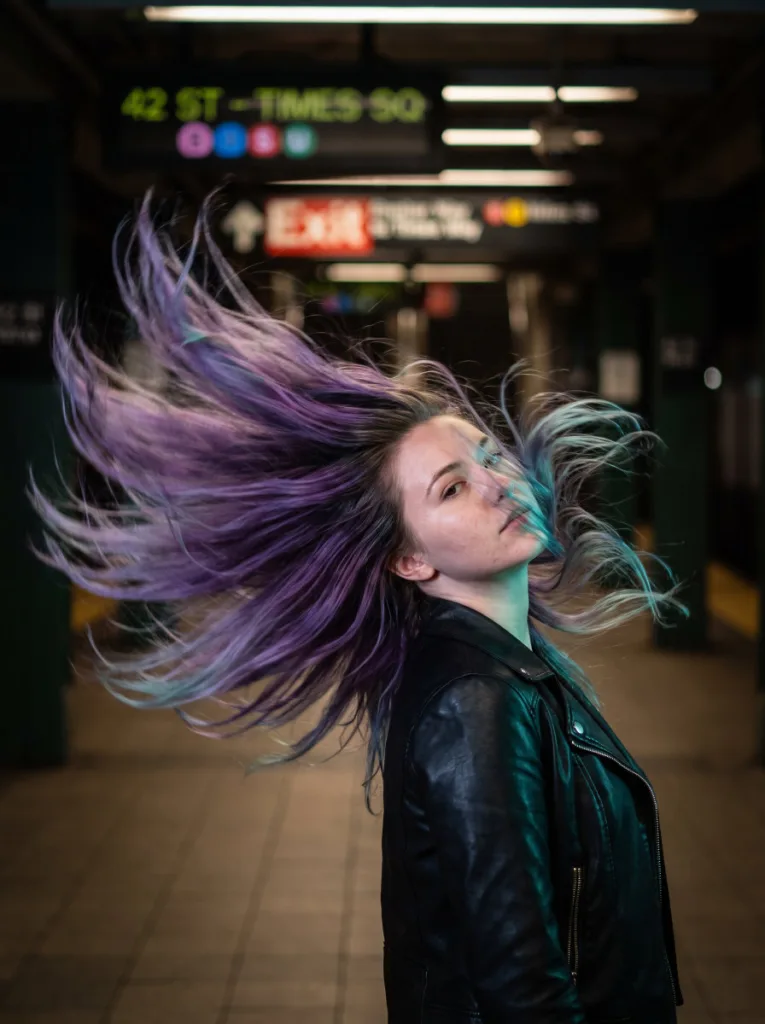
A daring combination of violet fading into teal, this gradient is best suited to very long or extra-thick hair that can show off two fully saturated colors. This look demands real upkeep, with toning needed roughly every three weeks to keep both shades from dulling. Cool undertones pair best with this bold combination. Because two vivid, high-maintenance colors are involved, expect a higher cost than a standard single-tone violet gradient, both for the initial application and for ongoing care. This is not a first-timer’s gradient. It works best for someone who already has experience with fashion color and knows what the maintenance routine involves. The payoff is a look that stands out in a way few other violet gradients can match.
Best for: very long or extra-thick hair | Undertone: cool | Touch-up: every 3 weeks
17. Copper To Violet Reverse Ombre
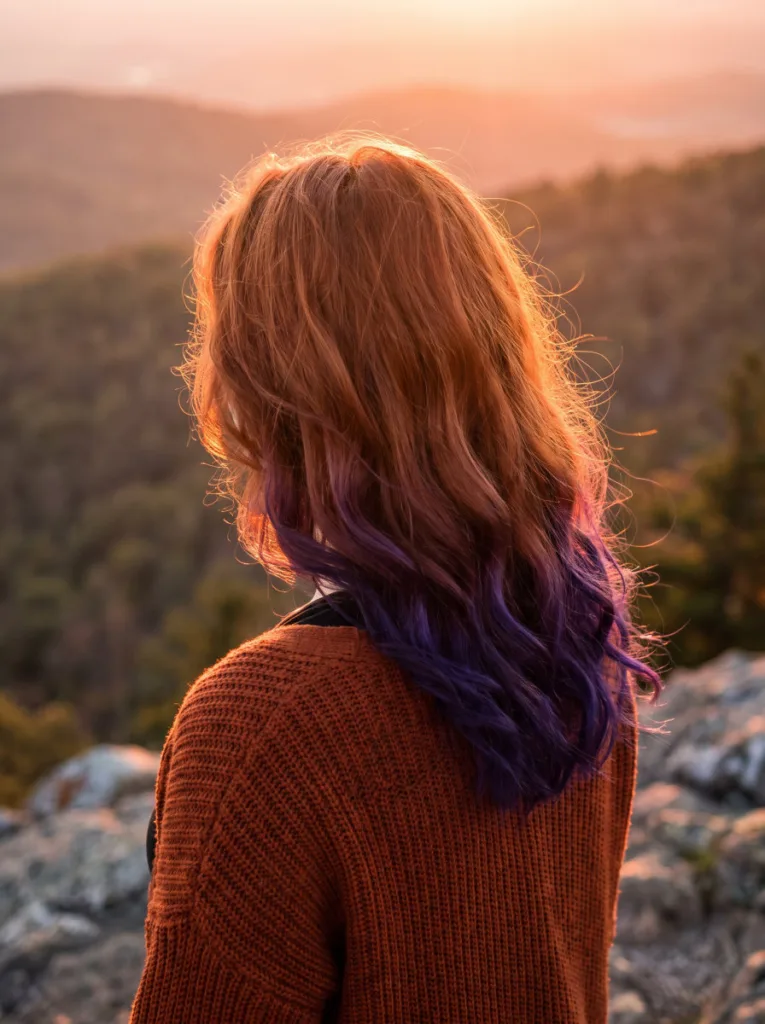
Warm copper roots deepen into cool violet ends in this contrast pairing that works surprisingly well on red-toned natural hair. Minimal lightening is required if your base is already copper or auburn, which keeps the process gentler than most violet gradients. Medium to long hair shows the transition most clearly, especially with some layering to help the two tones blend. This combination suits warm undertones at the roots and cool undertones at the ends, which sounds contradictory but reads as intentional and well-designed in person. Maintenance falls in the middle range, with a touch-up every five to six weeks recommended. This gradient is a good option for redheads who want to experiment with violet without abandoning their natural warmth entirely.
Best for: medium to long, red-toned natural hair | Undertone: warm roots, cool ends | Touch-up: every 5 to 6 weeks
18. Violet Balayage On Curly Hair
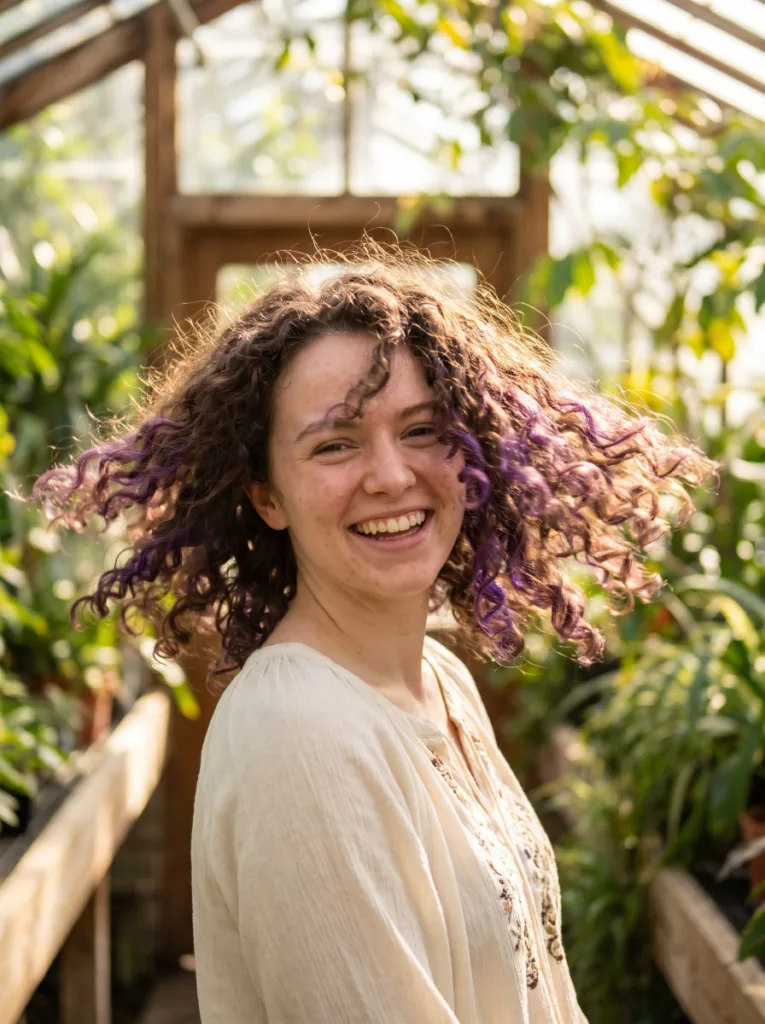
Hand-painted violet placed strategically through curls creates a dimensional gradient that moves with your natural texture instead of fighting it. Curly hair hides regrowth lines well, which makes this one of the more forgiving choices on this list for anyone with a busy schedule. The balayage technique lets your colorist place violet exactly where curls catch the light, rather than forcing a straight-line gradient onto a texture that doesn’t sit flat. Any curl pattern can wear this look, from loose waves to tight coils. Both warm and cool undertones work here, since the placement can be adjusted to suit your skin. Maintenance is moderate: expect a refresh every six weeks, with a hydrating mask in between to keep curls from drying out during the color process.
Best for: any curl pattern | Undertone: any | Touch-up: every 6 weeks
Frequently Asked Questions
Does a violet gradient work on dark hair?
Yes, but dark hair usually needs multiple lightening sessions first. Skipping this step leads to a muddy, uneven violet instead of a true gradient.
Can I do a violet gradient at home?
It’s possible on already-light hair, but full gradients on dark or untouched hair are risky to DIY. Salon application gives more even, predictable results.
How often do I need to touch up a violet gradient?
Most violet gradients need a refresh every 4 to 6 weeks. Purple shampoo between appointments helps stretch that timeline.
Will a violet gradient damage my hair?
Any lightening process causes some stress to hair. Deep conditioning treatments and protein masks before and after coloring reduce visible damage, and the American Academy of Dermatology recommends waiting 8 to 10 weeks between chemical processing sessions to limit cumulative stress on the hair.
What’s the difference between a gradient and highlights?
Highlights add streaks of color throughout the hair. A gradient shifts the entire base color gradually from one shade to another, root to tip.
Conclusion
A violet gradient rewards the people willing to plan it out, from picking the right undertone match to budgeting for upkeep. Book a consultation with a colorist experienced in fashion color, bring two or three reference photos from this list, and ask specifically for a color melt gradient rather than a flat violet dye.
If you’re still unsure which shade to commit to, start with a lower-maintenance option like the black-to-violet ombre or the chocolate-to-violet balayage. Both grow out gracefully and cost less to maintain than a full pastel gradient. Ask your colorist for a strand test before the full appointment, especially if your hair has been previously colored. This one extra step confirms how your hair will actually take the violet tone, so there are no surprises once the color melt is finished.
For more helpful articles related to haircut ideas, please visit blushhairflow.